
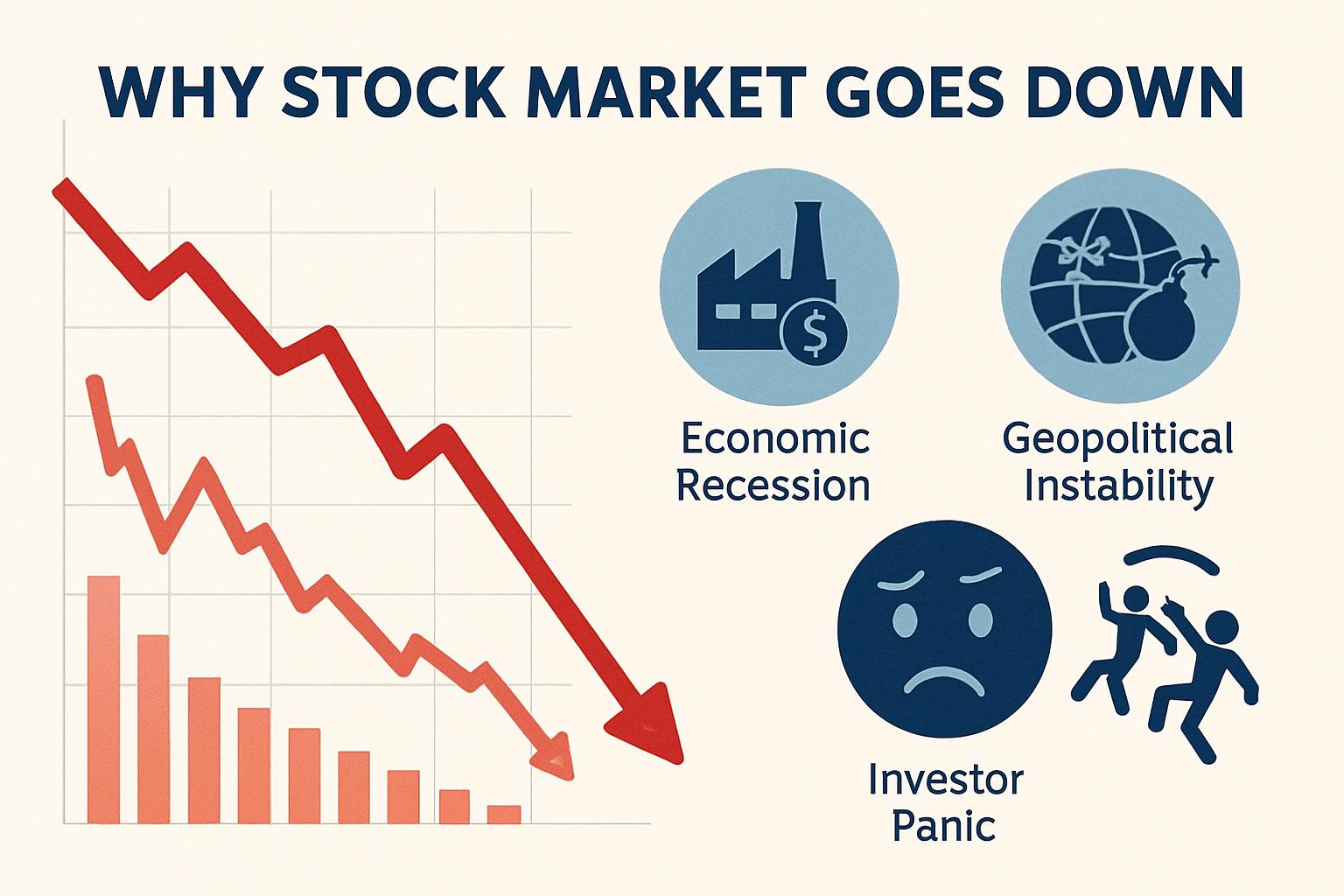
The daily fluctuations of the stock market are a complex interplay of numerous factors, ranging from immediate news headlines to deep-seated economic trends and psychological shifts among investors. When the market experiences a significant downturn, it’s rarely attributable to a single isolated event; rather, it’s often the culmination of several pressures that push sentiment and valuations lower. Understanding these drivers is crucial for investors seeking to navigate volatility and make informed decisions, transforming potential panic into an opportunity for strategic analysis.
Unpacking the Immediate Triggers of Market Volatility
Market movements are frequently influenced by real-time information that alters investor perception of future corporate earnings, economic growth, or overall stability. These immediate triggers can cascade quickly, particularly in an environment of high-frequency trading and rapid news dissemination.
Economic Data Releases
Regularly scheduled economic reports provide a pulse check on the health of the economy, and their deviation from expectations can trigger immediate market reactions. Inflation reports, such such as the Consumer Price Index (CPI) or Producer Price Index (PPI), are particularly potent. Higher-than-expected inflation can signal tighter monetary policy from central banks, leading to higher borrowing costs and reduced corporate profits. Conversely, weaker-than-anticipated unemployment figures or Gross Domestic Product (GDP) growth can suggest a slowing economy, prompting concerns about future corporate performance and consumer demand. Investors constantly weigh these data points against forecasts, and any significant surprise can lead to rapid adjustments in asset prices as participants recalibrate their outlook.
Geopolitical Developments
The global nature of today’s financial markets means that political instability or conflicts in one region can have far-reaching effects. Major geopolitical events, such as military conflicts, trade disputes between economic superpowers, or significant political shifts within influential nations, introduce uncertainty. This uncertainty often translates into risk aversion, where investors sell off riskier assets like stocks and flock to safer havens such as government bonds or gold. Supply chain disruptions stemming from international conflicts, for example, can impact manufacturing, increase costs, and squeeze profit margins for multinational corporations, directly affecting their stock valuations.
Central Bank Communications
Central banks, most notably the U.S. Federal Reserve, the European Central Bank, and the Bank of England, wield immense influence over financial markets through their monetary policy decisions. Announcements regarding interest rate hikes or cuts, quantitative tightening (reducing the money supply) or easing (increasing it), and even nuanced statements from central bank officials can send immediate ripples through the market. An unexpected hawkish stance (indicating a likelihood of higher rates) can dampen investor enthusiasm by signaling a less favorable environment for borrowing and economic expansion, leading to a sell-off in equities. Conversely, a dovish pivot (suggesting lower rates or more accommodative policy) can provide a boost, although if it signals deeper economic trouble, it might not always be positive.
Corporate Earnings and Sector-Specific News
While broader economic trends are crucial, specific corporate performance also drives market sentiment. When a major company, especially one with significant market capitalization or within a dominant sector, announces disappointing earnings, misses analyst expectations, or issues a lowered future guidance, it can pull down not only its own stock but also its peers and even the broader market indices. This is particularly true for sectors that are heavily weighted in major indices, such as technology or finance. Furthermore, sector-specific news, like regulatory changes impacting pharmaceuticals or a significant innovation disruption in tech, can create concentrated selling pressure that spills over into the wider market.
Underlying Economic Currents and Systemic Pressures
Beyond immediate catalysts, deeper economic currents often exert a more sustained downward pressure on markets, reflecting fundamental shifts in the economic landscape. These underlying issues can fester for months or even years before manifesting in significant market corrections.
Inflationary Pressures and Interest Rate Expectations
Persistent and elevated inflation is a major concern for investors. When the cost of goods and services rises steadily, it erodes purchasing power for consumers and increases operational costs for businesses, ultimately squeezing profit margins. To combat inflation, central banks typically raise interest rates. Higher interest rates make it more expensive for companies to borrow money for expansion and for consumers to finance purchases, leading to a slowdown in economic activity. For investors, higher rates also reduce the present value of future corporate earnings, making stocks less attractive relative to fixed-income investments like bonds. The anticipation of continued rate hikes can therefore create sustained selling pressure.
Recessionary Fears
The specter of an economic recession is a powerful market depressant. A recession, generally defined as two consecutive quarters of negative GDP growth, implies reduced consumer spending, lower corporate profits, and increased unemployment. Investors frequently try to “price in” a recession long before it officially begins, leading to pre-emptive selling. Indicators such as an inverted yield curve (where short-term bond yields are higher than long-term yields), declining consumer confidence, or a slowdown in manufacturing orders are often interpreted as harbingers of an impending economic contraction, prompting widespread investor caution and divestment.
Global Economic Slowdown
In an interconnected global economy, a slowdown in one major economic region can quickly ripple across borders. If China, the Eurozone, or another significant trading partner experiences an economic contraction, it can reduce demand for goods and services from other nations, disrupt global supply chains, and impact the earnings of multinational corporations. U.S. companies with significant international exposure, for example, would see their revenues and profits diminish if overseas markets weaken, leading to a downgrade in their stock valuations and contributing to a broader market decline.
Market Psychology and Technical Factors
Beyond fundamental economics, the collective psychology of investors and the mechanics of market trading can significantly amplify or even initiate market downturns.
Investor Sentiment and Panic Selling
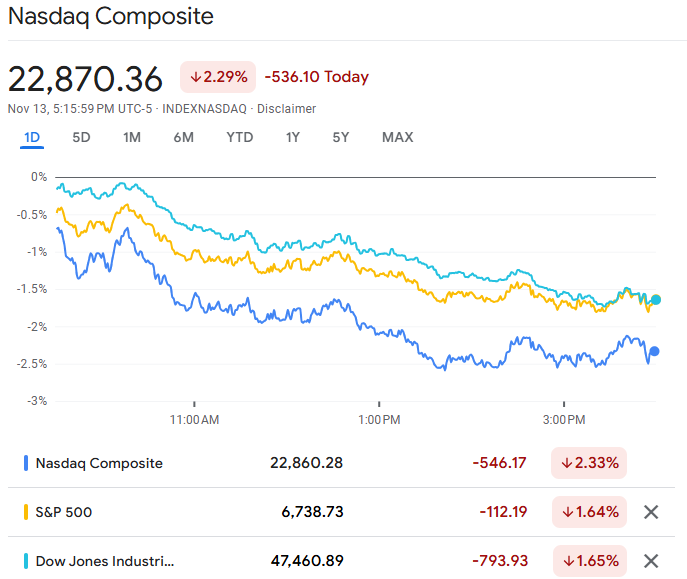
Fear is a potent emotion in financial markets. When negative news, whether economic or geopolitical, gains traction, it can quickly erode investor confidence and trigger panic selling. This “herd mentality” can lead to irrational decisions, where investors sell off assets indiscriminately, often at a loss, purely out of fear that prices will fall further. This rush to exit positions can create a self-fulfilling prophecy, driving prices down even more rapidly than warranted by underlying fundamentals. The speed of information dissemination through social media and financial news outlets can accelerate this phenomenon.
Technical Breakdowns
Technical analysis plays a significant role for many traders and institutional investors. When key price levels, such as major support lines or moving averages, are breached on the downside, it can trigger further selling. Many algorithmic trading systems are programmed to execute trades based on these technical signals. For instance, if a major index falls below its 200-day moving average, it might be interpreted as a bearish signal, prompting further liquidation of positions and accelerating the downward trend. This can create a cascade effect, as one technical breakdown leads to another.
Algorithmic Trading and High-Frequency Trading
The prevalence of algorithmic trading and high-frequency trading (HFT) means that a significant portion of market transactions are executed by computer programs. These algorithms react to market data, news, and technical indicators at speeds far beyond human capability. While they enhance liquidity, they can also exacerbate volatility during periods of stress. A cascade of sell orders triggered by algorithms responding to a sudden piece of negative news or a technical breach can lead to rapid, sharp market declines, sometimes referred to as “flash crashes,” before human traders can fully comprehend the situation.
The Role of Financial Sector Health and Credit Markets
The health of the financial sector is foundational to the broader economy, and issues within banking and credit markets can quickly propagate throughout the system.
Banking Sector Stability
Banks are the arteries of the economy, facilitating lending, investment, and payment processing. Concerns about the stability of the banking sector, whether due to bad loans, liquidity shortages, or failures of specific institutions, can trigger a widespread crisis of confidence. The interconnectedness of banks means that issues at one institution can create contagion risk, leading investors to fear a broader systemic meltdown. Such fears can lead to a credit crunch, where banks become hesitant to lend, stifling economic activity and leading to broad market sell-offs.
Credit Spreads and Lending Conditions
The corporate bond market provides crucial insights into the perceived risk of businesses. When credit spreads – the difference between the yield on corporate bonds and risk-free government bonds – widen significantly, it indicates that investors are demanding a higher premium for lending to companies. This suggests increased concern about corporate solvency and future economic conditions. Simultaneously, if lending conditions tighten, meaning banks become more restrictive in granting loans to businesses and consumers, it can starve the economy of capital, hindering investment and spending, which ultimately weighs on corporate profits and stock valuations.
Navigating Down Markets: Investor Strategies
While market downturns can be unsettling, they are a normal and often temporary feature of long-term investing. Rather than panicking, investors can adopt several strategies to mitigate risk and potentially capitalize on future recoveries.
Long-Term Perspective
Historically, stock markets have always recovered from downturns and gone on to reach new highs over the long term. Adopting a long-term investment horizon helps to weather short-term volatility. Instead of reacting to daily news cycles, focusing on multi-year goals allows investors to ride out market corrections without locking in losses through premature selling.
Diversification
Spreading investments across various asset classes (stocks, bonds, real estate), different sectors, and diverse geographical regions is a fundamental principle of risk management. A diversified portfolio is less susceptible to a severe decline caused by problems in any single area, as losses in one segment may be offset by gains or stability in another.
Rebalancing and Dollar-Cost Averaging
Regularly rebalancing a portfolio involves adjusting asset allocations back to their target percentages. During a downturn, this might mean selling some assets that have performed well (or have held up better) and buying more of those that have fallen, effectively “buying the dip.” Dollar-cost averaging, which involves investing a fixed amount of money at regular intervals regardless of market prices, is another powerful strategy. This approach means buying more shares when prices are low and fewer when prices are high, averaging out the purchase price over time and reducing the risk of making a large investment at an inopportune moment.
Focusing on Fundamentals
In turbulent times, it becomes even more critical to focus on the fundamental strength of the companies in which one invests. Companies with strong balance sheets, consistent cash flow, manageable debt, and competent management are generally better positioned to navigate economic headwinds and recover more robustly when market conditions improve. Evaluating these underlying metrics rather than being swayed solely by price action can lead to more resilient investment choices.
aViewFromTheCave is a participant in the Amazon Services LLC Associates Program, an affiliate advertising program designed to provide a means for sites to earn advertising fees by advertising and linking to Amazon.com. Amazon, the Amazon logo, AmazonSupply, and the AmazonSupply logo are trademarks of Amazon.com, Inc. or its affiliates. As an Amazon Associate we earn affiliate commissions from qualifying purchases.