
For anyone dipping their toes into the world of investing or seeking to deepen their understanding of financial markets, a fundamental question often arises: “What are the hours of the stock exchange?” While seemingly straightforward, the answer is nuanced, varying not only by specific exchange but also by the type of trading activity. Understanding these hours is crucial, as they dictate when investors can buy and sell securities, influence market liquidity, and impact trading strategies. Beyond the simple open and close times, the financial world operates with intricate schedules, including pre-market and after-hours sessions, weekend closures, and public holidays, all of which significantly shape the investment landscape. This comprehensive guide will demystify stock exchange hours, exploring their implications for investors worldwide.

Understanding Standard Trading Hours
The “standard trading hours,” often referred to as “regular market hours,” represent the core window during which the majority of trading activity occurs on a stock exchange. These hours are characterized by high liquidity and tighter bid-ask spreads, making them the most common period for investors to execute trades.
The Core Trading Window
In the United States, the two largest stock exchanges, the New York Stock Exchange (NYSE) and NASDAQ, operate with remarkably consistent standard trading hours. Both exchanges open at 9:30 AM Eastern Time (ET) and close at 4:00 PM ET on weekdays. This seven-and-a-half-hour window is considered prime time for market participants, from institutional investors and mutual funds to individual retail traders. During these hours, news releases, economic data, and corporate earnings reports typically have their most immediate and pronounced impact on stock prices. The sheer volume of transactions ensures a robust and generally efficient pricing mechanism for listed securities.
Weekends and Holidays: When Markets Close
While the daily rhythm of 9:30 AM to 4:00 PM ET defines the trading week, it’s equally important to recognize when markets are not open. Stock exchanges are closed on weekends (Saturdays and Sundays) to allow for settlement processing, system maintenance, and to provide a period of reflection for investors. Furthermore, exchanges observe a schedule of national holidays, which can include days like New Year’s Day, Martin Luther King, Jr. Day, Presidents’ Day, Good Friday, Memorial Day, Juneteenth National Independence Day, Independence Day, Labor Day, Thanksgiving Day, and Christmas Day. On these designated holidays, the exchanges remain entirely shut, meaning no trading can occur, even in extended hours. It’s vital for investors to consult the specific exchange’s holiday calendar well in advance, as an unexpected market closure can affect trading plans and portfolio access.
Factors Influencing Standard Hours
The establishment of standard trading hours is rooted in a combination of historical precedent, operational efficiency, and market stability. Historically, these hours accommodated the physical processes of trading on an exchange floor. Today, even with the dominance of electronic trading, the established window ensures sufficient overlap for participants across different time zones to engage, concentrates liquidity to facilitate fair pricing, and allows for nightly data processing and system updates. While there have been debates about extending standard hours, the current model provides a predictable structure that has served global financial markets for decades, balancing accessibility with the need for operational pauses.
Beyond the Bell: Pre-Market and After-Hours Trading
The traditional 9:30 AM to 4:00 PM ET window doesn’t tell the whole story of stock market activity. Modern electronic communication networks (ECNs) and alternative trading systems (ATSs) have enabled trading outside these regular hours, offering opportunities for investors to react to news and execute trades at virtually any time of day or night. This “extended-hours trading” is bifurcated into pre-market and after-hours sessions.
What is Pre-Market Trading?
Pre-market trading refers to the period before the regular market opens. For NYSE and NASDAQ, this typically begins as early as 4:00 AM ET and runs until the 9:30 AM ET open. During these hours, investors can place buy and sell orders that are matched and executed through electronic networks. Pre-market activity is often driven by corporate news releases (e.g., earnings reports, merger announcements) that occur overnight or early in the morning, allowing investors to react to these developments before the broader market opens. While it offers an early bird advantage, liquidity tends to be lower, and price volatility can be higher compared to regular hours.
After-Hours Trading Explained
After-hours trading occurs following the 4:00 PM ET close of the regular market, typically extending until 8:00 PM ET. Similar to pre-market trading, this session is facilitated by ECNs and allows investors to react to news released after the market close. Many companies intentionally time their major announcements for after-hours to avoid immediate market frenzy and give investors time to digest the information. The dynamics of after-hours trading mirror pre-market: lower liquidity, wider bid-ask spreads, and increased volatility are common characteristics. This makes it a double-edged sword, offering flexibility but also presenting heightened risks for less experienced traders.
Risks and Opportunities in Extended Hours
Extended-hours trading presents both unique opportunities and significant risks. The main opportunity lies in the ability to react quickly to breaking news, potentially capitalizing on immediate price movements that might dissipate once the regular market opens. It also offers flexibility for individuals whose schedules don’t align with standard market hours. However, the risks are substantial. Lower liquidity means fewer buyers and sellers, which can lead to larger price swings for even small trades and makes it harder to execute orders at desired prices. Wider bid-ask spreads increase transaction costs. Furthermore, institutional investors often dominate these sessions, potentially creating an uneven playing field for retail traders. Understanding these dynamics is paramount for anyone considering participating in pre-market or after-hours trading.
Global Variations: Stock Exchange Hours Around the World
The financial world never truly sleeps, thanks to a complex web of stock exchanges operating across different time zones. While the US market hours are often a primary reference, a truly global investor must be aware of the schedules of exchanges in other major financial centers.
Major US Exchanges (NYSE, NASDAQ)
As discussed, both the NYSE and NASDAQ operate from 9:30 AM to 4:00 PM ET, Monday through Friday. These exchanges are the backbone of the North American financial market, hosting thousands of publicly traded companies, from tech giants to industrial behemoths. Their extended hours also generally follow the 4:00 AM to 9:30 AM ET pre-market and 4:00 PM to 8:00 PM ET after-hours schedule.
European Markets (London, Frankfurt, Paris)
Europe hosts several of the world’s most influential stock exchanges, each with its own schedule.
- London Stock Exchange (LSE): Operates from 8:00 AM to 4:30 PM Greenwich Mean Time (GMT), Monday to Friday. Its earlier opening allows for some overlap with Asian markets and an early start before the US market opens.
- Deutsche Börse (Xetra, Frankfurt): Trading hours are typically 9:00 AM to 5:30 PM Central European Time (CET). Frankfurt is a key hub for European finance.
- Euronext (Paris, Amsterdam, Brussels, Lisbon): Euronext’s exchanges generally run from 9:00 AM to 5:30 PM CET.
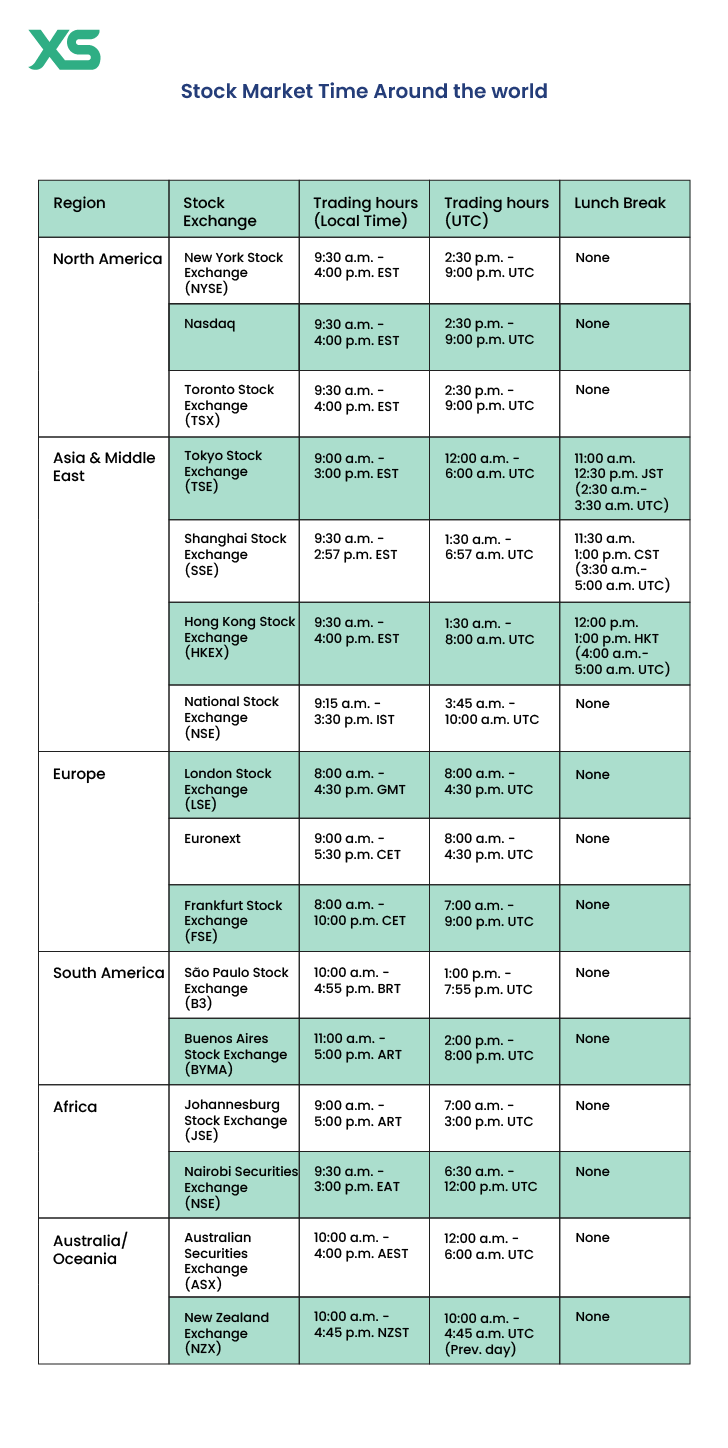
These European markets collectively provide continuous liquidity through a significant portion of the global trading day, connecting Asian closing hours with US market openings.
Asian Markets (Tokyo, Shanghai, Hong Kong)
Asia kicks off the global trading day, with its markets often reacting to overnight news from Europe and the US.
- Tokyo Stock Exchange (TSE): Typically operates in two sessions: 9:00 AM to 11:30 AM Japan Standard Time (JST) and 12:30 PM to 3:00 PM JST. There’s a one-hour lunch break, a common feature in many Asian markets.
- Shanghai Stock Exchange (SSE): Operates with similar split sessions: 9:30 AM to 11:30 AM China Standard Time (CST) and 1:00 PM to 3:00 PM CST.
- Hong Kong Stock Exchange (HKEX): Also uses a split session: 9:30 AM to 12:00 PM Hong Kong Time (HKT) and 1:00 PM to 4:00 PM HKT.
These Asian markets are crucial for global economic indicators and commodity trading, setting the tone for the subsequent trading day in Europe and the Americas.
Implications of Time Zones for Global Trading
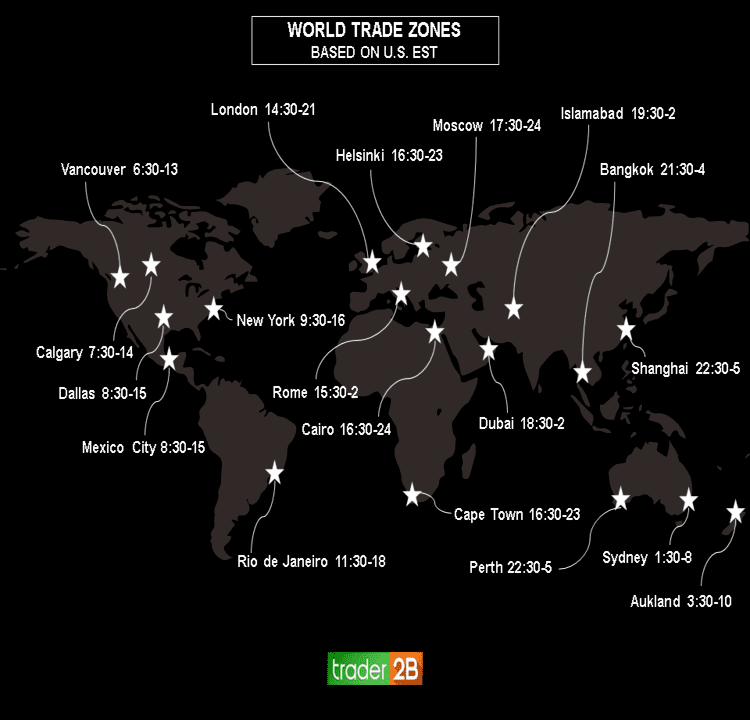
The staggered opening and closing of exchanges across time zones create a near 24-hour cycle of equity trading for those with access to international markets. For investors, this means that major news or events occurring at any point can affect markets globally, leading to ripple effects. For example, an economic announcement from China during its trading hours could influence European opening prices, and then subsequently impact US market sentiment when it opens. Understanding this global interconnectedness is vital for comprehensive portfolio management and risk assessment, particularly for those with diversified international holdings.
Why Trading Hours Matter for Investors
The specific timing of market operations has profound implications for every investor, influencing everything from the execution of a simple trade to the overall profitability of a sophisticated strategy.
Impact on Volatility and Liquidity
Trading hours directly correlate with market volatility and liquidity. During regular hours, the presence of a vast number of participants, including institutional investors and high-frequency traders, ensures high liquidity. This means there’s a constant stream of buyers and sellers, making it easier to enter and exit positions without significantly moving the price. Bid-ask spreads are typically tighter, reducing transaction costs. Outside these hours, however, liquidity often diminishes, leading to wider spreads and increased volatility. A relatively small trade in after-hours can cause a disproportionately large price swing, making it a riskier environment for less liquid stocks.
News Cycles and Market Reactions
News—be it corporate earnings, economic data, or geopolitical events—is a primary driver of stock prices. Companies often strategically release significant news either before the market opens or after it closes. This timing allows investors to digest the information without the immediate pressure of an active trading session. However, these news items will invariably trigger reactions in the pre-market or after-hours sessions, as well as influencing the opening prices for the next regular session. Understanding when different types of news are typically released and how various markets might react is a critical skill for investors looking to anticipate price movements.
Personal Trading Schedules and Lifestyle
For individual investors, stock exchange hours dictate when they can actively monitor their portfolios and execute trades. Someone working a standard 9-to-5 job might find it challenging to trade during regular US market hours. This often leads them to either rely on extended-hours trading, place limit orders that execute automatically, or focus on longer-term investing strategies that require less minute-to-minute attention. The availability of global markets also opens up opportunities for those in different time zones to engage with exchanges during their local business hours, aligning investing with their personal schedules.
Navigating Trading Hours: Strategies and Considerations
Adapting to the nuances of stock exchange hours is a critical component of successful investing. Different strategies and tools are available to help investors manage their exposure and capitalize on opportunities across various trading windows.
Day Traders vs. Long-Term Investors
The relevance of trading hours differs significantly depending on an investor’s strategy.
- Day Traders: For day traders, who aim to profit from intra-day price movements, understanding and actively participating during regular market hours is paramount. They thrive on the high liquidity and volatility found between the opening and closing bells, often avoiding extended hours due to the associated risks.
- Long-Term Investors: Investors with a long-term horizon (months, years, or decades) are generally less concerned with the minute-by-minute fluctuations or specific trading windows. Their focus is on fundamental analysis and the long-term growth prospects of companies. While they still execute trades during market hours, the precise timing of their entry or exit is often less critical than for day traders.
Using Market Orders vs. Limit Orders
The type of order an investor places can be particularly important when considering trading hours:
- Market Orders: A market order instructs your broker to buy or sell a security immediately at the best available current price. While effective during highly liquid regular hours, placing a market order in illiquid extended hours can be risky, potentially leading to execution at a much worse price than anticipated due to wide bid-ask spreads.
- Limit Orders: A limit order specifies the maximum price you’re willing to pay (for a buy order) or the minimum price you’re willing to accept (for a sell order). This provides price protection, especially during extended hours or volatile periods. While there’s no guarantee the order will execute if the price never reaches your specified limit, it prevents unfavorable executions. Many brokers allow investors to specify if a limit order should be “good for the day” (meaning it expires at market close) or “good ’til canceled” (GTC), which can be useful for orders intended to execute across different sessions.
Technology and Access to Extended Hours
The advent of online brokerage platforms and advanced trading technologies has democratized access to extended-hours trading. Most major retail brokers now offer clients the ability to place orders in pre-market and after-hours sessions. However, investors must be aware of their broker’s specific policies, including when their extended-hours trading starts and ends, and any associated disclaimers about the risks involved. Real-time market data and news feeds are also crucial for making informed decisions during these fast-paced periods.
Risk Management in Varied Trading Environments
Effective risk management is essential across all trading hours, but particularly so in extended sessions. Given the lower liquidity and higher volatility, strategies like using stop-loss orders (though not always guaranteed to execute at the desired price in illiquid markets) and diversifying investments become even more critical. Investors should only trade with capital they can afford to lose and thoroughly understand the instruments and markets they are engaging with, irrespective of the time of day.
In conclusion, understanding “what are the hours of the stock exchange” is far more than knowing a simple open and close time. It’s about grasping the intricate rhythms of global financial markets, recognizing the unique characteristics of standard versus extended trading periods, and adapting investment strategies to align with these dynamics. For every investor, from the novice to the seasoned professional, navigating these hours with insight and a well-defined approach is a fundamental pillar of informed and successful investing.
aViewFromTheCave is a participant in the Amazon Services LLC Associates Program, an affiliate advertising program designed to provide a means for sites to earn advertising fees by advertising and linking to Amazon.com. Amazon, the Amazon logo, AmazonSupply, and the AmazonSupply logo are trademarks of Amazon.com, Inc. or its affiliates. As an Amazon Associate we earn affiliate commissions from qualifying purchases.