
The term “share market,” often used interchangeably with “stock market,” refers to a vast and intricate ecosystem where financial instruments, primarily stocks (or shares), are bought and sold. It is far more than just a marketplace; it is a critical pillar of modern economies, providing companies with the capital they need to grow and offering investors the opportunity to participate in that growth. For many, the share market represents a pathway to wealth creation, a dynamic arena where fortunes can be made, and indeed, lost. Understanding its fundamental principles, mechanisms, and inherent risks is paramount for anyone looking to navigate its complexities, whether as an aspiring investor, an entrepreneur seeking funding, or simply an engaged citizen trying to comprehend the broader economic landscape.
At its core, the share market facilitates the exchange of ownership stakes in publicly traded companies. When you buy a share, you are purchasing a tiny fraction of a company, becoming a part-owner, and consequently, entitled to a portion of its assets and earnings. This article will delve into the intricacies of the share market, breaking down its foundational concepts, how it operates, the benefits and risks associated with investing, and practical steps for embarking on your investment journey. By the end, you will have a comprehensive understanding of this pivotal financial institution and its profound impact on personal finance and the global economy.
Deciphering the Share Market Fundamentals
To truly grasp the essence of the share market, one must first understand the primary instrument traded within it: the share itself. These foundational concepts are crucial stepping stones for anyone considering an foray into the world of investing.
Shares, Stocks, and Equity Ownership
A “share” or “stock” represents a unit of ownership in a company. When a company decides to raise capital from the public, it divides its ownership into millions or billions of these small units. Each share represents an equitable stake in the company’s assets and earnings. As a shareholder, you are a part-owner, and your ownership percentage is proportional to the number of shares you hold relative to the total number of shares outstanding. This concept of “equity ownership” is fundamental, granting shareholders certain rights, such as voting on company matters at annual general meetings and receiving a portion of the company’s profits in the form of dividends. The value of these shares can fluctuate based on a multitude of factors, reflecting the company’s performance, industry trends, and overall market sentiment. Understanding that a share is not just a piece of paper, but a claim on a living, breathing business, is the first step in appreciating the share market.
Why Companies Go Public: The IPO Process
Companies “go public” primarily to raise substantial capital to fund their growth, expansion, research and development, debt reduction, or other strategic initiatives. This process is known as an Initial Public Offering (IPO). Before an IPO, a company is privately owned, typically by founders, employees, and early-stage investors. When it decides to list on a stock exchange, it offers its shares to the general public for the first time. The funds raised through an IPO provide companies with a significant financial injection, which can be far greater than what could be obtained through traditional bank loans or private funding rounds. Beyond capital, going public also enhances a company’s visibility, credibility, and liquidity for existing shareholders. It provides a transparent market valuation and can make it easier to raise further capital in the future through subsequent public offerings.
The Role of Exchanges and Brokers
The share market doesn’t exist in a single physical location; rather, it’s a network of exchanges and brokerage firms. Stock exchanges, such as the New York Stock Exchange (NYSE), NASDAQ, London Stock Exchange (LSE), Bombay Stock Exchange (BSE), and National Stock Exchange (NSE), are regulated marketplaces where shares are bought and sold. They provide the infrastructure, rules, and technology to facilitate transactions efficiently and transparently. These exchanges ensure fair trading practices and disseminate real-time market data. However, individual investors cannot directly trade on these exchanges. Instead, they must go through a “broker.” A stockbroker acts as an intermediary, executing buy and sell orders on behalf of clients. Brokers provide access to the market, often through online trading platforms, and may also offer research tools, advice, and various investment products. Choosing the right brokerage firm is a crucial early decision for any aspiring investor.
How the Share Market Operates: Mechanics and Dynamics
The share market is a complex adaptive system driven by the interplay of various forces. Understanding its operational mechanics and the dynamics that influence share prices is key to navigating it effectively.
Primary vs. Secondary Markets
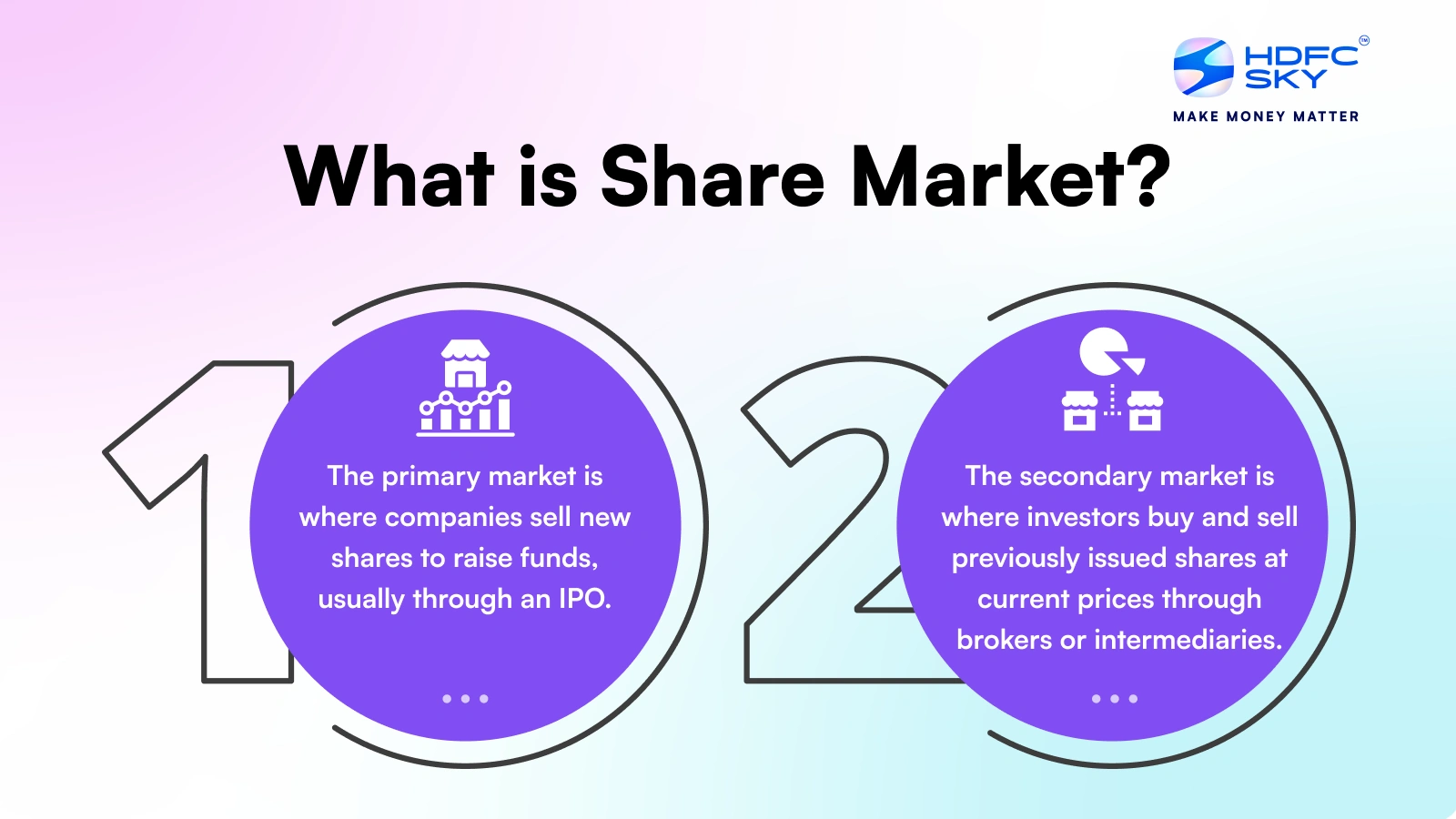
The share market is broadly divided into two segments: the primary market and the secondary market. The primary market is where new securities are issued for the first time. This is where companies raise capital directly from investors through IPOs (Initial Public Offerings) or FPOs (Follow-on Public Offerings). In the primary market, investors buy shares directly from the issuing company or its underwriters. Once shares are sold in the primary market, they can then be traded among investors in the secondary market. This is what most people typically refer to as the “stock market” – where existing shares are bought and sold. Companies do not directly receive money from transactions in the secondary market; instead, the money exchanges hands between investors. The secondary market provides liquidity to investors, allowing them to buy or sell shares at any time, which in turn makes investing in the primary market more attractive.
Factors Influencing Share Prices
Share prices are in a constant state of flux, driven by an intricate web of factors. At a fundamental level, prices are determined by the basic economic principles of supply and demand. If more investors want to buy a particular stock than sell it, its price will typically rise, and vice versa. However, numerous elements influence these supply and demand dynamics:
- Company Performance: Strong financial results (e.g., high revenue growth, increasing profits), positive earnings reports, and robust future outlooks tend to boost share prices. Conversely, poor performance or negative news can lead to declines.
- Economic Indicators: Broader economic health, reflected in metrics like GDP growth, inflation rates, interest rates, and unemployment figures, significantly impacts market sentiment and corporate profitability.
- Industry Trends: Sector-specific developments, technological advancements, regulatory changes, or shifts in consumer preferences can create tailwinds or headwinds for companies within particular industries.
- Geopolitical Events: International conflicts, trade wars, elections, or significant policy changes can introduce uncertainty and volatility across markets.
- Investor Sentiment and News: Market psychology, rumors, and news events (both positive and negative) can trigger rapid price movements, sometimes detached from a company’s underlying fundamentals.
Key Market Participants
The share market is a bustling ecosystem populated by diverse participants, each playing a distinct role:
- Retail Investors: These are individual investors who trade for their own accounts, often with smaller capital. They access the market through brokerage firms.
- Institutional Investors: Large organizations like mutual funds, pension funds, hedge funds, and insurance companies manage vast sums of money and are significant players due to their substantial trading volumes.
- Brokers/Dealers: As mentioned, brokers execute trades on behalf of clients. Dealers trade for their own accounts, often providing liquidity to the market by being willing to buy or sell shares.
- Market Makers: These are financial firms that stand ready to buy or sell a specific stock, providing continuous bid and ask prices. They facilitate trading and ensure market liquidity, profiting from the spread between their buy and sell prices.
- Regulators: Government bodies like the Securities and Exchange Commission (SEC) in the U.S. or SEBI in India oversee the markets, establish rules, and enforce compliance to protect investors and maintain market integrity.
Benefits and Risks: A Balanced Perspective for Investors
Investing in the share market offers compelling opportunities for wealth accumulation, but it is equally crucial to acknowledge and understand the inherent risks involved. A balanced perspective is essential for making informed investment decisions.
The Potential for Wealth Creation
One of the most attractive aspects of the share market is its potential to generate significant wealth over time. This potential manifests in several ways:
- Capital Appreciation: This is the most common way investors profit. If you buy shares of a company and its business grows, becomes more profitable, or gains market share, the demand for its shares may increase, driving up its price. When you sell these shares at a higher price than you bought them, you realize a capital gain.
- Dividends: Many profitable companies share a portion of their earnings with shareholders in the form of regular payments called dividends. These can be a valuable source of recurring income, especially for long-term investors or those seeking passive income streams.
- Compounding: Reinvesting dividends and capital gains allows your earnings to generate further earnings, leading to exponential growth over extended periods. This “power of compounding” is often cited as a cornerstone of long-term wealth building.
- Inflation Hedge: Historically, equity investments have often outperformed inflation, meaning your purchasing power can be preserved or enhanced over time, unlike holding cash which erodes in value due to inflation.
Understanding Inherent Risks
While the upside potential is significant, the share market is not without its perils. Investors must be acutely aware of the risks to avoid substantial losses:

- Market Volatility: Share prices are inherently volatile, meaning they can fluctuate wildly and unpredictably in the short term. Economic news, geopolitical events, company-specific announcements, or shifts in investor sentiment can all trigger sharp movements.
- Company-Specific Risk (Unsystematic Risk): This risk is tied to the performance or specific circumstances of an individual company. Poor management decisions, product failures, legal issues, or competitive pressures can severely impact a company’s stock price, regardless of the broader market.
- Systemic Risk (Market Risk): This refers to the risk of an entire market or financial system collapsing, often due to widespread economic downturns, financial crises, or pandemics. Diversification cannot completely mitigate systemic risk.
- Loss of Capital: Unlike bank deposits, which are often insured, money invested in the share market is not guaranteed. There is a real possibility of losing some or even all of your invested capital, particularly if you invest in speculative stocks or make poor decisions.
Strategies for Risk Mitigation
Successfully navigating the share market requires a robust approach to risk management:
- Diversification: The golden rule of investing. Spreading your investments across different companies, industries, asset classes (e.g., stocks, bonds, real estate), and geographical regions helps reduce company-specific and industry-specific risks. If one investment performs poorly, others may perform well, cushioning the blow.
- Asset Allocation: This strategy involves dividing your investment portfolio among various asset categories (stocks, bonds, cash, etc.) based on your financial goals, time horizon, and risk tolerance. A younger investor with a long time horizon might allocate more to stocks, while someone nearing retirement might favor a more conservative allocation with more bonds.
- Long-Term Perspective: Historically, the share market has shown an upward trend over long periods, despite short-term fluctuations. Adopting a “buy and hold” strategy and resisting the urge to react to every market dip or rise can significantly improve outcomes. Time in the market is often more important than timing the market.
- Thorough Research: Never invest in something you don’t understand. Conduct diligent research into the companies you consider, analyze their financial statements, understand their business models, and stay informed about market conditions.
- Investing within Your Means: Only invest money that you can afford to lose. Avoid using funds earmarked for essential needs, or taking on excessive debt to invest.
Embarking on Your Investment Journey: Practical Steps
For those ready to delve into the share market, a systematic approach is vital. Rushing in without preparation can lead to costly mistakes.
Setting Financial Goals and Assessing Risk Tolerance
Before placing your first trade, it’s crucial to define your financial objectives. Are you saving for retirement, a down payment on a house, your children’s education, or simply aiming for long-term wealth growth? Your goals will dictate your investment horizon and the level of risk you are comfortable taking. Equally important is assessing your “risk tolerance” – your emotional and financial ability to withstand potential losses. Are you comfortable with significant market fluctuations, or do you prefer more stable, albeit potentially lower-return, investments? Understanding your personal risk profile is fundamental, as it influences your asset allocation and investment choices. An honest self-assessment here will prevent panic selling during downturns and help maintain a consistent strategy.
Choosing a Brokerage and Opening an Account
As previously noted, individual investors need a brokerage account to trade in the share market. The choice of brokerage firm is an important one:
- Full-Service Brokers: Offer comprehensive services, including personalized advice, financial planning, and managed portfolios. They typically charge higher fees, often suitable for investors who prefer hands-on guidance.
- Discount Brokers (Online Brokers): Provide a platform for self-directed trading, with lower commissions and fees. They are ideal for investors who are comfortable doing their own research and making their own decisions.
- Platforms and Tools: Evaluate the brokerage’s trading platform, its user-friendliness, the research tools it offers (e.g., market data, analytics, educational resources), and customer support.
- Fees and Commissions: Compare account maintenance fees, trading commissions, and other charges to ensure they align with your trading frequency and budget.
Once chosen, opening an account typically involves providing personal identification, financial information, and funding the account, often through bank transfers.
Essential Research and Analysis Techniques
Informed decision-making is the bedrock of successful investing. Two primary analytical approaches guide investors:
- Fundamental Analysis: This involves evaluating a company’s intrinsic value by examining its financial statements (balance sheet, income statement, cash flow statement), management quality, industry position, competitive advantages, and macroeconomic factors. The goal is to determine if a company’s stock is undervalued or overvalued relative to its true worth. Key metrics include earnings per share (EPS), price-to-earnings (P/E) ratio, debt-to-equity ratio, and revenue growth.
- Technical Analysis: This approach involves studying past market data, primarily price and volume charts, to identify patterns and predict future price movements. Technical analysts believe that all relevant information is already reflected in the stock price, and historical price action can indicate future trends. Tools include moving averages, Bollinger Bands, Relative Strength Index (RSI), and MACD. Technical analysis is often employed by short-term traders, but long-term investors may also use it for timing entry and exit points.
No single method is foolproof, and many investors combine elements of both to gain a comprehensive understanding of their potential investments.
The Share Market’s Role in the Economy
Beyond individual wealth creation, the share market plays a pivotal, often understated, role in the broader economy, serving as a vital engine for growth and development.
Facilitating Capital Formation and Economic Growth
The share market is a primary mechanism for “capital formation” – the process by which a country increases its stock of capital goods. By providing a platform for companies to raise capital from a broad base of investors, the market funnels savings into productive investments. Companies use these funds to expand operations, innovate, develop new products, build infrastructure, and create jobs. This flow of capital is essential for economic growth, fostering entrepreneurship and driving technological advancement. Without a robust share market, businesses would face significant challenges in securing the necessary funding for their ambitions, thereby hindering national economic progress.
Reflecting Economic Health
Often referred to as a “barometer” of the economy, the overall performance of the share market is generally seen as an indicator of investor confidence and the health of the corporate sector. When the market is bullish (prices are rising), it often signals optimism about future economic growth, corporate earnings, and stable geopolitical conditions. Conversely, a bearish market (prices falling) can reflect concerns about recession, inflation, or geopolitical instability. While the market can sometimes be disconnected from real economic conditions in the short term due to speculative bubbles or emotional reactions, over the long run, it tends to track the underlying economic trajectory. Governments and central banks often monitor market trends as a data point in formulating economic policies.
Regulatory Framework and Investor Protection
Given the immense sums of money involved and the potential for abuse, the share market operates under strict regulatory frameworks. Regulatory bodies, such as the Securities and Exchange Commission (SEC) in the United States, the Financial Conduct Authority (FCA) in the UK, or SEBI in India, are tasked with ensuring market integrity, transparency, and fairness. Their responsibilities include:
- Protecting Investors: Establishing rules to prevent fraud, manipulation, and insider trading.
- Ensuring Transparency: Mandating public disclosure of financial information by listed companies, so investors have access to critical data.
- Maintaining Orderly Markets: Overseeing exchanges, brokers, and other participants to ensure efficient and fair trading practices.
- Enforcing Compliance: Investigating violations and imposing penalties to uphold market rules.
These regulations are crucial for building and maintaining investor trust, which is fundamental to the continued functioning and growth of the share market. Without a strong regulatory environment, market participants would be exposed to unacceptable levels of risk, potentially leading to instability and a decline in public participation.

Conclusion
The share market is a powerful and dynamic force, central to both individual financial aspirations and broader economic prosperity. It is a sophisticated platform where the ownership stakes of companies are traded, facilitating capital formation, stimulating economic growth, and offering investors the compelling prospect of wealth creation. From understanding what a share fundamentally represents to deciphering the intricate interplay of primary and secondary markets, and from acknowledging the twin aspects of potential gains and inherent risks, a holistic perspective is essential.
While the allure of substantial returns can be strong, successful participation in the share market hinges on diligent research, a clear understanding of personal financial goals, prudent risk management through diversification, and a commitment to a long-term, informed strategy. It is not a get-rich-quick scheme but a vehicle for patient and disciplined wealth accumulation. For anyone looking to invest, the journey begins with education and a profound respect for the market’s complexities. By approaching it with knowledge, caution, and a well-defined plan, individuals can leverage the share market’s immense potential to achieve their financial aspirations and contribute, however indirectly, to the engines of global economic progress.
aViewFromTheCave is a participant in the Amazon Services LLC Associates Program, an affiliate advertising program designed to provide a means for sites to earn advertising fees by advertising and linking to Amazon.com. Amazon, the Amazon logo, AmazonSupply, and the AmazonSupply logo are trademarks of Amazon.com, Inc. or its affiliates. As an Amazon Associate we earn affiliate commissions from qualifying purchases.