
The world of stock market investing can seem daunting at first glance, a complex labyrinth of charts, jargon, and financial news that often feels inaccessible to the uninitiated. Yet, for many, it represents one of the most powerful avenues for wealth creation, a pathway to securing financial independence and achieving long-term monetary goals. If you’ve ever pondered “how can I start buying stocks?”, you’re asking a fundamental question that signals a readiness to take control of your financial future. This guide is designed to demystify the process, providing a clear, step-by-step roadmap for beginners to confidently enter the stock market and begin their investment journey. By understanding the basics, preparing strategically, and making informed decisions, you can transform the intimidating into an empowering opportunity.
Laying the Foundation: Understanding the Stock Market Basics
Before you jump into buying your first stock, it’s crucial to grasp the fundamental concepts that govern the stock market. A solid understanding of these building blocks will not only boost your confidence but also help you make more informed and strategic investment decisions.
What is a Stock?
At its core, a stock (also known as equity) represents a small ownership stake in a public company. When you buy a share of stock, you become a part-owner of that company. This ownership stake, however small, grants you certain rights, such as voting on company matters (in some cases) and potentially sharing in the company’s profits through dividends. Companies issue stocks to raise capital, which they then use to expand operations, develop new products, or repay debts. The value of a stock can fluctuate based on a multitude of factors, including the company’s performance, industry trends, economic conditions, and overall market sentiment. This fluctuation is precisely where the potential for profit (and risk of loss) lies.
Why Invest in Stocks?
Investing in stocks offers several compelling advantages for long-term wealth building. Historically, the stock market has demonstrated a strong track record of outperforming other asset classes like bonds or savings accounts over extended periods, making it a powerful hedge against inflation. Inflation erodes the purchasing power of your money over time, and a well-performing stock portfolio can help your money grow faster than the rate of inflation. Beyond capital appreciation (the increase in the stock’s price), many companies also distribute a portion of their earnings to shareholders in the form of dividends. These dividends can provide a regular income stream or be reinvested to buy more shares, further accelerating your wealth accumulation through the power of compounding. Investing in stocks also allows you to participate in the growth and innovation of successful companies and industries, directly benefiting from economic progress.
Key Terminology for Beginners
Navigating the stock market requires familiarity with some essential terminology. While the list can seem endless, understanding a few core terms will go a long way:
- ETFs (Exchange-Traded Funds): These are baskets of various stocks (or other assets) that trade like individual stocks on an exchange. ETFs offer instant diversification, as a single ETF share might give you exposure to hundreds or thousands of underlying companies. They are often recommended for beginners due to their simplicity and lower risk compared to individual stocks.
- Mutual Funds: Similar to ETFs, mutual funds pool money from multiple investors to invest in a diversified portfolio of securities. However, they are typically managed by a professional fund manager and are bought or sold at the end of the trading day based on their Net Asset Value (NAV).
- Dividends: A portion of a company’s earnings paid out to its shareholders, usually on a quarterly basis.
- Capital Gains: The profit you make when you sell an investment for more than you paid for it.
- Market Volatility: Refers to the rate at which the price of a security (or market index) increases or decreases. High volatility means prices fluctuate wildly, while low volatility means prices are relatively stable. Understanding volatility is key to managing risk.
- Diversification: The strategy of spreading your investments across various assets, industries, and geographies to reduce risk. The adage “don’t put all your eggs in one basket” perfectly encapsulates this principle.
Preparing for Your Investment Journey
Before you even think about opening a brokerage account, it’s vital to lay a strong personal financial groundwork. This preparatory phase ensures that your investment decisions are sound, sustainable, and aligned with your broader financial well-being. Rushing into the market without this foundation can expose you to unnecessary risk and stress.
Define Your Financial Goals
Every investment decision should be tethered to a clear financial goal. Are you saving for a comfortable retirement three decades from now? Do you aim to make a down payment on a house in five years? Or perhaps you’re looking to save for your child’s education? Your goals will significantly influence your investment strategy, including the types of assets you choose, your risk tolerance, and your investment horizon. Long-term goals, for instance, typically allow for a greater allocation to potentially higher-growth, higher-volatility assets like stocks, as there’s more time to recover from market downturns. Short-term goals, conversely, often necessitate a more conservative approach to preserve capital. Clearly articulating these goals will provide direction and keep you disciplined, especially during market fluctuations.
Assess Your Risk Tolerance
Risk tolerance is your psychological and financial capacity to endure market volatility and potential losses without panicking or deviating from your investment plan. It’s a deeply personal metric. Someone with a high-risk tolerance might be comfortable with significant fluctuations in their portfolio value in pursuit of higher returns, while someone with a low-risk tolerance might prioritize capital preservation, even if it means lower potential returns. Consider your age, income stability, financial dependents, and comfort level with uncertainty. A young investor with a stable job and many years until retirement might have a higher risk tolerance than someone nearing retirement with limited savings. It’s crucial to be honest with yourself about this; investing beyond your comfort zone often leads to impulsive, costly decisions.
Build an Emergency Fund
This step is non-negotiable before you begin investing. An emergency fund is a readily accessible pool of savings, typically held in a high-yield savings account, sufficient to cover 3 to 6 months (or even more) of essential living expenses. Its purpose is to act as a financial safety net for unexpected events like job loss, medical emergencies, or significant home/car repairs. Investing money that you might need in the short term is perilous. If an emergency arises and your investments are down, you might be forced to sell them at a loss, thus undermining your long-term goals. An emergency fund provides peace of mind and ensures that your investment capital can remain untouched, allowing it to grow over time.
Research and Educate Yourself
The stock market is a dynamic environment, and continuous learning is paramount for successful investing. Don’t rely solely on sensational headlines or hot tips. Dedicate time to educating yourself through reputable sources. Read books on personal finance and investing (e.g., “The Intelligent Investor” by Benjamin Graham, “A Random Walk Down Wall Street” by Burton Malkiel). Follow respected financial news outlets and websites that provide unbiased analysis. Many online brokers offer free educational resources, webinars, and tutorials. Consider courses from accredited institutions or consult with a fee-only financial advisor who can offer personalized guidance tailored to your situation. The more you understand, the better equipped you’ll be to make informed decisions and avoid common pitfalls.
Opening an Investment Account
Once you’ve established your financial goals, assessed your risk tolerance, built an emergency fund, and armed yourself with basic knowledge, the next practical step is to open an investment account. This account will be your gateway to the stock market, allowing you to buy, sell, and manage your investments.
Choosing the Right Brokerage Account
Your first decision will be selecting the type of investment account that best suits your needs. The primary options include:
- Taxable Brokerage Accounts: These are flexible accounts that don’t have contribution limits and allow you to withdraw funds at any time. However, any capital gains or dividends earned are subject to taxation in the year they are realized.
- Retirement Accounts (IRAs, Roth IRAs, 401(k)s): These accounts offer significant tax advantages, such as tax-deferred growth (Traditional IRA/401(k)) or tax-free withdrawals in retirement (Roth IRA). They often come with contribution limits and rules regarding withdrawals. For beginners focused on long-term wealth building for retirement, these are often the most advantageous starting points.
- Custodial Accounts (e.g., UGMA/UTMA): Designed for investing for minors, these accounts are managed by an adult on behalf of a child.
Next, you’ll need to choose a brokerage firm. These are financial institutions that facilitate the buying and selling of securities. Today, the landscape is dominated by online brokers, which offer low fees and user-friendly platforms, making them ideal for beginners.
Key Factors When Selecting a Broker
When evaluating online brokerage firms, consider the following:
- Fees and Commissions: Many brokers now offer commission-free trading for stocks and ETFs. However, be aware of other potential fees, such as account maintenance fees, inactivity fees, or fees for mutual funds.
- Platform Features and User Experience: A good platform should be intuitive and easy to navigate, especially for beginners. Look for clear dashboards, simple order entry, and a robust mobile app if you plan to trade on the go.
- Research Tools and Educational Resources: Top-tier brokers offer extensive research reports, market analysis, screening tools, and educational content that can be invaluable for new investors.
- Investment Options: Ensure the broker offers access to the types of investments you’re interested in, whether it’s individual stocks, ETFs, mutual funds, or other asset classes.
- Customer Service: Responsive and helpful customer support (via phone, chat, or email) is crucial, especially when you’re just starting out and may have many questions.
- Minimum Deposit: Some brokers require a minimum initial deposit, though many popular platforms now have no minimums, making them accessible to investors with smaller starting capital.
The Account Opening Process
Opening an account with an online broker is typically a straightforward process:
- Application: You’ll fill out an online application providing personal information (name, address, date of birth, Social Security number).
- Identity Verification: You’ll usually need to upload copies of identification documents, like a driver’s license or passport.
- Investment Profile: The broker will ask questions about your income, net worth, and investment goals to help assess your risk tolerance and ensure suitable investments.
- Funding Your Account: Once approved, you’ll need to deposit money into your account. Common methods include:
- ACH Transfer: Electronically linking your bank account (most common and usually free).
- Wire Transfer: Faster but often involves fees.
- Check Deposit: Slower process.
- Rollover: Transferring funds from an existing retirement account.
Ensure your chosen funding method is secure and convenient. Once funds are settled, you’re ready to make your first investment.

Making Your First Stock Purchase
With your account open and funded, the moment you’ve been preparing for has arrived: making your first actual investment. This step can feel exhilarating, but it’s important to approach it with a clear strategy and an understanding of execution mechanics.
Deciding What to Buy: Individual Stocks vs. Diversified Funds
For beginners, the question of what to buy is paramount. While the allure of picking the next Amazon or Tesla is strong, investing in individual stocks comes with significant risk. A single company’s performance can be volatile, and a poor choice can lead to substantial losses if your entire portfolio is tied to it.
Therefore, for most new investors, the recommendation is to start with diversified funds like Exchange-Traded Funds (ETFs) or mutual funds. These funds automatically spread your investment across dozens, hundreds, or even thousands of underlying companies. For example, an S&P 500 index ETF gives you exposure to the 500 largest U.S. companies, instantly diversifying your risk across various sectors and industries. This strategy dramatically reduces the impact of any single company performing poorly and provides a more stable growth trajectory. It aligns perfectly with the principle of diversification and minimizes the need for extensive individual company research.
As you gain experience and confidence, you might gradually introduce a small portion of your portfolio to individual stocks you’ve thoroughly researched and believe in.
Understanding Order Types
When you decide to buy, you’ll encounter different “order types” on your brokerage platform. The two most common for beginners are:
- Market Order: This is the simplest and most common order type. A market order instructs your broker to buy (or sell) shares immediately at the best available current market price. While it guarantees execution, the exact price you pay might fluctuate slightly from the moment you place the order, especially in fast-moving markets.
- Limit Order: A limit order allows you to specify the maximum price you’re willing to pay for a stock (or the minimum price you’re willing to sell it for). Your order will only be executed if the stock’s price reaches your specified limit or better. Limit orders offer more control over the price but don’t guarantee immediate execution; if the stock never reaches your limit price, your order won’t be filled. For beginners buying broad-market ETFs, a market order is often sufficient, but for individual stocks, a limit order can be a prudent way to avoid overpaying.
Executing Your Trade
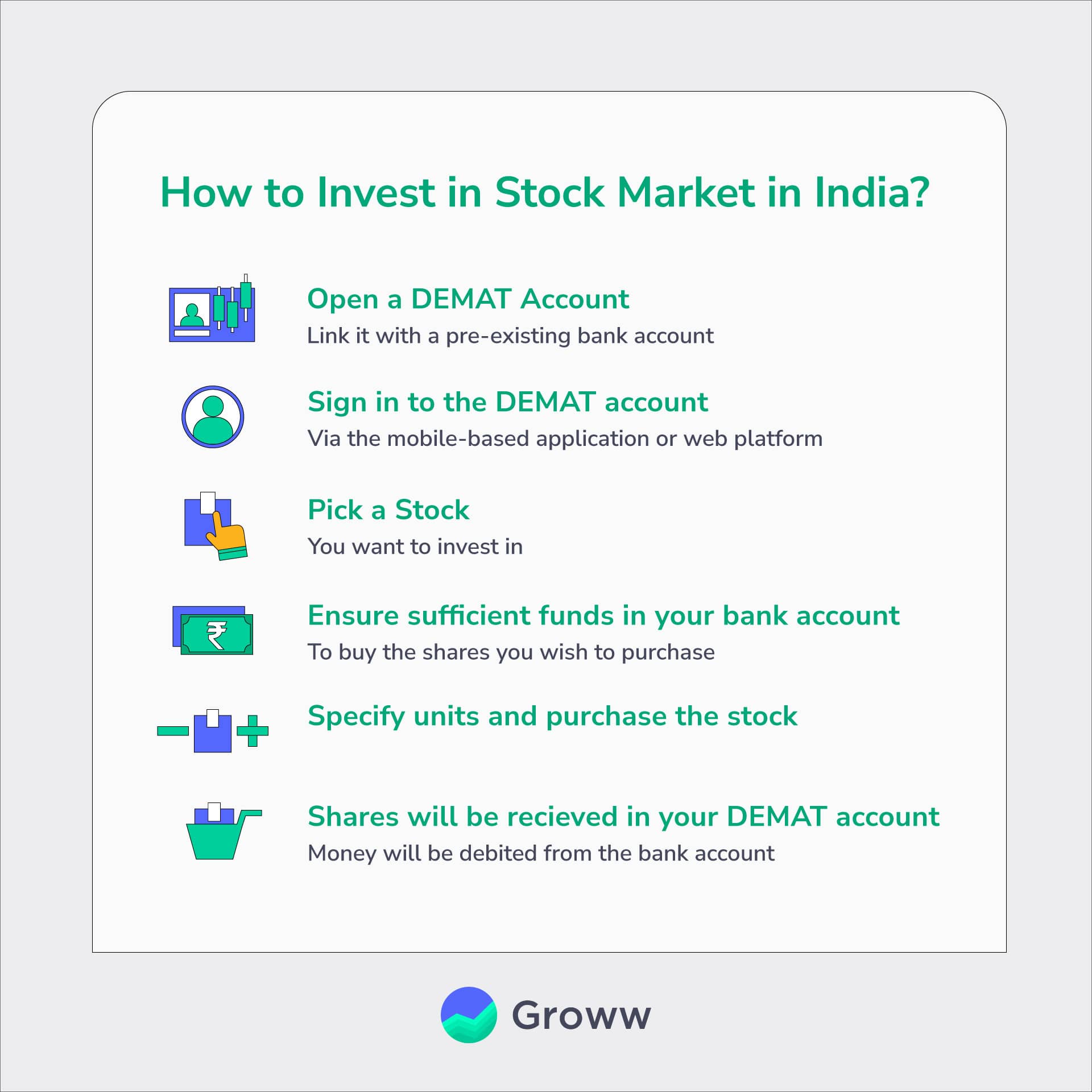
On your brokerage platform, the process generally follows these steps:
- Search: Use the search bar to find the ticker symbol (e.g., SPY for an S&P 500 ETF, AAPL for Apple) of the stock or ETF you wish to buy.
- Select “Buy”: Click the “Buy” button.
- Enter Details: Specify the number of shares you want to purchase or the dollar amount you wish to invest (some brokers offer fractional shares, allowing you to invest a specific dollar amount rather than buying whole shares).
- Choose Order Type: Select “Market Order” or “Limit Order” (and specify the limit price if applicable).
- Review and Confirm: Carefully review all the details of your order – the ticker, number of shares/amount, order type, and estimated cost – before submitting.
- Place Order: Click “Place Order” or “Submit Trade.”
Once your order is executed, you’ll typically receive a confirmation, and the shares will appear in your portfolio within your brokerage account.
Starting Small and Gradually
Don’t feel pressured to invest a large sum right away. Starting small, even with a few hundred dollars, is a perfectly valid and often recommended approach for beginners. It allows you to gain experience, understand market mechanics, and get comfortable with your brokerage platform without taking on excessive risk.
Consider employing a strategy called dollar-cost averaging (DCA). This involves investing a fixed amount of money at regular intervals (e.g., $100 every month) regardless of the stock’s price. When prices are high, your fixed dollar amount buys fewer shares; when prices are low, it buys more shares. Over time, this strategy helps average out your purchase price, reduces the risk of trying to “time the market” (buying at the absolute low), and fosters a disciplined investing habit.
Ongoing Management and Long-Term Strategies
Making your first purchase is just the beginning. Successful investing is a marathon, not a sprint, requiring continuous learning, disciplined management, and a long-term perspective. Your portfolio needs regular attention and adherence to proven strategies to maximize returns and mitigate risk.
Diversification is Key to Risk Management
We touched upon diversification earlier, but its importance cannot be overstated. Relying on a single stock or even a single industry exposes you to significant unsystematic risk – the risk specific to that particular company or sector. To truly diversify, you should aim to spread your investments across:
- Different Asset Classes: Beyond stocks, consider bonds, real estate, or commodities (though often through funds).
- Various Industries/Sectors: Don’t put all your money into tech, or healthcare, or energy.
- Different Geographies: While U.S. stocks are often a core holding, international exposure can offer additional diversification benefits.
- Company Sizes: Mix large-cap (established companies), mid-cap, and small-cap companies.
ETFs and mutual funds are excellent tools for achieving broad diversification easily, especially for new investors. A diversified portfolio is more resilient to market downturns and the inevitable ups and downs of individual investments, contributing to smoother, more consistent long-term growth.
Regular Portfolio Review and Rebalancing
Your investment journey isn’t a “set it and forget it” endeavor. While you shouldn’t obsess over daily fluctuations, a periodic review of your portfolio (e.g., annually or semi-annually) is essential. During this review:
- Check Performance: How have your investments performed relative to your goals and benchmarks?
- Reassess Goals and Risk Tolerance: Have your financial goals changed? Has your personal situation or risk tolerance evolved?
- Rebalance Your Portfolio: Over time, some investments will perform better than others, causing your asset allocation to drift from your target. Rebalancing involves selling some of your outperforming assets and buying more of your underperforming ones to bring your portfolio back to your desired allocation. For example, if you aimed for 80% stocks and 20% bonds, and stocks have surged to 90%, you’d sell some stocks and buy bonds to restore the 80/20 split. This strategy helps you “buy low and sell high” systematically and maintain your desired risk level.
- Stay Informed: Keep abreast of broader economic trends, market news, and any significant developments concerning the companies or funds you own. This doesn’t mean reacting to every headline, but understanding the larger context.
The Power of Long-Term Investing and Compounding
Perhaps the most crucial lesson for new investors is the immense power of long-term investing and compounding. Compounding is the process where the returns on your investments themselves start earning returns. When you reinvest dividends or capital gains, your capital base grows, and subsequent returns are calculated on that larger base. This snowball effect is incredibly powerful over decades.
Short-term market fluctuations, often referred to as “noise,” are largely irrelevant to a long-term investor. Trying to time the market – buying before it goes up and selling before it goes down – is notoriously difficult, even for professionals, and often leads to worse returns than simply staying invested. Adopting a buy-and-hold strategy, weathering market downturns, and consistently contributing to your investments will, historically, yield the best results. Patience and discipline are your greatest allies.
Avoiding Common Beginner Mistakes
As you embark on this journey, be mindful of common pitfalls:
- Panic Selling: Reacting emotionally to market drops by selling all your investments at a loss. Downturns are a normal part of the market cycle and often present buying opportunities.
- Chasing Hot Stocks/Trends: Buying into popular stocks without proper research, often after they’ve already had significant gains.
- Over-Leveraging: Investing with borrowed money (margin), which amplifies both gains and losses. This is highly risky for beginners.
- Neglecting Diversification: Putting too much money into a single company or sector.
- Lack of Emergency Fund: Being forced to sell investments prematurely due to unforeseen expenses.
By understanding these mistakes, you can actively work to avoid them and maintain a more rational and successful approach to investing.

Conclusion
Starting to buy stocks is a significant step towards building long-term wealth and securing your financial future. While the initial learning curve might seem steep, breaking down the process into manageable steps makes it accessible to anyone willing to put in the effort. Remember, it begins with understanding the basics of what a stock is and why investing matters. From there, you must prepare your personal finances by defining your goals, assessing your risk tolerance, and building a robust emergency fund, all while continuously educating yourself.
The practical steps involve carefully selecting and opening the right brokerage account, considering factors like fees, features, and customer service. When making your first purchase, prioritize diversified funds like ETFs to minimize risk, and always review your orders before execution. Finally, understand that investing is a journey, not a destination. Ongoing management through regular portfolio reviews, disciplined rebalancing, and a steadfast commitment to long-term compounding are what truly drive success. By embracing patience, avoiding common pitfalls, and committing to continuous learning, you’ll be well on your way to confidently navigating the stock market and achieving your financial aspirations. The best time to start investing was yesterday; the second best time is today.
aViewFromTheCave is a participant in the Amazon Services LLC Associates Program, an affiliate advertising program designed to provide a means for sites to earn advertising fees by advertising and linking to Amazon.com. Amazon, the Amazon logo, AmazonSupply, and the AmazonSupply logo are trademarks of Amazon.com, Inc. or its affiliates. As an Amazon Associate we earn affiliate commissions from qualifying purchases.