
Every entrepreneur dreams of growth. The expansion of reach, the increase in revenue, the solidification of market presence – these are the hallmarks of a thriving enterprise. Yet, the path to sustainable business growth is rarely linear and almost always complex. While various factors contribute to success, at its core, business growth is a financial endeavor. It demands astute financial planning, strategic investment, disciplined management of resources, and an unwavering focus on profitability and long-term value creation. This article delves into the critical monetary strategies and financial insights essential for propelling your business forward, ensuring that expansion is not just rapid, but also robust and resilient.
Fortifying Your Financial Foundations
Sustainable growth begins with an unshakeable financial bedrock. Without a clear understanding of your current financial state and a meticulous plan for its future, any growth efforts risk being built on sand.
The Imperative of Detailed Financial Planning and Budgeting
Growth is an expensive proposition, requiring investment in resources, marketing, and often, talent. A comprehensive financial plan is your roadmap. It quantifies your goals, projects revenue and expenses, and identifies potential funding gaps. Budgeting, in turn, is the ongoing process of allocating financial resources to achieve these goals efficiently.
Start by creating detailed annual and quarterly budgets that encompass all operational costs, marketing expenditures, R&D, and administrative overhead. Project your sales based on realistic market analysis and historical data. Regularly compare actual performance against your budget to identify variances and take corrective action. A robust budget acts as a financial constraint, ensuring spending is aligned with strategic priorities and preventing overextension, which is a common pitfall for growing businesses. Furthermore, consider different growth scenarios in your planning – what if sales exceed expectations, or what if they fall short? Scenario planning provides agility and prepares you for various economic landscapes.
Understanding and Optimizing Cash Flow Cycles
Cash flow is the lifeblood of any business. Profitability on paper doesn’t guarantee liquidity, and without sufficient cash, a growing business can quickly face insolvency. Optimizing your cash flow involves accelerating receivables (getting paid faster), managing payables strategically (paying vendors within terms but not prematurely), and minimizing unnecessary inventory or operational bottlenecks that tie up capital.
Analyze your cash conversion cycle – the time it takes to convert investments in inventory and accounts receivable back into cash. Shorter cycles are indicative of better liquidity management. Implement efficient invoicing systems, offer early payment discounts, and consider factoring or invoice financing if short-term liquidity is a consistent challenge. Conversely, negotiate favorable payment terms with suppliers and manage inventory levels meticulously to avoid tying up capital in stagnant stock. Effective cash flow management ensures you have the necessary funds to meet payroll, invest in growth opportunities, and weather unexpected financial storms.
Strategic Debt Management and Capital Structuring
As businesses grow, they often require external capital. This could be in the form of debt (loans, lines of credit) or equity (investment from partners, venture capitalists). Understanding the implications of each and managing them strategically is crucial. Debt can provide necessary capital without diluting ownership, but it comes with repayment obligations and interest. Equity provides capital and often expertise, but at the cost of giving up a share of your company.
Evaluate your debt-to-equity ratio regularly. A healthy balance ensures you can leverage borrowed funds without overburdening your business with excessive interest payments. When taking on debt, choose instruments with favorable terms, manageable repayment schedules, and competitive interest rates. Consider government-backed loans or small business administration programs which often offer more flexible terms. For equity, carefully assess potential investors beyond their capital contribution – do they bring strategic value, network connections, or industry expertise? Properly structured capital ensures you have the necessary funds for expansion without compromising the long-term financial health or control of your business.
Unlocking Revenue Generation and Expansion
While managing finances is crucial, growth ultimately requires increasing your top line. This means not just getting more customers, but optimizing how you generate revenue from them and how you expand your operational reach.
Diversifying and Expanding Income Streams
Relying on a single product, service, or customer segment can be risky. Diversifying income streams builds resilience and unlocks new avenues for growth. This could involve developing complementary products or services, targeting new customer demographics, expanding into new geographical markets, or even exploring licensing and partnership models.
For example, a product-based business might introduce subscription services or offer premium versions. A service-based business could create digital products (eBooks, online courses) based on their expertise. Before diversifying, conduct thorough market research to ensure there’s demand and that the new stream aligns with your core competencies. Analyze the potential ROI and the resources required. Diversification should be a strategic move to broaden your market appeal and mitigate risks, not a scattershot approach that dilutes focus.
Dynamic Pricing Strategies for Profit Maximization
Pricing is arguably the most powerful lever for profitability. Setting the right price isn’t just about covering costs; it’s about capturing value, influencing demand, and reflecting your brand’s position in the market. Growth-oriented pricing strategies can include value-based pricing (charging what customers perceive the value to be), competitive pricing, premium pricing, or even tiered pricing models that cater to different customer segments.
Regularly review and adjust your pricing based on market conditions, competitor actions, production costs, and customer feedback. Consider implementing dynamic pricing, especially for online businesses, where prices can be adjusted in real-time based on demand, inventory levels, and other factors. Small adjustments in pricing can have a disproportionately large impact on your profit margins and, by extension, your capacity for reinvestment and growth. Don’t be afraid to test different price points and analyze the impact on sales volume and overall revenue.
Scaling Operations with Financial Prudence
Scaling your business means increasing output or service delivery without a proportional increase in costs, thereby improving efficiency and profitability. This requires careful financial planning to ensure that growth doesn’t erode margins. Before scaling, analyze your existing processes for bottlenecks and inefficiencies. Can you automate tasks, outsource non-core functions, or leverage technology to increase capacity without significantly increasing headcount?
Invest in infrastructure that supports future growth, whether it’s more robust IT systems, larger production facilities, or a stronger supply chain. However, ensure these investments are justified by projected returns. Consider variable cost models where possible, such as cloud computing services, which scale with your usage, rather than large fixed upfront investments. Growth should be profitable; therefore, every scaling decision must be evaluated through a financial lens, ensuring that increased revenue translates into increased net profit.
Intelligent Investment for Long-Term Value
Growth requires strategic investment. It’s not enough to generate revenue; a portion of that revenue must be intelligently redeployed into areas that promise future returns.
Reinvesting Profits for Sustainable Growth

One of the most effective ways to fuel growth is to reinvest your earned profits back into the business. This could mean allocating funds to research and development for new products, expanding your marketing reach, upgrading technology, or investing in employee training and development. The key is to be strategic about where you reinvest.
Prioritize investments that align with your long-term vision and offer the highest potential ROI. For instance, investing in customer relationship management (CRM) software can improve customer retention and lifetime value. Investing in automation can reduce operational costs over time. Marketing investments that target high-value customer segments can generate substantial new revenue. Regularly evaluate the performance of your reinvestments to ensure they are yielding the desired results and adjust your strategy as needed. This self-funding mechanism is a powerful engine for organic, sustainable growth, reducing reliance on external capital.
Navigating External Funding: Loans, Equity, and Grants
When internal profits aren’t sufficient, external funding becomes necessary. As discussed, traditional bank loans and lines of credit are common for established businesses with strong credit. For startups or businesses with high growth potential, equity financing from angel investors or venture capitalists might be more suitable, often bringing not just capital but also valuable mentorship and connections.
Grants, often from government agencies or foundations, can be an excellent source of non-dilutive funding, especially for businesses involved in innovation, social impact, or specific industries. However, grants typically come with strict eligibility criteria and reporting requirements. Thoroughly research and prepare compelling proposals for each type of funding. Understand the terms, implications for ownership, and repayment schedules before committing. Securing the right type of external funding at the right stage of your business is a critical growth enabler.
Investing in Human Capital and Essential Assets
Your employees are your most valuable asset. Investing in their training, development, and well-being directly contributes to increased productivity, innovation, and customer satisfaction, all of which fuel financial growth. This includes competitive compensation, benefits, professional development opportunities, and fostering a positive work environment.
Beyond human capital, strategic investment in physical and intellectual assets is vital. This could mean acquiring new equipment to increase production capacity, investing in patented technologies, or purchasing real estate that reduces long-term operational costs. Evaluate these investments based on their contribution to efficiency, competitive advantage, and long-term value creation. Avoid impulsive purchases and ensure every significant asset acquisition has a clear financial justification and a projected return.
Harnessing Financial Technology and Analytics
In the modern business landscape, technology is an indispensable partner in managing finances and driving growth. Leveraging the right tools and analytical approaches can provide unparalleled insights and efficiency.
The Power of Modern Accounting and ERP Systems
Gone are the days of manual ledgers. Modern accounting software (e.g., QuickBooks, Xero) and Enterprise Resource Planning (ERP) systems (e.g., SAP, Oracle, NetSuite) automate financial record-keeping, streamline invoicing, payroll, and expense management. Beyond basic functions, these systems offer real-time insights into your financial performance, allowing for quicker, more informed decision-making.
As your business grows, an integrated ERP system can unify various functions – finance, operations, sales, inventory, and HR – providing a holistic view of your business. This integration reduces data silos, improves data accuracy, and enhances efficiency across departments, ultimately saving time and money and supporting seamless scaling. Investing in the right financial tech stack is an investment in your business’s operational intelligence and agility.
Data-Driven Decision Making through Financial Metrics
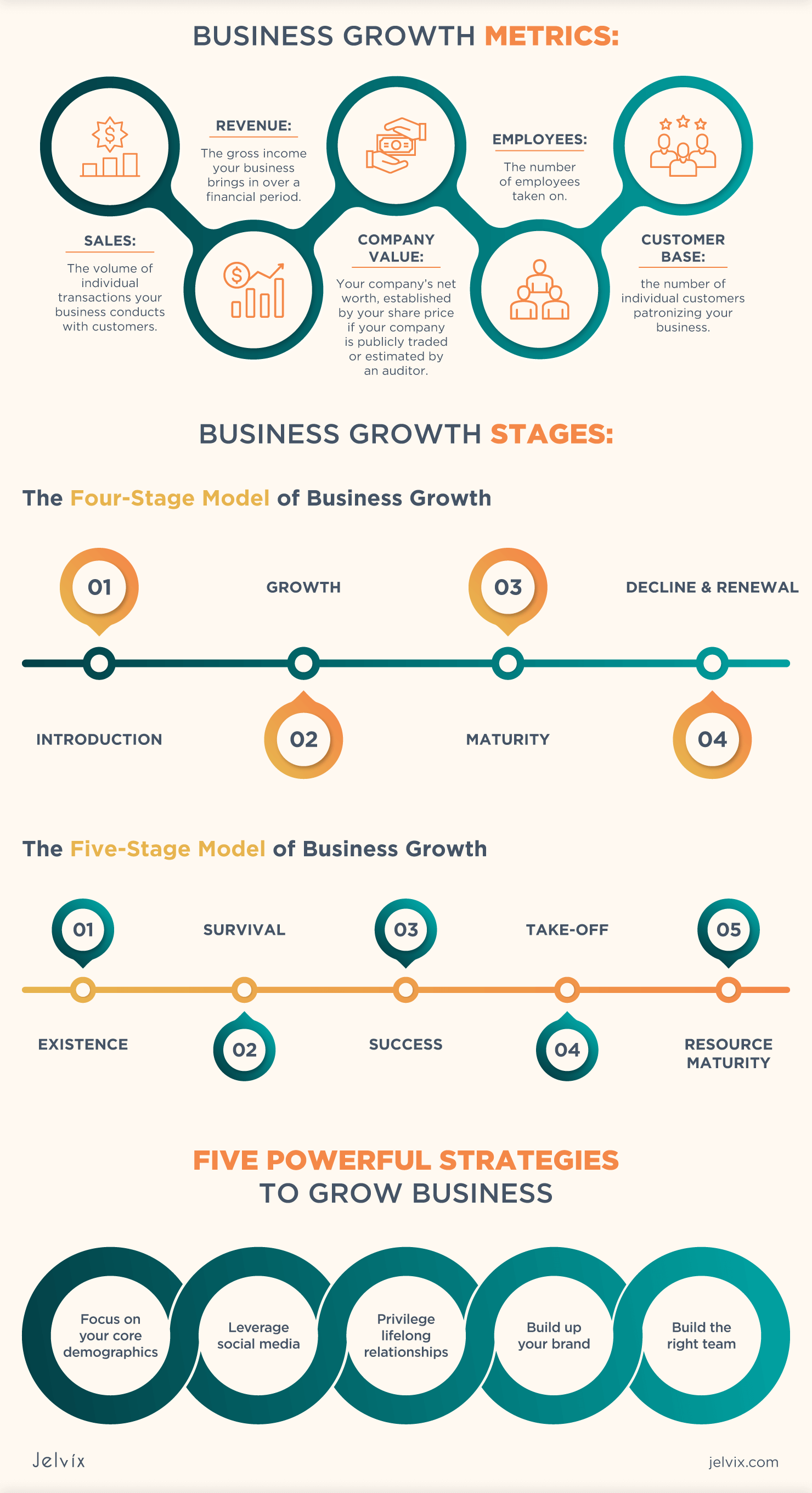
Growth is measurable. By tracking key financial performance indicators (KPIs), businesses can objectively assess their progress, identify areas for improvement, and make data-driven decisions. Beyond basic revenue and profit, track metrics like customer acquisition cost (CAC), customer lifetime value (CLTV), churn rate, gross margin, net profit margin, return on investment (ROI) for marketing campaigns, and working capital ratios.
Regularly analyze these metrics to understand trends, identify underperforming areas, and pinpoint opportunities for optimization. For example, if your CAC is rising while CLTV remains stagnant, you might need to re-evaluate your marketing spend or customer retention strategies. Data analytics empowers you to move beyond guesswork, making your growth strategies more precise and effective.
Proactive Financial Risk Management and Forecasting
Growth inevitably introduces new risks, from market volatility and increased competition to operational complexities and cash flow pressures. Proactive financial risk management involves identifying, assessing, and mitigating these potential threats. This includes maintaining adequate cash reserves, diversifying investments, securing appropriate insurance, and establishing strong internal controls to prevent fraud.
Financial forecasting is a critical component of risk management. By projecting future revenues, expenses, and cash flow, you can anticipate potential shortfalls or surpluses, allowing you to plan accordingly. Utilize sophisticated forecasting models that incorporate various market scenarios and economic indicators. Accurate forecasting enables you to secure funding proactively, adjust operational plans, and ensure you are financially prepared for both opportunities and challenges.
Cultivating a Growth-Orientated Financial Culture
Ultimately, sustained business growth is not just about strategies and tools; it’s about embedding a financial growth mindset into the very fabric of your organization.
Continuous Financial Education and Adaptability
The financial landscape is constantly evolving, with new regulations, market shifts, and technological advancements. Business leaders and their teams must commit to continuous financial education and adaptability. This means staying abreast of economic trends, understanding tax implications, and being open to adjusting financial strategies in response to changing circumstances.
Encourage financial literacy across your organization, not just among your finance team. When employees understand the financial impact of their decisions, they are more likely to contribute to cost savings and revenue generation. A culture of learning ensures your business remains agile and informed, capable of navigating complexities and seizing new financial opportunities for growth.
Building Robust Financial Partnerships
Your financial ecosystem extends beyond your internal team. Cultivating strong relationships with external financial partners – banks, accountants, financial advisors, and potential investors – is paramount. A trusted banker can provide vital credit lines and financial advice. An expert accountant or CFO can ensure compliance, optimize tax strategies, and offer strategic insights.
These partnerships provide external perspectives, specialized expertise, and access to capital and networks that are critical for growth. Don’t view these relationships as purely transactional; nurture them. Regular communication and transparency can lead to invaluable support, especially during periods of rapid growth or unexpected challenges.
Planning for Long-Term Sustainability and Exit Value
True business growth isn’t just about maximizing short-term gains; it’s about building a sustainable entity that can create long-term value for its founders, employees, and stakeholders. From day one, think about the ultimate trajectory of your business. Is it to be passed down, sold, or taken public?
Even if an exit is years away, understanding how your financial decisions today impact future valuation is crucial. Focus on building strong assets, repeatable revenue streams, clear financial records, and a solid management team. These factors significantly contribute to the attractiveness and value of your business to future investors or buyers. Planning for long-term sustainability involves making fiscally responsible choices that protect and enhance the business’s intrinsic value, ensuring that growth is not just achieved but endures.
By meticulously focusing on these financial aspects – from foundational planning and revenue generation to intelligent investment, technological leverage, and a strategic growth culture – businesses can chart a definitive course toward sustainable and impactful growth, transforming ambition into tangible success.
aViewFromTheCave is a participant in the Amazon Services LLC Associates Program, an affiliate advertising program designed to provide a means for sites to earn advertising fees by advertising and linking to Amazon.com. Amazon, the Amazon logo, AmazonSupply, and the AmazonSupply logo are trademarks of Amazon.com, Inc. or its affiliates. As an Amazon Associate we earn affiliate commissions from qualifying purchases.