
For countless small businesses across America, access to capital is the lifeblood that fuels growth, innovation, and job creation. While traditional bank loans can be elusive for startups or companies without extensive collateral, U.S. Small Business Administration (SBA) loans offer a powerful alternative. These government-backed loans provide favorable terms, lower interest rates, and longer repayment periods, making them an attractive option for entrepreneurs seeking to launch, expand, or stabilize their ventures. However, the path to securing an SBA loan isn’t always straightforward. It requires careful preparation, a thorough understanding of the process, and meticulous documentation. This comprehensive guide will demystify the journey, offering a step-by-step roadmap to successfully obtaining an SBA loan and unlocking your business’s full potential.
Understanding SBA Loans: More Than Just a Government Handout
Before diving into the application specifics, it’s crucial to grasp the fundamental nature of SBA loans. Often misunderstood as direct government grants, these are, in fact, commercial loans issued by conventional lenders (banks, credit unions, online lenders) but partially guaranteed by the SBA. This government guarantee significantly reduces the risk for lenders, making them more willing to provide financing to small businesses that might not otherwise qualify for traditional loans.
What the SBA Does (Guarantees, Not Lends Directly)
The Small Business Administration’s primary role is to set guidelines for the loans, reducing the risk to lenders by guaranteeing a portion of the loan amount (typically 50-85%). This guarantee encourages lenders to offer financing to businesses that, due to various factors like limited operating history, lack of collateral, or specific industry risks, might be deemed too risky for standard commercial loans. The SBA’s involvement doesn’t mean the government directly hands out money; rather, it acts as a crucial safety net for the lending institution, facilitating the flow of capital to small businesses nationwide. This distinction is vital for applicants to understand, as it underscores the importance of still meeting a lender’s credit standards alongside SBA requirements.
Key Benefits for Small Businesses
SBA loans come with a compelling suite of advantages that make them highly sought after by small businesses. Perhaps the most significant benefit is the access to capital for businesses that might struggle to secure traditional financing. Beyond mere availability, SBA loans offer more favorable terms than many conventional loans. This includes lower interest rates, often tied to the prime rate plus a modest spread, which translates into lower monthly payments and reduced overall borrowing costs. Furthermore, SBA loans typically feature longer repayment periods, sometimes extending up to 10 years for working capital and equipment, or even 25 years for real estate. This extended amortization provides businesses with greater financial flexibility, easing cash flow pressures and allowing more room for growth and investment. Additionally, the lower down payment requirements often associated with SBA loans make them more accessible to entrepreneurs who may not have substantial personal funds to invest upfront.
Types of SBA Loans: A Spectrum of Options
The SBA offers several loan programs, each tailored to different business needs and circumstances. Understanding these distinctions is crucial for selecting the right financing for your specific situation.
- SBA 7(a) Loan Program: This is the most common and flexible SBA loan program, suitable for a wide range of general business purposes. Loan amounts can go up to $5 million. Funds can be used for working capital, equipment purchases, inventory, business acquisition, or even real estate. The 7(a) program includes sub-programs like SBA Express (for faster processing of smaller loans), Export Express (for businesses engaged in international trade), and the Veteran’s Advantage program.
- CDC/SBA 504 Loan Program: Designed for major fixed-asset purchases, such as buying or constructing owner-occupied commercial real estate, or purchasing long-term machinery and equipment. These loans are typically structured with three parties: a private sector lender (providing 50% of the project cost), a Certified Development Company (CDC, providing up to 40% through an SBA-guaranteed debenture), and the borrower (contributing at least 10%). Loan amounts can reach up to $5.5 million.
- SBA Microloan Program: This program provides smaller loans, typically up to $50,000, to help startups and small businesses expand. Funds can be used for working capital, inventory, supplies, furniture, fixtures, and machinery or equipment. Microloans are administered through non-profit community-based organizations with experience in lending and technical assistance.
- SBA Disaster Loans: While not part of the typical business expansion financing, it’s important to note the SBA also provides low-interest disaster loans to businesses, homeowners, and non-profits in declared disaster areas. These help repair or rebuild physical damage and cover economic injury from business disruption.
For most businesses seeking general financing, the 7(a) program is the primary focus due to its versatility and widespread availability.
Eligibility Requirements: Are You a Candidate?
Securing an SBA loan isn’t just about finding a willing lender; it’s also about meeting the SBA’s strict eligibility criteria. These requirements ensure that the government’s guarantee supports legitimate, viable small businesses.
General Business Criteria
The SBA defines a “small business” based on industry-specific size standards, which can be determined by the number of employees or average annual revenue. Beyond size, a business must meet several core criteria:
- Operate for-profit: The business must be organized for profit, operating legally in the United States or its possessions. Non-profit organizations are generally ineligible, though specific exceptions may exist.
- Meet SBA size standards: While specific standards vary by industry, most businesses with fewer than 500 employees and less than $7.5 million in average annual receipts qualify.
- Owner’s equity invested: The business owners must have invested their own equity into the business, demonstrating a personal stake in its success.
- Tried other financing first: Businesses must generally be unable to obtain financing from other sources on reasonable terms. This doesn’t mean you have to be rejected everywhere else, but it implies the SBA loan is a necessary step rather than a convenience.
- Sound business purpose: The loan proceeds must be used for a sound business purpose (e.g., working capital, equipment, real estate, debt refinancing) and not for speculative investments or personal expenses.
- Not engaged in ineligible industries: Certain industries are excluded, such as gambling, pyramid schemes, financial businesses (e.g., banks, lenders), lobbying firms, and businesses deriving more than one-third of gross annual revenue from gambling.
Personal Qualifications
Beyond the business itself, the SBA and its lending partners will scrutinize the personal qualifications of the business owners and key management.
- Credit Score: A strong personal credit score (typically FICO 680 or higher) for all owners with 20% or more equity is critical. This reflects an individual’s history of managing debt responsibly.
- Business Plan: A well-articulated, comprehensive business plan is paramount. It must clearly outline the business’s mission, market analysis, management team, operational strategy, and detailed financial projections (at least three years). This demonstrates viability and foresight.
- Management Experience: Lenders look for owners and managers with relevant industry experience and a track record of success. Your ability to effectively run the business is a significant factor.
- Character and Reputation: The SBA will review the applicant’s criminal record (if any) and overall business ethics. Certain past legal issues can disqualify an applicant.
What Disqualifies You
It’s equally important to be aware of common disqualifiers. Besides falling into an ineligible industry, the following can jeopardize your application:
- Lack of owner equity: If owners haven’t invested any of their own funds, it signals a lack of commitment.
- Poor credit history: A history of bankruptcy, foreclosures, or significant delinquencies can be a major red flag.
- Unrealistic business plan: Overly optimistic projections or a lack of clear strategy will raise doubts about viability.
- Outstanding federal debt: If you or your business have defaulted on previous government loans or owe back taxes, you’ll likely be disqualified.
- Non-compliance with SBA regulations: Any past non-compliance with SBA rules or fraud attempts will lead to rejection.
The Application Process: A Step-by-Step Guide
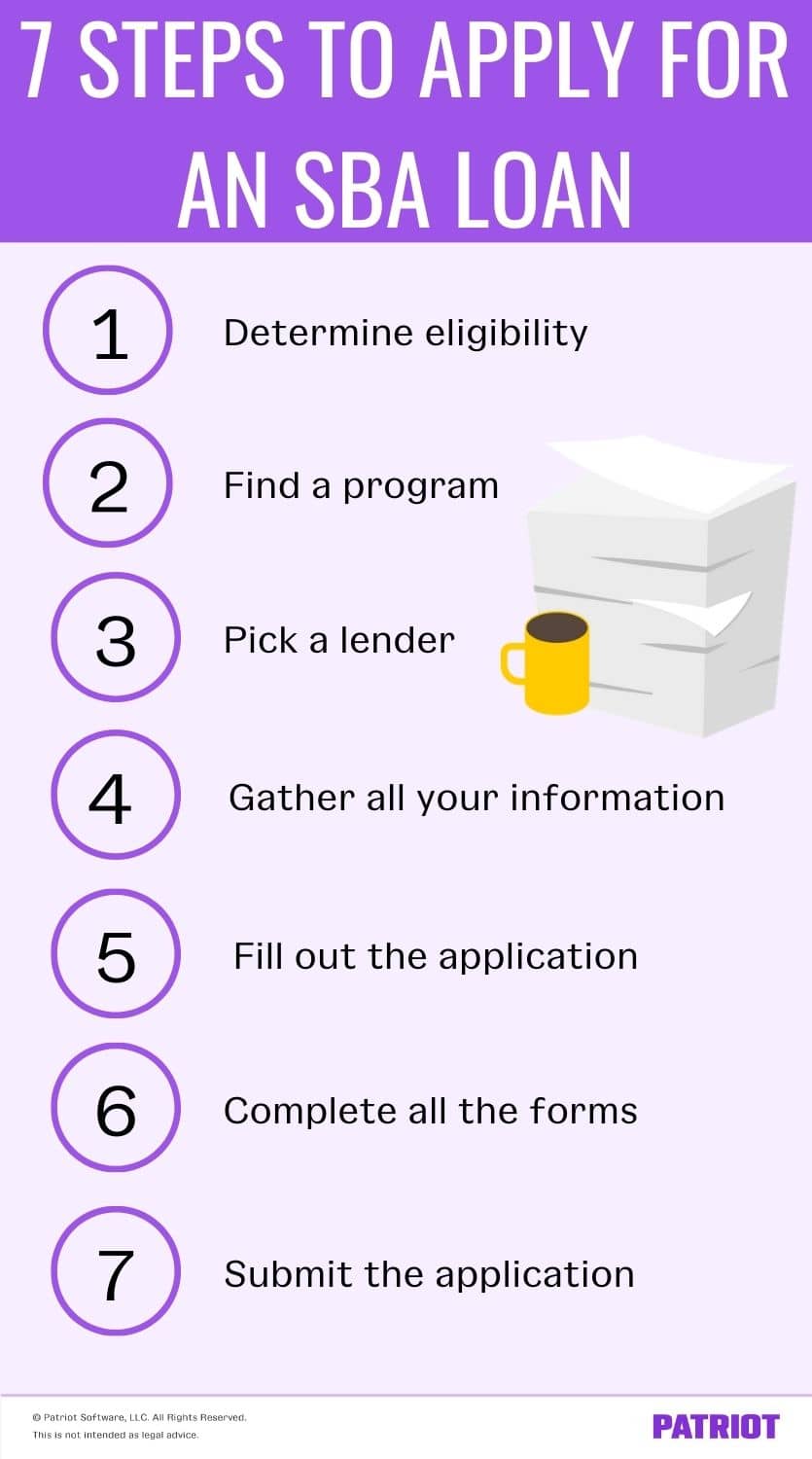
Securing an SBA loan is a methodical process that demands meticulous preparation and patience. While specific steps may vary slightly between lenders, the general framework remains consistent.
Step 1: Prepare Your Business Plan
This is often the first and most critical step. Your business plan is not just a formality; it’s your operational blueprint and a compelling sales pitch to potential lenders. It should include:
- Executive Summary: A concise overview of your business, its mission, products/services, and growth potential.
- Company Description: Legal structure, history, and goals.
- Market Analysis: Industry overview, target market, competitive analysis.
- Organization & Management: Ownership structure, management team biographies, and key personnel.
- Service or Product Line: Detailed description of what you offer.
- Marketing & Sales Strategy: How you will reach and retain customers.
- Funding Request: How much you need, how you’ll use the funds, and your repayment strategy.
- Financial Projections: Detailed historical financial data (if applicable), profit and loss statements, balance sheets, cash flow projections for at least the next three to five years, and break-even analysis.
A well-researched, realistic, and professionally presented business plan demonstrates your understanding of your business and its financial needs.
Step 2: Gather Financial Documents

Once your business plan is solid, you’ll need to compile a comprehensive set of financial and legal documents. This typically includes:
- Personal Financial Statements: For all owners with 20% or more equity, including assets, liabilities, and net worth.
- Personal Tax Returns: For the past two to three years.
- Business Tax Returns: For the past three years (if applicable).
- Business Financial Statements: Profit & Loss statements, Balance Sheets, and Cash Flow Statements for the past three years (if applicable) and interim statements (e.g., year-to-date).
- Bank Statements: Business and personal, for the past 6-12 months.
- Debt Schedule: A list of all outstanding business debts.
- Collateral: Details of any assets you plan to pledge as collateral (real estate, equipment, accounts receivable).
- Legal Documents: Business licenses, articles of incorporation, partnership agreements, franchise agreements (if applicable), and commercial leases.
- Resumes: For all principal owners and key management, highlighting relevant experience.
- Letters of Intent/Contracts: For significant purchases or sales, if relevant to the loan’s purpose.
Organization and completeness are key here. Any missing or inconsistent information can significantly delay the process.
Step 3: Choose Your Lender
The SBA does not lend directly (with some exceptions like disaster loans); you apply for an SBA-guaranteed loan through a participating financial institution. Research potential lenders carefully:
- Banks and Credit Unions: Many traditional banks and credit unions are active SBA lenders. Some have dedicated SBA departments and specialized loan officers.
- Online Lenders: A growing number of online platforms also offer SBA loans, sometimes with streamlined application processes.
- Preferred Lenders: Look for “SBA Preferred Lenders.” These institutions have a strong track record with the SBA, allowing them to make independent credit decisions and process loans more quickly.
- Local CDCs or Microlenders: For 504 loans or microloans, you’ll work with a Certified Development Company or a non-profit microlender, respectively.
Consider their experience with SBA loans, their customer service, and their familiarity with your industry. It can be beneficial to shop around and compare offers.
Step 4: Submit Your Application
Once you’ve selected a lender, you’ll formally submit your compiled documents and loan application. This typically involves:
- Completing Lender-Specific Forms: In addition to SBA forms, your chosen lender will have its own application forms.
- Writing a Loan Proposal: This often accompanies your business plan and specifically outlines your request, how the funds will be used, and how your business will generate the cash flow to repay the loan.
- Providing Personal Guarantees: For most SBA loans, all owners with 20% or more equity will be required to provide a personal guarantee, meaning they are personally liable for the loan if the business defaults.
Be prepared for follow-up questions and requests for additional information from the lender.
Step 5: Underwriting and Approval
After submission, the lender’s underwriting team will thoroughly review your entire application package. They will assess:
- Creditworthiness: Both personal and business credit history.
- Repayment Capacity: Your business’s ability to generate sufficient cash flow to repay the loan, based on historical financials and projections.
- Collateral: The value and liquidity of any assets pledged.
- Character: Your personal and business integrity.
- Conditions: The specific terms and conditions under which the loan will be granted.
This stage can take several weeks or even months, depending on the complexity of the loan and the lender’s workload. If approved by the lender, they will then submit the application to the SBA for final approval of the guarantee.
Step 6: Closing the Loan
Once your loan is approved by both the lender and the SBA, you’ll move to the closing phase. This involves:
- Reviewing and Signing Documents: You will sign numerous legal documents, including the loan agreement, promissory note, security agreements, and personal guarantees.
- Meeting Conditions Precedent: Any specific conditions stipulated in the approval letter (e.g., obtaining specific insurance, resolving outstanding liens) must be met before funds are disbursed.
- Disbursement of Funds: Once all paperwork is complete and conditions are met, the loan funds will be disbursed according to the agreed-upon schedule.
Navigating Challenges and Maximizing Your Chances
The SBA loan process can be complex, but strategic preparation can significantly enhance your likelihood of success.
Common Pitfalls to Avoid
Many applicants stumble due to avoidable errors. Be mindful of:
- Incomplete or Inaccurate Documentation: This is the most common pitfall. Missing forms, outdated financial statements, or discrepancies between documents will cause significant delays or outright rejection.
- Weak Business Plan: A poorly researched, unrealistic, or unconvincing business plan fails to demonstrate the business’s viability or the owner’s competence.
- Poor Credit History: Both personal and business credit issues are major red flags for lenders.
- Insufficient Collateral or Equity: While SBA loans are more flexible, some level of collateral or owner equity investment is usually expected.
- Unclear Use of Funds: Not clearly articulating how the loan money will be used and how it will contribute to repayment capacity.
Tips for a Successful Application
To put your best foot forward, consider these strategies:
- Be Thorough and Organized: Present a complete, well-organized package of documents. Use professional tools if necessary.
- Work with an Experienced Lender: Choose a lender with a strong track record of originating SBA loans. Their expertise can guide you through the intricacies.
- Develop a Robust Business Plan: Invest time in creating a detailed, realistic, and compelling business plan. Seek feedback from mentors or business advisors.
- Maintain Strong Personal Credit: Proactively manage your personal finances and credit score.
- Clearly Articulate Your Needs: Be specific about the loan amount requested, the intended use of funds, and the projected impact on your business’s financial health.
- Seek Professional Guidance: Consider consulting with a small business advisor, an accountant, or a financial consultant who has experience with SBA loans. They can help review your financials and business plan, ensuring they meet lender expectations.
- Be Patient and Persistent: The process takes time. Be prepared for follow-ups and remain responsive to your lender’s requests.

Post-Approval: Managing Your SBA Loan
Receiving an SBA loan is a significant achievement, but the journey doesn’t end there. Responsible management of your loan is crucial for your business’s long-term financial health. Ensure you:
- Adhere to Loan Terms: Strictly follow the repayment schedule and any specific covenants outlined in your loan agreement.
- Maintain Accurate Records: Keep meticulous financial records of how the loan funds are utilized.
- Communicate with Your Lender: If you anticipate any difficulties in making payments, communicate proactively with your lender. They may offer solutions or guidance.
- Focus on Business Growth: Leverage the capital strategically to achieve the goals outlined in your business plan, ensuring the loan contributes to sustainable growth.
Securing an SBA loan can be a transformative step for a small business, providing the essential capital needed to achieve ambitious goals. While the process demands diligence and preparation, understanding the requirements and strategically navigating each stage can significantly increase your chances of success. By committing to a thorough application and responsible financial management, you can harness the power of an SBA loan to build a stronger, more prosperous future for your business.
aViewFromTheCave is a participant in the Amazon Services LLC Associates Program, an affiliate advertising program designed to provide a means for sites to earn advertising fees by advertising and linking to Amazon.com. Amazon, the Amazon logo, AmazonSupply, and the AmazonSupply logo are trademarks of Amazon.com, Inc. or its affiliates. As an Amazon Associate we earn affiliate commissions from qualifying purchases.