
Navigating the world of auto financing can be a complex endeavor, with a myriad of options and terms that often leave consumers feeling overwhelmed. Among these choices, vehicle leasing has emerged as a popular alternative to traditional purchasing, offering lower monthly payments and the appeal of driving a new car more frequently. However, the seemingly simpler act of leasing hides an intricate calculation behind its monthly figures. Understanding “how to calculate auto lease payment” is not just about crunching numbers; it’s about empowering yourself to negotiate effectively, identify fair deals, and ultimately make an informed financial decision that aligns with your personal circumstances. This article aims to demystify the auto lease payment calculation, breaking down each component and providing a comprehensive guide to understanding what you’re truly paying for.
Understanding the Core Components of an Auto Lease
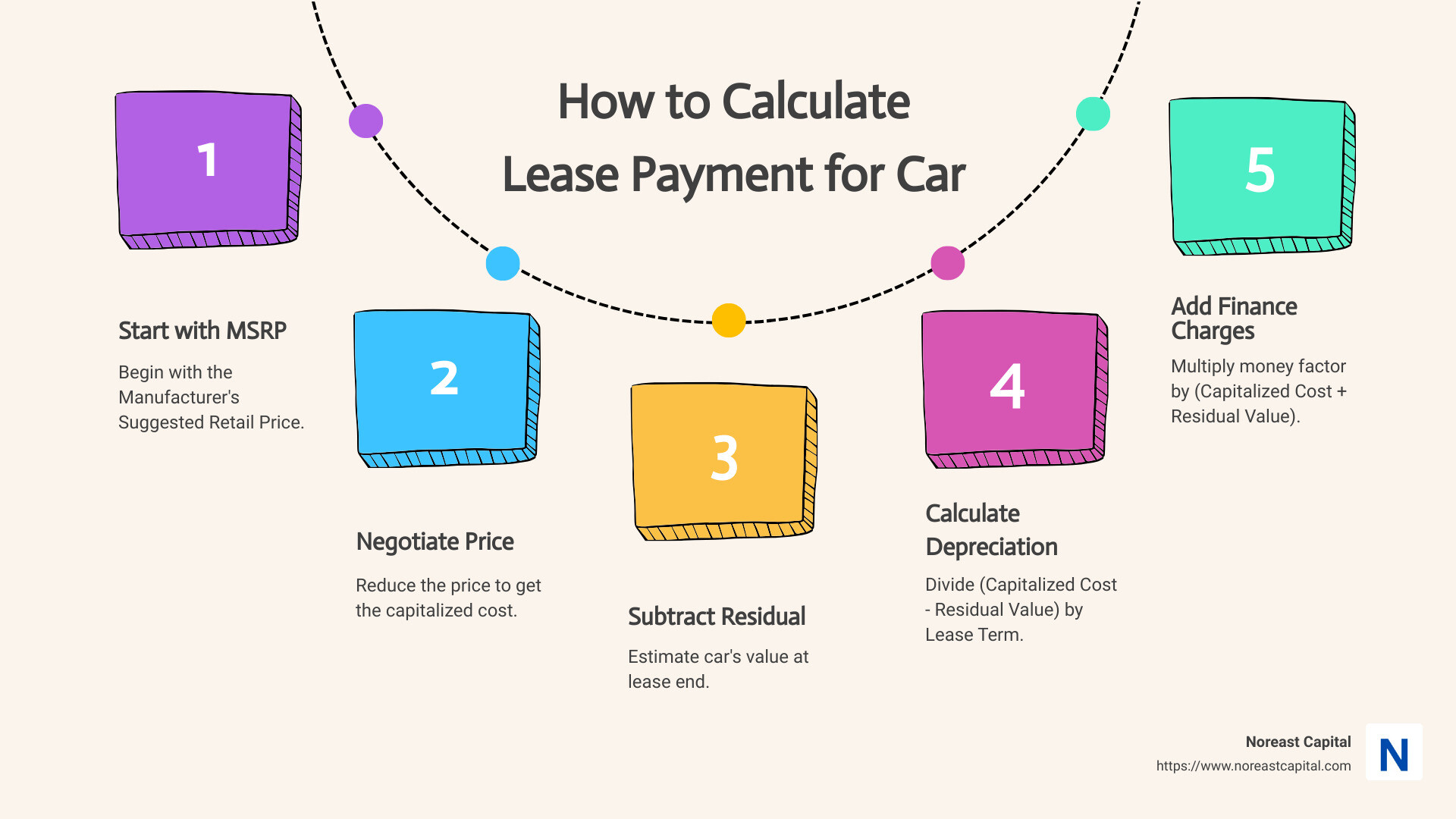
Before diving into the mathematical formulas, it’s crucial to grasp the fundamental elements that constitute an auto lease payment. Each of these variables plays a significant role in determining your monthly obligation and knowing them is the first step toward gaining control over your leasing experience.
Capitalized Cost (Cap Cost)
The capitalized cost, often referred to as the “cap cost,” is essentially the selling price of the vehicle you are leasing. Think of it as the agreed-upon value of the car at the beginning of the lease term. This is arguably the most crucial negotiation point, as a lower cap cost directly translates to a lower lease payment. Dealers typically present an initial cap cost, but like a purchase price, it is often negotiable. Any upfront payments you make, such as a down payment or the value of a trade-in vehicle, will reduce this cap cost, known as a “cap cost reduction.” The lower the net cap cost, the less you will “finance” or pay depreciation on over the lease term.
Residual Value
The residual value represents the estimated wholesale market value of the vehicle at the end of the lease term. This figure is determined by the leasing company (often the manufacturer’s financial arm) and is expressed as a percentage of the car’s MSRP (Manufacturer’s Suggested Retail Price). For instance, if a car has an MSRP of $30,000 and a residual value of 50% after three years, its estimated value at the end of the lease is $15,000. The difference between the capitalized cost and the residual value is the total amount you will be depreciating over the lease period, forming a significant portion of your monthly payment. A higher residual value is generally favorable to the lessee, as it means less depreciation to cover.
Money Factor (Lease Factor / Interest Rate)
While a car purchase involves an interest rate, a lease utilizes a “money factor” (sometimes called the lease factor or lease charge). This is essentially the interest rate equivalent for your lease, representing the cost of borrowing the money to finance the vehicle. The money factor is usually presented as a very small decimal, like 0.00250. To convert this to an annual interest rate percentage, you multiply it by 2400 (e.g., 0.00250 * 2400 = 6%). A lower money factor means you’re paying less in financing charges over the lease term. Dealers often mark up the money factor, so understanding this component is vital for negotiation. It’s applied to the “average outstanding balance” of the lease, which is typically calculated as the sum of the capitalized cost and the residual value.
Lease Term
The lease term is simply the duration of your lease agreement, typically expressed in months (e.g., 24, 36, 48 months). A longer lease term generally results in lower monthly payments because the total depreciation and finance charges are spread out over a greater number of months. However, a longer term also means you’ll pay more in total interest (money factor charges) over the life of the lease and might face higher maintenance costs as the vehicle ages. Conversely, a shorter term leads to higher monthly payments but less total interest paid and the opportunity to upgrade more frequently.
Sales Tax and Fees
Like any vehicle transaction, leases are subject to various taxes and fees. Sales tax can be applied in different ways depending on your state: some states tax the full capitalized cost upfront, others tax the monthly payment, and some tax the sum of the depreciation and finance charges. Beyond sales tax, you’ll encounter a number of administrative fees, including an acquisition fee (an upfront charge from the leasing company for processing the lease), a disposition fee (a charge at the end of the lease for processing the return), license and registration fees, and sometimes documentation fees. These can add significantly to the overall cost and should be factored into your total lease calculation.
The Step-by-Step Calculation Process
Once you understand the core components, calculating your auto lease payment becomes a methodical process. While online calculators can provide quick estimates, knowing the underlying math empowers you to verify figures and challenge discrepancies.
Calculating Depreciation
The depreciation portion of your monthly payment covers the expected loss in value of the vehicle over the lease term. This is typically the largest component of your payment.
The formula is:
(Capitalized Cost – Residual Value) / Lease Term (in months)
Let’s say:
- Capitalized Cost (negotiated price): $30,000
- Residual Value: $18,000 (after 36 months)
- Lease Term: 36 months
Depreciation per month = ($30,000 – $18,000) / 36 = $12,000 / 36 = $333.33
Calculating Finance Charge
The finance charge, derived from the money factor, is essentially the interest you pay on the amount of money the leasing company is “lending” you for the duration of the lease.
The formula is:
(Capitalized Cost + Residual Value) * Money Factor
Using our previous example and assuming a Money Factor of 0.00200 (equivalent to 4.8% annual interest):
- Capitalized Cost: $30,000
- Residual Value: $18,000
- Money Factor: 0.00200
Finance Charge per month = ($30,000 + $18,000) * 0.00200 = $48,000 * 0.00200 = $96.00
Determining the Base Monthly Payment
Your base monthly payment is the sum of the depreciation charge and the finance charge. This is the core cost before taxes and any additional fees.
Base Monthly Payment = Depreciation per month + Finance Charge per month
Base Monthly Payment = $333.33 + $96.00 = $429.33
Adding Taxes and Fees
This is where the calculation can vary significantly by state.
- Tax on monthly payment: If your state taxes the monthly payment, you simply apply the sales tax rate to your base monthly payment. For example, with a 7% sales tax: $429.33 * 0.07 = $30.05.
- Tax on full capitalized cost: Some states require you to pay sales tax on the entire capitalized cost upfront, or spread out over the payments. This would be (Capitalized Cost * Sales Tax Rate) / Lease Term.
- Tax on depreciation + finance charges: Other states tax only the sum of the depreciation and finance components.
Additionally, don’t forget the upfront or monthly allocation of other fees like the acquisition fee (if not paid upfront), license, and registration. If your acquisition fee is $595 and you roll it into the lease, it adds approximately $16.53/month ($595/36 months) to your payment, before tax.

Total Estimated Monthly Payment = Base Monthly Payment + Sales Tax (on monthly) + Amortized Fees
Total Estimated Monthly Payment = $429.33 + $30.05 + $16.53 = $475.91
Accounting for Down Payments and Trade-ins (Cap Cost Reduction)
Any money you pay upfront, whether cash or the equity from a trade-in vehicle, acts as a “cap cost reduction.” This directly lowers the capitalized cost, which in turn reduces the depreciation portion of your payment.
For example, if you make a $2,000 down payment, your new Capitalized Cost becomes $28,000 ($30,000 – $2,000).
Recalculating the depreciation: ($28,000 – $18,000) / 36 = $10,000 / 36 = $277.78 (a saving of $55.55/month in depreciation).
The finance charge would also be slightly lower as the average outstanding balance is reduced.
Practical Application and Negotiation Tips
Armed with the knowledge of how lease payments are calculated, you are in a much stronger position when dealing with dealerships. This understanding transforms you from a passive recipient of figures to an active participant in the negotiation.
Using Online Lease Calculators
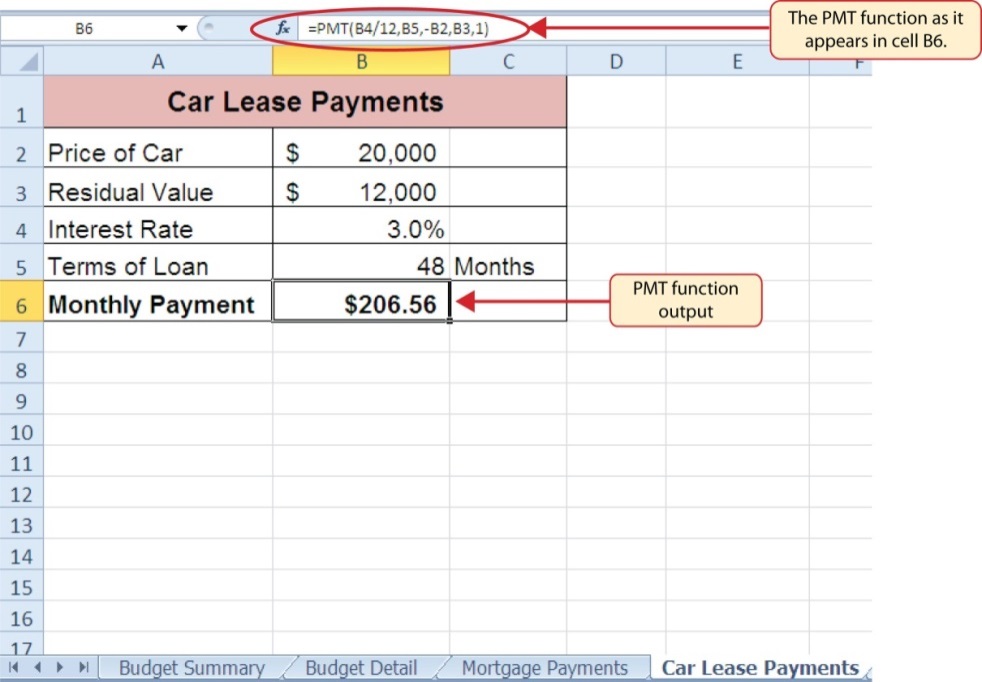
While manual calculation is excellent for understanding, online lease calculators are invaluable tools for real-time scenario planning. Many automotive websites and financial institutions offer robust calculators where you can input potential cap costs, residual values, money factors, and terms. Use these to experiment with different variables and estimate your target monthly payment. However, always double-check the figures with the dealer’s quoted numbers and be wary of calculators that don’t allow granular input of all components. They can be a good starting point, but not the final word.
Key Variables to Negotiate
- Capitalized Cost (Selling Price): Treat this like buying a car. Negotiate the absolute lowest selling price possible before discussing the lease. A lower cap cost is the single most effective way to reduce your monthly payment.
- Money Factor: This is often marked up by the dealer. Research the “buy rate” (the lowest money factor offered by the leasing company) for your specific vehicle and credit score. You can often find this information on forums or specialized leasing websites. Negotiate to get as close to the buy rate as possible.
- Residual Value: While usually non-negotiable (set by the leasing company), it’s crucial to verify it. Make sure the dealer is using the correct residual percentage for the vehicle, term, and mileage allowance.
- Fees: Challenge any excessive documentation fees, dealer prep fees, or other charges that seem out of line. Acquisition and disposition fees are harder to negotiate, but clarity on all fees is essential.
The Importance of the “Out-the-Door” Price
Just as with a purchase, focus on the “out-the-door” lease cost rather than just the monthly payment. This means understanding all upfront costs (down payment, first month’s payment, acquisition fee, taxes, license, registration) and how they impact your overall obligation. Dealers sometimes offer very low monthly payments by requiring a significant upfront payment, which may not be the best financial move for everyone. Always ask for a detailed breakdown of all costs.
Lease vs. Buy: When Leasing Makes Sense
Understanding lease payments also helps in evaluating whether leasing is the right choice for your financial situation and lifestyle. It’s not inherently better or worse than buying; it’s simply different.
Advantages of Leasing
- Lower Monthly Payments: Typically, lease payments are significantly lower than loan payments for the same car, as you’re only paying for the depreciation and finance charges over the term, not the full purchase price.
- Drive New Cars More Often: Lessees can enjoy a new car every 2-4 years, always driving vehicles under warranty and equipped with the latest technology and safety features.
- Reduced Maintenance Costs: Since you’re driving a new car, major repairs are usually covered by the manufacturer’s warranty for the duration of most leases.
- Less Hassle at Trade-in: At the end of the lease, you simply return the car (assuming it’s within mileage limits and reasonable wear and tear) and walk away, or lease another vehicle. You avoid the complexities of selling a used car.
Disadvantages of Leasing
- No Ownership Equity: You don’t build equity in a leased vehicle. At the end of the term, you have no asset to sell or trade in.
- Mileage Limitations: Leases come with strict annual mileage limits (e.g., 10,000, 12,000, or 15,000 miles per year). Exceeding these limits can result in substantial penalties (e.g., $0.20-$0.30 per mile).
- Wear and Tear Charges: While “normal wear and tear” is allowed, anything beyond that can result in additional charges at lease end.
- Early Termination Penalties: Breaking a lease early can be extremely expensive, often requiring you to pay the remaining payments, the residual value, and substantial fees.
- Always Have a Car Payment: Unless you decide to stop driving after your lease, you’ll generally always have a car payment if you continue to lease.
Factors to Consider for Your Situation
Leasing is often ideal for individuals who:
- Drive a consistent, predictable number of miles annually.
- Enjoy driving new cars every few years.
- Prefer lower monthly payments over building equity.
- Want to avoid the hassle of reselling a used car.
- Are diligent about maintaining their vehicles.
Buying is usually better for those who:
- Drive a lot of miles or have unpredictable driving habits.
- Prefer to own their vehicles outright and build equity.
- Plan to keep a car for many years beyond the loan term.
- Are comfortable with potentially higher monthly payments initially.
- Want the freedom to modify their vehicle.
Common Pitfalls and Smart Strategies
Even with a solid understanding of the calculations, certain aspects of leasing can trip up unwary consumers. Being aware of these common pitfalls and employing smart strategies can save you money and headaches.
Hidden Fees and Charges
Always ask for a complete breakdown of all fees involved in the lease. Besides the acquisition and disposition fees, inquire about any “dealer prep,” “etching,” or “administrative” fees. Some can be negotiable, while others are non-negotiable but still impact your total cost. A fully transparent quote should list every single charge.
Mileage Limits and Overages
Be realistic about your annual driving habits. Opting for a higher mileage allowance (e.g., 15,000 miles instead of 10,000) might slightly increase your monthly payment, but it could save you significantly more in overage penalties at the end of the lease if you frequently exceed the lower limit. Calculate the cost per mile for overages and compare it to the increased monthly payment for a higher allowance.
End-of-Lease Options
Understand your options before your lease ends. You generally have three choices:
- Return the vehicle: The most common option, simply returning the car to the dealer. Ensure you’ve addressed any excess wear and tear and are within mileage limits.
- Purchase the vehicle: You have the option to buy the car for its residual value plus any applicable purchase option fees and taxes. This can be a good idea if the market value of the car is significantly higher than its residual value.
- Lease another vehicle: You can trade in your current leased vehicle for a new one, potentially rolling any positive equity (if the car is worth more than the residual) into the new lease or facing negative equity (if the car is worth less than the residual).
Early Termination Penalties
Life is unpredictable, and sometimes you may need to end your lease early. Be acutely aware that early termination penalties are often substantial, potentially requiring you to pay all remaining payments, the residual value, and additional fees. Before signing, ask for a clear explanation of the early termination clause and consider whether it’s worth the risk given your personal circumstances. Explore options like lease transfers through services that facilitate them, if allowed by your leasing company, which can sometimes mitigate these costs.
By dissecting the components of an auto lease payment and understanding the underlying calculations, consumers can transform a potentially opaque process into a transparent one. This knowledge is not just academic; it’s a powerful tool for negotiation, enabling you to secure a fair deal and avoid costly surprises. Whether you ultimately choose to lease or buy, a clear grasp of auto lease mechanics ensures you make a financially savvy decision, perfectly suited to your needs.
aViewFromTheCave is a participant in the Amazon Services LLC Associates Program, an affiliate advertising program designed to provide a means for sites to earn advertising fees by advertising and linking to Amazon.com. Amazon, the Amazon logo, AmazonSupply, and the AmazonSupply logo are trademarks of Amazon.com, Inc. or its affiliates. As an Amazon Associate we earn affiliate commissions from qualifying purchases.