
Navigating the world of car financing can feel complex, with terms like APR, principal, and amortization often clouding the waters. At the heart of every car loan is interest—the cost of borrowing money. Understanding how car loan interest is calculated is not just academic; it’s fundamental to making informed financial decisions, potentially saving you thousands of dollars over the life of your loan. This guide will demystify the process, breaking down the mechanics, key factors, and practical implications of car loan interest.
Understanding the Basics of Car Loan Interest
Before delving into the calculations, it’s crucial to grasp the foundational concepts that dictate how much you’ll pay beyond the vehicle’s sticker price.
What is Interest?
In simple terms, interest is the charge for the privilege of borrowing money. When you take out a car loan, a lender provides you with the funds to purchase a vehicle, and in return, you agree to repay that amount (the principal) plus an additional fee (the interest). This interest compensates the lender for the risk they take in lending you money and for the opportunity cost of not using that money elsewhere. The interest rate is typically expressed as a percentage of the principal balance per year.
Key Factors Influencing Your Interest Rate
Several critical factors determine the interest rate you’ll be offered on a car loan. These elements directly impact the total cost of borrowing and your monthly payments.
- Credit Score: This is perhaps the most significant factor. Lenders use your credit score to assess your creditworthiness—how likely you are to repay the loan. A higher credit score (typically 700+) indicates a lower risk, often qualifying you for the most favorable, lower interest rates. Conversely, a lower credit score signals higher risk, leading to higher interest rates to compensate the lender.
- Loan Term: The length of time you have to repay the loan also plays a crucial role. Shorter loan terms (e.g., 36 or 48 months) generally come with lower interest rates because the lender’s risk is spread over a shorter period. Longer terms (e.g., 60, 72, or even 84 months) often have higher interest rates, though they result in lower monthly payments.
- Down Payment: Making a substantial down payment reduces the amount you need to borrow, thereby decreasing the lender’s risk. A larger down payment can often lead to a lower interest rate, as well as a lower overall loan amount and reduced total interest paid.
- Current Market Interest Rates: The prevailing economic environment and interest rates set by central banks (like the Federal Reserve in the U.S.) influence the rates lenders can offer. When general interest rates are low, car loan rates tend to be lower, and vice versa.
- Type of Vehicle (New vs. Used): New car loans often carry slightly lower interest rates than used car loans. This is partly because new cars are less of a risk for lenders (less depreciation initially, fewer potential mechanical issues), and partly due to manufacturer incentives on new vehicles.
- Lender and Negotiation: Different lenders (banks, credit unions, dealership financing) offer varying rates. It pays to shop around and compare offers. Sometimes, you can also negotiate the interest rate, especially if you have a strong credit profile.
The Mechanics of Interest Calculation: Simple vs. Compound
While many consumer loans use compound interest, car loans primarily use a method that calculates interest on the outstanding principal balance. This is often referred to as “simple interest” applied over the life of the loan through an amortization schedule.
Simple Interest Explained
Simple interest is calculated only on the principal amount of a loan. If you borrowed $10,000 at a 5% simple annual interest rate for one year, the interest would be $500 ($10,000 * 0.05). However, car loans are typically repaid over several years, and the principal balance decreases with each payment. This is where the concept of amortization comes in.
Amortization and Compound Interest in Car Loans
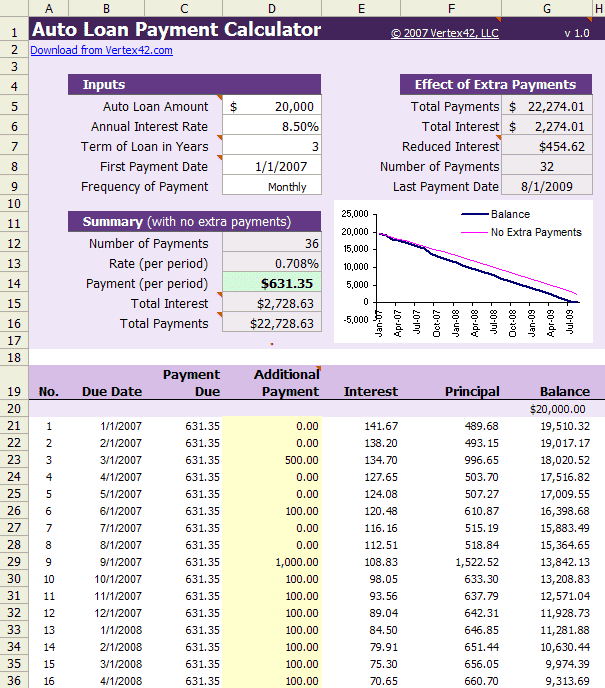
Car loans are almost universally amortized loans. This means that each monthly payment you make is split into two components: principal repayment and interest payment. Crucially, the interest for each payment period (usually monthly) is calculated based on the remaining principal balance at that time.
Here’s a simplified breakdown of how it works:
- Initial Calculation: At the beginning of the loan, your interest is calculated on the full principal amount.
- First Payment: Your first payment covers a portion of the interest accrued since the loan began, plus a small portion of the principal.
- Subsequent Calculations: For the next payment, the interest is calculated on the new, lower principal balance (the original principal minus the principal portion of your first payment).
- Over Time: As you continue to make payments, the principal balance gradually decreases. Consequently, the interest portion of each subsequent payment also decreases, and a larger portion of your payment goes towards reducing the principal.
While the calculation method per period is simple interest (rate * principal balance), the effect over the loan’s life can mimic compound interest in that unpaid interest could theoretically be added to the principal if you were to miss payments, or the total interest paid accumulates over time. However, for a standard, on-time payment schedule, interest is always calculated on the current outstanding principal.
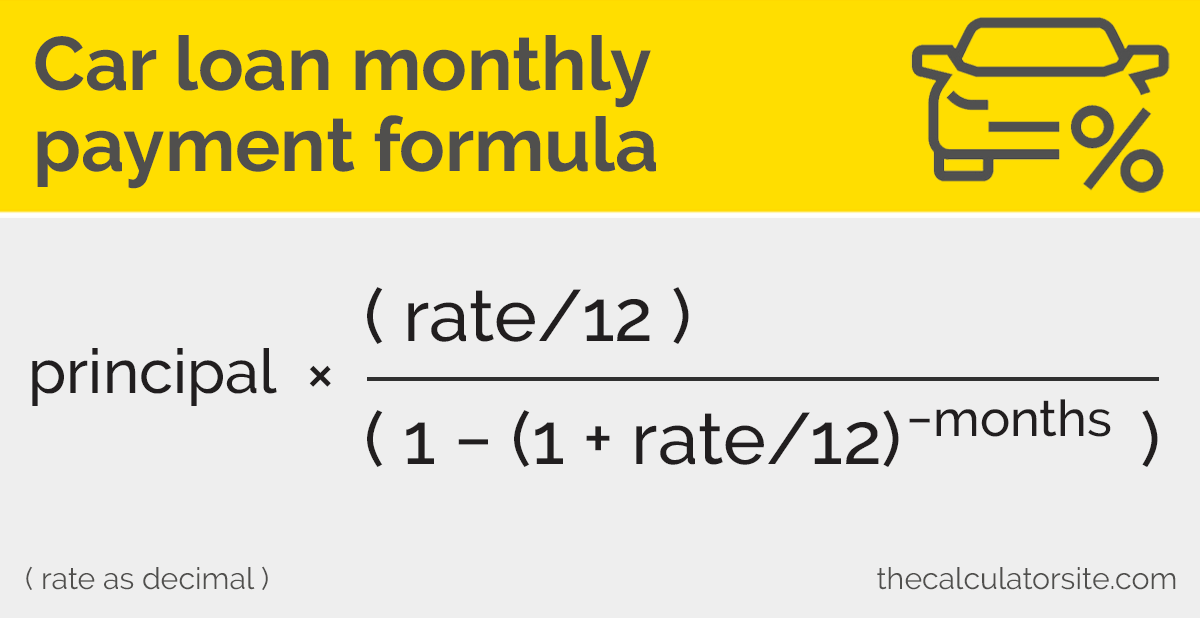
The formula for calculating the monthly interest payment for a specific month is:
Monthly Interest Payment = (Outstanding Principal Balance * Annual Interest Rate) / 12
Let’s illustrate with an example:
Suppose you have a car loan with an initial principal of $25,000 at an annual interest rate of 6%.
- Month 1: The interest for the first month would be ($25,000 * 0.06) / 12 = $125.
If your total monthly payment is $483.32 (for a 60-month loan), then $125 goes to interest, and $358.32 ($483.32 – $125) goes to principal.
Your new principal balance is $25,000 – $358.32 = $24,641.68. - Month 2: The interest for the second month would be ($24,641.68 * 0.06) / 12 = $123.21.
Now, $123.21 goes to interest, and $360.11 ($483.32 – $123.21) goes to principal.
Your new principal balance is $24,641.68 – $360.11 = $24,281.57.
This process continues for the entire loan term, with the interest portion of your payment gradually shrinking as the principal balance decreases.
The Role of Annual Percentage Rate (APR)
When comparing loan offers, the Annual Percentage Rate (APR) is a more comprehensive measure of the cost of borrowing than the nominal interest rate alone. APR includes not only the interest rate but also any additional fees or charges imposed by the lender, such as origination fees, processing fees, or discount points.
For instance, two lenders might offer the same nominal interest rate, say 5%. However, Lender A might charge a $200 origination fee, while Lender B charges no fees. Lender A’s APR would be slightly higher than 5% due to that fee, reflecting the true total annual cost of the loan more accurately. Always compare APRs when shopping for a car loan to get the clearest picture of what you’ll really pay.
Dissecting the Monthly Payment: Principal and Interest
Understanding how your monthly payment is allocated between principal and interest is key to comprehending your loan’s progression.
How Payments are Allocated Over Time
During the initial months of your car loan, a larger proportion of your monthly payment goes towards covering the interest. This is because the outstanding principal balance is at its highest, meaning the interest calculation yields a larger figure. As you consistently make payments and reduce the principal, the interest portion of your payment decreases, and a progressively larger share of each payment is applied directly to reducing your principal balance.
This front-loading of interest means that if you pay off your loan early, you’ll save more on interest than if you make extra payments towards the end of the loan term. It also highlights why simply making minimum payments for the entire term will result in the maximum possible interest paid.
The Impact of Loan Term on Total Interest Paid
The loan term, or the repayment period, has a profound impact on the total amount of interest you will pay.
- Shorter Loan Terms: While a shorter loan term (e.g., 36 or 48 months) results in higher monthly payments, it drastically reduces the total interest paid over the life of the loan. This is because you’re paying off the principal more quickly, and interest has less time to accrue. Additionally, shorter terms often come with lower interest rates from lenders due to reduced risk.
- Longer Loan Terms: Longer loan terms (e.g., 72 or 84 months) offer the appeal of lower monthly payments, making a more expensive car seem affordable. However, this convenience comes at a significant cost. You’ll be paying interest for a longer period, and often at a higher annual interest rate. This combination leads to a substantially greater total interest paid over the life of the loan. For example, a $30,000 car loan at 6% APR over 60 months might cost you around $4,700 in total interest, while the same loan over 84 months could cost over $6,700—a difference of $2,000.
It’s a trade-off: lower monthly payments versus a higher overall cost. Financial prudence often dictates choosing the shortest loan term with monthly payments you can comfortably afford, to minimize interest expense.
Practical Implications and Strategies for Lowering Costs
Armed with an understanding of how car loan interest is calculated, you can adopt several strategies to minimize your borrowing costs and save money.
Improving Your Credit Score
Since your credit score is a primary determinant of your interest rate, taking steps to improve it before applying for a car loan can lead to significant savings. This includes paying bills on time, reducing existing debt, correcting any errors on your credit report, and avoiding opening new lines of credit just before applying for a car loan. Even a small improvement in your credit score can drop your interest rate by a percentage point or more, leading to hundreds or even thousands in savings over the loan term.
Making a Larger Down Payment
A larger down payment reduces the amount you need to borrow, directly cutting down the principal on which interest is calculated. This results in lower monthly payments and less total interest paid. Additionally, a substantial down payment can signal lower risk to lenders, potentially qualifying you for a better interest rate. Aim for at least 10-20% of the vehicle’s price if possible.
Choosing a Shorter Loan Term
As discussed, opting for the shortest loan term you can comfortably afford will significantly reduce the total interest you pay. While it means higher monthly payments, the long-term financial benefits are substantial. Calculate what you can realistically afford each month and resist the temptation of stretching out the loan just for lower payment figures.

Refinancing Your Car Loan
If your credit score has improved since you first took out your car loan, or if market interest rates have dropped, you might be a good candidate for refinancing. Refinancing involves taking out a new loan to pay off your existing car loan, ideally at a lower interest rate or with more favorable terms. This can lead to lower monthly payments, reduced total interest paid, or both, depending on your goals and the new loan’s structure. It’s a particularly effective strategy if you started with a higher interest rate due to a less-than-stellar credit score and have since built a stronger financial history.
Understanding “how is car loan interest calculated” empowers you to be a savvier consumer. By focusing on your credit health, optimizing your down payment, and carefully selecting your loan term, you can significantly reduce the overall cost of your vehicle and manage your personal finances more effectively.
aViewFromTheCave is a participant in the Amazon Services LLC Associates Program, an affiliate advertising program designed to provide a means for sites to earn advertising fees by advertising and linking to Amazon.com. Amazon, the Amazon logo, AmazonSupply, and the AmazonSupply logo are trademarks of Amazon.com, Inc. or its affiliates. As an Amazon Associate we earn affiliate commissions from qualifying purchases.