
Purchasing a car is one of the most significant financial decisions many individuals make, second only to buying a home. For the vast majority, this involves taking out a car loan, a commitment that can stretch over several years and significantly impact monthly budgets. Yet, despite its importance, many consumers approach this process with only a vague understanding of how their loan payments are calculated, often focusing solely on the monthly figure without grasping the underlying mechanics.
Understanding how to figure out car loan payments is not just about crunching numbers; it’s about empowering yourself with knowledge to make informed decisions, negotiate effectively, and ultimately secure a loan that aligns with your financial well-being. This comprehensive guide will demystify the process, breaking down the essential components of a car loan, exploring calculation methods, and offering strategies for smart financial management. By the end, you’ll be equipped with the insights needed to navigate the car financing landscape confidently and avoid common pitfalls.
Understanding the Core Components of Your Car Loan
Before you can accurately calculate a car loan payment, it’s crucial to understand the fundamental variables that contribute to it. Each component plays a vital role in determining not just your monthly outlay but also the total cost of the loan over its lifetime.
Principal Amount: The Cost of Your Car
The principal amount is simply the total sum of money you borrow to purchase the vehicle. This isn’t necessarily the sticker price of the car; rather, it’s the purchase price minus any down payment or trade-in value you contribute. For instance, if a car costs $30,000 and you put down a $5,000 cash payment or trade in a vehicle worth that much, your principal loan amount would be $25,000. This is the foundation upon which all other calculations are built. A larger down payment or a valuable trade-in directly reduces the principal, leading to lower monthly payments and less interest paid over the life of the loan. Conversely, borrowing the entire purchase price means a higher principal and, consequently, higher payments and overall costs.
Interest Rate: The Cost of Borrowing
The interest rate, often expressed as an Annual Percentage Rate (APR), is essentially the cost you pay for borrowing the principal. It’s the lender’s fee for providing you with the capital. This rate is heavily influenced by several factors, including your credit score, the current market interest rates, the loan term, and the lender’s specific policies. A higher credit score typically translates to a lower interest rate, as lenders perceive you as a lower risk. Even a seemingly small difference in APR can have a substantial impact over the life of a multi-year car loan. For example, a 1% difference on a $25,000 loan over five years can amount to hundreds, if not thousands, of dollars in extra interest paid. Understanding your creditworthiness and current market rates is therefore paramount before you even begin to shop for a car.
Loan Term: The Duration of Your Debt
The loan term refers to the duration over which you agree to repay the loan, typically expressed in months (e.g., 36, 48, 60, 72, or even 84 months). The loan term has a direct inverse relationship with your monthly payment: a shorter term results in higher monthly payments but means you pay less interest overall, as you’re retiring the debt faster. Conversely, a longer term offers lower monthly payments, making the car seem more affordable in the short term. However, the trade-off is significant: extending the loan term means you’ll pay substantially more in total interest over the life of the loan. Furthermore, with longer terms, there’s a higher risk of becoming “upside down” on your loan, meaning you owe more than the car is worth, especially in the early years of ownership when depreciation is most rapid. Balancing affordability with the total cost of ownership is key when choosing a loan term.
The Mechanics of Calculating Your Car Loan Payment
Once you understand the core components, you can delve into the methods for calculating your monthly car loan payment. While complex formulas exist, practical tools make this process straightforward for consumers.
The Loan Payment Formula Explained
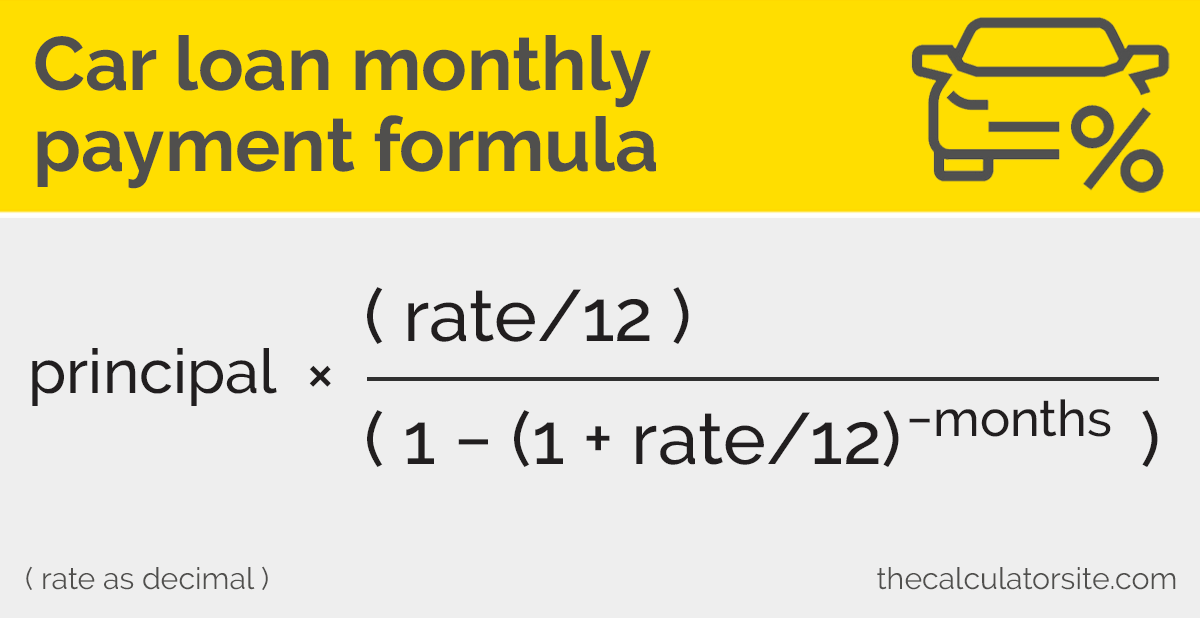
For those who appreciate the mathematical rigor, the standard formula for calculating a fixed monthly loan payment (an amortization formula) is:
$M = P [ i(1 + i)^n ] / [ (1 + i)^n – 1]$
Where:
- M = Monthly payment
- P = Principal loan amount (the amount you’re borrowing)
- i = Monthly interest rate (the annual interest rate divided by 12, expressed as a decimal; e.g., 5% APR becomes 0.05/12 = 0.004167)
- n = Number of months (the loan term in years multiplied by 12)
Let’s illustrate with an example: A $25,000 loan, with an APR of 5% (0.05/12 monthly rate) over 60 months (5 years).
- P = $25,000
- i = 0.004167
- n = 60
Plugging these values into the formula yields a monthly payment. While this formula provides precision, it can be intimidating for many and is often unnecessary given modern tools. The key takeaway is understanding how each variable—principal, interest rate, and term—directly feeds into this calculation. An increase in principal or interest rate will boost ‘M’, while an increase in ‘n’ (loan term) will generally decrease ‘M’ but increase the total interest paid.
Leveraging Online Car Loan Calculators
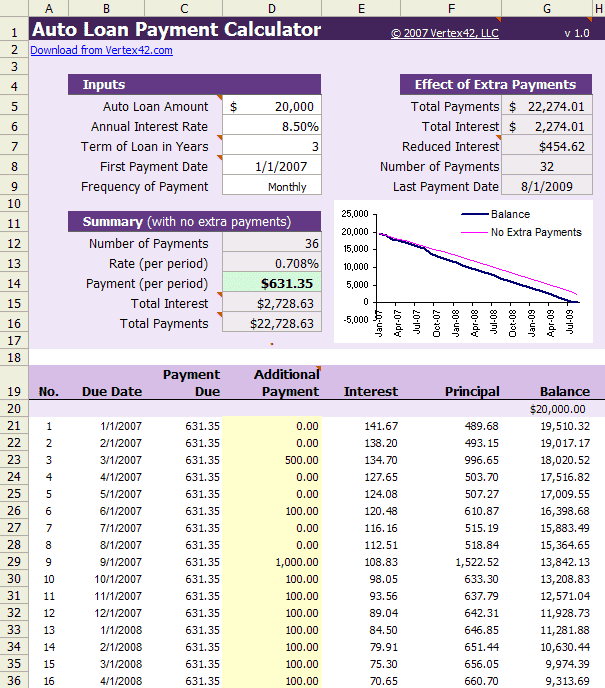
For the vast majority of consumers, online car loan calculators are the most practical and efficient way to figure out payments. These tools are ubiquitous and user-friendly, requiring you only to input the principal loan amount, the interest rate (APR), and the desired loan term. In a matter of seconds, they will provide an estimated monthly payment. The benefits of using these calculators are manifold:
- Speed and Accuracy: They eliminate manual calculation errors and provide instant results.
- “What-If” Scenarios: You can easily adjust variables (e.g., increase your down payment, try a shorter term, or input a different interest rate from another lender) to see how they impact your monthly payment. This allows for effective planning and comparison shopping.
- Total Cost Breakdown: Many advanced calculators also show the total amount of interest you’ll pay over the loan term, giving you a clearer picture of the true cost of borrowing.
By experimenting with different scenarios, you can find a balance between an affordable monthly payment and the total cost of the loan, helping you make a financially sound decision.
Understanding Amortization Schedules
An amortization schedule is a table that details each payment made over the life of a loan. For each payment, it breaks down how much goes towards paying down the principal and how much goes towards interest. This schedule provides a transparent view of your loan’s progression. In the early stages of a car loan, a larger portion of your monthly payment goes towards interest, while a smaller portion reduces the principal. As the loan matures, this ratio gradually shifts, with more of your payment attacking the principal balance. Understanding this helps you see why making extra payments, especially early in the loan term, can significantly reduce the total interest paid and shorten the loan duration. Many online calculators will generate an amortization schedule, offering valuable insight into how your money is being allocated with each payment.

Beyond the Monthly Payment: Other Factors to Consider
While the monthly payment is a critical figure, it’s essential to remember that it’s only one piece of the larger financial puzzle. Several other factors significantly impact the overall cost of vehicle ownership and should be considered alongside your loan payment.
Down Payments and Trade-Ins
As previously touched upon, a substantial down payment or a valuable trade-in can drastically reduce your principal loan amount. This not only lowers your monthly payments but also reduces the total interest you’ll pay over the life of the loan. Furthermore, a larger upfront contribution helps you build equity in the car more quickly, mitigating the risk of being “upside down” on your loan. Lenders also view borrowers with higher down payments as less risky, potentially leading to better interest rates. Financial experts often recommend putting down at least 20% of the car’s purchase price to avoid negative equity and reduce overall costs.
Additional Costs: Fees, Taxes, and Insurance
The car loan payment covers only the cost of the vehicle itself and the interest on the loan. It does not include other mandatory and associated costs of car ownership.
- Sales Tax: Most states levy a sales tax on vehicle purchases, which can add hundreds or even thousands of dollars to the upfront cost.
- Registration and Licensing Fees: Annual or biennial fees are required to legally operate your vehicle.
- Documentation Fees (Doc Fees): Dealerships often charge these fees for processing paperwork. While sometimes negotiable, they are a common additional cost.
- Car Insurance: This is a non-negotiable expense. Lenders require comprehensive and collision coverage on financed vehicles, and state laws mandate liability insurance. Insurance premiums vary widely based on the car’s value, your driving record, age, location, and chosen deductible. It’s crucial to get insurance quotes before finalizing your car purchase, as a higher-than-expected premium can derail your budget.
- Extended Warranties/GAP Insurance: While optional, many buyers consider these. Extended warranties offer coverage beyond the manufacturer’s warranty, and GAP (Guaranteed Asset Protection) insurance covers the difference between what you owe on your loan and the car’s actual cash value if it’s totaled or stolen, preventing you from being responsible for a depreciated asset. These can add to your loan or be paid separately.
Factoring in all these costs ensures you have a realistic picture of your total monthly automotive expenses, preventing budget surprises down the road.
The Impact of Your Credit Score
Your credit score is arguably the single most influential factor in determining the interest rate you’ll qualify for. Lenders use credit scores to assess your creditworthiness and the likelihood of you repaying the loan. A higher credit score (generally 700+) indicates a responsible borrower and grants access to the lowest interest rates, saving you significant money over the loan term. Conversely, a lower credit score will result in higher interest rates, as lenders perceive a greater risk of default. Before applying for a car loan, it’s wise to check your credit report and score. If your score is less than ideal, consider taking steps to improve it, such as paying down existing debts or correcting any errors on your report, before seeking financing. This proactive approach can lead to substantial long-term savings.
Strategies for Smart Car Loan Management
Understanding the components and calculations is the first step; implementing smart strategies is how you translate that knowledge into real financial benefits.
Budgeting for Your Car Payment
Integrating your car payment into your overall budget is non-negotiable. Don’t just look at the monthly loan payment in isolation; consider all associated costs: loan payment, insurance, fuel, maintenance, and potential parking fees. A common guideline suggests that your total monthly car expenses (excluding fuel) should not exceed 10-15% of your net income. Overstretching your budget for a car can lead to financial strain and compromise other financial goals, such as saving for retirement or a down payment on a home. Create a realistic budget before you start shopping, and stick to it. This financial discipline will prevent you from being “car poor.”
Shopping Around for the Best Rates
Never accept the first loan offer, especially from a dealership. Dealerships often add their markup to the interest rate, sometimes called the “dealer reserve.” Instead, proactively shop around for financing from multiple sources before you visit the dealership. Banks, credit unions, and online lenders can pre-approve you for a loan, giving you a firm interest rate and loan amount. This pre-approval acts as a powerful negotiating tool, allowing you to walk into the dealership knowing exactly how much you can spend and the interest rate you deserve. If the dealership can beat your pre-approved rate, fantastic; if not, you already have a competitive offer in hand. This simple step can save you thousands of dollars over the life of the loan.
Making Extra Payments and Early Payoff
If your budget allows, making extra payments on your car loan can be an incredibly effective strategy to save money. Since car loans are typically simple interest loans, any extra principal payment directly reduces the amount of interest accrued in subsequent periods. Even rounding up your payment each month or making an extra payment annually can significantly shorten your loan term and reduce the total interest paid. Before doing so, check your loan agreement for any prepayment penalties, though these are rare for car loans. Confirm that extra payments are indeed applied directly to the principal. The sooner you pay down the principal, the more you save.
Refinancing Your Car Loan
Refinancing involves taking out a new loan to pay off your existing car loan, often with different terms. This strategy can be beneficial if:
- Interest Rates Have Dropped: If market rates have fallen since you took out your original loan.
- Your Credit Score Has Improved: A better credit score can qualify you for a lower APR.
- You Want to Change Your Loan Term: You might refinance to a shorter term to save on interest (if you can afford higher payments) or to a longer term to reduce monthly payments (if you’re facing financial hardship, though this means more interest overall).
Refinancing can be a smart move, but ensure the new loan’s terms truly benefit you, considering any associated fees for the refinancing process.
Conclusion
Figuring out car loan payments is more than a mathematical exercise; it’s a fundamental aspect of responsible financial planning. By understanding the interplay of principal, interest rate, and loan term, leveraging online calculators, and considering all associated costs, you gain the power to make informed decisions. Furthermore, employing smart strategies such as diligent budgeting, comparative shopping for rates, and considering early payments or refinancing can lead to substantial savings and a healthier financial outlook.
A car is a significant investment and a necessity for many. Approaching its financing with a comprehensive understanding and proactive strategies ensures that your dream vehicle doesn’t become a financial burden. Empower yourself with knowledge, shop wisely, and manage your loan strategically to drive away with confidence and financial peace of mind.
aViewFromTheCave is a participant in the Amazon Services LLC Associates Program, an affiliate advertising program designed to provide a means for sites to earn advertising fees by advertising and linking to Amazon.com. Amazon, the Amazon logo, AmazonSupply, and the AmazonSupply logo are trademarks of Amazon.com, Inc. or its affiliates. As an Amazon Associate we earn affiliate commissions from qualifying purchases.