
Bitcoin, the revolutionary digital currency, has captivated the world’s attention since its inception in 2009. While its price fluctuations often dominate headlines, a more fundamental aspect, and one crucial to its economic model, is its finite supply. Unlike traditional fiat currencies, which central banks can print at will, Bitcoin operates under a strict, immutable supply cap. Understanding this inherent scarcity is not merely a technical detail; it is the bedrock of Bitcoin’s value proposition, its appeal as “digital gold,” and a critical factor for anyone engaging with the cryptocurrency market. This article delves into the precise mechanics of Bitcoin’s supply, exploring the existing coins, those yet to be mined, and the profound economic implications of its ultimate scarcity.

The Fixed Supply: Bitcoin’s Scarcity Principle
At the heart of Bitcoin’s design lies a fundamental principle of scarcity, meticulously engineered by its pseudonymous creator, Satoshi Nakamoto. This principle dictates that there will never be more than 21 million Bitcoin in existence, a hard cap enshrined in its underlying code. This stands in stark contrast to the inflationary nature of most national currencies, whose supply can be expanded by government or central bank decisions, often leading to a devaluation of purchasing power over time.
Satoshi Nakamoto’s Vision: A Digital Asset with Limited Supply
Satoshi Nakamoto’s whitepaper, “Bitcoin: A Peer-to-Peer Electronic Cash System,” outlined a vision for a decentralized digital currency free from government control and manipulation. A key component of achieving this vision was a predictable and limited supply. This design choice was deliberate, aimed at mimicking the properties of precious metals like gold, which derive much of their value from their rarity and the significant effort required to extract them. By establishing a fixed maximum supply from the outset, Satoshi sought to create a monetary system immune to arbitrary inflation, fostering trust and long-term value preservation. This foresight positioned Bitcoin not just as a payment system but as a potential store of value in an increasingly uncertain financial landscape.
The 21 Million Limit: An Absolute Cap
The 21 million Bitcoin limit is not an arbitrary number but a fixed constraint coded into the Bitcoin protocol. This cap is a cornerstone of its monetary policy, ensuring that the currency cannot be debased through over-issuance. As new blocks are mined and transactions are processed, new Bitcoin are introduced into circulation, but this process is carefully controlled and decelerates over time. The mechanism ensures that the total number of Bitcoin will approach, but never exceed, 21 million. This hard cap is one of the most compelling features distinguishing Bitcoin from traditional currencies and other digital assets that may have different or no supply limits. It guarantees that, over time, each unit of Bitcoin becomes proportionally rarer as demand potentially increases, solidifying its potential as a deflationary asset.
Why Scarcity Matters: Economic Implications
The scarcity principle inherent in Bitcoin has profound economic implications. Primarily, it positions Bitcoin as a potential hedge against inflation. In traditional economic models, an increase in the money supply without a corresponding increase in goods and services typically leads to inflation, reducing the purchasing power of each unit of currency. With Bitcoin, its predictable and diminishing issuance schedule means that its supply is inelastic to demand, a characteristic that makes it attractive during periods of economic uncertainty. This scarcity also contributes to its perceived value as a “store of value,” akin to how gold has functioned for centuries. Investors and individuals seeking to preserve wealth over the long term are drawn to assets that cannot be arbitrarily inflated away. The limited supply fosters a sense of digital ownership and a perceived intrinsic value that is independent of any central authority’s whims, a revolutionary concept in modern finance.
Understanding Bitcoin’s Current Supply: Mined and Circulating
While the ultimate supply of Bitcoin is capped at 21 million, the current number of Bitcoin in circulation is constantly evolving. New Bitcoin are introduced into the network through a process known as mining, which is governed by a predetermined schedule that systematically slows down over time. Understanding this dynamic is crucial for grasping Bitcoin’s present and future market value.
The Mining Process and Block Rewards
Bitcoin mining is the process by which new Bitcoin are created and added to the network. Specialized computers (miners) compete to solve complex mathematical puzzles. The first miner to solve the puzzle gets to add the next block of verified transactions to the blockchain and, in return, receives a “block reward” in the form of newly minted Bitcoin, plus any transaction fees associated with the transactions in that block. This reward serves as an incentive for miners to dedicate significant computational power, securing the network and validating transactions. This process is how new Bitcoin enter the circulating supply.
The Halving Events: Decreasing Supply Growth
A critical component of Bitcoin’s supply mechanism is the “halving” event. Approximately every four years, or specifically, after every 210,000 blocks are mined, the block reward awarded to miners is cut in half. The first halving occurred in 2012, reducing the reward from 50 BTC to 25 BTC. The second in 2016 brought it down to 12.5 BTC, and the third in 2020 further reduced it to 6.25 BTC. The most recent halving in April 2024 brought the reward down to 3.125 BTC. These halving events are pivotal because they dramatically reduce the rate at which new Bitcoin are introduced into the market, thereby increasing its scarcity. Historically, halving events have been associated with significant upward price movements for Bitcoin, as the reduced supply growth meets sustained or increasing demand. This predictable, programmed scarcity mechanism is a key differentiator for Bitcoin, making its monetary policy transparent and unalterable.
Current Circulating Supply: A Dynamic Metric
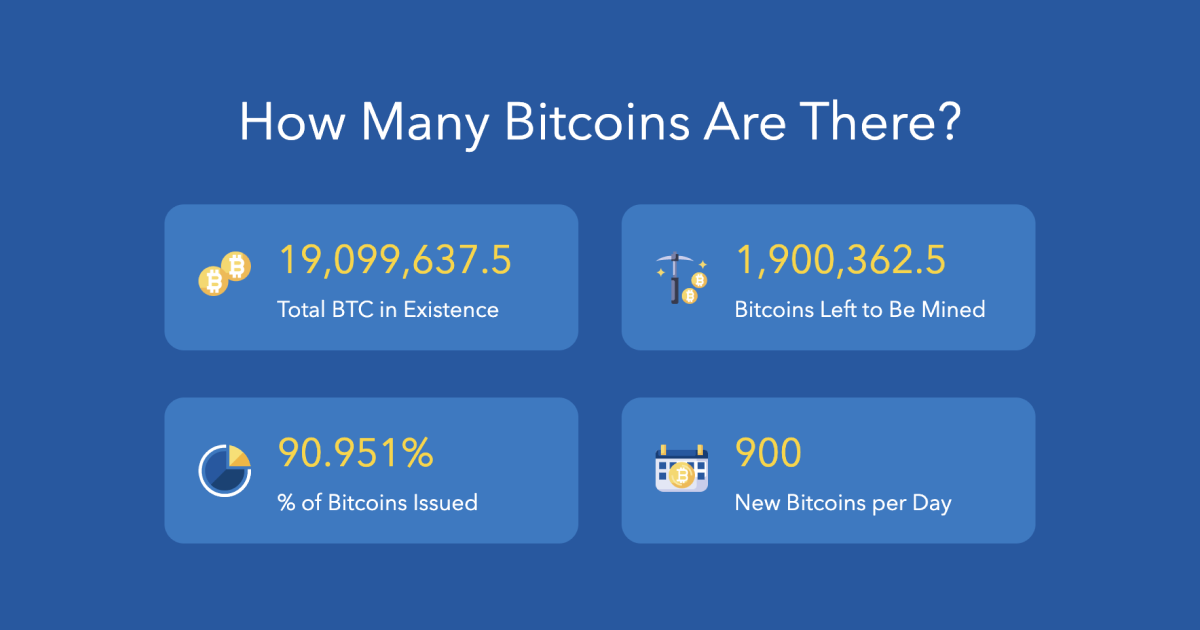
As of late 2023 and early 2024, the circulating supply of Bitcoin is typically around 19.5 million BTC. This figure continuously inches upwards as new blocks are mined and block rewards are issued. It’s important to note that the circulating supply is not static; it grows until it eventually reaches the 21 million hard cap, which is projected to occur sometime around the year 2140. For real-time and precise figures, reliable cryptocurrency data aggregators and blockchain explorers are the best sources. These platforms track every block mined and every Bitcoin issued, providing the most up-to-date picture of the circulating supply. Investors and analysts closely monitor this metric, as it directly impacts market dynamics and the overall supply-demand equilibrium for Bitcoin.
Lost, Unspent, and Unevenly Distributed Bitcoin
While the technical limit of 21 million Bitcoin is clear, the effective circulating supply that is actively traded and accessible is considerably less. A significant portion of mined Bitcoin is either permanently lost, held dormant, or concentrated in the hands of a few large entities, further amplifying its scarcity and influencing market behavior.
Irrecoverably Lost Coins: A Permanent Reduction
A notable portion of Bitcoin minted since 2009 has been permanently lost. This can occur for various reasons: individuals losing access to their private keys, accidentally sending Bitcoin to non-existent or incorrect addresses, or the demise of owners without provision for asset transfer. Early adopters, in particular, who mined Bitcoin when its value was negligible, may have lost or discarded hard drives containing their wallets. While estimates vary widely, it is widely believed that millions of Bitcoin are irrevocably lost. Some analyses suggest as much as 20% or even more of the total mined supply may be unrecoverable. These lost coins effectively reduce the actual circulating supply, making the remaining Bitcoin even scarcer and potentially more valuable. The absence of a central recovery mechanism, while a testament to Bitcoin’s decentralized nature, means these lost coins are gone forever.
Satoshi’s Unspent Holdings: The Dormant Millions
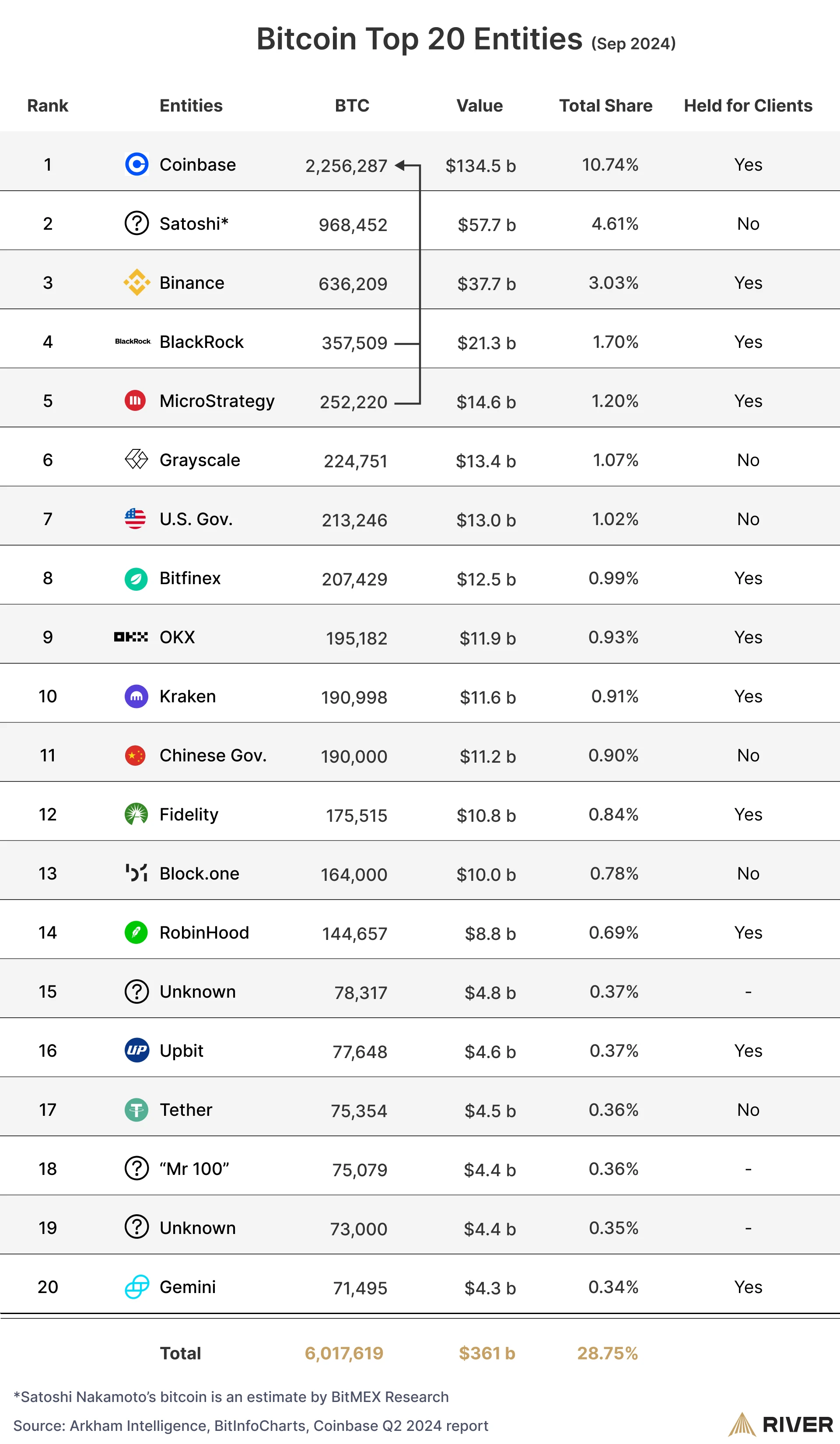
Perhaps the most famous tranche of unspent Bitcoin belongs to Satoshi Nakamoto, Bitcoin’s anonymous creator. Through analyzing early mining patterns, researchers estimate that Satoshi mined approximately one million Bitcoin in the early days of the network. These coins have remained largely untouched since they were first mined, sitting in dormant wallets. The potential movement of these coins is a constant subject of speculation, as such a large transfer could significantly impact market sentiment and price. However, given their prolonged dormancy, many assume they will never be spent, further solidifying their status as effectively out of circulation. These unspent coins from the network’s genesis represent a vast, theoretical reserve that influences perceptions of Bitcoin’s true available supply.
The Whale Phenomenon: Distribution Insights
Another critical aspect of Bitcoin’s distribution is the phenomenon of “whales”—individuals or entities holding vast amounts of Bitcoin. While not technically “lost,” these concentrated holdings significantly influence the effective market supply and dynamics. On-chain analysis frequently reveals that a relatively small number of addresses control a substantial percentage of the total Bitcoin supply. This uneven distribution means that while there are millions of Bitcoin, the readily tradable supply available to the broader market can be influenced by the decisions of these large holders. Their buying or selling activities can create significant price movements, leading to periods of heightened volatility. Understanding the distribution of Bitcoin, and the activities of these major holders, is crucial for assessing market liquidity and potential price pressures.
The Economic Implications of a Finite Supply
Bitcoin’s finite supply is not just a technical detail; it underpins its entire economic thesis and its growing role in global finance. This inherent scarcity shapes its market behavior, its investment appeal, and its long-term potential as a disruptive financial technology.
Bitcoin as Digital Gold: A New Paradigm for Value Storage
The comparison of Bitcoin to gold is no accident. Both derive a significant portion of their value from their scarcity, their resistance to debasement, and their role as a universal store of value independent of any single government or financial institution. Just as gold is difficult and costly to mine, Bitcoin requires significant energy and computational effort, creating a “proof-of-work” that mirrors the physical effort in extracting precious metals. Its digital nature, however, offers distinct advantages over physical gold, including ease of transfer, divisibility, and provable scarcity. In an era of expansive monetary policies by central banks globally, Bitcoin offers an alternative, a truly hard asset in a digital form, positioning itself as a robust inflation hedge and a sanctuary for wealth preservation.
Deflationary vs. Inflationary Currencies: A Fundamental Contrast
Traditional fiat currencies are inherently inflationary. Central banks can increase the money supply, either through quantitative easing or by setting interest rates that encourage borrowing and spending. While designed to stimulate economic growth, this often leads to a gradual erosion of purchasing power over time. Bitcoin, with its predictable and capped supply, presents a fundamentally deflationary model. As demand for Bitcoin potentially increases over time while its supply growth diminishes and ultimately ceases, each unit theoretically gains purchasing power. This stark contrast makes Bitcoin a compelling alternative for those disillusioned with the perpetual devaluation of fiat currencies, offering a monetary policy that prioritizes scarcity and value preservation above all else. This distinction is central to its appeal in macro-economic debates about future financial systems.
Impact on Price and Adoption: Scarcity Driving Demand
The direct impact of Bitcoin’s finite supply on its price is profound. As new Bitcoin are introduced at a steadily decreasing rate, and assuming consistent or increasing demand, the basic laws of supply and demand dictate that its value should increase over the long term. Each halving event, by cutting the issuance rate, intensifies this scarcity, often preceding periods of significant price appreciation. This predictable scarcity model creates a strong incentive for adoption and holding. As more individuals and institutions recognize Bitcoin’s unique properties—its hard cap, decentralization, and censorship resistance—its demand grows, further stressing the limited supply. This dynamic feedback loop between increasing scarcity and growing demand is a primary driver behind Bitcoin’s historical price performance and its potential for future growth and widespread adoption as a global reserve asset or digital currency.
Future Supply Dynamics and Beyond 21 Million
The journey to the 21 million Bitcoin cap is a long one, spanning over a century. However, the implications of this eventual limit, and what happens once it’s reached, are critical for the long-term sustainability and economic model of the Bitcoin network.
The Last Bitcoin Mined: An Event Horizon
The final Bitcoin is projected to be mined sometime around the year 2140. While this date is far into the future, it represents a significant event horizon for the network. At this point, the block reward of newly minted Bitcoin will cease entirely. This means that the monetary inflation component of Bitcoin’s supply will effectively end, reaching its absolute maximum. The network will then operate solely on the existing circulating supply, with no new units ever being introduced. This makes Bitcoin a truly disinflationary asset leading up to 2140, and then a perfectly deflationary one thereafter, in terms of its monetary supply. The anticipation of this ultimate scarcity adds another layer to its long-term investment narrative, positioning it as a truly unique financial asset for future generations.
Transaction Fees as Miner Incentive: A New Economic Model
Once the block reward of newly minted Bitcoin diminishes to zero, the question arises: how will miners be incentivized to continue securing the network? The answer lies in transaction fees. Currently, miners earn both the block reward and the fees voluntarily attached to transactions by users. As block rewards decrease and eventually disappear, transaction fees are expected to become the sole source of revenue for miners. This transition is crucial for Bitcoin’s long-term security. The market for transaction fees must be robust enough to adequately compensate miners for the significant computational resources they expend. This will necessitate a healthy demand for on-chain transactions and potentially higher average transaction fees than seen today, ensuring the network remains secure and immutable without relying on monetary expansion.
The Ongoing Debate: Can the Limit Be Changed?
While the 21 million cap is hardcoded into the Bitcoin protocol, the theoretical question of whether it could ever be changed occasionally surfaces. In principle, any aspect of the Bitcoin protocol could be changed if an overwhelming majority of network participants (miners, node operators, developers, and users) agreed to the alteration. This would involve a “hard fork,” creating a new version of Bitcoin with different rules. However, in practice, changing the 21 million limit is considered virtually impossible and extremely unlikely. The hard cap is perhaps the most fundamental and universally agreed-upon feature of Bitcoin’s monetary policy. Any attempt to increase it would be met with overwhelming resistance from the community, as it would fundamentally undermine Bitcoin’s value proposition as a scarce, inflation-proof asset. The social consensus around the 21 million limit is stronger than any technical possibility of alteration, cementing its permanence.
Conclusion
The question “how many Bitcoin in the world?” reveals more than just a number; it uncovers the intricate economic design that underpins this revolutionary digital asset. Bitcoin’s finite supply of 21 million units is not merely a technical specification but the very foundation of its appeal as “digital gold,” a hedge against inflation, and a potential store of value in an increasingly digital world. From the carefully orchestrated halving events that systematically reduce its issuance rate to the millions of irrevocably lost coins and the concentrated holdings of whales, every facet of its supply mechanism contributes to its scarcity and, by extension, its long-term value proposition.
As we move towards the eventual mining of the last Bitcoin around 2140, the network’s economic model will gracefully transition, relying entirely on transaction fees to incentivize the miners who secure its integrity. While the theoretical possibility of altering the 21 million cap exists, the overwhelming social and economic consensus within the Bitcoin community ensures its immutable nature. For investors, financial institutions, and individuals alike, understanding Bitcoin’s fixed supply is paramount to comprehending its role in the evolving global financial landscape, recognizing its unique position as a truly scarce digital asset in an era of abundant fiat money.
aViewFromTheCave is a participant in the Amazon Services LLC Associates Program, an affiliate advertising program designed to provide a means for sites to earn advertising fees by advertising and linking to Amazon.com. Amazon, the Amazon logo, AmazonSupply, and the AmazonSupply logo are trademarks of Amazon.com, Inc. or its affiliates. As an Amazon Associate we earn affiliate commissions from qualifying purchases.