
Electricity, the invisible force that powers our modern world, is governed by a set of fundamental principles and units. Understanding these basics is not just for aspiring electricians or engineers; it’s increasingly relevant for anyone navigating the tech landscape, managing personal finances, or even building a brand. In our interconnected world, where smart homes, electric vehicles, and AI-driven devices are becoming commonplace, a grasp of electricity’s core components is becoming as essential as understanding your smartphone’s battery life or the energy consumption of your gadgets.
This article will delve into the three foundational units of electricity, explaining what they represent, how they relate to each other, and why understanding them can offer a unique perspective across technology, branding, and financial decision-making. While the immediate application might seem purely technical, we’ll explore the surprisingly broad implications of these basic units in areas far beyond the electrical outlet.

The Pillars of Electrical Understanding: Voltage, Current, and Resistance
At its heart, electricity is the flow of charged particles, typically electrons. To quantify and understand this flow, scientists and engineers rely on three primary units, each representing a crucial aspect of an electrical circuit:
1. The Push: Understanding Voltage (V) – Measured in Volts
Imagine electricity flowing through a wire like water through a pipe. Voltage, measured in Volts (V), represents the electrical pressure or the potential difference that drives the flow of charge. It’s the “push” that compels electrons to move from one point to another.
- Analogy: In our water pipe analogy, voltage is akin to the water pressure supplied by a pump or the height difference in a reservoir. The higher the pressure, the stronger the force pushing the water. Similarly, a higher voltage means a stronger electrical “push.”
- Where you encounter it: You see voltage ratings on almost every electrical device. Your phone charger might be rated at 5V, a wall outlet typically supplies 120V (in North America) or 240V (in Europe), and powerful industrial equipment can operate at thousands of volts.
- Impact on Technology: Voltage is critical for the operation of virtually all electronic devices. Microprocessors and sensitive components often require very specific, low voltages to function correctly. Too high a voltage can fry delicate circuits, while too low a voltage might prevent a device from powering on or operating efficiently. Understanding voltage is key to selecting the right power adapters for your gadgets, troubleshooting power issues, and appreciating the engineering behind power delivery systems.
- Branding Implications: While not a direct marketing term, the concept of “voltage” can be metaphorically applied to brand energy and impact. A brand with high “voltage” is dynamic, exciting, and impactful, generating strong engagement and emotional resonance. Think of brands that evoke passion and excitement – they possess a high metaphorical voltage. Conversely, a brand with low voltage might be perceived as stagnant or uninspiring.
- Financial Connections: In personal finance, understanding voltage can relate to the “pressure” or “motivation” driving financial decisions. High “voltage” in financial goals (e.g., early retirement, significant investment targets) can be a powerful motivator. It also relates to the risk associated with certain investments; higher potential returns often come with higher “voltage” or risk, requiring careful management. In business finance, the “voltage” of capital injection (e.g., a large investment round) can significantly impact a company’s growth trajectory.
2. The Flow: Understanding Electric Current (I) – Measured in Amperes (Amps)
Electric current, measured in Amperes (A), often shortened to Amps, represents the rate of flow of electric charge. It’s the actual movement of electrons through a conductor.
- Analogy: In the water pipe analogy, current is the amount of water flowing through the pipe per unit of time. If you have a wide pipe with high pressure, you’ll have a higher flow rate (current).
- Where you encounter it: Circuit breakers and fuses are rated in Amps, indicating the maximum current an electrical circuit can safely handle before tripping or blowing. A typical household appliance might draw a few Amps, while a high-power device like an electric oven can draw tens of Amps.
- Impact on Technology: The amount of current a device draws determines its power consumption and how quickly it can perform certain tasks. For instance, a faster charging phone often draws more current (higher Amps) to replenish its battery more quickly. In power transmission, managing current is crucial to prevent overheating of wires and power loss. Understanding current is vital for comprehending energy efficiency ratings and the power draw of your appliances.
- Branding Implications: Metaphorically, brand “current” can represent the momentum and reach of a brand’s message and influence. A brand with strong current is actively engaging its audience, spreading its message effectively, and generating buzz. This can be seen in social media virality, widespread media coverage, or high customer adoption rates. A brand with weak current might struggle to gain traction or maintain audience interest.
- Financial Connections: In personal finance, current can be linked to the flow of money in and out of your accounts. Managing your “cash flow” – the incoming income (your “source” of current) and outgoing expenses (your “drains”) – is fundamental to financial health. For businesses, current is the revenue generated and the expenses incurred – the lifeblood of operations. Understanding how much “current” (money) is flowing and where it’s going is crucial for budgeting, investment decisions, and profitability.
3. The Opposition: Understanding Resistance (R) – Measured in Ohms
Resistance, measured in Ohms (Ω), represents the opposition to the flow of electric current. It’s the property of a material that impedes the movement of electrons.
- Analogy: In our water pipe analogy, resistance is like obstructions within the pipe – friction, narrow sections, or kinks – that make it harder for water to flow. The rougher or narrower the pipe, the higher the resistance.
- Where you encounter it: Wires themselves have resistance, which is why they heat up when carrying current (think of an old incandescent light bulb). Resistors are specific components in electronic circuits designed to limit current flow or create specific voltage drops.
- Impact on Technology: Resistance plays a crucial role in controlling electrical circuits. It’s used to manage the flow of current, dissipate heat, and create voltage dividers. For example, dimmer switches for lights use variable resistors to control the amount of current flowing to the bulb, thus controlling its brightness. Understanding resistance is key to designing and troubleshooting electronic devices, ensuring components operate within safe parameters, and preventing overheating.
- Branding Implications: Brand “resistance” can represent the challenges, hurdles, or inertia a brand faces in the market. This could be competition, changing consumer preferences, negative public perception, or internal inefficiencies. Brands that effectively overcome resistance are resilient, adaptable, and can navigate difficult market conditions. A brand that succumbs to resistance may struggle to grow or even survive. It can also refer to how resistant customers are to a brand’s message or product – the friction involved in adoption.
- Financial Connections: In personal finance, resistance can be seen as the obstacles preventing you from achieving financial goals. This might include debt, unexpected expenses, lack of discipline, or market downturns. Overcoming financial resistance often requires strategic planning, perseverance, and smart financial tools. In business finance, resistance can manifest as market barriers, regulatory challenges, or economic downturns that impede revenue growth or profitability. Managing and mitigating these resistances is a core aspect of successful business strategy.
The Interconnectedness: Ohm’s Law – The Unifying Principle
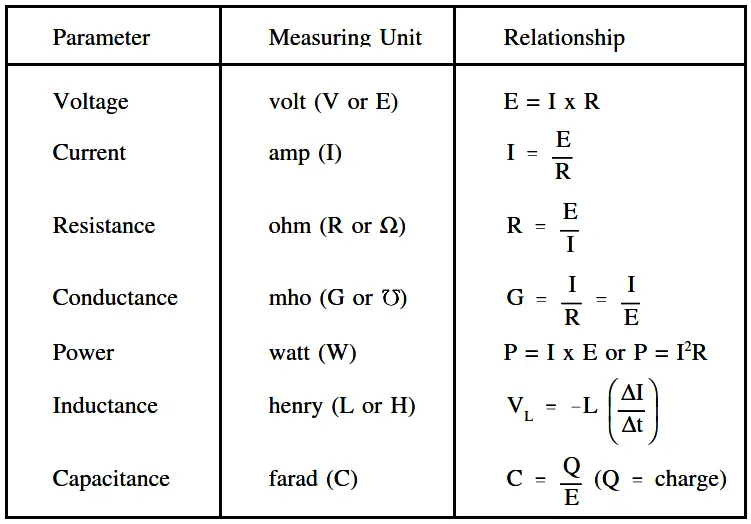
These three basic units – Voltage, Current, and Resistance – are not independent entities. They are intrinsically linked by a fundamental law of electricity known as Ohm’s Law. This law, expressed as:
V = I * R
(Voltage = Current multiplied by Resistance)
This simple equation elegantly describes their relationship:
- For a given resistance, if you increase the voltage (the push), the current (the flow) will increase proportionally.
- For a given voltage, if you increase the resistance (the opposition), the current (the flow) will decrease.
- Conversely, to maintain a constant current through a higher resistance, you would need to increase the voltage.
Understanding Ohm’s Law in Action:

Technology: The Foundation of Circuits
Ohm’s Law is the bedrock of electrical engineering and electronics design. When designing a circuit board, engineers use Ohm’s Law to calculate the values of resistors needed to control current flow to various components. For example, they might need to limit the current flowing to an LED to prevent it from burning out. By knowing the LED’s forward voltage drop and the desired current, they can calculate the necessary resistance using Ohm’s Law. Similarly, when diagnosing a faulty electronic device, understanding Ohm’s Law helps pinpoint problems. If a component is drawing too much or too little current for the applied voltage, it suggests an issue with its resistance. This is crucial for troubleshooting everything from simple chargers to complex computer systems. The efficiency of power adapters, the lifespan of batteries, and the performance of high-speed processors all rely on the precise application of Ohm’s Law.
Branding: Strategic Application of “Electrical” Principles
While not a direct scientific application, the principles of Ohm’s Law can offer a powerful framework for strategic branding. Consider “Voltage” as the brand’s inherent appeal and innovation, “Current” as its market reach and customer engagement, and “Resistance” as the competitive landscape and consumer inertia.
- A brand with high “Voltage” (innovative, exciting products) needs to ensure it has sufficient “Current” (effective marketing, strong distribution) to reach its audience. If the “Resistance” (competitors, market saturation) is high, the brand might need to increase its “Voltage” to break through or find ways to reduce the perceived “Resistance” for consumers to adopt.
- Conversely, a brand might have a strong established “Current” but needs to be mindful of potential “Resistance” (e.g., negative press, changing trends). To overcome this, it might need to boost its “Voltage” through new campaigns or product refreshes.
- The equation V = I * R suggests that to achieve a high “impact” (Voltage), a brand can either increase its “reach” (Current) or effectively overcome “challenges” (reduce Resistance). This highlights the strategic choices brands face in market penetration and competitive positioning.
Money: The Flow of Value and Financial Obstacles
In the financial realm, Ohm’s Law provides a surprisingly relevant metaphor for understanding the dynamics of wealth creation and management.
- Personal Finance: Imagine your financial goals as the desired “Voltage” – the target amount of wealth or return. The “Current” is your income and savings rate – the money flowing in. “Resistance” can be your expenses, debt, or taxes – the forces that impede the flow of money towards your goals. To achieve a high financial “Voltage,” you need to increase your “Current” (earn more, save more) and/or decrease your “Resistance” (reduce debt, cut unnecessary expenses).
- Investing: For investors, the “Voltage” can represent potential returns. The “Current” is the amount invested, and the “Resistance” could be market volatility, investment fees, or economic headwinds. A higher potential return (Voltage) might require a larger investment (Current) and could be subject to greater “Resistance” (risk). Understanding this interplay helps in setting realistic expectations and managing risk.
- Business Finance: A business’s profitability can be seen as its “Voltage.” The “Current” is revenue, and “Resistance” includes costs of goods sold, operating expenses, and market competition. To increase profitability, a business can increase revenue (Current) or reduce operational costs and competitive pressures (reduce Resistance).
Beyond the Basics: The Practical Significance of Electrical Units
While the technical definitions of Volts, Amps, and Ohms are precise, their practical significance extends far beyond academic understanding.
In Technology: Powering the Digital Revolution
Every piece of technology you interact with daily, from your smartphone to your smart refrigerator, operates within a delicate balance governed by these electrical units.
- Gadgets and Devices: The power adapter for your laptop is rated in Volts and Amps, ensuring it delivers the correct amount of power without damaging the device. The internal components of your computer operate at specific voltages, managed by complex circuitry. Understanding these specifications helps in choosing compatible accessories and even in some basic troubleshooting.
- Energy Consumption: When you’re looking to save on your electricity bill or make eco-friendly choices, understanding the wattage (which is directly related to Volts and Amps) of your appliances is crucial. Higher wattage devices consume more power, translating to higher costs and greater environmental impact. This information is often found on the appliance’s energy efficiency label.
- Digital Security: While not a direct application, the underlying infrastructure that supports digital security – servers, data centers, network equipment – all rely on precisely controlled electrical systems. Power surges, brownouts, or incorrect voltage can disrupt these systems, potentially compromising data integrity and security. Reliable power delivery is fundamental to maintaining the digital realm.
- Productivity and AI: As AI tools become more sophisticated, they demand significant computational power, which translates to higher voltage and current requirements for the hardware running them. Efficient power management and understanding the energy demands of AI can be crucial for both cost-effectiveness and environmental sustainability.
In Branding: Building Energetic and Resilient Brands
The metaphorical application of electrical units can offer a fresh perspective on branding strategy:
- Brand “Voltage” as Magnetic Appeal: Brands that generate high “voltage” are often those that are innovative, disruptive, and emotionally resonant. Think of Apple’s consistent product innovation or Tesla’s vision for sustainable energy – these brands have a high inherent “electrical charge” that attracts consumers.
- Brand “Current” as Market Momentum: A strong brand “current” means widespread awareness, active customer engagement, and significant market penetration. Social media virality, trending products, and consistent media presence all contribute to this flow. Brands that effectively “channel” their message create strong currents.
- Brand “Resistance” as Market Challenges: Every brand faces “resistance” – from established competitors, changing consumer tastes, economic downturns, or negative publicity. A brand’s ability to overcome or adapt to this resistance determines its longevity and success. Brands that are agile, responsive, and build strong customer loyalty are better equipped to navigate these resistances.
In Money: Navigating Financial Flows and Obstacles
The principles of electrical units offer a compelling analogy for financial literacy and strategy:
- Personal Finance:
- Income as Current: Your income is the “current” that fuels your financial life. Managing this flow, ensuring it’s sufficient to meet your needs and goals, is paramount.
- Expenses as Resistance: Uncontrolled expenses act as “resistance,” slowing down the flow of money towards savings and investments. Reducing unnecessary expenses is like reducing resistance in a circuit.
- Debt as a Drain: High-interest debt can be like a faulty wire, draining your financial “voltage” and making it harder to achieve your goals.
- Investing:
- Investment Size as Current: The amount you invest is the “current.” A larger investment can lead to greater potential returns.
- Risk as Resistance: Higher potential returns often come with higher risk (resistance). Understanding and managing this risk is key to successful investing.
- Market Volatility as Fluctuations: Just as voltage and current can fluctuate, so too can market conditions. Understanding how to navigate these fluctuations is crucial.
- Business Finance:
- Revenue as the Primary Current: A business’s revenue is its lifeblood. The higher the revenue, the greater the potential for profit.
- Operational Costs as Resistance: Inefficiencies and high operating costs create resistance, reducing profitability. Streamlining operations is akin to reducing electrical resistance.
- Capital Investment as Voltage Boost: Significant capital injections can act like a voltage boost, enabling a business to scale, innovate, and overcome market challenges.
Conclusion: A Universally Applicable Framework
The three basic units of electricity – Voltage, Current, and Resistance – are more than just technical terms. They represent fundamental forces that govern the flow of energy. By understanding these units and their interconnectedness through Ohm’s Law, we gain a powerful framework that can be applied not only to technology but also to the strategic thinking behind branding and the practical management of our finances.
Whether you’re choosing a new gadget, developing a marketing campaign, or planning your retirement, a foundational understanding of these electrical principles can provide valuable insights. It encourages us to think about the “push” behind our decisions (Voltage), the “flow” of resources (Current), and the “obstacles” we need to overcome (Resistance). In our increasingly complex and interconnected world, mastering these basic electrical concepts offers a unique lens through which to understand and navigate the forces shaping our technological, commercial, and personal lives.
aViewFromTheCave is a participant in the Amazon Services LLC Associates Program, an affiliate advertising program designed to provide a means for sites to earn advertising fees by advertising and linking to Amazon.com. Amazon, the Amazon logo, AmazonSupply, and the AmazonSupply logo are trademarks of Amazon.com, Inc. or its affiliates. As an Amazon Associate we earn affiliate commissions from qualifying purchases.