
The stock market’s upward trajectory has become a frequent headline, sparking both excitement among investors and a natural curiosity among observers. For many, the consistent climb begs a fundamental question: what forces are driving this sustained ascent? Is it a robust economy, technological breakthroughs, or perhaps something more nuanced related to investor sentiment and monetary policy? The reality is a complex tapestry woven from a multitude of interconnected factors, each playing a crucial role in propelling asset values higher. Understanding these underlying drivers is not just academic; it’s essential for investors looking to make informed decisions and for anyone seeking to comprehend the broader economic landscape. This article delves into the primary catalysts behind the current market strength, exploring the macroeconomic backdrop, the influence of innovation, the psychology of investing, and global dynamics that collectively explain why the stock market continues its impressive climb.

The Macroeconomic Tailwinds Powering Growth
At the heart of any sustained market rally lies a strong economic foundation. The stock market is, fundamentally, a forward-looking mechanism, discounting future corporate earnings and economic prospects. When the overall economic environment is conducive to growth, corporate profits tend to rise, making equities more attractive.
Robust Economic Data and Corporate Earnings
A significant driver of the stock market’s ascent has been the surprising resilience and strength of the global economy, particularly in major markets. Gross Domestic Product (GDP) figures have often exceeded expectations, indicating healthy economic activity. This broad-based growth translates directly into robust corporate earnings. Companies, across various sectors, have reported strong revenue growth and profitability, which are key metrics for investors. Healthy corporate balance sheets allow for reinvestment, innovation, and, crucially, higher shareholder returns through dividends and share buybacks. Furthermore, strong employment figures, characterized by low unemployment rates and rising wages, underpin consumer spending, which is a major component of economic output. When consumers are confident and employed, they spend more, fueling corporate revenues and profits, thereby creating a virtuous cycle that supports stock valuations. Certain sectors, particularly those tied to consumer discretionary spending and industrial output, often lead the charge during such periods, reflecting the broader economic health.
Taming Inflation and Monetary Policy Expectations
For a considerable period, inflation was a dominant concern for central banks globally, leading to aggressive interest rate hikes. However, recent trends have shown a consistent moderation in inflation, moving closer to central banks’ target levels. This cooling inflation has been a critical factor in shifting monetary policy expectations. As inflation recedes, the pressure on central banks to maintain restrictive interest rates diminishes, opening the door for potential rate cuts or at least a prolonged pause in tightening. Lower interest rates typically reduce the cost of borrowing for companies, stimulating investment and expansion. They also make equities more appealing relative to fixed-income investments (like bonds), which offer lower yields in a low-rate environment. The expectation of more accommodative monetary policy fuels investor optimism, as it signals a more supportive financial environment for businesses and asset valuations. This shift from an era of tightening to one of potential easing has acted as a powerful tailwind for stock prices, making capital more accessible and less costly.
Consumer Confidence and Spending Resilience
Consumer sentiment plays a pivotal role in economic performance and, consequently, stock market movements. Despite initial concerns about economic slowdowns or recessions, consumer confidence has often shown remarkable resilience. When consumers feel secure in their jobs, perceive a stable economic future, and are not overly burdened by inflation, they are more likely to spend on goods and services. This robust consumer spending directly translates into higher sales and profits for businesses, from retail and hospitality to technology and automotive. Data on retail sales, consumer credit, and discretionary spending often provide a leading indicator of corporate health. The sustained ability of consumers to spend, often supported by healthy household balance sheets and wage growth, injects vitality into the economy. This steady demand stream reassures investors about future earnings potential, underpinning their willingness to invest in companies poised to benefit from this ongoing consumption.
Technological Innovation and Sectoral Leadership
Beyond broad economic indicators, specific sectors and technological advancements often act as powerful engines for market growth, demonstrating the transformative power of innovation to reshape industries and create new wealth.
The AI Revolution and Tech Sector Dominance
Perhaps the most prominent driver of the current market rally is the rapid advancement and adoption of Artificial Intelligence (AI). The AI revolution is not merely a technological trend; it’s a paradigm shift impacting nearly every sector. Companies at the forefront of AI development, from chip manufacturers to software developers and cloud computing providers, have seen their valuations skyrocket. The promise of AI to enhance productivity, create new products and services, and drive efficiency across industries has attracted massive investment. This phenomenon is often concentrated in a few dominant players, frequently referred to as the “Magnificent Seven” or similar groups of mega-cap tech stocks, whose sheer size and growth have a disproportionate impact on major market indices. Investors are betting on these companies to be the architects of the future, leading to substantial capital inflows and driving their stock prices to unprecedented levels. The excitement around AI’s potential has created a strong narrative of future growth, overshadowing some traditional valuation concerns.
Broader Innovation Across Industries
While AI commands much of the spotlight, innovation is a pervasive force extending far beyond the tech sector itself. Breakthroughs in biotechnology, renewable energy, advanced manufacturing, and materials science are creating new markets and disrupting old ones. For instance, pharmaceutical companies are leveraging AI to accelerate drug discovery, while energy firms are developing more efficient and sustainable solutions. These innovations drive productivity gains, reduce costs, and open up new revenue streams for businesses across the economic spectrum. The development of new digital tools and platforms, improved supply chain logistics, and enhanced connectivity all contribute to a more dynamic and efficient global economy. This broader wave of innovation makes entire industries more competitive and profitable, attracting investor capital seeking exposure to companies that are adapting and leading in their respective fields. The market recognizes and rewards companies that are not just growing, but also evolving and innovating, ensuring their relevance and profitability in an ever-changing landscape.
Investor Psychology and Market Dynamics
The stock market is not solely a reflection of economic fundamentals; it’s also a complex interplay of human emotions, expectations, and behavioral patterns. These psychological factors can amplify trends, both upwards and downwards.
The Fear of Missing Out (FOMO) and Momentum Investing

In a rising market, one of the most powerful psychological forces at play is the Fear of Missing Out (FOMO). As stock prices climb and financial news outlets report impressive gains, individuals and even professional investors can feel compelled to jump in, lest they be left behind. This often leads to momentum investing, where investors buy assets that have already shown significant upward movement, expecting the trend to continue. Such behavior can create a self-fulfilling prophecy, pushing prices even higher as more capital flows into the market. While momentum can be a powerful force, it also carries risks, as it can sometimes detach asset prices from their underlying fundamental value. However, during a bull market, FOMO and momentum investing can sustain rallies longer than many analysts might predict, fueled by the collective belief that “the trend is your friend.”
Institutional Investor Inflows and Capital Allocation
Large institutional investors, such as pension funds, mutual funds, hedge funds, and sovereign wealth funds, control trillions of dollars in assets. Their allocation decisions have a profound impact on market movements. When these institutions decide to increase their equity exposure, perhaps due to a more optimistic economic outlook or a rebalancing of their portfolios, the sheer volume of capital they deploy can exert significant buying pressure on the stock market. Moreover, passive investing vehicles like index funds and ETFs, which track major indices, automatically buy more of the underlying stocks as capital flows into them, creating a consistent demand for the largest and best-performing companies. The collective buying power of these institutional players can easily overwhelm individual selling, providing a strong and steady base of demand that helps to propel and sustain market rallies.
Retail Investor Engagement and Accessibility
The landscape of investing has been transformed by technological advancements, making it easier and more accessible for individual retail investors to participate. Commission-free trading, user-friendly mobile apps, and fractional share investing have lowered barriers to entry, allowing millions of new investors to engage with the stock market. During periods of perceived bullishness, retail investors, sometimes influenced by social media trends or popular narratives, can contribute significant buying volume. Their collective actions, especially in specific stocks or sectors, can create concentrated buying pressure. While institutional flows are typically larger, the aggregated impact of engaged retail investors, particularly in growth-oriented or speculative assets, can add another layer of demand, amplifying upward trends and contributing to the overall market’s upward momentum.
Global Factors and Capital Flows
The modern financial system is globally interconnected. Events and trends far beyond national borders can have a significant impact on local stock market performance, influencing investor confidence and capital flows.
Easing Geopolitical Tensions and Stability
While the world stage is rarely entirely free of geopolitical friction, periods of relative stability or de-escalation of major conflicts can significantly reduce market uncertainty. Investors generally prefer predictability, and a reduction in major geopolitical risks—such as trade wars, regional conflicts, or political instability in key economic blocs—can lead to increased investor confidence. When the perceived risk of a major global disruption diminishes, capital that might have been held on the sidelines or allocated to safer assets (like government bonds or gold) tends to flow back into riskier, but potentially higher-return, assets like stocks. Even if significant tensions persist, markets can demonstrate resilience if the challenges are deemed manageable or if certain regions are perceived as safe havens, attracting capital seeking stability amidst global turbulence. This flow towards stability can paradoxically concentrate gains in certain markets.
International Capital Flows Seeking Returns
Capital is inherently global and seeks the most attractive returns available anywhere in the world, adjusted for risk. If a particular stock market, such as that of the United States or a specific emerging market, is perceived to offer superior growth prospects, higher corporate earnings, or a more stable regulatory environment compared to others, it will naturally attract significant foreign investment. These international capital inflows translate directly into increased demand for domestic equities, driving up stock prices. Factors such as a strong dollar (making US assets more attractive to foreign buyers), favorable interest rate differentials, or a clear lead in a transformative technology (like AI) can draw billions in foreign capital. This global competition for investment often means that a market’s performance is not just a reflection of its domestic health, but also its relative attractiveness on the world stage.
Understanding Valuation and Risk
While the market’s upward journey has been compelling, it’s crucial for investors to maintain a balanced perspective, considering both the catalysts for growth and the inherent risks. Understanding valuation metrics and embracing strategic investment principles are paramount.
Are Valuations Justified?
A frequently debated question during a protracted bull market is whether current stock valuations are justified by underlying fundamentals. Metrics like the price-to-earnings (P/E) ratio, price-to-sales (P/S) ratio, and enterprise value to EBITDA are commonly used to assess whether stocks are reasonably priced, overvalued, or undervalued. In a strong market driven by growth expectations (especially in areas like AI), P/E ratios can expand significantly, as investors are willing to pay a premium for anticipated future earnings. The argument for justified high valuations often rests on the premise of transformative technological shifts and sustained, high-quality earnings growth. However, critics may point to historical averages and suggest that some sectors or individual stocks are entering “bubble territory,” implying a potential correction. An insightful analysis requires looking beyond simple multiples to consider growth trajectories, competitive advantages, and the long-term sustainability of current profit margins. Investors must weigh the optimistic growth narratives against the potential for overextension.
The Importance of Diversification and Long-Term Strategy
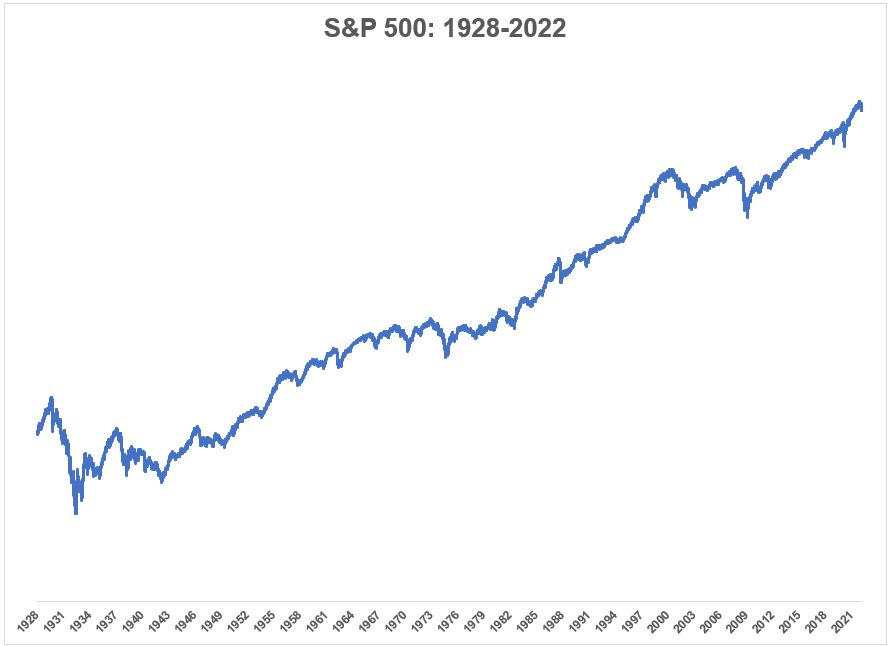
Even in a booming market, prudent investment principles remain non-negotiable. Diversification across different asset classes (stocks, bonds, real estate), sectors, geographies, and company sizes is essential to mitigate risk. While certain sectors or stocks may be driving the market higher, concentrating all investments in a few hot areas can expose an portfolio to significant volatility if those trends reverse. A long-term investment strategy, focusing on compounding returns over many years rather than chasing short-term gains, tends to yield better results. This approach encourages weathering market fluctuations and staying invested through various cycles. It also emphasizes investing in quality companies with strong fundamentals, durable competitive advantages, and sound management, rather than speculating on momentum plays that lack intrinsic value.
Potential Headwinds to Watch
No market ascent is without potential challenges. Investors should remain vigilant about factors that could reverse the upward trend. Unexpected resurgence in inflation could force central banks to revert to tighter monetary policies, making borrowing more expensive and hurting corporate profits. Geopolitical shocks, such as new conflicts or significant trade disputes, can inject uncertainty and lead to capital flight. Economic slowdowns, perhaps triggered by a sharp decline in consumer spending or business investment, would directly impact corporate earnings. Furthermore, if valuations become excessively stretched and detach too far from fundamentals, a market correction could occur as investors re-evaluate risks. Monitoring these potential headwinds is crucial for navigating the market proactively and adjusting investment strategies as circumstances evolve.
In conclusion, the stock market’s upward trajectory is a multi-faceted phenomenon, driven by a powerful confluence of robust economic indicators, transformative technological innovation—especially in AI—optimistic shifts in monetary policy expectations, and the dynamic interplay of investor psychology and global capital flows. While the current environment presents compelling opportunities, a professional and insightful approach dictates a thorough understanding of these underlying drivers, a continuous assessment of valuations, and an unwavering commitment to diversified, long-term investment strategies. The market is a complex adaptive system, and while it may climb higher on solid fundamentals and powerful trends, awareness of potential risks remains paramount for sustainable financial success.
aViewFromTheCave is a participant in the Amazon Services LLC Associates Program, an affiliate advertising program designed to provide a means for sites to earn advertising fees by advertising and linking to Amazon.com. Amazon, the Amazon logo, AmazonSupply, and the AmazonSupply logo are trademarks of Amazon.com, Inc. or its affiliates. As an Amazon Associate we earn affiliate commissions from qualifying purchases.