
When the phrase “all stocks are down” echoes through financial news, it often sparks widespread concern, confusion, and sometimes, panic among investors. This isn’t just about a few companies or a specific sector experiencing a rough patch; it signifies a broad-based market downturn where equities across various industries and geographies are shedding value. Such periods, though unsettling, are a normal, albeit challenging, part of the economic cycle. Understanding the complex interplay of factors that contribute to these synchronized declines is crucial for any investor seeking to navigate the financial markets effectively. From macroeconomic shifts to investor psychology, a confluence of forces typically drives such widespread retreats, signaling a recalibration of market expectations and asset valuations.
Understanding the Macroeconomic Undercurrents
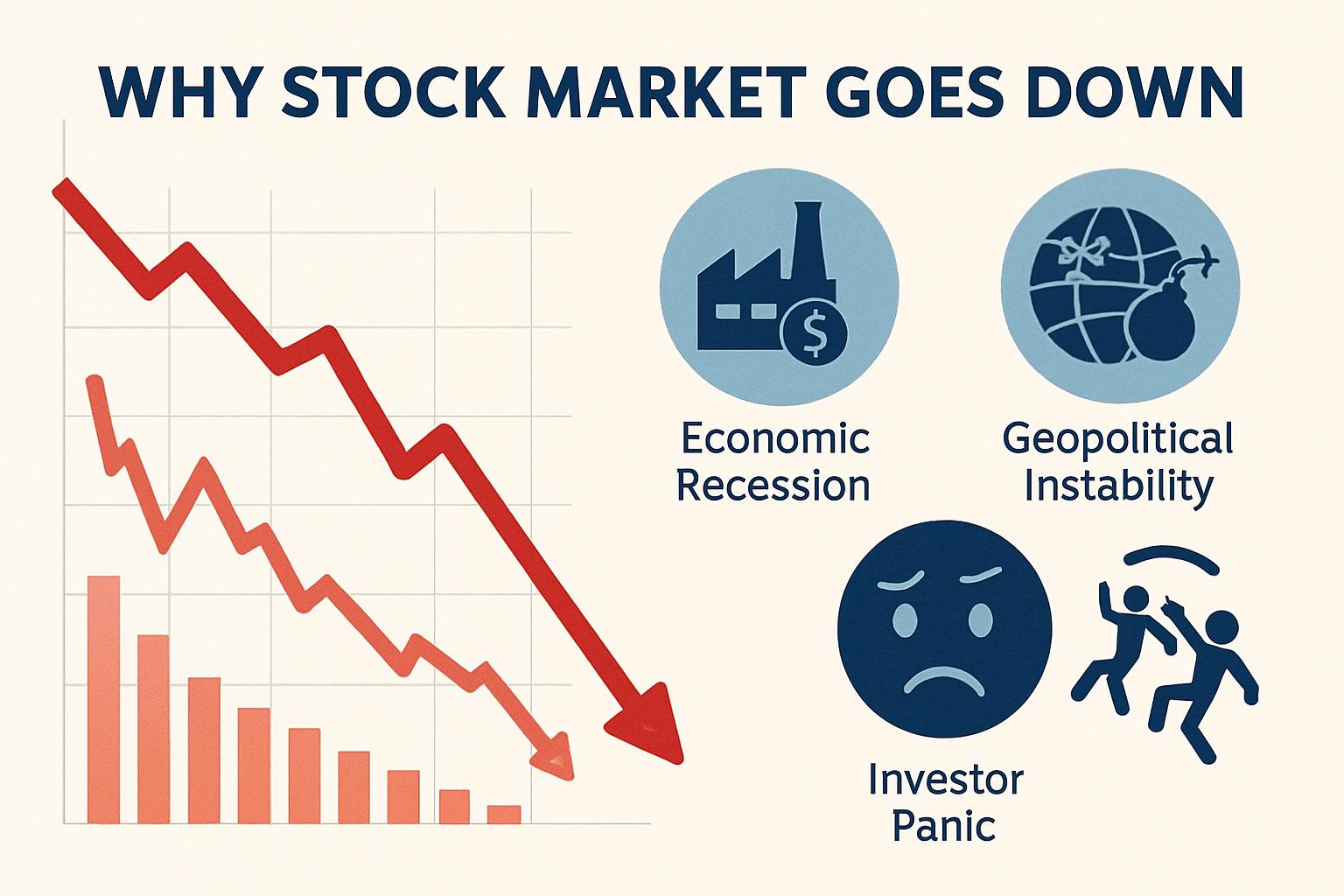
Broad market downturns rarely occur in a vacuum. They are often rooted in significant macroeconomic shifts that alter the fundamental landscape for businesses and consumers alike. These overarching economic forces dictate the health of corporate earnings, investor sentiment, and the overall availability and cost of capital.
Inflationary Pressures and Interest Rate Hikes
One of the most potent triggers for a widespread stock market decline is persistent inflation. When the cost of goods and services rises steadily, it erodes the purchasing power of consumers and increases input costs for businesses. This squeeze on profit margins can lead to lower corporate earnings, making stocks less attractive. Central banks, like the U.S. Federal Reserve, typically respond to high inflation by raising benchmark interest rates. The goal is to cool down an overheated economy by making borrowing more expensive, thereby reducing demand and slowing price increases.
However, higher interest rates have a profound impact on the stock market. Firstly, they increase the cost of capital for businesses, making it more expensive to finance expansion, invest in new projects, or even manage existing debt. Secondly, higher rates make future corporate earnings less valuable when discounted back to the present, especially for growth-oriented companies whose valuations heavily rely on future projections. Lastly, rising interest rates make “safer” fixed-income investments, like government bonds, more appealing, drawing capital away from riskier equities. This shift in capital allocation contributes to selling pressure across the stock market.
Economic Slowdown and Recession Fears
The measures taken to combat inflation, particularly aggressive interest rate hikes, often come with an inherent risk: slowing economic growth too much, potentially leading to a recession. An economic slowdown means reduced consumer spending, decreased business investment, and generally lower economic activity. Companies face challenges in maintaining sales volumes and profitability in such an environment.
The mere anticipation of a recession can trigger a stock market downturn. Investors are forward-looking, and if they foresee a period of contracting economic activity, they will often price in lower future corporate earnings by selling stocks today. A recession means higher unemployment, reduced discretionary spending, and increased financial uncertainty, all of which directly translate into weaker corporate performance and lower stock valuations. The stock market often acts as a leading indicator, declining well before an official recession is declared, as it discounts future economic conditions.
Geopolitical Instability and Supply Chain Disruptions
Global events, from wars and political unrest to pandemics and trade disputes, can significantly disrupt economic stability and, consequently, stock markets. Geopolitical instability can lead to heightened uncertainty, impacting investor confidence and prompting a flight to safety. For instance, conflicts can disrupt global energy supplies, leading to spikes in oil and gas prices, which then feed into higher transportation and production costs for businesses worldwide.
Supply chain disruptions, as widely experienced during the COVID-19 pandemic, illustrate this point vividly. When the flow of raw materials, components, and finished goods is impeded, it creates shortages, drives up prices, and hampers production for numerous industries. Companies struggle to meet demand, leading to lost sales and decreased profitability. These disruptions contribute to inflationary pressures and can exacerbate economic slowdowns, creating a challenging environment for corporate earnings and stock market performance across the board.
Corporate Performance and Valuation Adjustments
While macroeconomic factors set the stage, the direct impact on corporate performance and how investors perceive company valuations are critical in driving broad stock market declines. These micro-level effects ultimately determine how individual stocks and, by extension, the entire market react.
Declining Earnings and Revenue Growth
The macroeconomic headwinds directly translate into declining earnings and revenue growth for companies. Higher interest rates increase borrowing costs, reducing net income. Inflation means companies pay more for labor, materials, and transportation, squeezing profit margins. If companies try to pass these costs onto consumers, they risk reduced demand, leading to lower sales volumes. Conversely, if they absorb the costs, profitability suffers.
During a broad market downturn, investors anticipate that most companies will report weaker financial results. This expectation alone can drive down stock prices even before earnings reports are released. Companies that had enjoyed robust growth during more favorable economic conditions often face the steepest adjustments as their future growth prospects diminish, leading to significant downward revisions in earnings forecasts across the market.
Re-evaluation of Valuations
Beyond declining earnings, higher interest rates fundamentally alter how investors value companies. The discounted cash flow (DCF) model, a common valuation method, relies on discounting a company’s projected future cash flows back to their present value. When interest rates rise, the discount rate used in this calculation also increases. A higher discount rate means that future earnings and cash flows are worth less in today’s dollars.
This re-evaluation disproportionately affects “growth stocks”—companies whose current earnings might be low or non-existent, but whose valuations are predicated on significant future growth. As interest rates rise, the distant future cash flows of these companies become significantly less valuable, leading to substantial corrections in their stock prices. Even for established, profitable companies, the overall market’s willingness to pay a premium for earnings (reflected in price-to-earnings or P/E ratios) tends to decrease during periods of economic uncertainty and higher interest rates. This “multiple compression” contributes significantly to broad market declines.
Impact on Different Sectors
While a broad market downturn implies a general decline, its impact is rarely uniform across all sectors. Certain sectors are more sensitive to specific economic conditions. For example, technology and discretionary consumer goods sectors, often characterized by higher growth potential and reliance on consumer spending, tend to be more vulnerable during periods of rising interest rates and economic slowdowns. Their valuations often depend heavily on future growth, which becomes less attractive when discount rates increase.
Conversely, defensive sectors such as utilities, consumer staples, and healthcare tend to be more resilient. Companies in these sectors provide essential goods and services that consumers need regardless of the economic climate, making their earnings more stable. However, even these sectors are not immune to a general market decline, as widespread selling pressure can still drag down even the strongest performers.
Investor Psychology and Market Dynamics
Beyond fundamental economic and corporate performance factors, investor psychology plays a significant, often self-fulfilling, role in exacerbating broad market downturns. Collective sentiment and market dynamics can amplify initial declines and create a cycle of selling.
Fear, Uncertainty, and Doubt (FUD)
When economic news turns negative, and stock prices start to fall, an atmosphere of Fear, Uncertainty, and Doubt (FUD) can quickly take hold. News cycles often amplify concerns about inflation, recessions, and geopolitical risks, leading to a collective sense of anxiety among investors. This fear can trigger irrational decisions, prompting individuals and even institutions to sell off holdings en masse, often without regard for the underlying fundamentals of the companies they own.
The desire to “cut losses” or “get out before it gets worse” can lead to a cascade of selling pressure. This herd mentality means that even fundamentally sound companies can see their stock prices plummet simply due to widespread panic selling, rather than any specific deterioration in their business prospects.
Liquidation and De-risking
During periods of market stress, institutional investors, hedge funds, and even individual investors often engage in “de-risking” strategies. This involves reducing exposure to perceived higher-risk assets like stocks and reallocating capital to safer havens such as cash, short-term government bonds, or gold. Investors might liquidate positions across their portfolios to meet margin calls, raise liquidity, or simply reduce overall portfolio volatility.
This collective movement to liquidate assets creates substantial selling pressure across the market. It’s not uncommon for investors to sell their best-performing stocks alongside their worst, simply to reduce their overall equity exposure. This broad-based liquidation contributes to the “all stocks are down” phenomenon, as even quality companies are sold off indiscriminately.
Technical Factors and Momentum Selling
Beyond fundamental analysis and emotional responses, technical trading factors can also accelerate market declines. Once a downward trend is established, automated trading algorithms and technically oriented traders may initiate selling based on price action alone. Breaking key support levels, the crossing of moving averages, or other technical signals can trigger automatic sell orders, creating further downward momentum.
Short selling, where investors borrow and sell stocks in anticipation of a price drop, can also intensify market declines. As prices fall, short sellers profit, and their activity can add to the selling pressure. Moreover, “stop-loss” orders, set by investors to automatically sell a stock if it falls below a certain price, can trigger a flurry of selling once those price points are breached, further cascading the decline.
The Role of Central Banks and Government Policies
Central banks and government policies are not just reactive; their actions and inactions significantly influence the trajectory of financial markets during downturns. Their decisions on monetary and fiscal policy can either mitigate or exacerbate market declines.
Monetary Policy Tightening
As discussed, central bank monetary policy, particularly interest rate hikes and quantitative tightening (reducing the money supply), is a primary tool to combat inflation. While necessary for long-term economic stability, the short-term effect is often a contraction in economic activity and a decline in asset prices. By making money more expensive and less available, central banks deliberately aim to cool demand, which naturally impacts corporate revenues and profits. The market’s reaction reflects this intentional tightening, pricing in reduced future economic growth and earnings.
Fiscal Policy Responses and Their Limitations
Governments also play a role through fiscal policy—spending and taxation. During an economic slowdown, governments might implement stimulus packages, tax cuts, or increased public spending to boost demand and support economic activity. However, there are limitations. Implementing effective fiscal policy can be slow and politically contentious. Furthermore, during a period of high inflation, excessive fiscal stimulus can inadvertently worsen the problem, putting more pressure on central banks to tighten monetary policy even further, which can create a conflicting and confusing environment for markets. The balance between stimulating growth and managing inflation is a delicate act.
Global Interconnectedness of Markets
In today’s globalized economy, markets are deeply interconnected. Economic conditions and policy decisions in one major economy can have ripple effects worldwide. For instance, a significant interest rate hike by the U.S. Federal Reserve often strengthens the U.S. dollar, which can make U.S. exports more expensive and make it harder for countries with dollar-denominated debt to service their obligations. This can trigger capital outflows from emerging markets, leading to currency depreciation and stock market declines in those regions. A broad market downturn in one major financial hub can quickly spread globally as investors adjust their portfolios in response to interconnected risks and changing global economic prospects.
Navigating a Downturn: Strategies for Investors
While broad market downturns are daunting, they are also a normal part of investing. For savvy investors, they present both challenges and opportunities. A well-thought-out strategy can help mitigate losses and even position for future gains.
Diversification and Asset Allocation
The bedrock of resilience during a downturn is a diversified portfolio. Spreading investments across different asset classes (stocks, bonds, real estate, commodities), various industries, company sizes, and geographies helps cushion the blow. When one asset class or sector is underperforming, others might hold up better, reducing overall portfolio volatility. Regular rebalancing helps maintain the desired asset allocation, ensuring that one isn’t overexposed to struggling assets.
Long-Term Perspective and Dollar-Cost Averaging
Panic selling during a downturn often locks in losses. History shows that markets recover, and patience is a virtue. Adopting a long-term investment horizon allows investors to ride out short-term fluctuations. Dollar-cost averaging, which involves investing a fixed amount of money at regular intervals regardless of market prices, is an effective strategy. When prices are low, your fixed investment buys more shares, potentially leading to higher returns when the market eventually recovers. It removes emotion from investing and capitalizes on market volatility.
Rebalancing and Opportunity Identification
Market downturns can be opportune moments for proactive investors. As certain assets fall more than others, your portfolio’s original asset allocation might drift. Rebalancing involves selling assets that have performed well (and are now overweight) and buying assets that have underperformed (and are now underweight) to bring your portfolio back to your target allocation. This forces you to “buy low and sell high.” Furthermore, downturns provide chances to invest in high-quality companies at discounted prices. Identifying fundamentally strong businesses that are temporarily undervalued due to market-wide selling can lead to significant long-term gains.

Cash Reserves and Emergency Funds
Maintaining adequate cash reserves or an emergency fund separate from your investment portfolio is critical. This ensures that you don’t have to sell investments at a loss to cover unexpected expenses during a downturn. A solid financial safety net provides peace of mind and allows you to stick to your long-term investment plan without being forced into disadvantageous sales.
In conclusion, when “all stocks are down,” it’s a complex phenomenon driven by a confluence of macroeconomic pressures, corporate performance shifts, investor psychology, and policy responses. While unnerving, understanding these drivers and adopting disciplined investment strategies like diversification, a long-term perspective, and strategic rebalancing can help investors navigate these challenging periods and emerge stronger on the other side. Market downturns, though painful in the short term, are an integral part of the investment landscape and often set the stage for future growth.
aViewFromTheCave is a participant in the Amazon Services LLC Associates Program, an affiliate advertising program designed to provide a means for sites to earn advertising fees by advertising and linking to Amazon.com. Amazon, the Amazon logo, AmazonSupply, and the AmazonSupply logo are trademarks of Amazon.com, Inc. or its affiliates. As an Amazon Associate we earn affiliate commissions from qualifying purchases.