
For anyone engaged in the world of finance, from seasoned institutional investors to budding retail traders, the question of “when does the stock market open today?” is far more than a simple query about a time slot. It’s a fundamental point of reference, a cornerstone around which strategies are built, news is digested, and investment decisions are executed. Understanding stock market operating hours – including standard sessions, extended trading, and the myriad factors that can alter them – is critical for managing risk, capitalizing on opportunities, and simply participating effectively in the global financial landscape. This article will delve into the intricacies of stock market timing, exploring its nuances across major exchanges, the implications for investors, and how to navigate the complex, interconnected world of global trading.
The Standard Operating Hours of Major Stock Exchanges
The rhythm of the stock market is primarily dictated by its standard operating hours, which define when the vast majority of trading occurs. These hours are carefully chosen to balance liquidity, regulatory oversight, and the daily cycles of business. However, these times vary significantly depending on the geographic location and specific exchange.
North American Markets: NYSE and NASDAQ
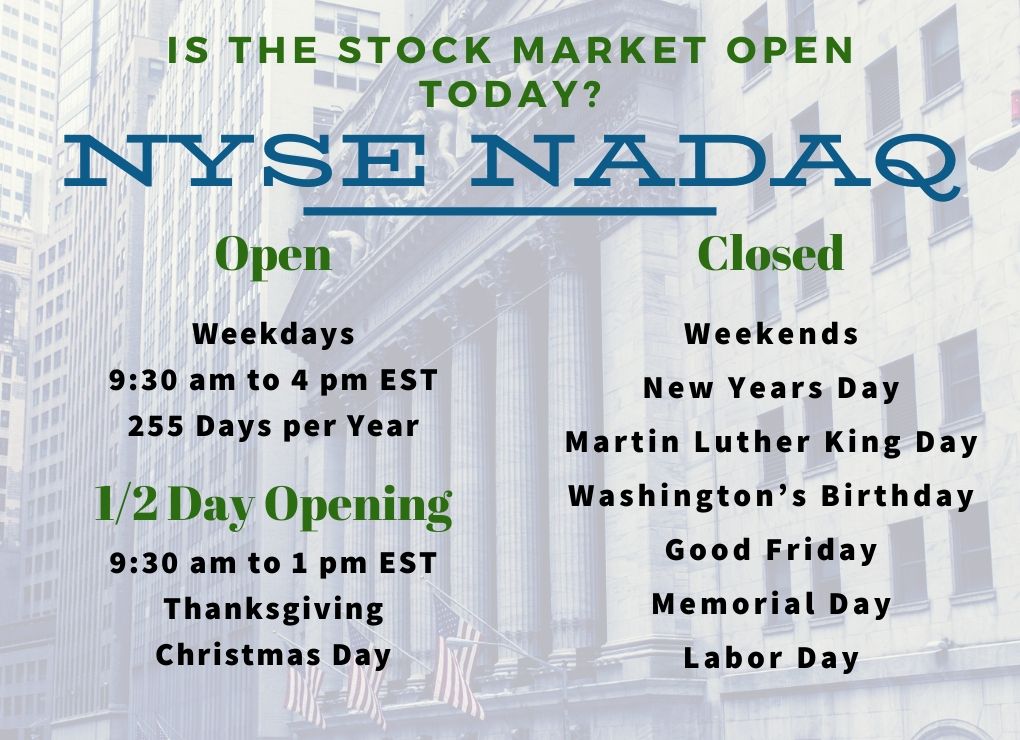
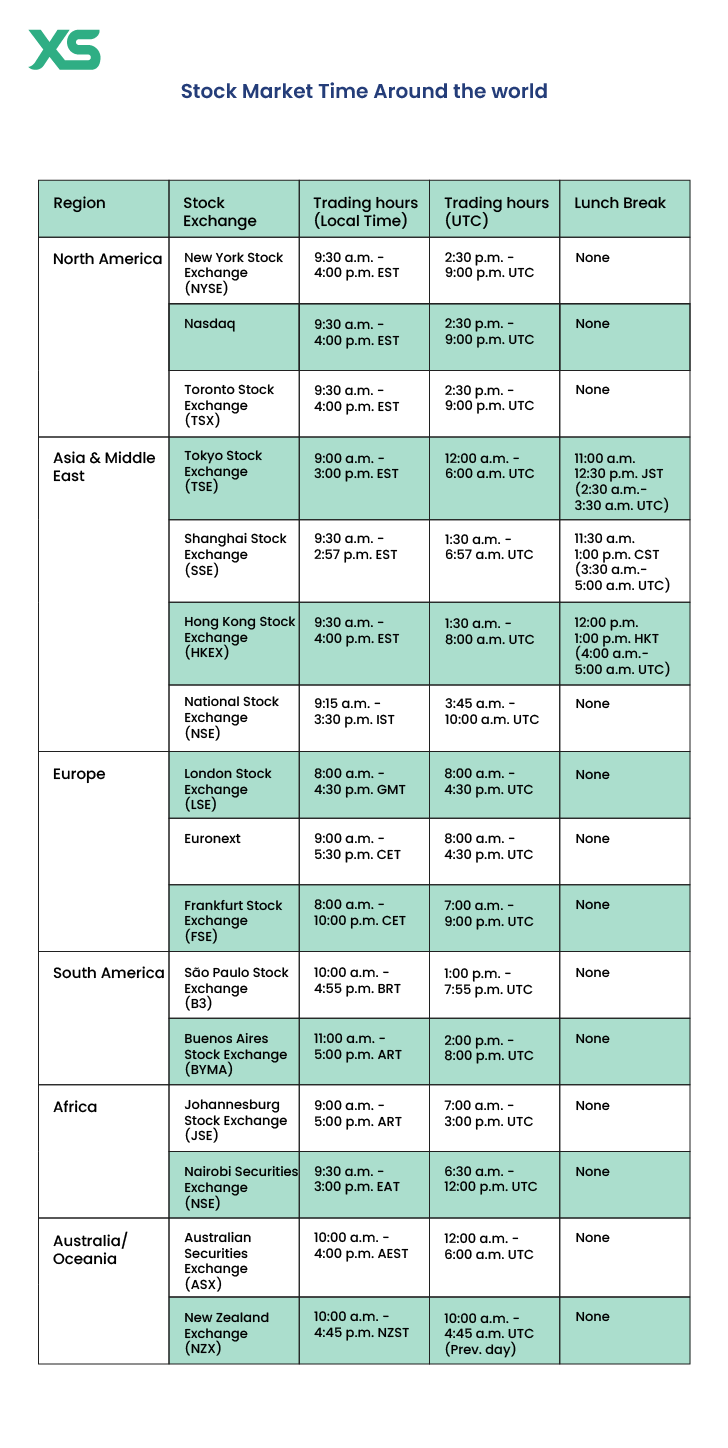
In the United States, the two titans of equity trading, the New York Stock Exchange (NYSE) and the NASDAQ, follow identical core trading hours. Both exchanges open at 9:30 AM Eastern Time (ET) and close at 4:00 PM ET on weekdays. This seven-and-a-half-hour window is often referred to as the “regular trading session” or “cash market hours.” These times are established to concentrate trading activity, thereby maximizing liquidity and minimizing price volatility, while also allowing sufficient time for market participants across different time zones to engage. It’s important for investors to note the impact of daylight saving time, as the actual clock time for these hours shifts by an hour twice a year. Canadian exchanges, such as the Toronto Stock Exchange (TSX), typically mirror these hours, operating from 9:30 AM to 4:00 PM ET.
European Markets: London Stock Exchange (LSE) and Euronext
Across the Atlantic, European exchanges operate on their own distinct schedules. The London Stock Exchange (LSE), one of the world’s oldest and largest, runs from 8:00 AM to 4:30 PM Greenwich Mean Time (GMT) or British Summer Time (BST) when applicable. This longer session reflects a different approach to market structure and allows for overlap with both Asian and North American markets. Similarly, Euronext, which operates exchanges in Amsterdam, Brussels, Dublin, Lisbon, Oslo, and Paris, generally has a core trading session from 9:00 AM to 5:30 PM Central European Time (CET) or Central European Summer Time (CEST). These hours are designed to accommodate a broad range of European investors and institutions, ensuring robust liquidity throughout the continent’s business day.
Asian Markets: Tokyo Stock Exchange (TSE) and Shanghai Stock Exchange (SSE)
Asia presents a more fragmented and often unique set of trading hours. The Tokyo Stock Exchange (TSE), Japan’s primary exchange, operates from 9:00 AM to 11:30 AM Japan Standard Time (JST) for its morning session, followed by a lunch break, and then reopens from 12:30 PM to 3:00 PM JST for its afternoon session. This midday break is a distinguishing feature of many Asian markets, intended to give participants a pause and potentially manage volatility.
In mainland China, the Shanghai Stock Exchange (SSE) and Shenzhen Stock Exchange (SZSE) also incorporate a lunch break. Their trading hours are typically 9:30 AM to 11:30 AM China Standard Time (CST) for the morning session and 1:00 PM to 3:00 PM CST for the afternoon session. Other major Asian exchanges, such as the Hong Kong Stock Exchange (HKEX) and the Bombay Stock Exchange (BSE) in India, similarly have their own distinct schedules, often featuring lunch breaks and different opening and closing times, reflecting local business practices and regulatory frameworks.
Unpacking Pre-Market and After-Hours Trading
While the regular trading session dominates volume and public attention, the financial markets are not entirely dormant outside these hours. “Extended-hours trading” – comprising pre-market and after-hours sessions – offers opportunities and challenges that traditional investors may not encounter.
What is Extended-Hours Trading?
Extended-hours trading refers to the periods before the official market open (pre-market) and after the official market close (after-hours). In the U.S., pre-market trading typically begins as early as 4:00 AM ET and runs until 9:30 AM ET, while after-hours trading can extend from 4:00 PM ET to as late as 8:00 PM ET. These sessions are largely facilitated by Electronic Communication Networks (ECNs), which are automated trading systems that match buy and sell orders directly, bypassing traditional market makers. The primary purpose of extended-hours trading is to allow market participants to react quickly to news and events that occur outside regular market hours, such as earnings reports, economic data releases, or breaking geopolitical developments.
Advantages and Disadvantages
Extended-hours trading presents a unique set of pros and cons for investors.
Advantages:
- Timely Reaction to News: Investors can immediately act on significant news before or after the regular session, potentially gaining an edge or mitigating losses.
- Flexibility: It offers greater flexibility for those with busy schedules during standard market hours.
- Early Price Discovery: For highly anticipated events, pre-market activity can offer clues about how the stock might perform during the regular session.
Disadvantages:
- Lower Liquidity: Significantly fewer participants trade during extended hours, leading to thinner order books and making it harder to execute large orders without impacting the price.
- Higher Volatility: The low liquidity can lead to exaggerated price swings on relatively small trading volumes, increasing risk.
- Wider Spreads: The difference between the bid and ask price (the spread) is often wider, meaning investors might pay more to buy or receive less to sell.
- Institutional Dominance: Large institutional investors and professional traders with sophisticated tools and vast capital often dominate these sessions, putting retail investors at a disadvantage.
- Limited Order Types: Some brokers may restrict the types of orders that can be placed during extended hours, often only allowing limit orders.
Retail investors engaging in extended-hours trading must exercise extreme caution, understanding the inherent risks and potentially adjusting their strategies to account for the unique market dynamics of these periods.
Market Closures and Special Trading Days: What to Know
The stock market doesn’t operate every single weekday, and its hours can be truncated on certain occasions. Understanding these market closures and special trading days is crucial for financial planning and avoiding unexpected trading disruptions.
Public Holidays: Major Market Shutdowns
Stock exchanges worldwide observe various public holidays, during which they remain entirely closed. These typically include national holidays, which vary by country. For example, in the United States, major exchanges like the NYSE and NASDAQ are closed on:
- New Year’s Day
- Martin Luther King, Jr. Day
- Presidents’ Day
- Good Friday
- Memorial Day
- Juneteenth National Independence Day
- Independence Day
- Labor Day
- Thanksgiving Day
- Christmas Day
It’s important to remember that if a holiday falls on a weekend, the market may observe it on the preceding Friday or following Monday. Each exchange publishes its holiday schedule well in advance, and investors should consult these official calendars to plan their trading and investment activities accordingly.
Early Closings and Special Circumstances
In addition to full-day closures, exchanges sometimes operate on an abbreviated schedule, closing earlier than usual. In the U.S., common examples include:
- The day after Thanksgiving (Black Friday), when markets typically close at 1:00 PM ET.
- The day before Independence Day, if it falls on a weekday.
- Christmas Eve, if it falls on a weekday.
These early closings are often designed to accommodate holidays while still allowing a partial trading session. Beyond scheduled early closings, extremely rare and unforeseen events like severe weather, national emergencies, or significant technical issues could potentially lead to unscheduled market closures or delays. While electronic trading largely mitigates the need for physical closures, regulatory bodies have the authority to halt trading if deemed necessary to maintain market integrity.
Impact of Futures and Options Market Hours
It’s also worth noting that related financial markets, such as futures and options exchanges, often have different and frequently longer trading hours than the underlying equity markets. For instance, many futures contracts trade nearly 24 hours a day, five days a week, with only short breaks. This can impact strategies that involve hedging or arbitrage between different asset classes, as news occurring outside equity market hours can still move related derivatives markets, influencing where stocks might open the next day. Investors need to be aware of the specific hours for each asset class they trade.
The Strategic Importance of Market Hours for Investors
Knowing when the market opens and closes is more than a logistical detail; it holds significant strategic importance for investors. Market hours influence liquidity, volatility, news dissemination, and ultimately, the success of various trading strategies.
Volatility and Liquidity Patterns
Throughout the standard trading day, patterns of volatility and liquidity emerge. Generally, the first hour after the market opens (often called the “opening bell” or “power hour”) and the last hour before it closes tend to exhibit the highest volatility and liquidity.
- Opening Hour: This period sees a surge in activity as investors react to overnight news, economic reports, and pre-market price movements. Prices can swing wildly, offering opportunities for day traders but also presenting higher risk.
- Mid-Day Lull: The middle hours of the trading day typically experience lower volume and volatility, as many active traders take a break or wait for new catalysts.
- Closing Hour: As the market approaches its close, another surge in activity occurs as institutions rebalance portfolios, individual investors place last-minute orders, and options expiry strategies play out. This period can also be highly volatile.
Understanding these patterns allows traders to tailor their activity. Day traders often focus on the opening and closing hours for their heightened price action, while those seeking more stable conditions might prefer the mid-day.
News Catalysts and Market Reactions
Major corporate announcements, economic data releases, and significant geopolitical news are frequently timed to occur either before the market opens or after it closes. This strategy aims to give all market participants a chance to digest the information before trading resumes, theoretically leading to a more orderly price discovery process.
However, this also means that the opening bell can be a moment of intense reaction, as accumulated news translates into rapid price adjustments. Investors must be prepared to absorb and react to new information quickly, understanding how it might influence their holdings or potential trades. Tools like pre-market analysis and monitoring futures markets can offer insights into potential opening gaps or early trends.
Adapting Trading Strategies
Different investment strategies inherently interact with market hours in distinct ways:
- Day Traders: These investors operate within a single trading day, entering and exiting positions before the market closes. Their success heavily depends on understanding intra-day volatility and liquidity patterns. The opening and closing “power hours” are often their prime hunting grounds.
- Swing Traders: Holding positions for a few days to several weeks, swing traders are less focused on the minute-by-minute action but still need to be aware of how overnight news might create opening gaps that impact their entry or exit points.
- Long-Term Investors: For those holding stocks for months or years, the precise opening and closing times are less critical. Their focus is on fundamental analysis and long-term trends, though they still benefit from understanding overall market sentiment and major news events that can influence long-term valuations.
- Order Placement: Understanding market hours also dictates effective order placement. During active trading, market orders are typically executed quickly. However, during extended hours or volatile periods, using limit orders (which specify a maximum buy price or minimum sell price) becomes crucial to protect against unfavorable executions.
Navigating Global Markets and Time Zone Differences
The world’s financial markets are increasingly interconnected, creating a nearly continuous flow of trading activity around the globe. For investors with international interests or those seeking a broader understanding of market dynamics, navigating these global markets and their time zone differences is essential.
The 24/5 Trading Cycle (Almost)
While no single stock exchange operates 24/7, the staggered opening and closing times of major global markets create an almost continuous 24-hour trading cycle across the five weekdays. As the trading day ends in Asia, European markets are already well underway, and as Europe winds down, North American markets are in full swing. This global relay means that news and events in one region can quickly cascade and influence market sentiment and prices in another. For instance, a major economic announcement in China can impact European opening prices, which in turn can set the tone for the U.S. market later in the day. Institutional investors often have desks operating around the clock to capitalize on this continuous flow of information and opportunity.
Practical Considerations for International Investing
Investing in foreign markets introduces additional layers of complexity beyond just time zones:
- Currency Exchange Rates: When investing in non-domestic markets, currency fluctuations become a significant factor. A strong investment gain can be eroded by an unfavorable exchange rate movement, and vice versa.
- Regulatory Differences: Each country has its own regulatory framework, accounting standards, and investor protection laws. Understanding these differences is crucial for assessing risk and compliance.
- Local Holidays and Market Conventions: As discussed, holiday schedules and specific trading conventions (like lunch breaks in Asia) vary greatly. Investors must research the specific market they intend to trade in.
- Brokerage Access: Not all brokers offer access to every international market, and fees for foreign trading can be higher.

Tools and Resources for Tracking Global Markets
Given the complexities, investors need reliable tools and resources to stay informed:
- Financial News Platforms: Reputable financial news outlets (e.g., Bloomberg, Reuters, The Wall Street Journal, Financial Times) provide real-time updates on global market openings, closures, and key events.
- Trading Apps and Platforms: Many modern trading platforms and mobile apps offer consolidated views of global market hours, indices, and real-time data.
- Time Zone Converters: Simple online time zone converters are invaluable for translating global market hours into a local context.
- Exchange Websites: The official websites of individual stock exchanges are the most accurate sources for holiday schedules, early closings, and specific trading rules.
By leveraging these resources, investors can maintain a comprehensive view of the global financial landscape, irrespective of their local time zone.
Understanding when the stock market opens today, and every other trading day, is a foundational element of financial literacy for anyone participating in capital markets. It’s not just about a clock; it’s about appreciating the intricate dance of global economics, investor psychology, regulatory frameworks, and technological infrastructure that drives the world’s financial engine. From the standard sessions of major exchanges to the extended hours, special closures, and the strategic implications for trading, every aspect of market timing plays a crucial role. By diligently researching, utilizing available tools, and staying informed, investors can better navigate the opportunities and challenges that arise with each opening bell around the globe.
aViewFromTheCave is a participant in the Amazon Services LLC Associates Program, an affiliate advertising program designed to provide a means for sites to earn advertising fees by advertising and linking to Amazon.com. Amazon, the Amazon logo, AmazonSupply, and the AmazonSupply logo are trademarks of Amazon.com, Inc. or its affiliates. As an Amazon Associate we earn affiliate commissions from qualifying purchases.