
In the dynamic world of global finance, the question “what stock market is open right now?” is far more complex than it initially appears. Unlike a local storefront with fixed operating hours, the stock market is a vast, interconnected network of exchanges spanning every time zone, ensuring that somewhere in the world, trading is almost always in progress. For investors, traders, and financial enthusiasts, understanding the continuous ebb and flow of global market hours is not merely an academic exercise; it is a fundamental aspect of strategic decision-making, risk management, and capitalizing on opportunities as they arise across different continents.
The perception of “the stock market” often defaults to prominent Western exchanges like the New York Stock Exchange (NYSE) or NASDAQ. While these are undoubtedly crucial, they represent only a fraction of the global trading ecosystem. As one market closes for the day, another is typically opening, creating a sequential chain of trading activity that underpins the modern 24/7 financial news cycle. This article will delve into the intricacies of global stock market hours, explaining why they matter, detailing the schedules of key exchanges worldwide, exploring the factors that influence these times, and offering practical tools to help you stay informed and make well-timed investment decisions.
The Global Nature of Stock Markets: A 24/7 Investing Landscape
The idea of a single, monolithic “stock market” is a misconception. Instead, we operate within a sophisticated global network of individual exchanges, each with its own operating hours, trading rules, and listed securities. This decentralized yet interconnected structure allows for a continuous flow of capital and information, fundamentally shaping how investors approach their portfolios and react to world events.
Why Market Hours Matter for Investors
For any investor, whether retail or institutional, understanding market hours is paramount for several critical reasons. Firstly, it dictates when orders can be placed, executed, and settled. If you’re looking to buy shares of a U.S. company, attempting to do so when the NYSE is closed means your order will either sit pending or be executed during the next available trading session, potentially at a different price than anticipated. This lag can be particularly impactful during periods of high volatility or breaking news.
Secondly, market hours directly influence liquidity and price discovery. During active trading hours, a large volume of buyers and sellers creates tight bid-ask spreads and efficient price discovery. Outside these hours, liquidity often dries up significantly, making it harder to execute large orders without impacting prices, and increasing the risk of wider spreads and price discrepancies.
Finally, market hours impact the timing of corporate announcements and economic data releases. Companies often choose to release earnings reports or significant news outside of regular trading hours to allow investors time to digest the information before markets react. Similarly, major economic indicators are often scheduled strategically to coincide with market openings or closings, leading to immediate price movements. Being aware of these schedules allows investors to anticipate and react effectively.
The Interconnectedness of Global Exchanges
The notion that markets operate in isolation is increasingly outdated. Modern financial markets are deeply interconnected, driven by instantaneous information flow, global capital allocation, and the rise of multinational corporations. News or economic data released in one major market can trigger a ripple effect across others, even if they are in different time zones and operating during different local hours.
For instance, a significant economic report from China can influence European stock futures before European markets even open, and then subsequently impact U.S. markets later in their trading day. Technological advancements and the proliferation of electronic trading platforms have further cemented this interconnectedness, allowing capital to flow seamlessly across borders. This means that even if your primary investments are in a single market, understanding the global tapestry of trading hours provides crucial context and can help predict potential market sentiment shifts.
Key Stock Market Opening and Closing Times Around the World
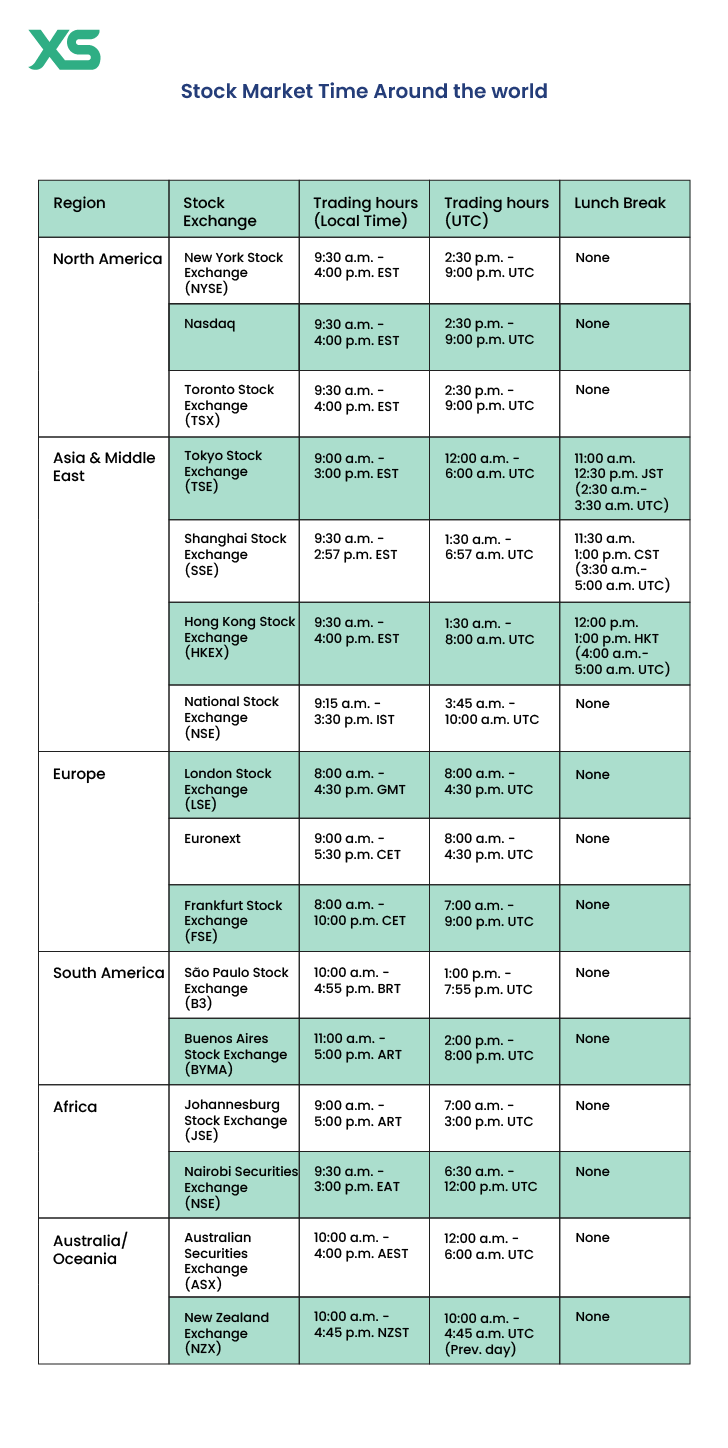
To navigate the global investing landscape, it’s essential to be familiar with the operating hours of major stock exchanges across different regions. These times are typically based on local time zones and are subject to changes due to daylight saving and national holidays.
North American Markets (NYSE, NASDAQ, TSX)
North American markets are among the most closely watched globally.
- New York Stock Exchange (NYSE) & NASDAQ (USA): Both operate from 9:30 AM to 4:00 PM Eastern Time (ET), Monday through Friday. These are the primary trading hours.
- Toronto Stock Exchange (TSX) (Canada): Operates from 9:30 AM to 4:00 PM Eastern Time (ET), Monday through Friday, mirroring the U.S. markets.
European Markets (LSE, Euronext, Deutsche Börse)
Europe’s financial centers kick off their trading day as Asian markets wind down.
- London Stock Exchange (LSE) (UK): Open from 8:00 AM to 4:30 PM Greenwich Mean Time (GMT) or British Summer Time (BST), Monday through Friday.
- Euronext (Paris, Amsterdam, Brussels, Lisbon): Generally open from 9:00 AM to 5:30 PM Central European Time (CET) or Central European Summer Time (CEST), Monday through Friday.
- Deutsche Börse (Frankfurt) (Germany): Operates from 9:00 AM to 5:30 PM CET/CEST, Monday through Friday.
Asian Markets (TSE, HKEX, SSE, NSE)
Asia is where the global trading day typically begins, setting the tone for subsequent markets.
- Tokyo Stock Exchange (TSE) (Japan): Operates from 9:00 AM to 11:30 AM and 12:30 PM to 3:00 PM Japan Standard Time (JST), Monday through Friday (with a lunch break).
- Hong Kong Stock Exchange (HKEX): Operates from 9:30 AM to 12:00 PM and 1:00 PM to 4:00 PM Hong Kong Time (HKT), Monday through Friday (with a lunch break).
- Shanghai Stock Exchange (SSE) & Shenzhen Stock Exchange (SZSE) (China): Operate from 9:30 AM to 11:30 AM and 1:00 PM to 3:00 PM China Standard Time (CST), Monday through Friday (with a lunch break).
- National Stock Exchange (NSE) & BSE (India): Open from 9:15 AM to 3:30 PM Indian Standard Time (IST), Monday through Friday.
Other Major Markets (ASX, B3)
Further extending the global trading day.
- Australian Securities Exchange (ASX) (Australia): Operates from 10:00 AM to 4:00 PM Australian Eastern Standard Time (AEST) or Australian Eastern Daylight Time (AEDT), Monday through Friday.
- B3 (Brazil Stock Exchange) (Brazil): Operates from 10:00 AM to 5:00 PM Brazil Standard Time (BRT) or Brazil Daylight Time (BRST), Monday through Friday.
This sequential opening and closing of exchanges means that as the sun rises across the globe, a new trading session begins, offering continuous opportunities and challenges for the informed investor.
Factors Influencing Market Hours and Trading Activity
While the core trading hours are relatively standard, several factors can influence or extend these times, adding layers of complexity for investors.
Time Zones and Daylight Saving
The most obvious factor is time zones. Markets operate according to their local time, meaning that 9:00 AM in Tokyo is a completely different absolute time than 9:00 AM in New York. Investors planning to trade across multiple regions must constantly convert times to their local reference or rely on platforms that do so automatically.
Daylight Saving Time (DST) further complicates matters. Countries that observe DST shift their clocks forward or backward by an hour, usually in spring and autumn. This means that the time difference between two markets might change by an hour twice a year. For example, the time difference between New York and London will be different when one or both are observing DST compared to when they are not. Awareness of these shifts is crucial to avoid missed opportunities or mistimed trades.
National Holidays and Market Closures
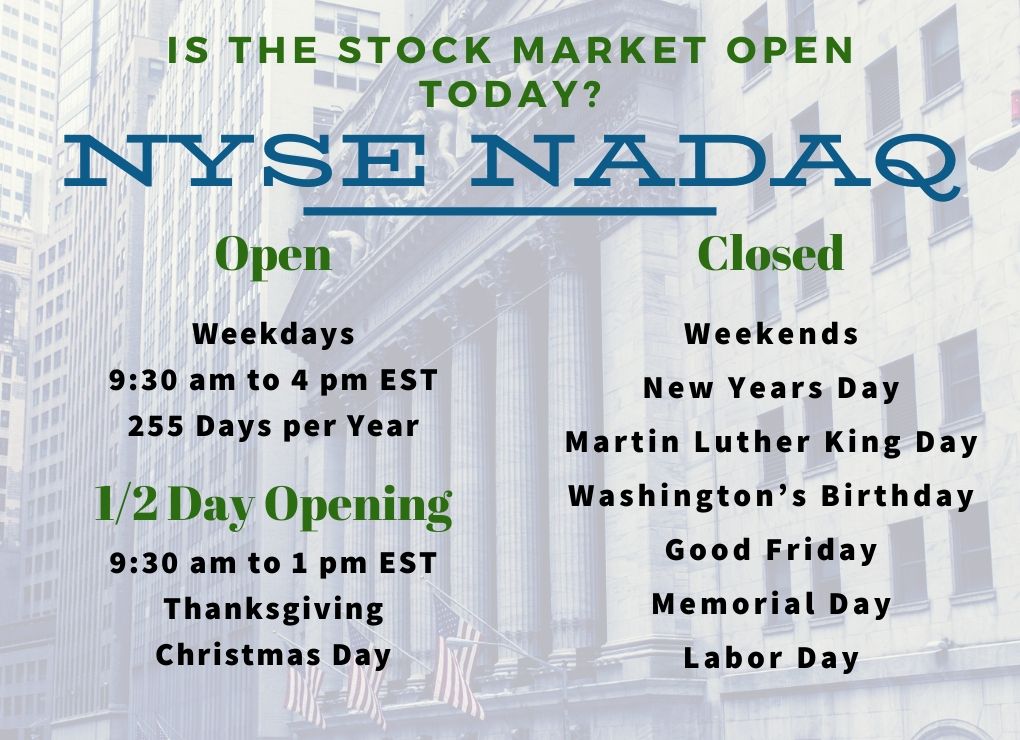
Stock exchanges observe national holidays, during which they remain closed. These closures can be particularly impactful when they occur in major financial centers. For instance, U.S. markets are closed on federal holidays like New Year’s Day, Memorial Day, Independence Day, Thanksgiving, and Christmas. European and Asian markets have their own sets of holidays, some of which may span multiple days, such as Chinese New Year or various religious festivals.
It is imperative for investors to consult a market holiday calendar, especially if they hold positions in international securities or trade derivatives linked to foreign indices. Unanticipated closures can prevent the execution of urgent orders, leaving portfolios exposed to overnight risks or preventing investors from realizing profits.
Pre-Market and After-Hours Trading
Beyond the standard trading hours, many exchanges facilitate “pre-market” and “after-hours” trading sessions.
- Pre-Market Trading: Occurs before the official market open. For U.S. exchanges like NYSE and NASDAQ, this typically runs from 4:00 AM to 9:30 AM ET.
- After-Hours Trading: Occurs after the official market close. For U.S. exchanges, this usually runs from 4:00 PM to 8:00 PM ET.
These extended sessions allow institutional investors and sophisticated retail traders to react quickly to news released outside regular hours. However, they come with significant caveats:
- Lower Liquidity: Fewer participants mean wider bid-ask spreads and potentially larger price swings on smaller volumes.
- Higher Volatility: Less liquidity can amplify price movements, increasing risk.
- Limited Access: Not all brokers offer pre-market and after-hours trading, and order types might be restricted.
While these sessions offer flexibility, they demand a deeper understanding of market mechanics and increased vigilance due to their unique characteristics.
Practical Tools and Strategies for Tracking Live Market Status
Staying abreast of which market is open and what its current status is requires reliable information sources and strategic use of financial tools. In today’s digital age, a wealth of resources is available to help investors keep track.
Financial News Websites and Apps
Leading financial news outlets are indispensable resources. Websites like Bloomberg, Reuters, The Wall Street Journal, Financial Times, and Yahoo Finance offer comprehensive global market coverage. Many provide dedicated “market dashboards” or “world market” sections that display the current status (open, closed, pre-market, after-hours) of major exchanges, along with real-time quotes, indices, and news feeds.
Mobile apps from these providers offer similar functionality, allowing investors to monitor markets on the go. These platforms often include customizable watchlists, alerts for specific stocks or indices, and market holiday calendars, making them invaluable for both active traders and long-term investors.
Brokerage Platforms and Their Features
Your online brokerage platform is another primary source of market information. Most modern brokerage interfaces display the current trading status of markets relevant to the securities you hold or track. They often show a countdown to market open or close, indicate if a stock is trading in pre-market or after-hours, and provide access to extended-hours trading capabilities.
Advanced platforms may even offer integrated global market calendars, news feeds filtered by region, and real-time data for international exchanges. Understanding how to leverage these features within your brokerage account can significantly enhance your ability to make timely decisions. Always check your broker’s specific functionalities and any disclaimers regarding data delays for international markets.
Leveraging World Clocks and Market Calendars
For those who frequently trade across different time zones, a reliable world clock is essential. Many operating systems (Windows, macOS) have built-in world clock features, and numerous online tools and apps provide customizable world clocks. Setting up clocks for key financial centers (New York, London, Tokyo, Frankfurt) can help you quickly ascertain local times and adjust your trading schedule accordingly.
Furthermore, a dedicated market holiday calendar is crucial. Websites like MarketWatch, Investing.com, or specific exchange websites (e.g., NYSE.com, LSE.com) publish annual calendars detailing market closures for holidays, shortened trading days, and other special events. Subscribing to email alerts or integrating these calendars into your personal digital calendar can prevent unexpected disruptions to your trading plans.
Navigating Different Market Sessions as an Investor
Understanding market hours is just the first step; effectively navigating the different trading sessions requires a tailored approach to strategy, risk, and execution.
Real-time Trading vs. Delayed Orders
During regular market hours, most retail investors can place market orders, limit orders, or stop-loss orders that are typically executed in real-time (or near real-time, depending on system load and liquidity). The high volume and liquidity ensure that prices are generally stable and orders are filled efficiently.
However, outside of these hours, if you place an order, it will often be treated as a “delayed” order, meaning it will sit pending until the next regular trading session begins. The execution price could be significantly different from the price at which you placed the order, especially if major news breaks overnight. For critical trades, it’s often advisable to use limit orders that specify a maximum or minimum acceptable price, rather than market orders, to protect against adverse price movements during delayed execution.
Risks and Opportunities of After-Hours Trading
After-hours and pre-market trading offer both distinct risks and opportunities.
Opportunities:
- Immediate Reaction to News: Allows investors to react to earnings reports or news releases that occur outside regular hours, potentially getting ahead of the general market.
- Flexibility: Provides more flexibility for those whose schedules prevent them from trading during standard hours.
- Price Discovery: Early indications of market sentiment can emerge, signaling potential trends for the upcoming regular session.
Risks:
- Low Liquidity: As mentioned, lower trading volumes can lead to wider bid-ask spreads, making it more expensive to execute trades and increasing the potential for significant price volatility.
- Higher Volatility: A small number of large orders can cause disproportionately large price swings, making it difficult to achieve desired entry or exit points.
- Institutional Dominance: These sessions are often dominated by institutional investors with advanced tools and information, potentially putting retail investors at a disadvantage.
- Technological Issues: Not all brokers or trading platforms are equally robust during extended hours, and technical glitches can occur.
Investors considering extended-hours trading should do so with caution, using limit orders exclusively, and understanding the increased risks involved.
Developing a Global Trading Strategy
For investors with a truly global perspective, developing a strategy that accounts for worldwide market hours is essential. This might involve:
- Diversification: Holding assets across different time zones to reduce concentration risk and potentially capture growth opportunities around the clock.
- Strategic Information Gathering: Monitoring global news feeds continuously, recognizing that a development in one region can impact your portfolio in another, even if that market is currently closed.
- Time Zone Management: Using world clocks and market calendars to plan trading activity around openings and closings of relevant exchanges.
- Leveraging Technology: Utilizing advanced brokerage tools, real-time data feeds, and alerts to stay informed.
- Risk Management: Being extra vigilant with stop-loss orders for positions in volatile international markets, especially during periods when those markets are closed.
- Understanding Cultural and Economic Nuances: Recognizing that different regions have unique economic drivers, regulatory environments, and investor sentiments that influence market behavior.
In conclusion, the question “what stock market is open right now?” underscores the truly global and ceaseless nature of modern finance. While no single market is open 24/7, the sequential operation of exchanges around the world creates a continuous trading environment. For the discerning investor, understanding this intricate dance of opening and closing bells, factoring in time zones, holidays, and extended trading hours, is not just about staying informed; it’s about mastering the rhythm of global capital and positioning oneself for success in a perpetually active financial world.
aViewFromTheCave is a participant in the Amazon Services LLC Associates Program, an affiliate advertising program designed to provide a means for sites to earn advertising fees by advertising and linking to Amazon.com. Amazon, the Amazon logo, AmazonSupply, and the AmazonSupply logo are trademarks of Amazon.com, Inc. or its affiliates. As an Amazon Associate we earn affiliate commissions from qualifying purchases.