
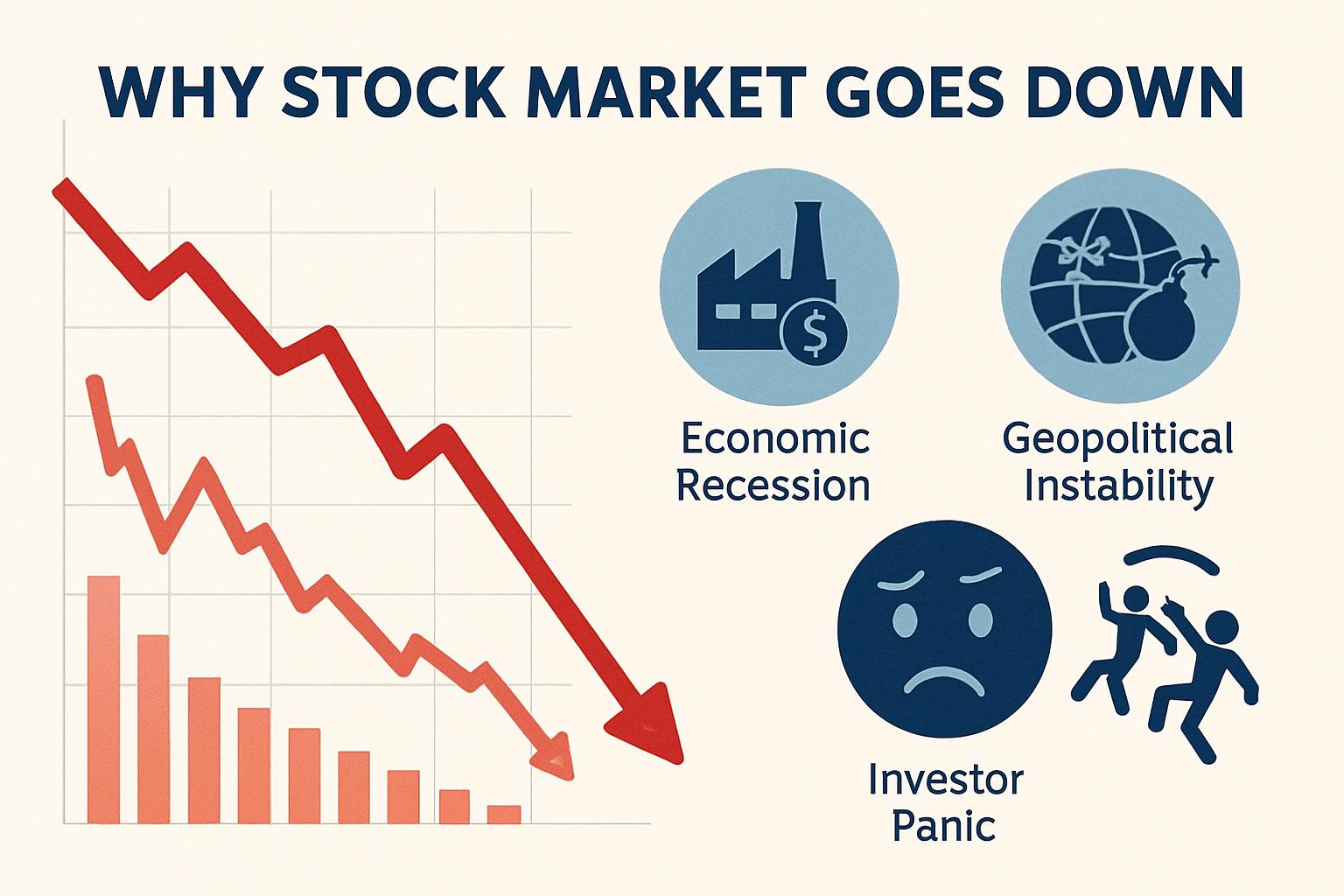
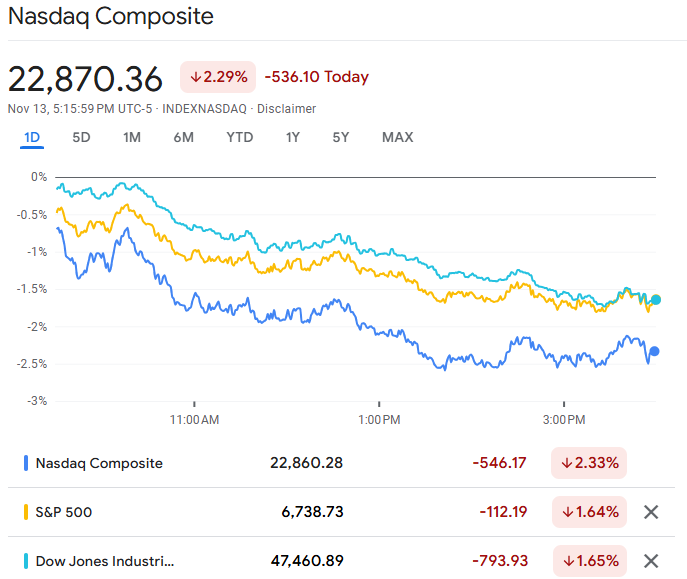
The stock market, a dynamic and often unpredictable beast, is a constant barometer of global economic health, investor sentiment, and geopolitical stability. Today, like many days before it and surely many after, the market has experienced a downturn, prompting investors, analysts, and everyday citizens alike to ask: what exactly is causing this decline? A market drop is rarely attributable to a single factor; instead, it typically emerges from a complex interplay of macroeconomic forces, specific industry headwinds, and the powerful, sometimes irrational, currents of investor psychology. Understanding these underlying causes is crucial not only for making sense of current events but also for strategizing future financial decisions.
Understanding Market Volatility: A Daily Phenomenon
Market volatility is not an anomaly; it is an intrinsic characteristic of financial markets. Fluctuations, both upward and downward, are a natural part of the investment landscape, driven by the continuous interplay of supply and demand, informed and emotional decision-making, and the constant flow of new information.
The Dynamic Nature of Global Markets
Financial markets are interconnected ecosystems, meaning an event in one corner of the world can ripple across continents. A poor earnings report from a major tech company in the U.S. might affect investor confidence globally. A shift in monetary policy by the European Central Bank could influence bond yields in Asia. This interconnectedness means that diagnosing a market drop requires a broad perspective, looking beyond immediate headlines to the deeper currents flowing through the global economy. Liquidity, the ease with which assets can be bought or sold without affecting their price, also plays a role; in times of uncertainty, liquidity can dry up, amplifying price movements.
Differentiating Corrections from Crashes
It’s important to distinguish between a market “drop,” a “correction,” and a full-blown “crash.” A market drop, like the one we might be observing today, could be a daily ebb. A market correction is generally defined as a decline of 10% or more from a recent peak. These are relatively common and often healthy, helping to reset valuations and prevent overheating. A market crash, conversely, is a rapid, often unexpected, and steep decline (typically 20% or more) that can take years to recover from, usually triggered by systemic economic issues or significant crises. Today’s drop is more likely a reaction to immediate news or a developing trend rather than an indicator of a systemic collapse, though sustained drops can morph into corrections if the underlying concerns persist.
Key Macroeconomic Factors Fueling Today’s Downturn
The primary drivers of widespread market movements are almost always macroeconomic in nature. These overarching economic conditions influence corporate profitability, consumer spending, and the overall risk appetite of investors.
Inflationary Pressures and Interest Rate Hikes
One of the most potent forces influencing markets today is the specter of inflation. When the cost of goods and services rises persistently, it erodes the purchasing power of money and eats into corporate profit margins. In response, central banks worldwide, notably the U.S. Federal Reserve, often resort to raising interest rates. While intended to cool down an overheating economy and bring inflation under control, higher interest rates make borrowing more expensive for businesses and consumers. This can slow economic growth, increase the cost of financing for companies (impacting their bottom line), and make bonds, which offer fixed returns, more attractive relative to riskier stocks. Growth stocks, in particular, whose valuations often rely on future earnings, tend to be more sensitive to rising interest rates, as higher discount rates diminish the present value of those future profits.
Geopolitical Tensions and Global Instability
Uncertainty is anathema to financial markets, and geopolitical tensions are a primary source of it. Conflicts, trade wars, political instability in major economic regions, or even significant policy shifts by influential governments can send shockwaves through global markets. Such events disrupt supply chains, increase commodity prices (especially energy), reduce consumer and business confidence, and can lead to capital flight as investors seek safer havens. The war in Ukraine, for example, has had a profound impact on energy and food prices globally, contributing to inflationary pressures and casting a pall of uncertainty over the global economic outlook. Similarly, tensions between major trading blocs can trigger tariffs and trade barriers, hurting multinational corporations.
Economic Data and Corporate Earnings
Markets are constantly digesting new data, and disappointing economic indicators can trigger sell-offs. Lower-than-expected GDP growth rates, rising unemployment figures, declining manufacturing output, or weaker retail sales can signal an economic slowdown or even a recession, prompting investors to pull back from equities. Similarly, corporate earnings reports are critical. If a significant number of bellwether companies report earnings that miss analyst expectations or issue cautious guidance for future quarters, it signals weakening corporate health. This can lead to a broad market decline as investors reassess future profitability and valuations across entire sectors or the market as a whole. Profit warnings from influential companies can particularly impact sentiment.
Commodity Price Swings
The prices of raw materials like oil, natural gas, metals, and agricultural products have a cascading effect on the economy. A sharp rise in oil prices, for instance, increases transportation costs for businesses, raises manufacturing expenses, and reduces the disposable income of consumers. Conversely, a dramatic fall could signal weakening global demand. These price swings can impact various sectors differently—benefiting energy producers while hurting airlines or manufacturers. Persistent volatility in commodity markets can be a major contributor to broader market instability, adding another layer of cost pressure and uncertainty.
Sector-Specific Headwinds and Investor Sentiment
Beyond the macro picture, specific sectors can face unique challenges that contribute to a broader market drop, often amplified by prevailing investor psychology.
Technology Sector Vulnerability
The technology sector, characterized by high growth potential and often higher valuations, is particularly susceptible to market downturns. In an environment of rising interest rates, the present value of future earnings (which many tech companies rely on) decreases, making these stocks less attractive. Furthermore, many tech companies thrive on venture capital and easy credit, which become scarcer and more expensive when rates rise. During periods of economic uncertainty, investors often rotate out of high-growth, speculative tech stocks into more stable, value-oriented companies. This rotation can lead to significant drops in major tech indices and exert downward pressure on the overall market, given the tech sector’s large capitalization.
Consumer Confidence and Retail Spending
Consumer spending is a cornerstone of most economies. When consumer confidence wanes due to job insecurity, rising prices, or economic uncertainty, discretionary spending often slows down. This directly impacts the retail sector, hospitality, travel, and other consumer-facing industries. Companies in these sectors may see reduced sales and profits, which then translates into lower stock prices. Weak retail sales data or cautious outlooks from major retailers can signal broader economic weakness and contribute to a market drop. Inflation, in particular, forces consumers to prioritize essential goods, leaving less for other purchases, hurting non-essential consumer goods companies.
Fear, Uncertainty, and Doubt (FUD)
Investor sentiment is a powerful, often irrational, force. In times of uncertainty, fear can quickly spread, leading to panic selling. This phenomenon, often described as “Fear, Uncertainty, and Doubt” (FUD), can amplify market movements beyond what fundamental economic data might suggest. News headlines, social media chatter, and even algorithmic trading strategies designed to react quickly to market signals can exacerbate sell-offs, creating a downward spiral. The herd mentality, where investors follow the actions of others rather than their own analysis, can lead to overreactions and irrational market behavior. Breaking news, even if not fully substantiated, can trigger rapid, widespread selling.
Navigating the Downturn: Strategies for Investors
While the reasons for a market drop can be unsettling, they also present opportunities for informed investors. A downturn is not merely a period to endure; it’s a phase that requires strategic thinking and discipline.
Maintain a Long-Term Perspective
Perhaps the most crucial advice during a market drop is to maintain a long-term perspective. Historically, markets have always recovered from downturns, often reaching new highs. Panicking and selling off investments during a low point locks in losses and prevents participation in the eventual recovery. For long-term investors, market drops can actually be viewed as opportunities to acquire quality assets at reduced prices, much like a sale. Focus on your financial goals and investment horizon, rather than daily fluctuations.
Diversification is Key
A well-diversified portfolio is your best defense against volatility. Spreading investments across various asset classes (stocks, bonds, real estate), different industries, geographic regions, and company sizes can help mitigate risk. When one sector or asset class performs poorly, others might hold steady or even perform well, cushioning the overall impact on your portfolio. For instance, during a market downturn, bonds often perform better as investors seek safer assets. Reviewing your diversification strategy during calm times ensures you are prepared for turbulent ones.
Rebalance Your Portfolio
A market drop can significantly alter your portfolio’s asset allocation. If stocks have fallen sharply, their proportion in your portfolio might have decreased, potentially shifting your risk profile. This is an opportune time to rebalance, which means selling some assets that have become overweighted and buying more of those that are now underweighted, bringing your portfolio back to your desired allocation. This often means buying low and selling high, a fundamental principle of investing. Rebalancing helps ensure your portfolio remains aligned with your risk tolerance and financial objectives.
Consider Dollar-Cost Averaging
Dollar-cost averaging is an investment strategy where you invest a fixed amount of money at regular intervals, regardless of market conditions. When the market is down, your fixed investment buys more shares; when it’s up, it buys fewer. Over time, this strategy helps to average out your purchase price and reduces the risk of investing a large sum at an inopportune moment (like just before a market drop). It’s a disciplined approach that removes emotion from investing and can be particularly effective during volatile periods.
Stay Informed, Not Overwhelmed
It’s important to stay abreast of economic news and market developments from reputable sources. However, avoid constant monitoring of your portfolio or succumbing to speculative rumors. Daily market fluctuations are often noise, and reacting impulsively to every piece of news can be detrimental. Rely on expert analysis, understand the underlying reasons for market movements, and make informed decisions based on your personal financial plan, rather than succumbing to fear-driven impulses.
Looking Ahead: What to Watch For
The market’s trajectory will largely depend on the evolution of the factors currently causing its decline. Investors should keep a close eye on several key indicators and events.
Central Bank Policies
The future path of interest rates and other monetary policies from central banks will be paramount. Any indication of a pivot towards less aggressive tightening, or even potential rate cuts, could provide a significant boost to market sentiment. Conversely, continued hawkish stances could prolong the period of market uncertainty.
Geopolitical Developments
Resolution or de-escalation of major geopolitical conflicts and tensions would remove a significant source of uncertainty, potentially stabilizing commodity markets and improving global economic cooperation. New conflicts or escalating existing ones, however, could further dampen sentiment.

Corporate Performance and Economic Indicators
Future earnings reports and key economic data releases (like inflation figures, employment reports, and GDP growth) will continue to shape market expectations. Consistent signs of economic resilience and strong corporate profitability, or at least stabilization, will be crucial for a sustained recovery.
In conclusion, today’s market drop is a multifaceted event, influenced by a blend of macroeconomic pressures, sector-specific challenges, and the powerful sway of investor psychology. While unsettling, understanding these dynamics empowers investors to navigate the volatility with a clearer head, focusing on long-term strategies like diversification, dollar-cost averaging, and maintaining a disciplined approach rather than succumbing to short-term panic. The market’s current decline is a reminder that successful investing often means preparing for turbulence and staying focused on the horizon.
aViewFromTheCave is a participant in the Amazon Services LLC Associates Program, an affiliate advertising program designed to provide a means for sites to earn advertising fees by advertising and linking to Amazon.com. Amazon, the Amazon logo, AmazonSupply, and the AmazonSupply logo are trademarks of Amazon.com, Inc. or its affiliates. As an Amazon Associate we earn affiliate commissions from qualifying purchases.