
For countless investors worldwide, the SPDR S&P 500 ETF (SPY) stands as a foundational pillar of their portfolios. As one of the oldest and largest exchange-traded funds, SPY offers a straightforward way to gain exposure to the broad U.S. equity market by tracking the performance of the S&P 500 index. While its primary appeal lies in its market-tracking capabilities and potential for capital appreciation, many investors also appreciate the regular income stream it provides through dividends. Understanding the frequency and mechanics of these dividend payments is crucial for effective financial planning and investment strategy.

The direct answer to “how often does SPY pay dividends?” is clear: SPY pays dividends on a quarterly basis. This means investors can expect a distribution four times a year, typically in March, June, September, and December. These payments are not arbitrary; they are a direct reflection of the dividends collected from the 500 underlying companies within the S&P 500 index, which SPY then passes through to its own shareholders. Delving deeper into the intricacies of SPY’s dividend policy, its drivers, and how investors can leverage this income stream, reveals a comprehensive picture for both novice and seasoned investors alike.
Understanding SPY: The SPDR S&P 500 ETF
Before dissecting its dividend schedule, it’s essential to grasp what SPY is and why it occupies such a prominent position in the investment landscape. Its structure and objectives directly influence its dividend distribution policy.
What is SPY?
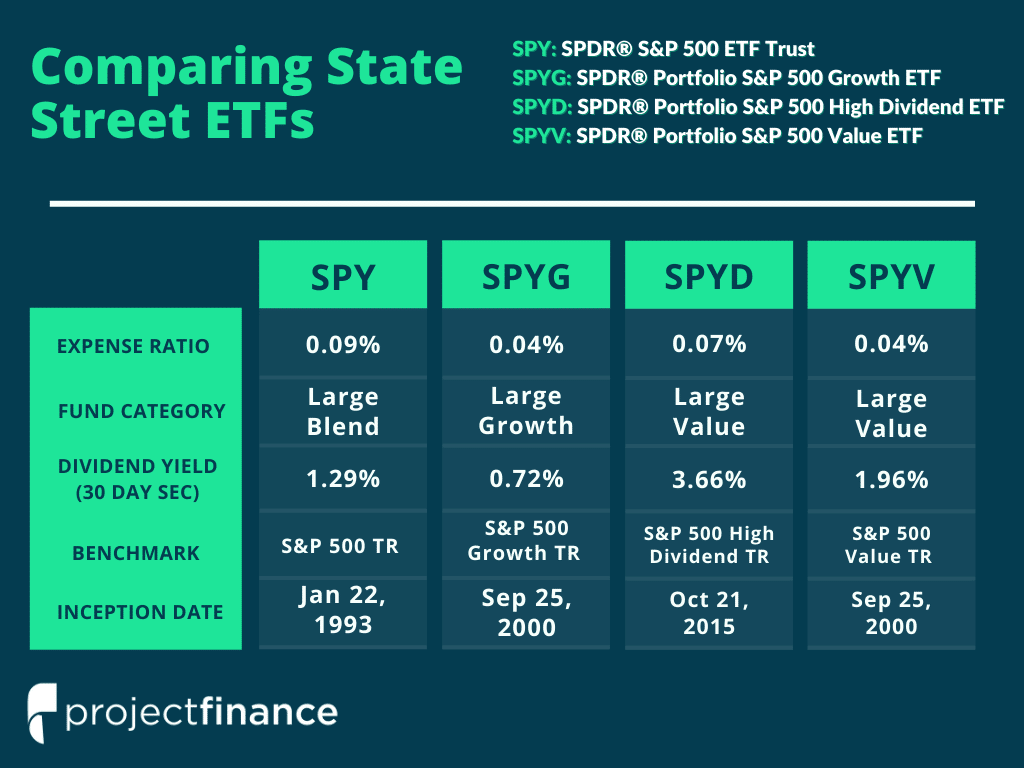
SPY, short for the SPDR S&P 500 ETF Trust, is an Exchange Traded Fund that debuted in 1993, making it one of the pioneering ETFs. Its core objective is to provide investment results that, before expenses, correspond generally to the price and yield performance of the S&P 500 Index. This index comprises 500 of the largest publicly traded companies in the United States, selected by S&P Dow Jones Indices based on criteria such as market size, liquidity, and sector representation.
Essentially, when you invest in SPY, you are buying a tiny slice of all 500 companies that make up the S&P 500. This broad market exposure means you are not putting all your eggs in one basket; instead, you are diversified across various sectors and industries, from technology giants to consumer staples, healthcare, financials, and more. This inherent diversification is one of SPY’s most attractive features, reducing the risk associated with investing in individual stocks. Furthermore, SPY trades like a stock on major exchanges, offering high liquidity and making it easy for investors to buy and sell throughout the trading day.
Why Invest in SPY?
The reasons for SPY’s enduring popularity are multifaceted, extending beyond just its dividend payments.
- Broad Market Diversification: As mentioned, SPY offers instant diversification across 500 leading U.S. companies. This eliminates the need for individual stock picking and the associated research, providing exposure to the overall performance of the U.S. economy.
- Low Expense Ratio: Compared to actively managed mutual funds, SPY boasts a very low expense ratio (typically around 0.09%). This means a smaller portion of your investment is eaten away by fees, allowing more of your returns to compound over time.
- Liquidity and Ease of Trading: Because it trades like a stock, SPY can be bought and sold at any time during market hours, providing flexibility that traditional mutual funds often lack. Its high trading volume also ensures tight bid-ask spreads, making transactions efficient.
- Long-Term Growth Potential: By tracking the S&P 500, SPY benefits from the long-term growth trajectory of the U.S. economy and its most robust companies. Historically, the S&P 500 has delivered attractive returns over extended periods, making SPY a compelling choice for long-term wealth accumulation.
- Consistent Income Stream (Dividends): While not a high-yield fund, SPY provides a consistent, albeit modest, quarterly dividend stream. For income-focused investors or those looking to reinvest, this regular payout adds another layer to its overall return potential.
The Mechanics of SPY’s Dividend Payments
Understanding the “how” behind SPY’s dividend payments is as important as knowing the “how often.” It involves recognizing the sources of these payments and the key dates that govern their distribution.
The Quarterly Cadence
As established, SPY pays dividends quarterly. These payments are not generated by SPY itself in the same way a company earns profits; rather, they are a pass-through of the dividends declared and paid by the individual companies within the S&P 500 index. When the underlying companies distribute their own dividends to shareholders, SPY, as a holder of those company shares, collects these distributions. It then aggregates these amounts and passes them on to its own unitholders, minus its minimal operating expenses.
This means the amount of the dividend SPY pays can fluctuate from quarter to quarter and year to year. It depends entirely on the dividend policies of the 500 companies it holds. If more companies increase their dividends, SPY’s payout might rise. Conversely, if companies cut or suspend dividends (as often happens during economic downturns), SPY’s payout will likely decrease. Despite these fluctuations, the quarterly frequency remains consistent.
Key Dividend Dates Explained
For investors keen on receiving dividends, understanding a few critical dates is paramount. These dates determine eligibility and when the cash hits your account.
- Declaration Date: This is the date on which the board of trustees of the SPDR S&P 500 ETF Trust announces its intention to pay a dividend, along with the amount, record date, and payment date.
- Ex-Dividend Date: This is arguably the most crucial date for investors. To receive a dividend, you must purchase the shares before the ex-dividend date. If you buy on or after the ex-dividend date, you will not be eligible for that specific dividend payment. Conversely, if you sell your shares on or after the ex-dividend date, you will still receive the dividend. The stock price typically drops by the dividend amount on the ex-dividend date to reflect that new buyers will not receive the payout.
- Record Date: This is the date on which the fund reviews its records to identify all shareholders who are eligible to receive the dividend. You must be recorded as a shareholder on this date to receive the payment. The record date is typically two business days after the ex-dividend date.
- Payment Date: This is the date when the dividend is actually paid out to eligible shareholders. The funds are typically deposited directly into your brokerage account.
For SPY, these dates are regularly published by State Street Global Advisors (the fund manager) and are widely available on financial news websites and brokerage platforms.
Dividend Yield and Growth
SPY’s dividend yield, which is the annual dividend per share divided by the current share price, typically hovers around 1.5% to 2%. This is generally lower than what you might find from dedicated dividend growth stocks or high-yield sectors like real estate investment trusts (REITs). However, SPY’s appeal is not primarily as a high-yield income play, but rather as a diversified total return vehicle.
The growth of SPY’s dividends is directly tied to the dividend growth of the underlying S&P 500 companies. Over the long term, as corporate earnings grow and companies mature, they tend to increase their dividend payouts. This incremental growth contributes to SPY’s overall return and provides a growing income stream for long-term investors. It’s important to remember that dividend yield can also fluctuate inversely with the share price; if SPY’s price increases significantly, its yield will decrease (assuming the dividend amount remains constant).
Factors Influencing SPY’s Dividend Payments
The stability and growth of SPY’s quarterly dividends are not immutable; they are influenced by a confluence of economic and corporate factors. Understanding these drivers helps investors anticipate potential changes in their income stream.
Performance of Underlying S&P 500 Companies
At the heart of SPY’s dividend payments is the financial health of the 500 companies it holds. When these companies perform well, generating strong profits and robust free cash flow, they are more likely to declare and potentially increase their dividends. Conversely, during periods of economic contraction or industry-specific headwinds, companies may choose to reduce or even suspend their dividends to preserve capital.
- Corporate Earnings: Strong earnings growth across the S&P 500 typically translates to higher overall dividend payouts.
- Payout Ratios: Companies maintain payout ratios (the percentage of earnings paid out as dividends). A healthy payout ratio indicates sustainability. If companies globally decide to retain more earnings for reinvestment rather than distribution, SPY’s dividends could be affected.
- Sectoral Shifts: The S&P 500’s composition evolves over time. Shifts towards sectors with lower dividend yields (e.g., high-growth tech companies that reinvest profits) or away from higher-yield sectors can subtly influence SPY’s aggregate dividend yield.
Economic Environment and Market Volatility
The broader economic climate plays a significant role in corporate profitability and, consequently, dividend policies.
- Economic Growth/Recession: A growing economy generally supports corporate earnings and dividend increases. During recessions, however, companies often face declining revenues and profits, leading many to cut or suspend dividends to conserve cash. The impact of such actions would be reflected in SPY’s dividend payouts.
- Interest Rate Environment: While not a direct driver, interest rates can indirectly affect dividend attractiveness. In a low-interest-rate environment, dividend-paying investments like SPY become more appealing to income-seeking investors compared to fixed-income alternatives. Conversely, rising rates can make bonds more competitive, potentially putting pressure on dividend yields.
- Geopolitical Events: Major geopolitical events can create uncertainty, impacting global supply chains, consumer confidence, and corporate earnings, which in turn can influence dividend decisions.
Fund Management and Expense Ratio
While SPY is a passively managed ETF, its management still plays a role in the net dividend received by investors. The fund aims to track the S&P 500 index as closely as possible, and its minimal expense ratio is subtracted from the gross returns of the underlying index, including dividends. The efficiency of the fund in replicating the index and minimizing tracking error ensures that the dividends collected from the underlying companies are passed through to investors as effectively as possible. However, the expense ratio, no matter how small, slightly reduces the overall dividend yield an investor receives.
Maximizing Dividend Income with SPY
For investors who hold SPY, understanding how to best leverage its quarterly dividend payments is an important aspect of long-term wealth building and financial strategy.
Reinvesting Dividends (DRIP)
One of the most powerful strategies for maximizing returns from dividend-paying investments like SPY is dividend reinvestment. Many brokerage platforms offer a Dividend Reinvestment Plan (DRIP), which automatically uses your dividend payouts to purchase additional shares or fractional shares of SPY.
- Power of Compounding: By reinvesting dividends, you acquire more shares over time without incurring additional transaction costs (in most DRIP programs). These newly acquired shares then go on to earn their own dividends, which are also reinvested, creating a powerful compounding effect. Over decades, this seemingly small act can significantly boost your total returns.
- Dollar-Cost Averaging: DRIPs also offer a form of dollar-cost averaging. Since dividends are paid regularly, you’re automatically buying more shares when prices might be lower and fewer shares when prices are higher, smoothing out your average purchase price over time.
For long-term investors focused on capital appreciation and wealth accumulation, enabling DRIP for SPY can be a highly effective strategy.
Tax Implications of Dividends
It’s crucial for investors to be aware of the tax implications of receiving dividends. In most jurisdictions, dividends are considered taxable income.
- Qualified vs. Non-Qualified Dividends: Dividends from U.S. corporations, including those passed through by SPY, are generally considered “qualified dividends” if certain holding period requirements are met. Qualified dividends are taxed at lower capital gains rates, which are typically more favorable than ordinary income tax rates. Non-qualified dividends are taxed at ordinary income rates.
- Tax-Advantaged Accounts: Holding SPY within tax-advantaged accounts such as an Individual Retirement Account (IRA), 401(k), or other retirement vehicles can provide significant tax benefits. In a Roth IRA, qualified withdrawals in retirement are tax-free, including all accumulated dividends and capital gains. In a traditional IRA or 401(k), taxes on dividends and capital gains are deferred until withdrawal in retirement.
- Consult a Professional: Tax laws are complex and can vary based on individual circumstances and jurisdiction. Always consult with a qualified tax advisor to understand your specific tax obligations related to dividend income from SPY.
SPY’s Role in a Dividend-Focused Portfolio
While SPY provides a consistent dividend stream, it’s generally not considered a primary “dividend stock” due to its relatively modest yield compared to dedicated dividend growth funds or high-yield individual equities. However, it still plays a vital role for investors seeking diversified income.
- Core Diversification for Income: For investors building a portfolio with an income component, SPY can serve as a highly diversified core holding that provides a reliable, albeit moderate, quarterly dividend. It smooths out the risk that comes with concentrating solely on a few high-yield stocks.
- Total Return Focus: SPY is more about “total return,” which encompasses both capital appreciation (growth in share price) and dividends. Its primary objective is to track the S&P 500’s overall performance. Income investors might pair SPY with other assets that have higher yields or specific dividend growth mandates to achieve their desired income level.
- Stability and Growth: SPY offers exposure to companies that have historically grown their dividends, aligning with a strategy that values both current income and future income growth.

Conclusion
The SPDR S&P 500 ETF (SPY) consistently pays dividends on a quarterly basis, typically in March, June, September, and December. These payments are a direct pass-through of the dividends collected from the 500 underlying companies that comprise the S&P 500 index. While SPY’s dividend yield is generally modest, its reliability, combined with its unparalleled diversification and exposure to the broad U.S. market, makes it a cornerstone investment for many.
Understanding the mechanics of these payments, including the critical ex-dividend date, and recognizing the factors that influence their amounts – such as corporate profitability and the broader economic environment – empowers investors to make informed decisions. Whether you choose to reinvest these dividends to harness the power of compounding or take them as income, SPY offers a transparent and efficient way to participate in the financial success of America’s leading companies. As with any investment, a long-term perspective and a clear understanding of its role within your overall financial strategy are key to maximizing its benefits.
aViewFromTheCave is a participant in the Amazon Services LLC Associates Program, an affiliate advertising program designed to provide a means for sites to earn advertising fees by advertising and linking to Amazon.com. Amazon, the Amazon logo, AmazonSupply, and the AmazonSupply logo are trademarks of Amazon.com, Inc. or its affiliates. As an Amazon Associate we earn affiliate commissions from qualifying purchases.