
For many, the stock market opens and closes with the familiar ring of a bell at 9:30 AM ET and 4:00 PM ET, respectively. This perception, while accurate for regular trading hours, overlooks a significant portion of the trading day where critical price discovery and strategic moves often take place: pre-market trading. Understanding “what time is pre-market trading” is more than just knowing a schedule; it’s about recognizing an extended period of opportunity and risk that can profoundly influence a trader’s success.
Pre-market trading allows investors and traders to react to news, earnings reports, and global events that unfold outside the conventional 9:30 AM to 4:00 PM window. It’s a critical phase for those seeking an early advantage, providing a glimpse into market sentiment and potential price movements before the broader market enters the fray. However, this early access comes with its own set of unique characteristics and challenges, demanding a sophisticated understanding of market dynamics, liquidity, and risk management. This article will demystify pre-market trading, outlining its typical schedule, exploring the motivations behind early participation, detailing the inherent risks, and equipping you with the knowledge to navigate this often-overlooked segment of the trading day.
The Mechanics of Pre-Market Trading: An Early Bird’s Advantage
Pre-market trading represents an extension of the regular trading day, allowing transactions to occur before the official market open. This period is crucial for market participants who need to react swiftly to information released overnight or before the trading session officially begins.
Defining Pre-Market Trading: Beyond Regular Hours
Pre-market trading, also known as “after-hours trading” (though often distinguished from the post-market session), refers to the period during which investors can buy and sell securities before the opening of the primary stock exchanges. For the major U.S. exchanges like the New York Stock Exchange (NYSE) and NASDAQ, this typically commences several hours prior to the standard 9:30 AM ET open. Unlike regular hours, where market makers and specialists ensure continuous liquidity, pre-market sessions often feature less robust trading environments, characterized by lower trading volumes and fewer participants. This environment can lead to different price dynamics and necessitates a more cautious approach from traders. Understanding this foundational difference is key to appreciating both the potential benefits and pitfalls of engaging in early trading activity. It’s not just an earlier start; it’s a distinct market environment with its own rules and characteristics.
The Standard Schedule: When Does It Typically Begin and End?
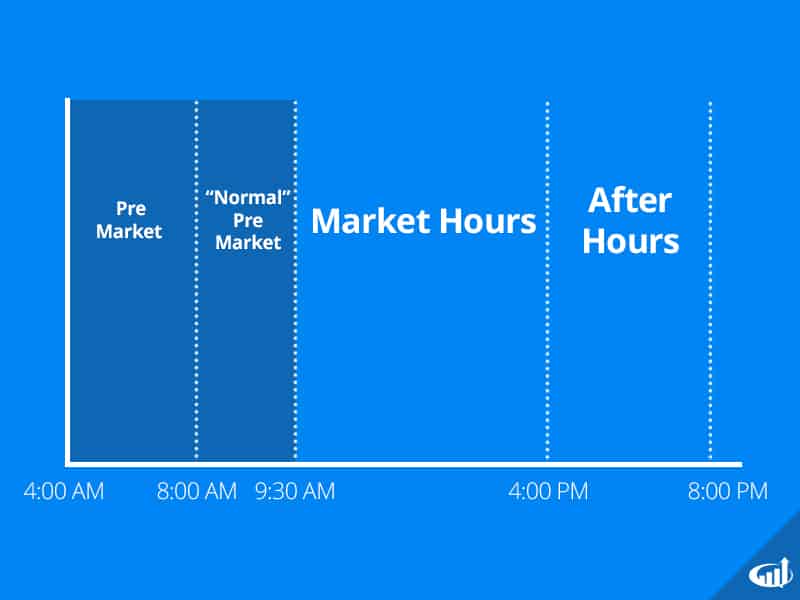
While pre-market trading can vary slightly depending on the brokerage and specific exchange, there’s a widely accepted window for the major U.S. markets. For most retail brokers offering pre-market access to NYSE and NASDAQ-listed stocks, the pre-market session generally begins around 4:00 AM Eastern Time (ET) and concludes at 9:30 AM ET, coinciding with the regular market open.
Some brokers might offer a slightly later start, for instance, 7:00 AM ET, but the 4:00 AM ET start is common for those providing the earliest access. It’s important to note that while trading can theoretically occur throughout this entire window, the most active periods often tend to be closer to the regular market open, usually from 7:00 AM ET onwards, as more institutional participants and news events begin to shape the market. The volume and liquidity increase significantly as 9:30 AM approaches. Knowing these core hours is the first step in planning any pre-market strategy, allowing traders to align their activities with periods of potentially greater market interest and information flow.
Factors Influencing Pre-Market Hours: Brokerage Variations and Exchange Rules
The exact timing and accessibility of pre-market trading are not uniform across the board. Several factors come into play, primarily the specific brokerage firm you use and the rules set by the exchanges.
Firstly, brokerage variations are significant. While the exchanges permit trading to begin as early as 4:00 AM ET, not all retail brokers offer access for the full duration. Some brokers might only allow pre-market trading to begin at 7:00 AM ET or 8:00 AM ET, or they might have specific cut-off times before 9:30 AM ET. This is often due to their internal systems, liquidity providers, or risk management policies. Traders seeking the earliest access should verify their broker’s specific pre-market hours and any associated rules or limitations.
Secondly, exchange rules dictate the overarching framework. While NYSE and NASDAQ generally allow trading from 4:00 AM ET, they often have specific systems and order types that may differ from regular market hours. For instance, the types of orders accepted (e.g., limit orders only) might be restricted during these extended sessions. Furthermore, international exchanges have their own unique pre-market schedules that align with their respective time zones and market practices, which is a crucial consideration for global investors. Understanding these nuances is vital for anyone looking to actively participate in pre-market trading, as it directly impacts when and how trades can be executed.
Why Traders Engage in Pre-Market Activity: Strategic Advantages
Participating in pre-market trading is not merely about getting an early start; it’s a strategic decision driven by a desire to capitalize on information and gain an edge before the wider market reacts.
Reacting to Overnight News: Capturing Early Momentum
One of the primary motivations for pre-market trading is the ability to react immediately to significant news events that occur outside regular trading hours. Company earnings reports are frequently released before the market opens (often between 7:00 AM and 9:00 AM ET), providing a clear impetus for early trading. Similarly, macroeconomic data (like inflation reports or unemployment figures), geopolitical developments, or major corporate announcements (e.g., mergers, acquisitions, FDA approvals) can break overnight or in the early morning.
Traders who monitor these news feeds diligently can analyze the information and execute trades based on their assessment of its impact on specific stocks or sectors. This early reaction can be critical, as waiting for the regular market open might mean missing out on significant price movements or being forced to enter or exit at less favorable prices once the broader market has absorbed the news. By acting quickly in the pre-market, traders aim to capture the initial surge or decline in price, riding the wave of early momentum before it dissipates or reverses. This proactive approach underscores the strategic advantage that pre-market access offers to informed and agile traders.
Liquidity and Price Discovery: Early Indications of Market Sentiment
While pre-market trading is typically characterized by lower liquidity compared to regular hours, it still plays a vital role in price discovery. During this period, the early bids and offers, even if from a smaller pool of participants, begin to establish a preliminary price for a security. These early transactions reflect the initial collective sentiment of traders reacting to fresh information.
This preliminary price action provides valuable clues about how a stock might behave once the regular market opens. For example, if a stock shows a significant gap up or down in pre-market trading on high volume, it signals strong bullish or bearish sentiment that could carry over into the regular session. Traders can use this early price discovery to gauge the strength of a news event’s impact, understand potential support and resistance levels, and refine their strategies for the day. While pre-market prices are not always indicative of where a stock will trade later in the day, they offer an important “first look” at market sentiment, allowing prudent traders to adjust their expectations and plans accordingly.
Executing Trades Ahead of the Crowd: Potentially Better Prices
The opportunity to execute trades ahead of the crowd is a compelling reason for engaging in pre-market activity. In situations where significant news has broken, the initial reaction can lead to rapid price changes. By trading in the pre-market, savvy investors might be able to buy shares at a lower price before a stock surges on positive news, or sell shares at a higher price before a stock plummets on negative news, relative to where the stock might open during regular hours.
This early positioning can be particularly advantageous for highly anticipated events or for stocks with limited float. However, this potential for “better prices” is a double-edged sword, heavily dependent on timing and accurate information interpretation. While some may secure favorable entry or exit points, others might experience slippage due to the lower liquidity. The key is to act decisively yet judiciously, leveraging real-time data and a clear understanding of the market’s initial reaction to capitalize on these early opportunities before the broader market—and its accompanying volume—potentially corrects or reinforces the pre-market price action.
Navigating the Nuances: Risks and Considerations
While pre-market trading offers distinct advantages, it’s crucial to acknowledge and understand the elevated risks associated with this period. The unique characteristics of extended-hours trading demand a more disciplined and informed approach.
Reduced Liquidity: Wider Spreads and Price Volatility
One of the most significant characteristics and risks of pre-market trading is reduced liquidity. With fewer participants and lower trading volumes compared to regular hours, it can be more challenging to buy or sell shares quickly without impacting the price. This reduced liquidity manifests in several ways:
Firstly, wider bid-ask spreads are common. The difference between the highest price a buyer is willing to pay (bid) and the lowest price a seller is willing to accept (ask) can be substantially larger than during regular hours. This means that a market order could be filled at a price significantly less favorable than the last traded price, effectively eroding potential profits or increasing losses.
Secondly, increased price volatility is a direct consequence of lower liquidity. Small orders can have a disproportionate impact on a stock’s price, leading to exaggerated price swings that might not reflect the true underlying value or broader market sentiment. A stock might jump or drop several percentage points on relatively low volume, only to see those gains or losses reverse once regular trading commences and liquidity improves. Traders must be acutely aware that prices established in the pre-market might not hold once the bell rings, making careful order placement and risk management paramount.
Increased Volatility: Exaggerated Price Swings
Building on the point of reduced liquidity, increased volatility is a defining feature of pre-market trading. Because fewer shares are being traded and fewer market participants are actively placing orders, even a relatively small block trade or a single significant news item can cause a stock’s price to move dramatically.
These exaggerated price swings can present both opportunities and dangers. For aggressive traders, sudden movements can mean quick profits if they are on the right side of the trade. However, for those caught off guard, or those attempting to execute larger orders, the lack of depth in the order book can lead to significant slippage and unexpected losses. A stock might rally 5% on positive news, only to see that gain evaporate in minutes if the initial buying interest wanes or if a large seller emerges. This heightened unpredictability demands that traders employ stringent risk management techniques, such as using tight stop-loss orders and trading smaller position sizes, to mitigate the potential impact of these rapid and often unpredictable price fluctuations. Understanding that pre-market prices are often more fragile and susceptible to manipulation or transient demand is essential for survival in this environment.
Limited Order Types: Market vs. Limit Orders
Another critical consideration for pre-market traders is the limited range of order types typically available or advisable. During regular trading hours, traders have access to a wide array of order types, including market orders, limit orders, stop orders, stop-limit orders, and various time-in-force instructions (e.g., Good ‘Til Canceled).
However, in the pre-market environment, due to the reduced liquidity and increased volatility, some order types are either restricted by brokers or highly inadvisable. Market orders, for instance, which instruct the broker to execute a trade immediately at the best available price, are generally discouraged in pre-market. Given the wider bid-ask spreads and lower volume, a market order could be filled at a price far less desirable than anticipated, leading to significant slippage.
Instead, limit orders are almost universally recommended for pre-market trading. A limit order specifies the maximum price you are willing to pay for a buy order or the minimum price you are willing to accept for a sell order. This allows traders to control their entry and exit points, mitigating the risk of adverse fills due to wide spreads or sudden price swings. While a limit order carries the risk of not being filled if the price doesn’t reach the specified level, this control is often preferable to the uncertainty of a market order in a thinly traded session. Traders must familiarize themselves with their broker’s specific rules regarding order types for extended-hours trading.
Access and Brokerage Limitations: Not All Platforms Are Equal
Access to pre-market trading is not universal, and the extent of that access can vary significantly among brokerage platforms. This is a crucial practical consideration for any trader looking to participate in early-hour sessions.
Firstly, not all brokers offer pre-market trading capabilities for retail investors. Some smaller or more basic brokerage accounts might only allow trading during regular market hours. Even among brokers that do offer it, the specific hours they allow can differ, as discussed earlier. One broker might open pre-market at 7:00 AM ET, while another provides access starting at 4:00 AM ET.
Secondly, even if a broker offers pre-market trading, there might be specific restrictions or requirements. These could include:
- Minimum account balances: Some advanced trading features, including extended-hours access, might be reserved for accounts meeting certain equity thresholds.
- Special permissions or agreements: Traders might need to opt-in or sign specific agreements acknowledging the risks of extended-hours trading.
- Platform limitations: The tools and data available for pre-market analysis might not be as robust as those for regular hours, or they might require a premium subscription.
- Limited instrument availability: While most major stocks are available, options, certain ETFs, or less liquid securities might not be tradable in the pre-market.
Therefore, before attempting any pre-market trades, it is imperative for traders to thoroughly investigate their chosen brokerage platform’s specific rules, hours, available order types, and any associated fees or limitations. This due diligence ensures that their expectations align with their broker’s capabilities and helps avoid frustrating or costly surprises.
Tools and Strategies for Effective Pre-Market Participation
Successful pre-market trading relies heavily on timely information, advanced analytical tools, and a robust risk management framework. Without these elements, the inherent volatility and reduced liquidity can quickly turn opportunities into costly mistakes.
Real-Time Data and News Feeds: Staying Informed
The cornerstone of effective pre-market trading is access to real-time data and high-quality news feeds. Given that pre-market moves are often triggered by news events released outside regular hours, being the first to receive and interpret this information is a significant advantage.
Traders should subscribe to reliable financial news services that provide immediate alerts on:
- Earnings reports: Companies often release their quarterly results before the market opens.
- Economic data: Government reports on inflation, employment, or GDP can move entire markets.
- Corporate announcements: Mergers, acquisitions, product launches, or regulatory approvals.
- Analyst upgrades/downgrades: Research firm recommendations can influence sentiment.
- Global market developments: News from Asian or European markets can impact U.S. stocks.
Relying on delayed data or slow news sources can negate any potential advantage of trading early. Many professional traders use dedicated newswires (like Dow Jones Newswires or Bloomberg Terminal) or specialized trading platforms that integrate real-time news directly into their interface. Supplementing these with social media monitoring (e.g., Twitter for breaking news from credible sources) can also provide an edge. The goal is to process critical information swiftly and accurately, forming a trading hypothesis before the masses.
Advanced Charting and Analysis Tools: Identifying Opportunities
While news drives initial pre-market sentiment, advanced charting and analysis tools are essential for identifying actionable trading opportunities and understanding price action. Standard charting platforms provided by brokers typically offer extended-hours data, allowing traders to visualize pre-market price movements.
Key charting features and analytical approaches for pre-market include:
- Extended-hours candles: These clearly show price action from 4:00 AM ET onwards, allowing traders to identify early trends, support, and resistance levels.
- Volume analysis: Scrutinizing pre-market volume is crucial. A significant price move on very low volume might be less reliable than a similar move backed by higher-than-average pre-market volume. Traders look for “unusual volume” alerts.
- Gap analysis: Many pre-market opportunities arise from a stock gapping up or down due to news. Charting tools help identify the size of the gap and potential fill levels.
- Technical indicators: While some indicators might be less reliable on thin pre-market volume, momentum indicators or moving averages can still provide context, especially as volume picks up closer to market open.
- Pre-set scanners: Setting up scanners to find stocks with significant pre-market price changes, high relative volume, or specific news catalysts can quickly filter the market down to a manageable list of potential trades.
Combining real-time news with visual analysis on charts allows traders to validate their news-driven hypothesis with observable price and volume action, leading to more informed and strategic pre-market decisions.
Understanding Order Flow and Level 2 Data: Gaining Deeper Insight
For serious pre-market traders, going beyond basic charts and news to understand order flow and Level 2 data is paramount. These tools offer a deeper, more granular view of market activity, providing insights into demand and supply dynamics.
Level 2 data displays the order book, showing the various bid and ask prices for a stock, along with the corresponding sizes (number of shares) at each price level, and the market participants (brokers/market makers) placing those orders. In the illiquid pre-market environment, Level 2 data becomes even more critical:
- Identifying true demand/supply: It helps gauge the actual interest in buying or selling at different price points, rather than just relying on the last traded price.
- Spotting spoofing/manipulation: While less common in retail, unusually large orders on Level 2 that disappear quickly could indicate attempts to influence price.
- Understanding support/resistance: Large blocks of bids or asks on Level 2 can indicate strong immediate support or resistance levels.
- Assessing liquidity at specific prices: It shows where there’s enough volume to get a decent fill for a limit order.
Order flow analysis involves watching the “time and sales” (or “tape”) to see actual trades as they execute. This provides a real-time stream of transactions, indicating the size, price, and whether the trade was executed at the bid or ask (implying buyer or seller aggression). In pre-market, watching the tape helps confirm whether buyers or sellers are dominant and if volume is truly supporting a price move. Combined with Level 2, this offers a powerful insight into the minute-by-minute battle between buyers and sellers, crucial for navigating the often-choppy pre-market waters.
Risk Management Protocols: Protecting Capital in Volatile Environments
Given the inherent risks of reduced liquidity and increased volatility, robust risk management protocols are non-negotiable for pre-market trading. Failing to implement strict safeguards can lead to significant and rapid capital depletion.
Key risk management strategies for pre-market include:
- Smaller position sizes: Trade with a smaller percentage of your capital than you might during regular hours. This limits the potential loss if a trade moves against you swiftly.
- Strict stop-loss orders (preferably mental or technical): While limit orders are recommended for entry, having a predefined maximum loss level is crucial. However, placing physical stop-loss orders in pre-market can be risky due to wide spreads and potential “stop hunting.” Many professional traders use mental stops or base their exits on technical levels or changes in order flow, prepared to manually exit if the price breaches their threshold.
- Focus on highly liquid stocks (even in pre-market): Stick to well-known, large-cap stocks that tend to have relatively more pre-market volume, even if it’s still lower than regular hours. Avoid thinly traded micro-caps.
- Define your risk per trade: Before entering any trade, know exactly how much capital you are willing to lose if the trade fails.
- Avoid market orders: As discussed, always use limit orders to control your execution price and prevent significant slippage.
- Don’t chase moves: In volatile pre-market conditions, FOMO (fear of missing out) can be particularly dangerous. Wait for clear setups and don’t blindly jump into rapidly rising or falling stocks.
- Understand potential for overnight gaps: If you hold positions overnight, be aware that pre-market trading can significantly alter your open price, and gaps can negate stop-loss effectiveness.
By diligently applying these risk management principles, traders can protect their capital and approach pre-market opportunities with a more measured and sustainable strategy.
Beyond the Bell: Post-Market Trading and the Full Picture
To fully grasp the extended trading day, it’s beneficial to also understand post-market trading and how it complements the pre-market session, forming a continuous cycle of activity outside regular hours.
Post-Market Trading Defined: Extending the Day
Just as pre-market trading extends the day before the opening bell, post-market trading extends it after the closing bell. This session typically begins at 4:00 PM ET, immediately following the regular market close, and can last until 8:00 PM ET. Similar to pre-market, the exact duration and availability depend on the brokerage platform.
Post-market trading serves a similar purpose to pre-market: allowing traders and institutions to react to news that breaks after regular hours. Companies often release late-day earnings reports or make significant announcements after 4:00 PM ET. This session provides an immediate window for investors to adjust their positions based on this new information, rather than waiting until the following morning’s pre-market or regular session. Like pre-market, it is characterized by lower liquidity and higher volatility compared to regular hours, necessitating the same cautious approach and reliance on limit orders.
Similarities and Differences: Comparing Pre- and Post-Market
While both pre-market and post-market trading fall under the umbrella of “extended-hours trading” and share many characteristics, there are subtle differences and key similarities worth noting:
Similarities:
- Lower Liquidity and Higher Volatility: Both sessions typically have fewer participants and lower trading volumes, leading to wider bid-ask spreads and more volatile price movements.
- News-Driven: Both are heavily influenced by news events, earnings reports, or economic data released outside regular trading hours.
- Limit Orders Preferred: Due to the illiquid nature, limit orders are strongly recommended over market orders in both sessions.
- Brokerage Dependent: Access and specific hours are subject to the individual brokerage firm’s policies.
Differences:
- Timing of News: Pre-market often reacts to overnight news or morning announcements, while post-market reacts to late-day or evening news.
- Market Sentiment Carryover: Pre-market trading sets the initial tone for the regular session, often determining the “gap” open. Post-market trading, on the other hand, can be influenced by the sentiment from the just-concluded regular session and sets the stage for the following day’s pre-market.
- Institutional Participation: While both have institutional involvement, the mix and volume can slightly differ. For instance, hedge funds might use post-market for larger block trades to avoid impacting regular session prices, while day traders might be more active closer to the market open in pre-market.
Understanding these distinctions helps traders tailor their strategies to the specific dynamics of each extended-hours session.
The Continuous Cycle: How Early and Late Trading Shapes the Next Day
The pre-market and post-market sessions are not isolated events but integral parts of a continuous trading cycle that significantly shapes the subsequent regular trading day. News and trading activity in one session flow into the next, influencing market sentiment and price action.
For example, a major earnings surprise released in the post-market can cause a stock to jump or drop dramatically. This price action, along with the volume traded, then becomes the starting point for the following morning’s pre-market session. Early pre-market traders will react to this established post-market move, potentially extending or reversing it based on new information or differing interpretations. As the pre-market session progresses and more participants join, the price discovery process refines the stock’s valuation, often leading to an opening gap once the regular market begins at 9:30 AM ET.
Conversely, a significant macroeconomic report released during pre-market hours can set the tone for the entire market, influencing indices and sector-specific stocks. This early trading activity establishes key support and resistance levels that traders will watch once regular hours begin. Essentially, extended-hours trading provides a crucial “foreplay” to the main event, laying the groundwork for the day’s narrative. Investors who ignore these sessions miss out on valuable context and risk being caught off guard by significant price changes that have already been established before they even look at their screens. It’s a testament to the 24/7 global nature of modern financial markets, where information and reactions are constantly evolving.
Conclusion: Maximizing Your Trading Edge
Understanding “what time is pre-market trading” is far more than knowing a schedule; it’s about recognizing an extended dimension of market activity that presents both unique opportunities and heightened risks. From the typical 4:00 AM ET start until the regular market open at 9:30 AM ET, this period is a battleground where early information, swift reactions, and strategic positioning can yield significant advantages.
However, the allure of early gains must be tempered with a sober assessment of the challenges. Reduced liquidity, increased volatility, and limited order types demand a disciplined approach. Successful pre-market participation hinges on a combination of real-time data, sophisticated charting, an understanding of order flow, and, crucially, robust risk management protocols. By embracing these tools and strategies, traders can navigate the often-choppy waters of extended-hours trading, react effectively to overnight news, and gain an early edge in price discovery.
Ultimately, the goal is to make informed decisions that maximize your trading edge while protecting your capital. By integrating pre-market analysis into your overall trading strategy, you transition from merely reacting to the market to proactively engaging with it, leveraging every available hour to refine your understanding and enhance your potential for success. The market may have a bell, but for the discerning trader, the opportunities begin long before it rings.
aViewFromTheCave is a participant in the Amazon Services LLC Associates Program, an affiliate advertising program designed to provide a means for sites to earn advertising fees by advertising and linking to Amazon.com. Amazon, the Amazon logo, AmazonSupply, and the AmazonSupply logo are trademarks of Amazon.com, Inc. or its affiliates. As an Amazon Associate we earn affiliate commissions from qualifying purchases.