
In the dynamic and often complex world of financial markets, understanding the various instruments and indices is paramount for both seasoned investors and curious beginners. Among the multitude of financial tools, “Dow Futures” frequently surfaces in market commentary, news headlines, and investor discussions. Far from being an arcane concept reserved for Wall Street elites, Dow Futures play a critical role in global financial markets, offering insights into market sentiment, hedging opportunities, and avenues for speculation. At its core, Dow Futures refers to a financial derivatives contract whose value is tied to the performance of the Dow Jones Industrial Average (DJIA), one of the oldest and most widely recognized stock market indices in the world. This article will delve into the intricacies of Dow Futures, demystifying its components, exploring its functionality, and outlining its significant implications for the broader economic landscape.
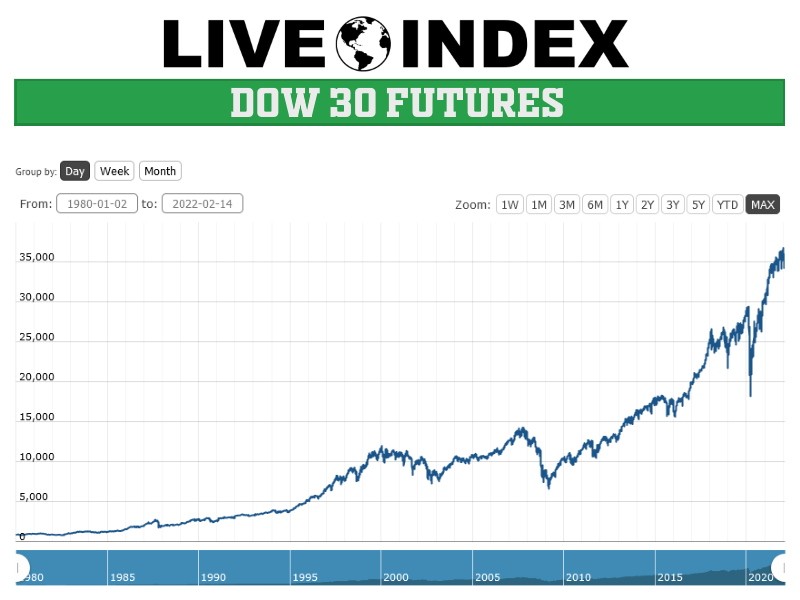
Deciphering the Dow Jones Industrial Average (DJIA)
To fully grasp what Dow Futures are, one must first understand its underlying asset: the Dow Jones Industrial Average. The DJIA is more than just a number; it is a historical barometer of U.S. industrial prowess and a bellwether for the health of the American economy.
The Foundation: Understanding the DJIA
The Dow Jones Industrial Average, often simply called “the Dow,” is a stock market index that tracks the performance of 30 large, publicly-traded companies based in the United States. Established in 1896 by Charles Dow, co-founder of Dow Jones & Company, its initial iteration comprised just 12 industrial stocks. Over a century later, while the name “industrial” remains, the composition has evolved significantly to include companies from diverse sectors such as technology, healthcare, finance, and consumer goods, reflecting the changing landscape of the American economy.
The DJIA is considered a price-weighted index, meaning stocks with higher share prices have a greater impact on the index’s value than those with lower share prices, regardless of their market capitalization. Despite the rise of other market-capitalization-weighted indices like the S&P 500, the Dow retains its significance due to its long history, broad recognition, and its representation of some of the most influential companies in the world. It serves as a benchmark for the broader market, with many investors and analysts using its movements to gauge the overall direction and sentiment of the U.S. stock market. Its daily fluctuations are closely watched as an indicator of investor confidence and economic outlook.
How the DJIA is Calculated and Maintained
Unlike market-capitalization-weighted indices, where the weight of each component stock is proportional to its total market value, the DJIA’s calculation is more straightforward yet requires a unique adjustment. It is essentially an average of the prices of its 30 component stocks, divided by a specific number known as the “Dow Divisor.”
The Dow Divisor is crucial for maintaining the historical continuity and integrity of the index. When events like stock splits, spin-offs, or changes in the index’s components occur, the divisor is adjusted to ensure that the index’s value remains comparable before and after these changes. Without this adjustment, a stock split, for example, would artificially lower the index’s value, even if the underlying market capitalization of the company remains the same. The divisor is a small number (currently much less than 1), which means that a one-point change in any of the component stocks will result in a larger than one-point change in the Dow.
The selection of the 30 companies in the DJIA is not based on rigid quantitative rules but rather on the discretion of a committee. Companies are typically chosen for their excellent reputations, sustained growth, and broad investor interest, aiming to reflect a significant portion of the U.S. equity market and the American economy. While the DJIA’s methodology has faced criticism for its price-weighting scheme and limited number of components compared to broader indices, its prominent role as a market indicator endures, making its associated futures contracts highly relevant.
The Mechanics of Dow Futures Contracts
Having established the foundation of the DJIA, we can now pivot to understanding the mechanics of Dow Futures contracts themselves. These derivatives allow participants to bet on or hedge against the future movements of the underlying index.
What is a Futures Contract?
A futures contract is a legally binding agreement to buy or sell an asset at a predetermined price on a specified future date. The “asset” can be a commodity (like oil or gold), a currency, an interest rate, or in this case, a stock market index. Futures contracts are highly standardized, meaning the quantity, quality (if applicable), delivery month, and price quotation are all uniformly defined. This standardization facilitates liquidity and trading on organized exchanges.
When you enter a futures contract, you are not buying or selling the underlying asset directly. Instead, you are taking a position on its future price. A buyer (long position) expects the price to rise, while a seller (short position) expects it to fall. Most futures contracts are settled in cash rather than by physical delivery, particularly for indices like the Dow. This means that at expiration, the difference between the contract price and the prevailing market price of the index is exchanged between the buyer and seller. Futures contracts are traded on regulated exchanges, primarily the Chicago Mercantile Exchange (CME Group) for Dow Futures, which acts as a central counterparty to all trades, guaranteeing performance and reducing counterparty risk.
How Dow Futures Work
Dow Futures contracts are financial derivatives that allow traders and investors to speculate on or hedge against the future performance of the Dow Jones Industrial Average. The most commonly traded Dow Futures contract is the E-mini Dow Futures (ticker: YM), offered by the CME Group through its Chicago Board of Trade (CBOT) division and the Globex electronic trading platform.
Each E-mini Dow Futures contract has a specific multiplier, typically $5 per index point. This means that for every one-point movement in the Dow Jones Industrial Average, the value of one E-mini Dow Futures contract changes by $5. For instance, if the Dow Futures price moves from 35,000 to 35,010, the contract’s value increases by $50 (10 points x $5/point). This leverage is a significant characteristic of futures trading.
Dow Futures contracts trade nearly 24 hours a day, five days a week, allowing participants to react to global economic news and events even when the cash equity markets are closed. They expire on a quarterly cycle—March, June, September, and December—on the third Friday of the respective month. As a contract approaches expiration, traders typically roll their positions into the next active contract month if they wish to maintain their market exposure. The settlement is cash-based, meaning that at expiration, no physical delivery of stocks occurs; rather, profits or losses are credited or debited to the trader’s account based on the difference between their entry price and the final settlement price.
Understanding Dow Futures Pricing
The price of a Dow Futures contract is influenced by several factors and often differs from the current “spot” value of the actual Dow Jones Industrial Average. This difference is known as the basis. In an ideal scenario, the futures price should reflect the spot price plus the cost of carrying the underlying asset until expiration. For a stock index like the Dow, the “cost of carry” primarily involves the interest rate and expected dividends from the component stocks.
- Interest Rates: Higher interest rates generally lead to higher futures prices relative to the spot index, as there’s a financing cost associated with holding the theoretical portfolio of stocks until the future date.
- Dividends: Expected dividends from the underlying DJIA companies tend to lower the futures price relative to the spot price. This is because dividend payments reduce the value of the individual stocks and, consequently, the index itself over time.
- Time to Expiration: As the expiration date approaches, the futures price typically converges with the spot price of the DJIA. The longer the time to expiration, the greater the influence of interest rates and dividends.
- Market Sentiment: Supply and demand dynamics, driven by investor expectations and sentiment regarding the future direction of the economy and corporate earnings, also play a significant role. If traders anticipate strong economic growth, futures prices might trade at a premium (contango) to the spot index, indicating optimism. Conversely, if pessimism prevails, futures might trade at a discount (backwardation).
Understanding these pricing dynamics is crucial for traders looking to identify potential arbitrage opportunities or simply to gauge the market’s collective wisdom regarding the future value of the Dow.
Key Uses and Participants in Dow Futures Markets
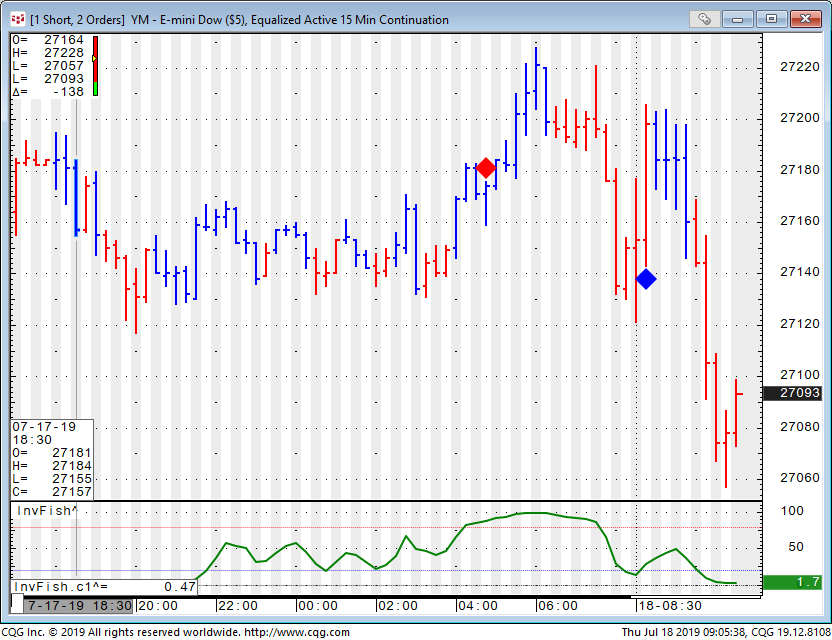
Dow Futures are not merely speculative tools; they serve several critical functions within the broader financial ecosystem, attracting a diverse range of participants from institutional funds to individual traders.
Hedging Against Market Risk
One of the primary uses of Dow Futures is hedging. Large institutional investors, such as pension funds, mutual funds, and insurance companies, often hold substantial portfolios of stocks that closely mirror the composition of the Dow Jones Industrial Average or the broader market. These institutions use Dow Futures to protect the value of their portfolios against potential downside movements in the market.
For example, if a fund manager believes the market might experience a temporary downturn but doesn’t want to sell off their underlying stock holdings (which could incur transaction costs or tax implications), they can sell Dow Futures contracts. If the market does fall, the loss in their equity portfolio will be offset by the profit from their short futures position. This allows them to effectively “insure” their portfolio without liquidating assets, providing a flexible and cost-effective risk management tool. Similarly, if they anticipate purchasing a large block of stocks in the future but fear prices might rise, they can buy futures contracts to lock in a price.
Speculation and Directional Trading
Beyond hedging, Dow Futures are a popular instrument for speculation. Traders, ranging from high-frequency firms to individual day traders, use futures to profit from anticipated short-term movements in the Dow. Given the leverage inherent in futures contracts, even small price movements can lead to significant profits or losses, making them attractive for those looking to capitalize on market volatility.
Speculators can take a long position (buy futures) if they expect the Dow to rise or a short position (sell futures) if they expect it to fall. The ability to easily go short without borrowing stocks is a key advantage of futures. Furthermore, trading a single Dow Futures contract offers exposure to the entire index of 30 companies, making it a more efficient and lower-cost alternative to buying or selling all 30 individual stocks. This consolidated exposure allows for quick and precise directional bets on the overall market.
Price Discovery and Market Sentiment
Dow Futures play a crucial role in price discovery, especially during non-traditional trading hours. Since futures trade almost 24 hours a day, they provide a real-time indication of market sentiment and expectations even when the U.S. stock exchanges are closed. For instance, after a major economic report or a significant global event released overnight, the movement in Dow Futures can often signal how the cash market (the actual DJIA) is likely to open the following day.
This continuous trading allows global investors to react immediately to news, leading to more efficient pricing and a more complete picture of market sentiment. Traders and analysts closely monitor futures movements before the cash market opens to gauge the overnight impact of news and to anticipate the direction of the market’s open. This makes Dow Futures a leading indicator for the broader equity market.
Arbitrage Opportunities
Arbitrageurs seek to profit from temporary price discrepancies between the Dow Futures contract and the underlying cash index. While these discrepancies are usually small and fleeting due to the efficiency of modern markets and the actions of high-frequency traders, they do arise. For example, if the futures contract is trading at an unjustified premium to the cash index, an arbitrageur might simultaneously sell the futures contract and buy the underlying constituent stocks of the Dow (or an exchange-traded fund that tracks it). By doing so, they lock in a risk-free profit as the prices converge towards expiration. This activity, while challenging for individual traders, is crucial for ensuring that futures prices remain closely aligned with the underlying index, contributing to market efficiency.
Risks and Considerations for Trading Dow Futures
While Dow Futures offer significant opportunities, they are sophisticated financial instruments that come with inherent risks. A thorough understanding of these risks is essential for anyone considering engaging in futures trading.
Leverage: The Double-Edged Sword
The most prominent feature and risk of futures trading is leverage. Futures contracts require only a small percentage of the total contract value as an initial margin deposit. While this allows traders to control a large notional value of the underlying asset with relatively little capital, it also magnifies both profits and losses. A small adverse price movement can result in a significant percentage loss of the initial margin, potentially exceeding the deposited amount.
Traders must maintain a certain level of equity in their account (maintenance margin). If their account balance falls below this level due to losses, they will receive a “margin call,” requiring them to deposit additional funds immediately to cover the losses. Failure to meet a margin call can lead to forced liquidation of positions by the broker, often at unfavorable prices. This powerful leverage makes risk management paramount when trading Dow Futures.
Volatility and Market Swings
The Dow Jones Industrial Average, and consequently its futures contracts, can be highly volatile, especially during periods of economic uncertainty, geopolitical events, or major corporate news. Rapid and unpredictable price swings can lead to quick and substantial losses, particularly for undercapitalized traders or those without effective stop-loss strategies.
The nearly 24-hour trading nature of futures also means that market events occurring outside of traditional trading hours can significantly impact positions, requiring constant vigilance or sophisticated automated trading systems. Unexpected market-moving news can cause “gaps” in prices between trading sessions, where the opening price is significantly different from the previous closing price, potentially bypassing stop-loss orders.
Liquidity and Spreads
While E-mini Dow Futures are generally very liquid, meaning they can be bought and sold easily without significantly affecting the price, liquidity can decrease during certain times (e.g., late night hours or during major holidays) or in extreme market conditions. Reduced liquidity can lead to wider bid-ask spreads, increasing transaction costs, and making it harder to enter or exit positions at desired prices. In highly volatile markets, the depth of the order book might also diminish, making large orders more difficult to execute without market impact.

Regulatory Oversight and Trading Hours
Dow Futures trading is subject to strict regulatory oversight, primarily by the Commodity Futures Trading Commission (CFTC) in the United States, which aims to ensure fair and orderly markets. While this provides a layer of protection, traders must be aware of the specific rules and regulations governing futures markets, including position limits and reporting requirements.
The nearly 24-hour trading schedule, while offering flexibility, also presents a challenge. It requires traders to either actively monitor the markets around the clock or rely on automated strategies. This can be mentally and physically demanding, and failure to monitor positions can lead to significant unattended losses, especially during fast-moving market events.
In conclusion, Dow Futures are a multifaceted financial instrument offering powerful tools for hedging, speculation, and price discovery. They are a significant component of global financial markets, reflecting real-time sentiment towards the U.S. economy and corporate health. However, their leveraged nature and inherent volatility demand a high degree of knowledge, discipline, and robust risk management strategies from all participants. For those equipped with these, Dow Futures can be an invaluable asset in their financial toolkit.
aViewFromTheCave is a participant in the Amazon Services LLC Associates Program, an affiliate advertising program designed to provide a means for sites to earn advertising fees by advertising and linking to Amazon.com. Amazon, the Amazon logo, AmazonSupply, and the AmazonSupply logo are trademarks of Amazon.com, Inc. or its affiliates. As an Amazon Associate we earn affiliate commissions from qualifying purchases.