
The S&P 500 is arguably the most referenced and influential stock market index in the world, serving as a critical barometer for the health of the U.S. economy and global financial markets. For seasoned investors and novices alike, understanding its mechanics is fundamental to grasping the pulse of the market, evaluating investment performance, and making informed financial decisions. Far from being a mere collection of 500 stocks, the S&P 500 is a sophisticated construct designed to represent the performance of large-cap U.S. equities, reflecting a broad cross-section of American industry. This article will demystify the S&P 500, delving into its composition, selection criteria, weighting methodology, and how investors can effectively integrate it into their financial strategies.

What is the S&P 500?
At its core, the S&P 500, or the Standard & Poor’s 500, is a stock market index that tracks the stock performance of 500 of the largest companies listed on stock exchanges in the United States. It is a market-capitalization-weighted index, meaning that companies with larger market values have a greater impact on the index’s performance. Established in 1957, it has evolved into a cornerstone of financial analysis and a bellwether for the overall U.S. stock market.
A Benchmark for the U.S. Economy
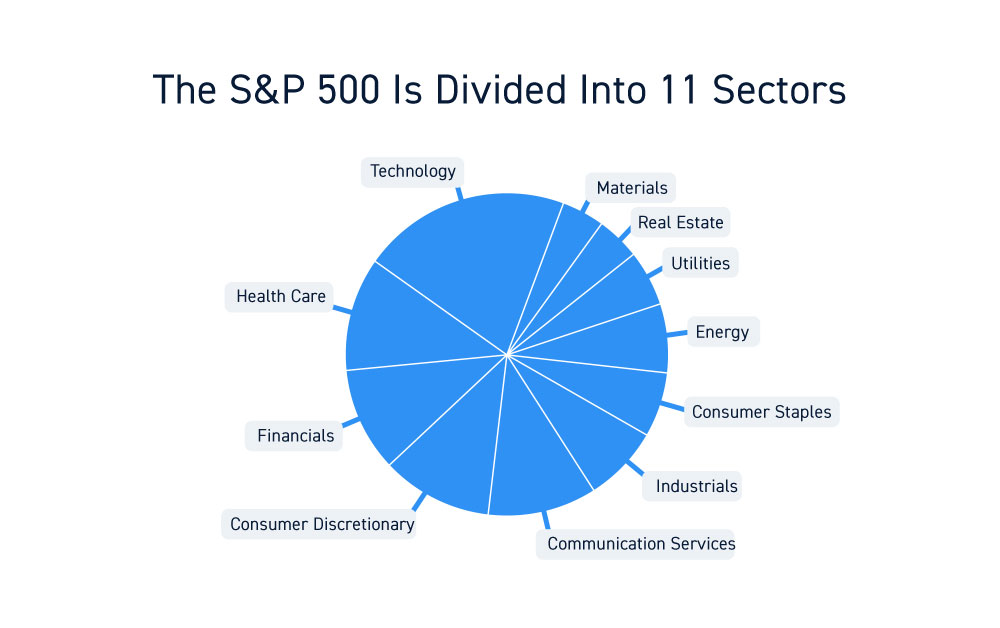
The S&P 500 is not merely a list of companies; it is a meticulously constructed portfolio designed to reflect the broader economic landscape. Because it includes companies from all major sectors—technology, healthcare, finance, consumer discretionary, industrials, and more—its performance offers insights into the overall economic output and corporate profitability of the nation. When the S&P 500 rises, it often signals investor confidence and economic expansion; conversely, a decline can point to economic headwinds or market uncertainty. For many financial professionals and economists, it provides a more comprehensive picture of the U.S. equity market than, for example, the Dow Jones Industrial Average, which comprises only 30 companies. This broader representation makes it an invaluable tool for benchmarking investment portfolios and understanding macroeconomic trends.
Not Just Any 500 Companies
While the name suggests a simple count, the 500 companies within the index are anything but arbitrary selections. They are chosen through a rigorous process by a dedicated committee to ensure they meet specific criteria for size, liquidity, and industry representation. The S&P 500 aims to include companies that are leaders in their respective fields and genuinely contribute to the economic fabric of the United States. This careful curation ensures that the index remains relevant and reflective of the leading publicly traded companies that drive innovation, employment, and economic growth across the country. It’s a dynamic list, with companies being added or removed as their financial performance, market capitalization, and strategic relevance evolve.
The Selection Criteria: Who Makes the Cut?
The S&P Dow Jones Indices Committee is the gatekeeper of the S&P 500, responsible for selecting and removing constituents. Their decisions are driven by a set of clear and objective criteria designed to ensure the index accurately represents the large-cap U.S. equity market. This rigorous process is what gives the S&P 500 its credibility and relevance.
Eligibility Requirements
To be considered for inclusion in the S&P 500, a company must meet several stringent requirements:
- U.S. Company: The company must be headquartered in the United States.
- Market Capitalization: It must have an unadjusted market capitalization of at least $14.5 billion (this threshold is subject to change based on market conditions). This ensures the inclusion of large-cap companies.
- Liquidity: A significant portion of its shares must be available for trading (public float), and its daily trading volume must be substantial enough to allow for easy buying and selling without significant price impact. This ensures the company’s stock is actively traded and reflective of true market sentiment.
- Profitability: The company must have positive reported earnings in its most recent quarter, and its aggregate earnings over the past four consecutive quarters must also be positive. This “four consecutive quarters of positive earnings” rule ensures financial stability and operational viability.
- Public Float: At least 10% of the company’s outstanding shares must be available for public trading (not held by insiders, governments, or other companies). This free-float adjustment ensures that the index reflects the shares that are actually available to the broader investing public.
- Sector Representation: While not a strict quota, the committee also considers sector balance to ensure the index remains diversified and representative of the overall U.S. economy, avoiding over-concentration in any single industry.
The S&P Dow Jones Indices Committee
This committee, composed of economists and analysts at S&P Dow Jones Indices, meets regularly to review the index’s composition. Their decisions are based on the objective criteria outlined above, as well as qualitative factors that ensure the index’s integrity and representativeness. They are committed to maintaining the index as an accurate barometer of the U.S. equity market, not to make subjective judgments about a company’s future prospects. Transparency and a rules-based methodology are paramount to their work.
Why Companies Are Added or Removed
Companies are added to the S&P 500 when they meet the eligibility criteria and when a spot opens up, typically due to another company being removed. Reasons for removal include:
- Failure to Meet Criteria: A company’s market capitalization might drop below the minimum threshold, or it might experience sustained losses.
- Mergers and Acquisitions: If an S&P 500 company is acquired by another company, it is typically removed.
- Bankruptcy: Companies facing insolvency are removed as they no longer represent a viable investment.
- Relocation: If a company ceases to be U.S.-based, it may be removed.
These changes ensure the index remains dynamic and continues to accurately reflect the leading edge of the American corporate landscape.
Understanding its Market-Cap Weighting
One of the most defining characteristics of the S&P 500 is its market-capitalization weighting methodology. This approach fundamentally influences how changes in individual stock prices affect the overall index value and performance. Unlike a simple average, where each company has an equal say, in the S&P 500, the giants cast longer shadows.
What is Market Capitalization?
Market capitalization, often shortened to “market cap,” is the total value of a company’s outstanding shares. It is calculated by multiplying the current stock price by the total number of shares a company has issued. For example, a company with 1 billion shares trading at $100 per share would have a market cap of $100 billion. This figure represents the total market value of the company and is a key indicator of its size and influence.
The Impact of Larger Companies
In a market-cap-weighted index like the S&P 500, companies with higher market capitalizations have a greater impact on the index’s movement. If Apple, which has one of the largest market caps in the index, sees its stock price rise by 1%, it will contribute more to the S&P 500’s overall gain than a 1% rise in a smaller S&P 500 company. Conversely, a significant drop in a highly weighted stock will drag the index down more substantially. This weighting means the index’s performance is heavily influenced by the financial health and stock performance of its largest constituents. While this method reflects the overall wealth held in these companies, it also means the index can be concentrated in a few dominant players, particularly in sectors like technology where a few behemoths command massive market caps.
Free-Float Adjustment
The S&P 500 also employs a “free-float adjustment” to its market-cap weighting. This means that only the shares available for public trading—those not held by insiders, governments, or other corporate entities—are included in the calculation of a company’s market cap for index weighting purposes. This adjustment is crucial because it ensures the index reflects the value of shares that are truly liquid and tradable in the market, providing a more accurate representation of investor sentiment and market dynamics. It prevents situations where a company with a high total market cap but a low public float might disproportionately influence the index due to its restricted tradability.
How Investors Access the S&P 500
For individual and institutional investors, the S&P 500 is not a direct investment vehicle. You cannot directly “buy the S&P 500.” Instead, investors gain exposure to its performance through various financial products designed to mirror the index. These methods offer diversification and often come with lower costs compared to actively managed funds.
Index Funds: Passive Investing Power
The most common way for investors to gain exposure to the S&P 500 is through an S&P 500 index fund. These are mutual funds that aim to replicate the performance of the S&P 500 by holding the same stocks in the same proportions as the index. Index funds are a cornerstone of passive investing, characterized by their low management fees and inherent diversification. By investing in an S&P 500 index fund, an investor effectively owns a tiny slice of all 500 companies, tracking the index’s collective performance without needing to pick individual stocks. This approach aligns with the philosophy that “you can’t beat the market” consistently, and therefore, it’s better to simply “be the market.”
Exchange-Traded Funds (ETFs): Flexibility and Diversification
Similar to index funds, Exchange-Traded Funds (ETFs) that track the S&P 500 also hold the underlying stocks in proportion to the index. The key difference is that ETFs trade on stock exchanges like individual stocks throughout the day, offering greater liquidity and flexibility. Investors can buy and sell ETF shares at market prices, whereas mutual funds are priced only once a day after the market closes. S&P 500 ETFs have become incredibly popular due to their low expense ratios, tax efficiency, and ease of trading, making them an attractive option for both long-term investors and those seeking short-term exposure. Popular examples include SPY, IVV, and VOO.
Derivatives and Other Investment Products
More sophisticated investors and traders can also gain exposure to the S&P 500 through derivative products. Futures contracts on the S&P 500 allow investors to agree to buy or sell the index at a predetermined price on a future date. Options on S&P 500 ETFs or the index itself provide the right, but not the obligation, to buy or sell shares at a specific price. These products are typically used for hedging, speculation, or creating complex trading strategies and carry higher risks due to leverage and volatility. Additionally, some structured products and annuities may offer returns linked to the S&P 500’s performance.
Direct Stock Ownership (and why it’s not the same)
While an investor could theoretically buy all 500 stocks in the S&P 500 individually in the correct proportions, this would be highly impractical due to transaction costs, rebalancing efforts, and the sheer capital required. Moreover, even if one were to do so, tracking the index exactly would still be a challenge given the constant changes in company composition and market-cap weighting. Therefore, for most investors, index funds and ETFs remain the most efficient and practical means to invest in the S&P 500.
Why the S&P 500 Matters to Investors
The S&P 500 is more than just a number on a screen; it’s a powerful tool and concept that underpins many aspects of modern investing. Its significance stems from its comprehensive nature, historical performance, and role as a market bellwether.
A Barometer of Market Health
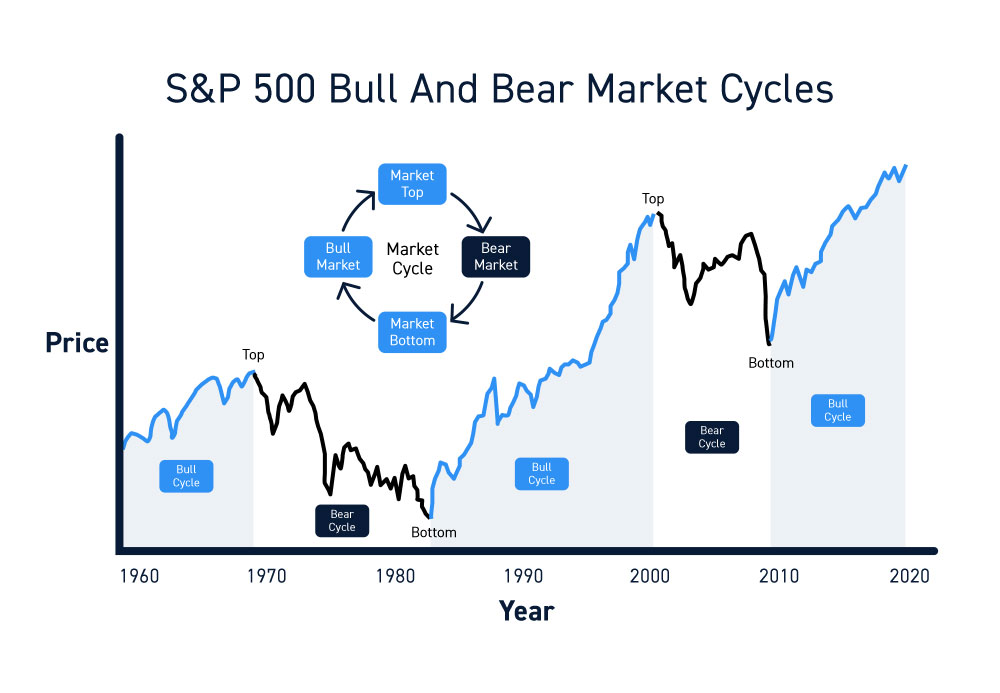
As previously discussed, the S&P 500 serves as the primary indicator of the large-cap U.S. stock market’s performance and, by extension, a key gauge of the broader economy. A rising S&P 500 generally reflects robust corporate earnings, investor optimism, and economic growth. Conversely, a falling index can signal economic slowdowns, corporate distress, or geopolitical uncertainties. Investors, economists, and policymakers closely monitor its movements to gain insight into current market sentiment and future economic projections. Understanding its trends helps investors contextualize their own portfolio performance and anticipate broader market shifts.
Diversification Benefits
Investing in an S&P 500 index fund or ETF offers inherent diversification. By holding a basket of 500 different companies across various sectors, investors reduce the risk associated with investing in a single stock or a small handful of companies. If one company or sector underperforms, the impact on the overall portfolio is mitigated by the performance of the other 499 constituents. This broad exposure helps smooth out volatility and provides a more stable growth trajectory over the long term compared to a concentrated portfolio. It’s a foundational principle of risk management in investing.
Long-Term Growth Potential
Historically, the S&P 500 has demonstrated remarkable long-term growth potential. Despite numerous economic downturns, recessions, and market corrections, the index has consistently recovered and reached new highs over extended periods. While past performance is no guarantee of future results, the S&P 500’s historical average annual return has been around 10-12% (before inflation), making it a powerful engine for wealth creation for patient, long-term investors. This consistent growth is attributed to the underlying strength and innovation of American corporations and the U.S. economy.
Benchmarking Your Portfolio
For many investors, the S&P 500 serves as the standard benchmark against which they measure the performance of their own investment portfolios or the performance of actively managed funds. If a mutual fund manager claims to be generating superior returns, investors will often compare that fund’s performance to that of the S&P 500 over the same period. If an actively managed fund consistently underperforms the S&P 500, it raises questions about the value proposition of paying higher management fees for that fund. Using the S&P 500 as a benchmark provides a clear, objective yardstick for evaluating investment success.
Conclusion
The S&P 500 is far more than a simple compilation of 500 companies; it is a dynamic, carefully curated index that stands as a vital pillar of the global financial system. Its rigorous selection criteria, market-capitalization weighting, and broad diversification make it an indispensable tool for understanding market trends, benchmarking investment performance, and facilitating passive investing strategies. For anyone looking to build a robust financial future or simply understand the economic world around them, grasping “how the S&P 500 works” is an essential step towards informed decision-making and strategic financial planning. Whether you’re an individual investor leveraging an S&P 500 ETF for long-term growth or a financial analyst dissecting market movements, the S&P 500 remains an unparalleled lens through which to view the health and potential of the U.S. equity market.
aViewFromTheCave is a participant in the Amazon Services LLC Associates Program, an affiliate advertising program designed to provide a means for sites to earn advertising fees by advertising and linking to Amazon.com. Amazon, the Amazon logo, AmazonSupply, and the AmazonSupply logo are trademarks of Amazon.com, Inc. or its affiliates. As an Amazon Associate we earn affiliate commissions from qualifying purchases.