
In the realm of personal and professional finance, percentages are the primary language of growth, risk, and stability. Whether you are calculating the interest on a high-yield savings account, determining the ROI of a diversified stock portfolio, or simply trying to figure out the sales tax on a major business purchase, understanding how to calculate the percentage of a number is a non-negotiable skill. Financial literacy is built upon the ability to translate raw data into actionable proportions.
While calculators and financial software have made these tasks easier, the underlying logic remains essential for making quick, informed decisions. This guide explores the fundamental mathematics of percentages within the context of money management, providing you with the tools to navigate your financial journey with precision.

The Fundamentals of Financial Percentages
Before diving into complex investment strategies or corporate tax structures, one must master the basic arithmetic of percentages. At its core, a percentage is a way of expressing a number as a fraction of 100. In finance, this “whole” could be your total monthly income, your initial investment capital, or the total value of an estate.
The Core Formula: Part over Whole
The most basic way to calculate the percentage of a number is to use the “Part over Whole” method. To find what percentage $X$ is of $Y$, you divide the part by the whole and multiply by 100.
Formula: $(Part / Whole) times 100 = Percentage$
For example, if you set aside $500 from a $4,000 monthly paycheck for savings, you are calculating what percentage of your income is being saved.
- $500 / 4,000 = 0.125$
- $0.125 times 100 = 12.5%$
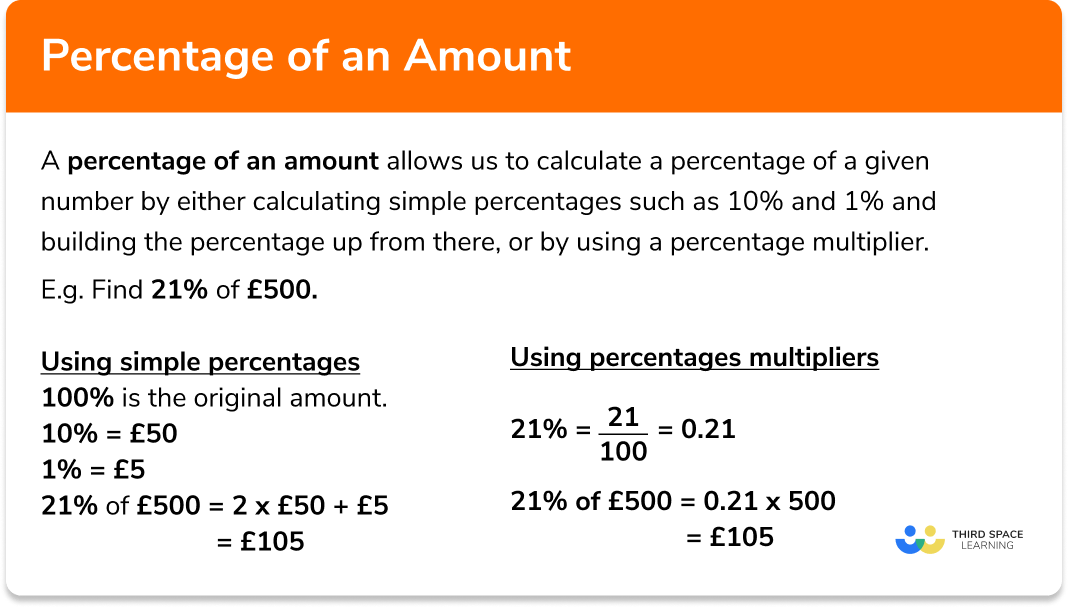
Understanding this inverse relationship is equally important. If you need to find a specific percentage of a number (e.g., “What is 15% of $200?”), you convert the percentage to a decimal and multiply.
- $15% = 0.15$
- $0.15 times 200 = $30$
Converting Decimals to Percentages in Finance
In many financial tools and spreadsheets like Excel or Google Sheets, percentages are stored as decimals. Professional financiers often skip the “multiply by 100” step in their heads and work directly with decimals. Converting a decimal to a percentage requires moving the decimal point two places to the right. Conversely, converting a percentage to a decimal (for use in a formula) requires moving it two places to the left.
This skill is vital when looking at interest rates. A bank might offer a “0.05” interest rate in a technical document, which the layperson must recognize as 5%. Misplacing a single decimal point can lead to catastrophic errors in financial planning, which is why fundamental mastery is the first step toward wealth.
Percentages in Personal Budgeting and Saving
Effective money management is less about how much you earn and more about how you allocate what you have. Percentages allow you to create a scalable budget that works whether you are earning entry-level wages or a C-suite salary.
Applying the 50/30/20 Rule
One of the most popular financial frameworks is the 50/30/20 rule. This strategy uses percentages to dictate cash flow:
- 50% for Needs: Housing, utilities, groceries, and insurance.
- 30% for Wants: Dining out, hobbies, and travel.
- 20% for Financial Goals: Debt repayment, emergency funds, and retirement.
To apply this, you must calculate these percentages based on your “Net Income” (take-home pay). If your net income is $6,500, you would calculate:
- Needs: $6,500 times 0.50 = $3,250$
- Wants: $6,500 times 0.30 = $1,950$
- Savings: $6,500 times 0.20 = $1,300$
By using percentages rather than fixed dollar amounts, your budget remains flexible. If your income increases, your “Wants” budget grows, but your “Savings” contribution increases proportionally as well.
Calculating Debt-to-Income Ratios
When applying for a mortgage or a business loan, lenders look at your Debt-to-Income (DTI) ratio. This is a percentage that represents how much of your gross monthly income goes toward paying debts.
To calculate your DTI, you divide your total monthly debt payments by your gross monthly income. For instance, if you pay $1,200 for a mortgage, $300 for a car loan, and $200 for student loans ($1,700 total debt) and your gross income is $5,000:
- $1,700 / 5,000 = 0.34$ or $34%$
Lenders generally prefer a DTI ratio below 36%. Knowing how to calculate this percentage yourself allows you to assess your “loan-worthiness” before ever stepping into a bank.
Investment Mathematics: ROI and Compound Growth
In the world of investing, percentages are the yardstick of success. They allow you to compare the performance of different asset classes, such as comparing a 7% return in the stock market against a 4% return in a bond portfolio.
Measuring Your Return on Investment (ROI)
ROI is the most common percentage calculation in the financial world. it tells you the efficiency of an investment.
Formula: $[(text{Current Value} – text{Original Cost}) / text{Original Cost}] times 100$
Imagine you bought shares of a tech company for $10,000, and a year later, the position is worth $11,500.
- Profit = $1,500
- $1,500 / 10,000 = 0.15$
- $0.15 times 100 = 15%$ ROI.
This calculation is essential for identifying which investments are pulling their weight and which should be liquidated.
Understanding Annual Percentage Yield (APY) vs. APR
When looking at savings accounts or loans, you will encounter APR (Annual Percentage Rate) and APY (Annual Percentage Yield). The difference lies in “compounding.”
APR represents the simple interest rate over a year. However, APY accounts for the effect of intra-year compounding—interest earned on interest. To calculate the impact of compounding, you must understand that the percentage is applied to the new balance each period, not just the original principal. Over long horizons, the difference between a 4.0% APR and a 4.08% APY can result in thousands of dollars in wealth variance.
Strategic Business Finance and Tax Calculations
For entrepreneurs and business owners, percentage calculations are used daily to protect profit margins and ensure tax compliance. Without a firm grasp of these numbers, a business can appear successful while actually losing money.
Calculating Profit Margins and Markups
One of the most frequent errors in business finance is confusing “markup” with “margin.”
- Markup is the percentage added to the cost to reach a selling price.
- Profit Margin is the percentage of the selling price that is profit.
If a product costs $70 to produce and you sell it for $100:
- Markup: $($30 text{ profit} / $70 text{ cost}) = 42.8%$
- Gross Margin: $($30 text{ profit} / $100 text{ revenue}) = 30%$
A business owner who thinks they have a 42% margin when they actually have a 30% margin may overspend on overhead, leading to a cash flow crisis. Calculating the percentage of revenue that constitutes net profit is the only way to ensure long-term corporate sustainability.
Determining Sales Tax and Effective Tax Rates
Taxation is almost entirely percentage-based. Whether it is a 7% state sales tax or a 24% federal income tax bracket, you must know how to extract these numbers.
To calculate the total cost of an item with sales tax:
Formula: $text{Price} times (1 + text{Tax Rate as a decimal})$
If a piece of office equipment costs $1,200 and the tax is 8.5%:
- $1,200 times 1.085 = $1,302$
On a larger scale, the “Effective Tax Rate” is the actual percentage of your total income you pay in taxes after deductions and credits. If you earn $100,000 but only pay $15,000 in total taxes, your effective tax rate is 15%, even if you are in a “24% bracket.” Knowing this percentage is crucial for accurate annual budgeting.
Common Pitfalls and Tools for Accurate Financial Percentages
Even seasoned financial professionals can make mistakes when calculating percentages, particularly when dealing with “percentage points” versus “actual percentages.”
If an interest rate rises from 5% to 6%, it has increased by one percentage point, but it has increased by 20% in terms of its value ($1$ is $20%$ of $5$). Failing to distinguish between these two can lead to a fundamental misunderstanding of market shifts.
Leveraging Financial Tools
While manual calculation builds the mental muscle necessary for financial success, modern tools provide the accuracy needed for execution.
- Financial Calculators: Tools like the HP 12C are industry standards for calculating Time Value of Money (TVM) and percentages.
- Spreadsheet Software: Excel’s
=PERCENTRANKand basic arithmetic functions allow for the processing of thousands of data points instantly. - Online ROI Calculators: These are useful for quickly determining the percentage of gain or loss in a volatile market.

Conclusion: The Power of Proportional Thinking
Calculating the percentage of a number is more than a mathematical exercise; it is a vital component of wealth management. By viewing your finances through the lens of percentages, you gain a clearer perspective on your spending habits, the efficiency of your investments, and the health of your business. Whether you are aiming for early retirement or scaling a startup, the ability to manipulate and understand these ratios is the foundation upon which financial freedom is built. Mastery of these simple calculations ensures that you are no longer just a spectator in your financial life, but the lead architect of your economic future.
aViewFromTheCave is a participant in the Amazon Services LLC Associates Program, an affiliate advertising program designed to provide a means for sites to earn advertising fees by advertising and linking to Amazon.com. Amazon, the Amazon logo, AmazonSupply, and the AmazonSupply logo are trademarks of Amazon.com, Inc. or its affiliates. As an Amazon Associate we earn affiliate commissions from qualifying purchases.