
The question “how much is the S&P 500?” is one of the most frequently asked in the financial world, yet its answer is often misunderstood. Unlike a single stock, the S&P 500 doesn’t have a “price per share” in the traditional sense. Instead, it represents an index value, a dynamic snapshot of the performance of 500 of the largest and most influential publicly traded companies in the United States. For investors, understanding this index is paramount, as it serves as a critical benchmark for the U.S. stock market and a powerful tool for long-term wealth building.
Understanding the S&P 500: More Than Just a Number
The S&P 500, officially known as the Standard & Poor’s 500, is a stock market index maintained by S&P Dow Jones Indices. It’s not a company you can invest in directly, nor is it a physical entity. Rather, it’s a theoretical portfolio designed to reflect the performance of 500 leading U.S. publicly traded companies selected by a committee. This selection is based on factors like market size, liquidity, and sector representation, ensuring it’s a broad and fair measure of the overall health of the American economy.
What Constitutes the S&P 500?
At its core, the S&P 500 aims to provide a broad representation of the U.S. equity market. The companies included are typically large-cap firms that meet specific criteria related to market capitalization, public float, liquidity, and profitability. While the number 500 suggests a fixed count, the exact number of stocks can fluctuate slightly due to mergers, acquisitions, and rebalancing by the S&P Dow Jones Indices committee.
Market Capitalization Weighting
A crucial aspect of the S&P 500’s methodology is its market-capitalization weighting. This means that companies with larger market values (share price multiplied by the number of outstanding shares) have a greater impact on the index’s movement than smaller companies within the index. For example, a 1% move in Apple or Microsoft, both enormous companies by market cap, will influence the index more significantly than a 1% move in a company with a smaller market capitalization, even if both are part of the 500. This weighting ensures the index accurately reflects the actual economic footprint of its constituent companies.
Deciphering the “Value” of the S&P 500
When people ask “how much is the S&P 500?”, they are referring to its current index level, which is a numerical value reported daily, hourly, and even minute-by-minute by financial news outlets. This value isn’t a price you can buy or sell; it’s a calculated figure that tracks the collective performance of the 500 companies.
How the Index Value is Calculated
The S&P 500 index value is calculated using a complex formula, but conceptually, it represents the sum of the market capitalizations of all 500 companies, divided by a proprietary divisor. This divisor is adjusted periodically to account for corporate actions like stock splits, dividends, mergers, and changes in the index’s composition, ensuring the index value remains consistent and accurately reflects market movements without being distorted by non-market events. The goal is to compare the aggregate market value of the current constituents to their aggregate market value on a base date, providing a continuous, comparable measure of market performance over time.
Factors Influencing Index Movement
The S&P 500’s value fluctuates constantly throughout trading hours, influenced by a multitude of economic and corporate factors:
- Corporate Earnings: Stronger-than-expected earnings reports from major S&P 500 companies tend to push the index up, while disappointing results can drag it down.
- Economic Indicators: Reports on GDP growth, inflation, employment figures, consumer confidence, and manufacturing output provide insights into the overall health of the economy, directly impacting investor sentiment and, consequently, stock prices.
- Interest Rates: Decisions by the Federal Reserve regarding interest rates have a significant effect. Higher rates can increase borrowing costs for businesses and make bonds more attractive, potentially reducing appetite for stocks.
- Geopolitical Events: Global political instability, trade disputes, or major international events can introduce uncertainty, leading to market volatility.
- Market Sentiment: Investor psychology, including fear and greed, can often amplify market movements, leading to rapid rises or falls that may not always be directly tied to fundamentals.
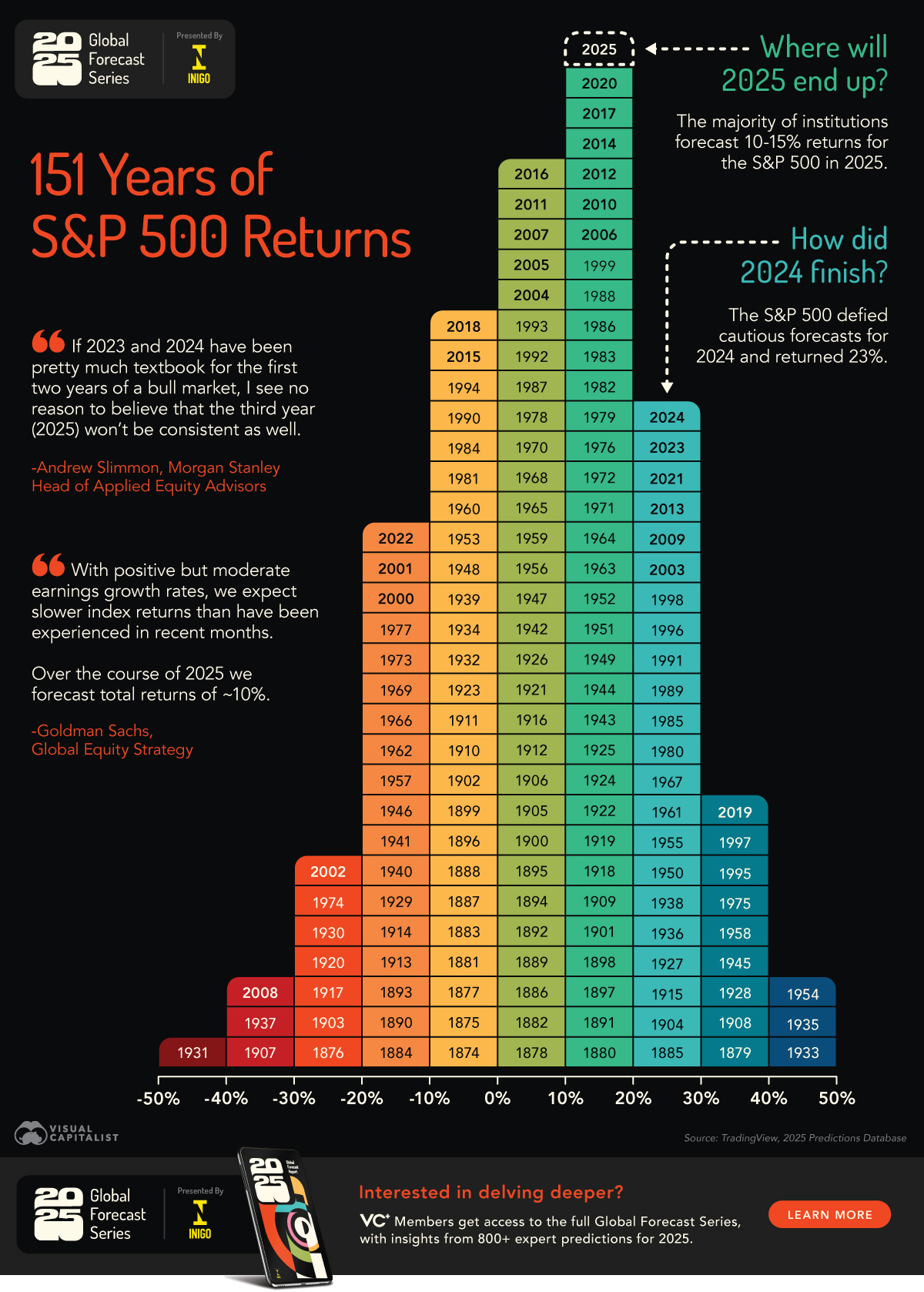
Historically, the S&P 500 has demonstrated a strong upward trend over the long term, punctuated by periods of significant volatility and downturns. Understanding this long-term growth potential, alongside the inherent risks, is crucial for any investor.
Why the S&P 500 Matters to Investors
For many investors, the S&P 500 is more than just a ticker symbol; it’s a foundational element of their investment strategy. Its broad market representation and historical performance make it a powerful tool for diversification and long-term wealth accumulation.
The Ultimate Benchmark for U.S. Stocks
The S&P 500 is widely considered the best single gauge of large-cap U.S. equities and a leading indicator for the broader U.S. stock market and economy. Professional money managers, analysts, and individual investors alike use it to evaluate their own portfolio performance. If a fund manager claims to beat the market, they are almost certainly referring to outperforming the S&P 500. Its comprehensive coverage of various sectors—including technology, healthcare, financials, consumer discretionary, and industrials—makes it a robust proxy for American corporate performance.
Diversification and Long-Term Growth Potential
Investing in the S&P 500 inherently provides a significant level of diversification. Instead of betting on the success of a single company, investors gain exposure to 500 different businesses across diverse industries. This broad exposure helps mitigate the risk associated with individual company failures. Historically, despite numerous economic crises and market downturns, the S&P 500 has consistently recovered and delivered substantial long-term returns, demonstrating the resilience and growth potential of the U.S. economy. This makes it an attractive option for investors with a long time horizon, such as those saving for retirement.
Fueling the Rise of Passive Investing

The consistent long-term performance and broad diversification offered by the S&P 500 have fueled the immense popularity of passive investing. Rather than trying to pick winning individual stocks or actively managed funds that often fail to beat the index after fees, many investors opt for S&P 500 index funds or Exchange-Traded Funds (ETFs). These vehicles aim to replicate the performance of the index at a very low cost, allowing investors to participate in the market’s overall growth with minimal effort.
Practical Ways to Invest in the S&P 500
While you can’t buy the S&P 500 index directly, several accessible and cost-effective financial products allow investors to gain exposure to its performance.
S&P 500 Index Funds (Mutual Funds)
An S&P 500 index mutual fund is a type of mutual fund that holds stocks in the same proportions as the S&P 500 index. These funds are managed to mirror the index’s performance, rather than actively trying to outperform it.
- Advantages: Diversification, professional management (though passive), often low expense ratios compared to actively managed funds, suitable for regular contributions through automatic investments.
- Disadvantages: Typically priced only once per day after market close, can have minimum investment requirements, and while low, still carry expense ratios.
Popular examples include mutual funds offered by Vanguard, Fidelity, and Charles Schwab that track the S&P 500.
S&P 500 Exchange-Traded Funds (ETFs)
ETFs are a more modern and increasingly popular way to invest in the S&P 500. Like mutual funds, S&P 500 ETFs hold a basket of stocks designed to track the index. However, unlike mutual funds, ETFs trade on stock exchanges throughout the day, just like individual stocks.
- Advantages: High liquidity (can be bought and sold at any time during market hours), typically very low expense ratios, no minimum investment requirements beyond the price of a single share, and transparent holdings.
- Disadvantages: Subject to intraday price fluctuations, requiring investors to potentially time their purchases.
Well-known S&P 500 ETFs include SPDR S&P 500 ETF Trust (SPY), iShares Core S&P 500 (IVV), and Vanguard S&P 500 ETF (VOO). These are often the first choice for investors looking to easily gain broad market exposure.
Dollar-Cost Averaging for S&P 500 Investments
A prudent strategy for investing in the S&P 500 through index funds or ETFs is dollar-cost averaging. This involves investing a fixed amount of money at regular intervals (e.g., monthly or quarterly), regardless of the market’s current level. When the market is down, your fixed amount buys more shares; when it’s up, it buys fewer. Over time, this strategy helps to smooth out the impact of market volatility, potentially leading to a lower average cost per share and reducing the risk of making a large investment right before a market downturn.
Considerations Before Investing in the S&P 500
While investing in the S&P 500 offers numerous benefits, it’s essential to approach it with a clear understanding of its characteristics and your personal financial situation.
Risk and Reward
Even broad market indexes like the S&P 500 are subject to market risk. The value of your investment can go down as well as up, and you could lose money. Economic recessions, geopolitical crises, and significant corporate events can lead to substantial, albeit typically temporary, declines in the index value. Investors should be prepared for this volatility and have a long-term perspective to ride out the inevitable market fluctuations. The reward, historically, has been significant growth over decades, but past performance is not indicative of future results.
Time Horizon
Investing in the S&P 500 is best suited for long-term financial goals, such as retirement planning or saving for a child’s education. A recommended time horizon of at least 5-10 years (or even longer) allows your investments sufficient time to recover from any market downturns and benefit from the compounding effect of returns. Short-term investing in the S&P 500, attempting to time the market, is generally not advisable for most individuals due to inherent unpredictability.
Expense Ratios and Fees
One of the greatest advantages of S&P 500 index funds and ETFs is their typically low expense ratios (the annual fee charged as a percentage of your investment). Even seemingly small differences in expense ratios can accumulate significantly over decades, impacting your total returns. Always compare the expense ratios of different funds before investing, favoring those with the lowest fees to maximize your long-term gains.

Diversification Beyond the S&P 500
While the S&P 500 provides excellent diversification within the U.S. large-cap equity market, it’s not a complete portfolio in itself. For true diversification, consider adding other asset classes such as bonds, international stocks (developed and emerging markets), and potentially real estate or commodities, depending on your risk tolerance and financial goals. This broader diversification can help reduce overall portfolio risk and enhance returns by capturing growth opportunities outside the U.S. large-cap segment.
aViewFromTheCave is a participant in the Amazon Services LLC Associates Program, an affiliate advertising program designed to provide a means for sites to earn advertising fees by advertising and linking to Amazon.com. Amazon, the Amazon logo, AmazonSupply, and the AmazonSupply logo are trademarks of Amazon.com, Inc. or its affiliates. As an Amazon Associate we earn affiliate commissions from qualifying purchases.