
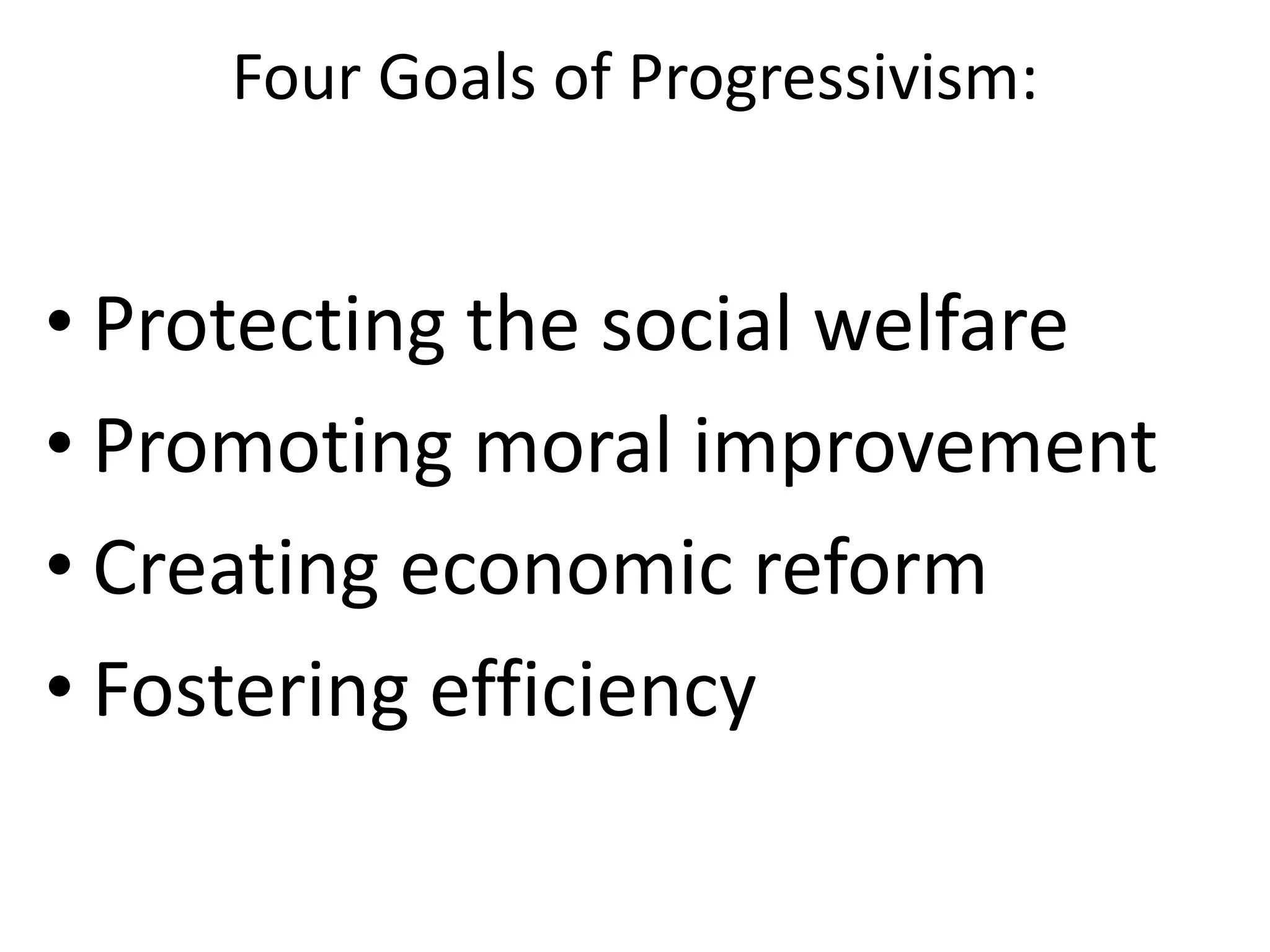
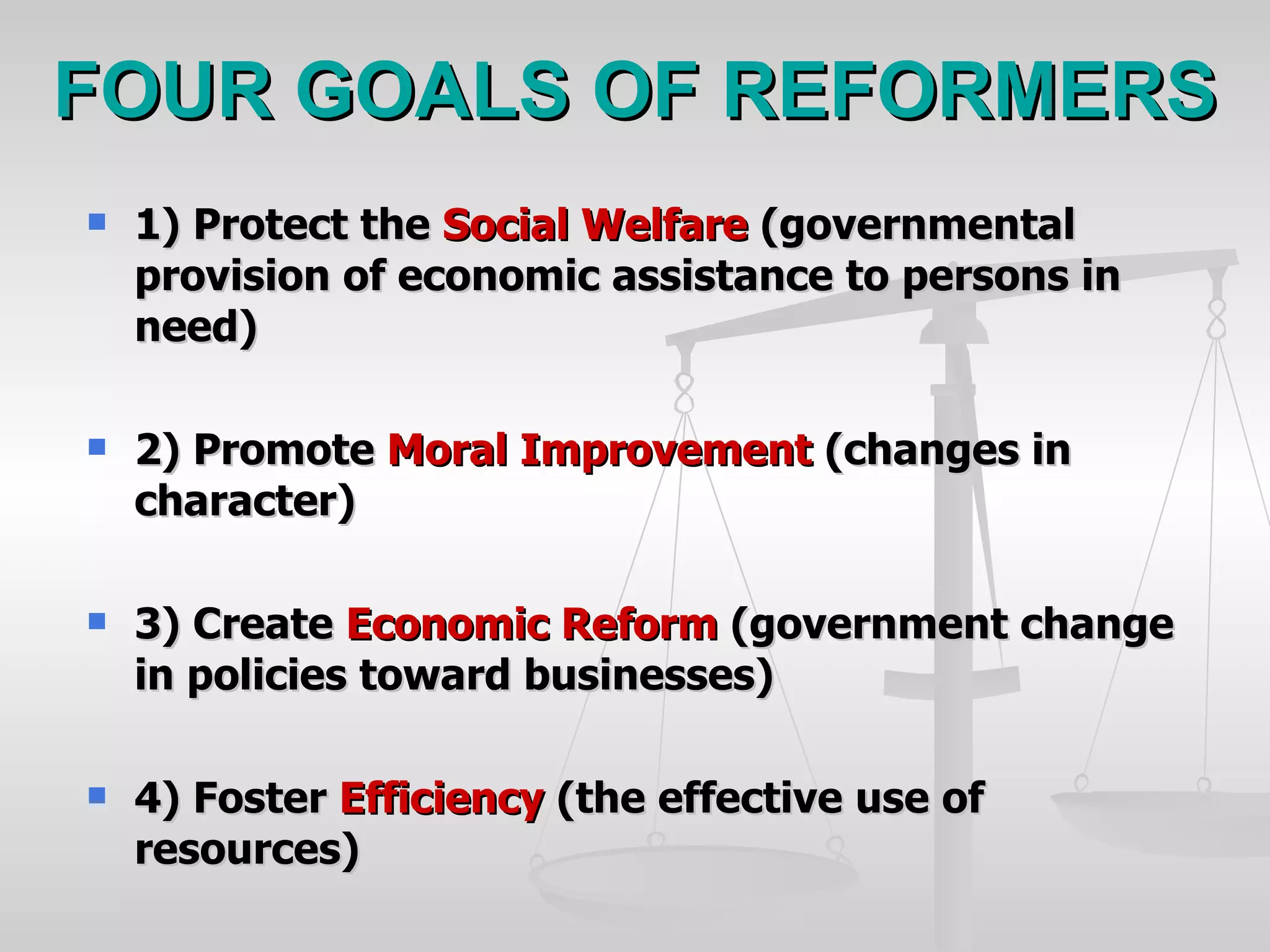
The Progressive Movement, emerging in the late 19th and early 20th centuries, was a multifaceted reform effort that profoundly reshaped the economic and financial landscape of the United States. Driven by a desire to address the inequalities and excesses wrought by rapid industrialization and unchecked capitalism, Progressives sought to leverage government power to create a more stable, equitable, and transparent financial system. Their four primary goals, though often interconnected, each targeted specific economic grievances and laid foundational principles for modern financial regulation, consumer protection, and social welfare programs. These aims were not merely idealistic but pragmatic attempts to ensure that economic growth benefited a broader segment of society, preventing the concentration of wealth and power that threatened democratic institutions and individual financial well-being.
Reforming Economic Structures and Curtailing Corporate Power
One of the most immediate and impactful goals of the Progressive Movement was the systemic reform of economic structures to curb the immense power of large corporations and trusts. The rapid industrial expansion following the Civil War had led to the rise of monopolies that controlled vast sectors of the economy, stifling competition, exploiting labor, and manipulating markets for their own gain. Progressives recognized that this unchecked corporate dominance was detrimental to both individual financial opportunity and the overall health of the nation’s economy.
Challenging Monopolies and Trusts
At the heart of this goal was the vigorous challenge to trusts and monopolies. Companies like Standard Oil, U.S. Steel, and various railroad conglomerates had consolidated immense economic power, often through ruthless business practices that eliminated smaller competitors and dictated prices to consumers. The absence of effective regulation meant these entities could act with near impunity, extracting wealth from the public without accountability. Progressives, through figures like President Theodore Roosevelt, championed the enforcement and expansion of antitrust laws, most notably the Sherman Antitrust Act of 1890, which had initially been weak. Their efforts led to landmark legal actions, such as the breakup of Standard Oil, demonstrating a commitment to fostering a competitive marketplace. This directly impacted personal finance by preventing price gouging and offering consumers more choices, while also creating opportunities for new businesses to enter markets without being immediately crushed by dominant players. The objective was to decentralize economic power, ensuring that no single entity could exert undue influence over entire industries or the financial lives of citizens.
Establishing Regulatory Frameworks
Beyond breaking up existing monopolies, Progressives understood the necessity of establishing robust regulatory frameworks to prevent future abuses. This involved creating governmental bodies equipped with the authority to oversee industries that were vital to the public good. The Interstate Commerce Commission (ICC), initially established in 1887 to regulate railroads, gained significant teeth during this era, setting freight rates and ensuring fair practices. Similarly, the creation of the Federal Trade Commission (FTC) in 1914 marked a pivotal step in monitoring business practices, preventing unfair competition, and protecting consumers from deceptive advertising and monopolistic tendencies. These regulatory bodies were crucial financial tools, acting as safeguards against corporate malfeasance that could otherwise deplete personal savings, undermine small businesses, and destabilize investment markets. The establishment of clear rules and oversight mechanisms aimed to create a predictable and fair economic environment where financial transactions were conducted with integrity, fostering public trust in the marketplace.
Protecting Consumers and Fair Competition
The emphasis on consumer protection and fair competition was a direct outgrowth of challenging corporate power. Progressives sought to ensure that economic freedom extended to all participants, not just the largest corporations. This manifested in various forms, including efforts to guarantee the safety and quality of products. The Pure Food and Drug Act and the Meat Inspection Act, both passed in 1906, were monumental achievements that directly protected the financial well-being of individuals by preventing them from spending money on unsafe or fraudulent products. Prior to these acts, consumers often faced significant health risks and financial losses due to adulterated goods. By mandating transparency in product labeling and establishing federal inspection standards, these laws helped consumers make informed financial decisions and ensured that their purchases provided genuine value. This also leveled the playing field for ethical businesses, preventing those that prioritized profit over product safety from gaining an unfair competitive advantage.
Enhancing Financial Equity and Social Welfare
Another core goal of the Progressive Movement was to address the stark financial inequalities and social injustices that had become prevalent in an industrializing society. The era witnessed immense wealth accumulation at the top, juxtaposed with widespread poverty, dangerous working conditions, and a lack of social safety nets for the majority. Progressives sought to use fiscal and legislative means to distribute economic benefits more broadly and protect the most vulnerable segments of the population.
Advocating for Progressive Taxation
A cornerstone of the Progressive agenda for financial equity was the advocacy for progressive taxation. Prior to this era, the U.S. relied heavily on tariffs and excise taxes, which disproportionately affected lower and middle-income individuals. Progressives argued that those who had benefited most from the nation’s economic growth should bear a greater share of the financial burden for public services and social welfare. This culminated in the ratification of the 16th Amendment in 1913, which established the federal income tax. This was a revolutionary shift in public finance, enabling the government to fund social programs and regulatory bodies through a system where wealthier individuals paid a higher percentage of their income. The progressive income tax directly aimed to mitigate wealth concentration, provide a stable revenue stream for public goods, and subtly redistribute wealth to foster greater economic equality. It allowed for the funding of infrastructure, education, and social services that improved the collective financial well-being of communities.
Improving Labor Standards and Worker Protections
The brutal realities of industrial labor—long hours, low wages, dangerous conditions, and the widespread use of child labor—were significant financial drains on working families and a moral outrage for Progressives. They championed reforms aimed at improving labor standards and providing essential worker protections. This included advocating for minimum wage laws, although these were often implemented at the state level and faced legal challenges. More successful were efforts to limit working hours (the eight-hour workday), improve workplace safety through regulations, and prohibit child labor, initially at the state level and later through federal legislation (though some initial federal attempts were struck down by courts). From a financial perspective, these reforms directly increased the disposable income of workers, reduced the incidence of debilitating injuries that led to medical debt and lost wages, and ensured that children had the opportunity for education rather than being forced into financially exploitative labor. These protections were critical in safeguarding personal finance for millions, providing a basic floor of economic security that had been absent in the Gilded Age.
Addressing Urban Poverty and Public Health Costs

Rapid urbanization brought with it unprecedented challenges in public health and the exacerbation of urban poverty. Slums, poor sanitation, and disease were rampant, disproportionately affecting the working class and immigrant populations. Progressives understood that these issues had significant financial implications, not only for individuals suffering from illness and poverty but also for society at large in terms of lost productivity and healthcare costs. Their efforts led to significant investments in public health initiatives, including improved sanitation systems, housing reforms, and the establishment of public health departments. While these might not seem directly “financial,” preventing disease outbreaks and improving living conditions directly reduced healthcare expenditures for families and communities, increased economic productivity, and decreased the financial burden of caring for the sick and infirm. Public investment in these areas was seen as an essential economic strategy to build a healthier, more financially resilient population.
Modernizing Financial Governance and Accountability
A third crucial objective of the Progressive Movement was to modernize the mechanisms of financial governance and instill greater accountability in both the public and private sectors. The existing systems were often fragmented, inefficient, and susceptible to corruption, undermining public trust and impeding stable economic growth. Progressives sought to professionalize government, create more resilient financial institutions, and ensure greater transparency in public spending.
Establishing Centralized Financial Authority
A critical achievement in modernizing financial governance was the creation of a centralized banking system. The U.S. had suffered from a series of financial panics in the late 19th and early 20th centuries, most notably the Panic of 1907, which highlighted the instability of a decentralized banking system. There was no central authority to manage the nation’s money supply, act as a lender of last resort, or regulate commercial banks effectively. The Progressive response was the Federal Reserve Act of 1913, which established the Federal Reserve System. This act fundamentally transformed American finance by creating a central bank with the power to control the money supply, supervise banks, and provide stability to the financial system. For businesses and individuals, this meant a more stable economic environment, reducing the likelihood of devastating bank runs and financial crises that could wipe out savings and investments. The Federal Reserve became an indispensable financial tool for managing economic cycles and safeguarding the integrity of the nation’s currency.
Streamlining Government Operations for Fiscal Prudence
Progressives also applied principles of scientific management and efficiency, often borrowed from industry, to government operations. They sought to streamline bureaucracy, reduce waste, and improve the effectiveness of public services. This quest for “efficiency” was fundamentally a financial one, aimed at ensuring taxpayer money was used judiciously and effectively. Reforms included implementing civil service reforms to replace political patronage with merit-based appointments, adopting city manager systems in local government, and conducting audits of public expenditures. The goal was to reduce the financial costs of corruption and inefficiency, making government more responsive and accountable in its financial management. By reducing waste and ensuring competent administration, these reforms aimed to deliver more public value for every dollar collected in taxes, indirectly enhancing the personal finance of citizens by ensuring public funds were not squandered.
Combating Corruption and Political Graft
Pervasive corruption in government, often linked to powerful business interests, was a major target for Progressives. Political machines often operated as financially exploitative enterprises, siphoning public funds through kickbacks, inflated contracts, and outright graft. This corruption had direct financial costs for taxpayers and distorted economic competition. Progressives advocated for reforms like the direct primary, initiative, referendum, and recall, which were designed to make government more transparent and directly accountable to the electorate, thereby reducing opportunities for financial malfeasance. Investigations into political corruption, often led by “muckraking” journalists, exposed the financial networks that underpinned these systems. By fighting corruption, Progressives aimed to ensure that economic decisions were made in the public interest rather than for private gain, safeguarding taxpayer money and creating a more level playing field for businesses and individuals alike.
Cultivating an Ethical Financial Environment
The fourth overarching goal of the Progressive Movement was to cultivate an ethical financial environment, rooted in principles of transparency, public trust, and social responsibility. This went beyond mere regulation; it sought to instill a moral compass within the capitalist system, ensuring that economic activities served broader societal good rather than solely maximizing private profit without regard for consequences.
Promoting Transparency in Business Practices
Progressives strongly believed that transparency was a prerequisite for an ethical financial environment. They pushed for reforms that compelled businesses to disclose more information to the public and to their investors. This included calls for greater financial reporting by corporations, moves toward more standardized accounting practices, and the exposure of business practices deemed unethical or exploitative. The “muckrakers,” investigative journalists of the era, played a crucial role in exposing the hidden financial dealings and social costs of industrial giants, from Ida Tarbell’s exposé on Standard Oil to Upton Sinclair’s The Jungle, which revealed the unsanitary conditions in the meatpacking industry. This push for transparency was a financial defense mechanism, allowing investors to make more informed decisions, helping regulators identify abuses, and empowering consumers to choose products and services from companies that operated with integrity. An informed public could exert pressure, forcing businesses to align their financial practices with ethical standards.
Instilling Public Trust in Economic Systems
A deep-seated lack of trust in financial institutions and corporate power characterized the Gilded Age. Panics, corporate scandals, and visible disparities in wealth eroded public confidence in the fairness and stability of the economic system. A key Progressive goal was to rebuild this trust, recognizing that a stable economy depends on public faith in its underlying structures. Reforms like the Federal Reserve System, antitrust enforcement, and consumer protection laws were all designed to demonstrate that government could and would intervene to protect ordinary citizens from economic exploitation and systemic instability. By creating a more regulated and seemingly fairer system, Progressives aimed to reassure individuals that their investments, savings, and livelihoods were reasonably secure. This renewed trust was vital for fostering economic participation, encouraging investment, and ensuring the long-term viability of the capitalist system itself.
Debating Social Costs of Certain Industries
Finally, Progressives engaged in significant public discourse and legislative action concerning the social and economic costs of certain industries, notably the alcohol industry. The Prohibition movement, culminating in the 18th Amendment, was a strong current within Progressivism. While often framed as a moral crusade, it had significant financial underpinnings. Advocates argued that alcohol consumption led to widespread poverty, domestic abuse, lost wages, and increased public health costs, imposing a heavy financial burden on families and communities. The debate highlighted how certain industries, while generating profit, could inflict substantial negative externalities on society, which then had to be borne by taxpayers and affected families. Though controversial and ultimately repealed, the Prohibition experiment underscored the Progressive willingness to question and potentially restrict industries whose financial gains were perceived to come at too great a social and economic cost. This reflected a broader commitment to evaluating economic activities through a lens of collective financial well-being and social responsibility, rather than pure profit maximization.
aViewFromTheCave is a participant in the Amazon Services LLC Associates Program, an affiliate advertising program designed to provide a means for sites to earn advertising fees by advertising and linking to Amazon.com. Amazon, the Amazon logo, AmazonSupply, and the AmazonSupply logo are trademarks of Amazon.com, Inc. or its affiliates. As an Amazon Associate we earn affiliate commissions from qualifying purchases.