
Priceline, a name synonymous with online travel deals, has revolutionized how millions plan and book their journeys. Far more than just a booking website, Priceline operates as a sophisticated technological ecosystem, a digital marketplace engineered to connect travelers with a vast inventory of hotels, flights, rental cars, and vacation packages. Understanding “how Priceline works” means peeling back the layers of its intricate software architecture, innovative algorithms, and seamless user experience that collectively power its mission to deliver value to its customers.
At its core, Priceline is a technology company leveraging advanced data analytics, proprietary algorithms, and extensive API integrations to aggregate travel options, process transactions, and offer unique pricing models. Its operational blueprint is designed not just for convenience but for strategic price optimization, making it a fascinating case study in travel tech innovation.
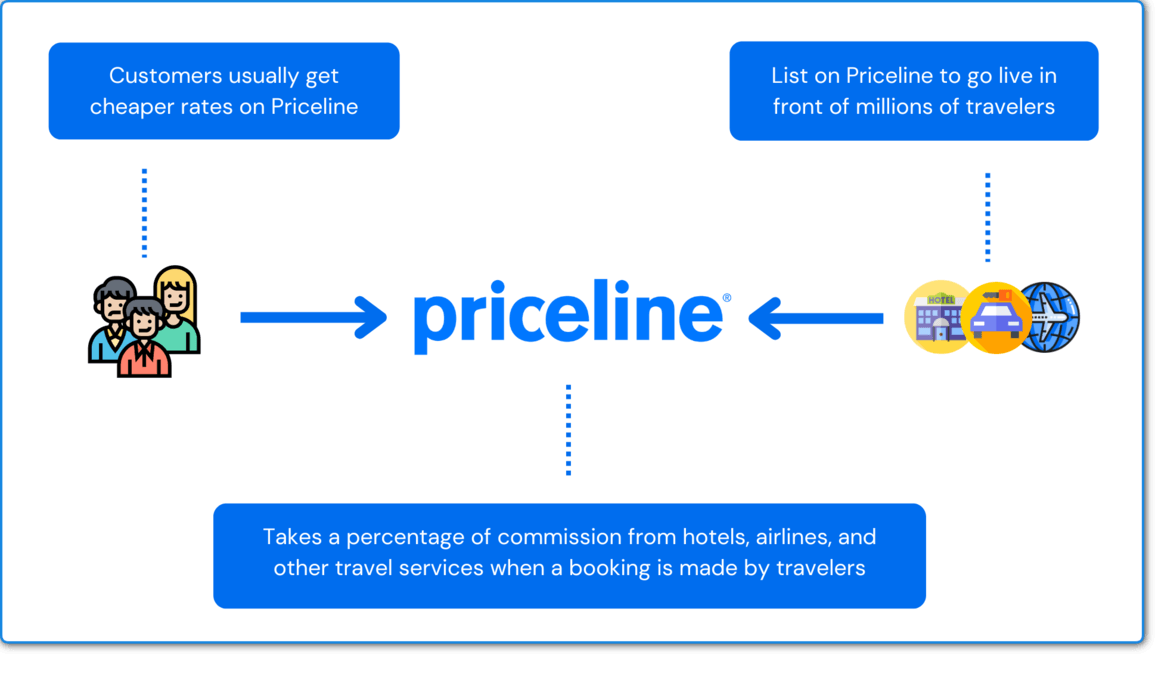
Priceline’s Core Technological Framework: The Digital Travel Marketplace
Priceline functions as an expansive digital marketplace, an intricate web of interconnected systems that process staggering amounts of data in real-time. This framework is the backbone that supports everything from a simple hotel search to its more complex opaque pricing models.
The Backend Engine: Data Aggregation and Dynamic Pricing
The true magic behind Priceline lies in its robust backend infrastructure. This engine constantly aggregates vast amounts of data from thousands of travel providers globally – airlines, hotel chains, independent properties, car rental companies, and cruise lines. Through a complex network of Application Programming Interfaces (APIs), Priceline establishes direct, real-time communication channels with these providers. This allows it to pull live inventory, pricing, and availability data, ensuring that the information displayed to users is current and accurate.
Once data is ingested, Priceline’s proprietary algorithms spring into action. These sophisticated computational models don’t just display prices; they actively analyze market conditions, demand fluctuations, historical booking patterns, and even competitor pricing. This dynamic pricing capability is crucial. Instead of static rates, Priceline’s system can adjust prices instantaneously, often presenting deals that reflect current supply surpluses or anticipated demand deficits. For instance, if a hotel anticipates empty rooms for a particular night, Priceline’s system can identify this and offer a discounted rate through its Express Deals, a process driven entirely by algorithmic intelligence identifying optimal revenue management opportunities for providers.
This constant data flow and algorithmic analysis are what enable Priceline to offer competitive rates and, more importantly, its signature “opaque” deals, where some details are hidden until after booking. The technology manages the delicate balance of offering attractive discounts to consumers while helping providers fill inventory they might otherwise lose, all without directly undermining their published rack rates.
User Interface and Experience (UI/UX)
While the backend operates in a realm of complex code and algorithms, the frontend is meticulously designed for simplicity and intuitive interaction. Priceline’s User Interface (UI) is clean, uncluttered, and focuses on guiding the user through the booking process efficiently. Whether on its website or mobile app, the design prioritizes ease of navigation, clear presentation of options, and quick access to essential information.
The User Experience (UX) is crafted to minimize friction. From intelligent search filters that allow users to narrow down options by price, ratings, amenities, and location, to streamlined booking forms that pre-populate information, every element is considered. Features like interactive maps, high-resolution imagery, and user reviews are seamlessly integrated to provide comprehensive information, empowering travelers to make informed decisions. The goal is to create a responsive, engaging, and trustworthy digital environment that makes complex travel planning feel effortless. This involves constant A/B testing, user feedback analysis, and iterative design improvements to ensure the platform remains at the forefront of usability.
Unpacking Priceline’s Signature Booking Innovations
Priceline’s technological prowess is best showcased in its unique booking methods, which have redefined how travelers access discounted rates. These innovations are not merely marketing gimmicks but sophisticated algorithmic solutions to a fundamental economic challenge in the travel industry.
Express Deals: Algorithm-Driven Opaque Pricing
Express Deals represent Priceline’s most prominent current opaque pricing model. The technology behind this is highly advanced. Instead of a traditional search where all details are revealed upfront, Express Deals leverage algorithms to offer deeply discounted rates by obscuring certain information – specifically the exact hotel name, airline, or car rental agency – until after the booking is confirmed.
Here’s how the technology works: When a travel provider has unsold inventory, they can feed this data into Priceline’s system, specifying parameters for how low they are willing to go, often based on demand forecasts and competitor pricing. Priceline’s algorithms then process this information. When a user searches for an Express Deal, the system dynamically matches their preferences (e.g., star rating, neighborhood, amenities for a hotel) with available opaque inventory. The algorithms ensure that the presented deal characteristics (e.g., “4-star hotel in Midtown Manhattan with free Wi-Fi”) accurately represent the hidden property, while strategically withholding the exact name to protect the provider’s brand integrity and standard pricing. This allows providers to offload perishable inventory without devaluing their brand, and travelers to secure significant savings. It’s a complex, real-time matching engine that balances supply, demand, and strategic anonymity.
Name Your Own Price (NYOP): A Legacy of Reverse Auctions
While largely phased out for hotels and rental cars, the Name Your Own Price (NYOP) model was a groundbreaking technological innovation that solidified Priceline’s reputation. This system employed a reverse auction mechanism. Travelers would submit a bid (a price they were willing to pay) for a generic service (e.g., a 4-star hotel in a specific area). Priceline’s algorithms would then scour its inventory to see if any provider was willing to accept that price or lower.
The technology behind NYOP was immensely complex, involving:
- Dynamic Inventory Matching: Rapidly comparing user bids against a real-time database of provider offers, considering location, star rating, and price acceptance thresholds.
- Bid Management Logic: Preventing users from “gaming” the system by adjusting bids, and ensuring fair opportunity for providers.
- Capacity Optimization: Identifying providers with excess capacity likely to accept lower bids to fill rooms.
- Fraud Prevention: Safeguarding against malicious bidding patterns.
Though its widespread use has diminished due to evolving market dynamics and provider preferences, NYOP stands as a testament to Priceline’s pioneering spirit in developing sophisticated algorithmic trading systems for travel. Its principles, however, continue to influence other opaque pricing models.
Standard Bookings and Bundles: Integrated Search and Comparison

Beyond its signature opaque deals, Priceline’s platform excels at standard booking services. Its search engine is a powerful aggregation tool, allowing users to compare prices for flights, hotels, and rental cars across numerous providers simultaneously. This involves:
- Multi-API Integration: Connecting to hundreds of different travel provider APIs to pull real-time data for each search query.
- Comparison Algorithms: Processing and sorting vast amounts of data to present the most relevant and often cheapest options, along with detailed filters.
- Dynamic Packaging Engine: For bundles (flight + hotel, hotel + car), Priceline uses algorithms to combine multiple components into a single package, often unlocking greater savings than booking each component separately. This “dynamic packaging” isn’t merely adding up prices; it’s a sophisticated optimization problem that identifies the most cost-effective combinations in real-time.
The Technology Behind Seamless User Experience
Priceline’s commitment to technology extends beyond just finding deals; it’s deeply embedded in ensuring a smooth, secure, and personalized user journey across all touchpoints.
Mobile App Functionality and GPS Integration
The Priceline mobile app is a cornerstone of its modern platform, designed for on-the-go travelers. It replicates the full functionality of the desktop site while enhancing it with mobile-specific features:
- Location-Based Services: Utilizing GPS, the app can instantly show nearby hotel deals, car rental pick-up points, or flight information relevant to the user’s current location, making last-minute bookings incredibly convenient.
- Push Notifications: Leveraging device capabilities, the app can deliver personalized deal alerts, booking confirmations, or flight status updates directly to the user.
- Optimized Interface: The app’s UI/UX is specifically tailored for smaller screens and touch interaction, ensuring a fluid and responsive experience.
- Offline Access (limited): Some booking details or itinerary information can be accessed even without an internet connection, a crucial feature for international travelers.
AI and Machine Learning in Personalization and Recommendations
Priceline increasingly employs Artificial Intelligence (AI) and Machine Learning (ML) to enhance personalization. These technologies analyze user behavior, past bookings, search patterns, and demographic data to:
- Tailor Search Results: Prioritizing hotels or flights that align with a user’s known preferences (e.g., family-friendly, luxury, budget-conscious).
- Offer Personalized Recommendations: Suggesting destinations, hotels, or activities based on browsing history or similar user profiles.
- Dynamic Content Delivery: Adjusting promotions and advertisements in real-time to be more relevant to the individual user.
- Chatbots and Customer Support: AI-powered chatbots assist users with common queries, streamlining customer service and providing instant support.
Digital Security and Trust: Protecting User Data
Given the sensitive nature of personal and financial information handled, robust digital security is paramount. Priceline employs a multi-layered security architecture:
- Encryption: All data transmissions, especially payment information, are secured using industry-standard SSL/TLS encryption protocols.
- Firewalls and Intrusion Detection Systems: Sophisticated network security measures protect against unauthorized access and cyber threats.
- Regular Audits and Compliance: Adherence to global data protection regulations (like GDPR) and PCI DSS compliance for payment processing ensures data integrity and user privacy.
- Secure Payment Gateways: Integration with trusted payment processors ensures that financial transactions are handled securely, mitigating risks of fraud.
Priceline’s Ecosystem: Connecting Supply and Demand
The efficiency of Priceline’s operations hinges on its ability to seamlessly integrate with a vast network of travel providers and payment systems. This forms a complex technological ecosystem.
API Integrations with Travel Providers
The bedrock of Priceline’s extensive inventory is its sophisticated API integration strategy. Through a standardized set of protocols, Priceline’s systems can communicate directly with the property management systems (PMS) of hotels, global distribution systems (GDS) for flights, and reservation systems of car rental companies. These APIs allow for:
- Real-time Inventory Updates: Ensuring that if a room is booked directly through a hotel’s website, that availability is immediately reflected on Priceline, preventing overbooking.
- Automated Pricing Adjustments: Providers can push dynamic pricing changes directly to Priceline based on their yield management strategies.
- Booking Confirmations: Instantaneous confirmation of bookings directly into the provider’s reservation system.
This level of deep integration is computationally intensive, requiring robust error handling, high-availability servers, and continuous monitoring to ensure uptime and data accuracy across thousands of connections.
Payment Gateway Technologies
Handling millions of transactions securely and efficiently requires cutting-edge payment gateway technology. Priceline integrates with multiple secure payment gateways and processors globally. This system supports a wide array of payment methods, from major credit cards to digital wallets (e.g., PayPal, Apple Pay). The technology ensures:
- PCI DSS Compliance: Strict adherence to Payment Card Industry Data Security Standard to protect cardholder data.
- Fraud Detection: Advanced algorithms and machine learning models are deployed to detect and prevent fraudulent transactions in real-time.
- Multi-Currency Processing: Facilitating bookings for international travelers by processing transactions in various currencies.
- Tokenization: Sensitive credit card information is often tokenized, meaning it’s converted into a unique, non-sensitive identifier, further enhancing security by never storing raw card data on Priceline’s servers.
Future Forward: Technological Advancements and Evolution
Priceline’s journey as a technological innovator is continuous. The company consistently invests in research and development to leverage emerging technologies and adapt to the evolving digital landscape.
Leveraging Big Data for Market Insights
The sheer volume of booking data, search queries, and user behavior patterns collected by Priceline constitutes “Big Data.” The company utilizes advanced analytics platforms and data science teams to:
- Identify Market Trends: Spotting emerging travel destinations, peak booking periods, and shifts in consumer preferences.
- Optimize Pricing Strategies: Refining its dynamic pricing algorithms for both standard and opaque deals.
- Improve User Segmentation: Creating more precise traveler profiles for hyper-personalized marketing and product offerings.
- Enhance Operational Efficiency: Optimizing internal processes and resource allocation.
Emerging Tech (e.g., Voice, VR for Travel Planning)
Looking ahead, Priceline is exploring how new technologies can further enhance the travel planning experience. This includes:
- Voice Commerce: Integrating with voice assistants (like Amazon Alexa or Google Assistant) to allow users to search and book travel using natural language commands. This requires sophisticated Natural Language Processing (NLP) capabilities.
- Virtual Reality (VR) and Augmented Reality (AR): Potentially offering immersive previews of hotels or destinations, allowing travelers to “experience” a location before booking, thereby reducing uncertainty and increasing confidence.
- Blockchain: While still nascent, exploring blockchain for secure identity management, loyalty programs, or transparent payment processing in the travel ecosystem.
In conclusion, Priceline’s success is deeply rooted in its sophisticated technological framework. From its backend data aggregation and dynamic pricing algorithms to its user-centric mobile apps and robust security protocols, every aspect of its operation is engineered for efficiency, value, and a seamless user experience. It stands as a prime example of how innovative software and strategic digital solutions can transform an industry and empower millions of travelers worldwide.
aViewFromTheCave is a participant in the Amazon Services LLC Associates Program, an affiliate advertising program designed to provide a means for sites to earn advertising fees by advertising and linking to Amazon.com. Amazon, the Amazon logo, AmazonSupply, and the AmazonSupply logo are trademarks of Amazon.com, Inc. or its affiliates. As an Amazon Associate we earn affiliate commissions from qualifying purchases.