
In an increasingly demanding world where time often feels like our most precious commodity, the concept of earning money passively holds immense appeal. Imagine a life where your income isn’t solely tied to the hours you clock in, where your financial well-being isn’t constantly dependent on your direct, active labor. This is the promise of passive income: generating revenue with minimal ongoing effort, once the initial work, investment, or system setup is complete. It’s about building financial engines that continue to run, freeing up your time, reducing stress, and paving the way for true financial independence.
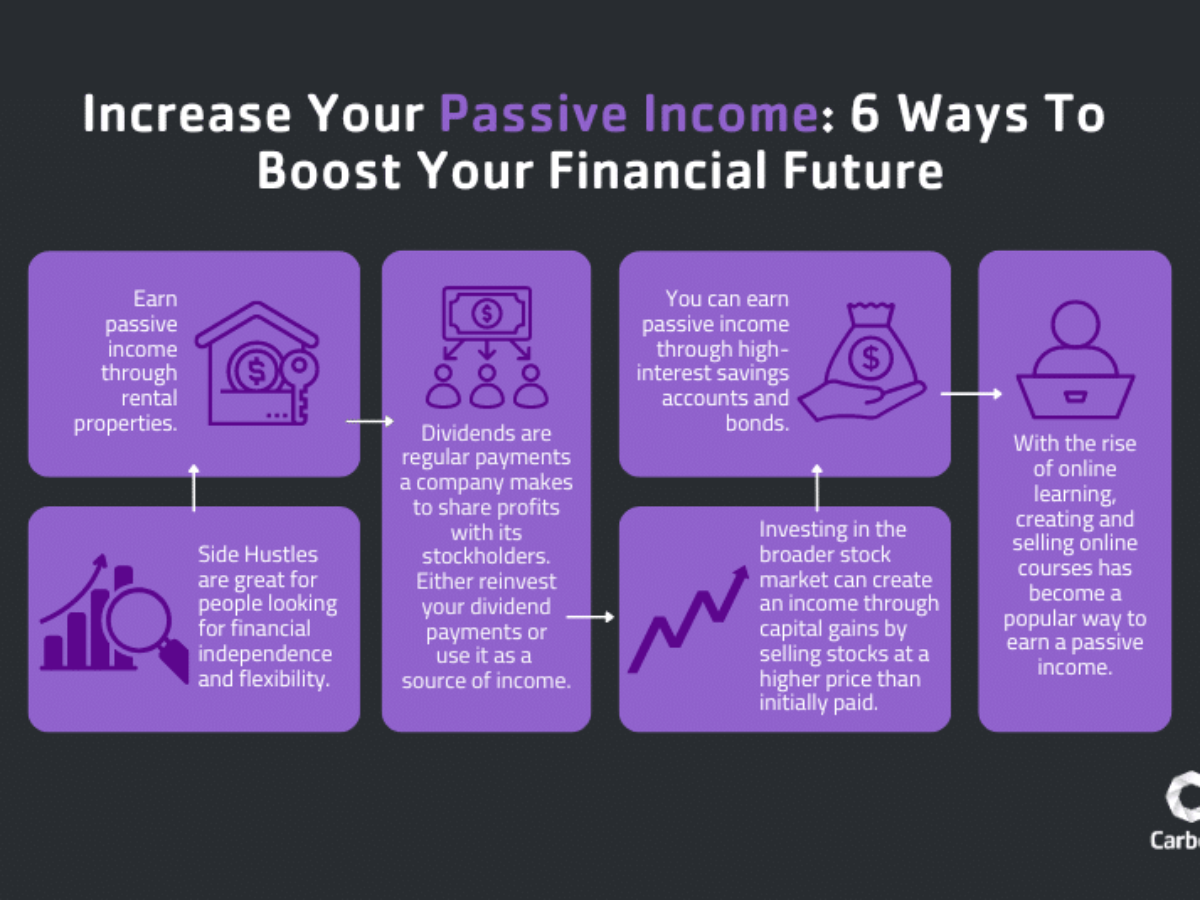
While the phrase “passive income” often conjures images of effortless wealth, it’s crucial to understand that “passive” does not mean “no work.” Rather, it implies significant initial effort, strategic investment, or creative input, followed by a system that largely operates on its own. This article delves into the diverse world of passive income, exploring various avenues, dispelling common myths, and offering actionable strategies to help you cultivate streams of income that work for you, even when you’re not actively working. From intelligent investments to digital creations and automated business models, we’ll uncover how to strategically build a financial future less reliant on the daily grind and more on smart, sustainable systems.
Understanding the Fundamentals of Passive Income
Before diving into specific strategies, it’s essential to grasp the core principles that underpin effective passive income generation. A clear understanding will help set realistic expectations and guide your approach.
Dispelling the “Get Rich Quick” Myth
The allure of passive income can sometimes be distorted into a “get rich quick” fantasy. This misconception is not only inaccurate but can lead to poor decisions and disappointment. True passive income rarely materializes overnight. It typically requires one or a combination of significant upfront investments:
- Time Investment: Developing a digital product, building a content platform, or setting up an automated business system demands considerable time, effort, and often skill development.
- Financial Investment: Purchasing rental properties, investing in dividend stocks, or funding a business venture requires capital. The more substantial the initial investment, often the quicker and larger the passive returns can be, but this also carries greater risk.
- Skill Investment: Acquiring expertise in areas like coding, graphic design, writing, or financial analysis can be leveraged to create passive income assets.
The “passive” aspect comes after this initial phase, when the system is established and running, requiring only periodic maintenance or oversight rather than continuous, active labor. Patience, persistence, and strategic planning are far more valuable than the pursuit of instant wealth.
Active vs. Passive Income: A Clear Distinction
To fully appreciate passive income, it’s helpful to contrast it with active income.
- Active Income: This is money earned directly in exchange for time and effort. Examples include a salary from a job, hourly wages, freelance service fees, or direct consulting work. If you stop working, the active income stops.
- Passive Income: This is income generated from an asset or system that largely operates independently of your direct, daily involvement. Once established, it continues to bring in money without requiring constant attention. The goal is to decouple your income from your time, allowing you to earn even while you’re sleeping, traveling, or pursuing other interests.
The strategic pursuit of passive income aims to shift a portion of your financial reliance from active endeavors to self-sustaining streams, enhancing your financial security and freedom.
Key Pillars of Passive Income Generation
Successful passive income strategies typically rest on a few fundamental pillars:
- Leverage: Utilizing existing resources – whether your capital, skills, network, or intellectual property – to generate returns without direct manual input for every dollar earned.
- Scalability: The ability of your income stream to grow without a proportional increase in your time or effort. Digital products, for instance, can be sold infinitely once created.
- Automation & Delegation: Employing technology, systems, or other individuals (e.g., virtual assistants, property managers) to handle routine tasks, allowing the income stream to flow with minimal intervention from you.
- Asset Creation: Focusing on building or acquiring assets (financial, intellectual, or physical) that can generate income over time, rather than just selling your time.
Investment-Based Passive Income Streams
One of the most traditional and effective ways to generate passive income is through intelligent financial investments. These strategies often require initial capital but can provide relatively hands-off returns.
Real Estate Investments
Real estate remains a perennial favorite for passive income due to its tangible nature and potential for appreciation.
- Rental Properties: Purchasing residential or commercial properties and leasing them out generates consistent rental income. While it can be capital-intensive and may require some active management (or delegated management to a property manager), the income stream can be substantial. Equity appreciation over time adds another layer of financial gain.
- Real Estate Investment Trusts (REITs): For those without the capital or desire to manage physical properties, REITs offer a way to invest in a portfolio of income-generating real estate. These are companies that own, operate, or finance income-producing real estate across various property sectors. REITs trade on major stock exchanges, making them liquid and accessible, and they are legally required to distribute a significant portion of their taxable income to shareholders as dividends.
- Crowdfunded Real Estate: Platforms allow individuals to invest smaller amounts into larger real estate projects, sharing in the rental income or profits from sales. This lowers the barrier to entry but may involve higher fees and less liquidity.
Dividend Stocks and Bonds
Investing in the stock and bond markets can provide a relatively hands-off passive income stream.
- Dividend Stocks: Many established companies distribute a portion of their profits to shareholders in the form of dividends. By investing in dividend-paying stocks, you can receive regular cash payments, often quarterly, without needing to sell your shares. Reinvesting these dividends can significantly accelerate wealth accumulation through compounding.
- Bonds: Bonds represent loans made to governments or corporations, which pay investors regular interest payments over a specified period. While generally lower-yield than stocks, bonds offer greater stability and diversification, making them a cornerstone of a balanced passive income portfolio.
- Exchange-Traded Funds (ETFs) and Mutual Funds: Investing in funds that focus on dividend stocks or bonds allows for instant diversification across many companies or bond types, reducing risk compared to individual stock picking. These funds also typically have professional management.
High-Yield Savings Accounts and Certificates of Deposit (CDs)
For those prioritizing safety and liquidity, certain banking products can offer modest passive income.
- High-Yield Savings Accounts (HYSAs): These accounts offer significantly higher interest rates than traditional savings accounts, though still generally modest compared to other investments. They are FDIC-insured, making them extremely low-risk, and funds are readily accessible. They are ideal for emergency funds or short-term savings.
- Certificates of Deposit (CDs): CDs require you to deposit money for a fixed term (e.g., 6 months, 1 year, 5 years) in exchange for a higher, fixed interest rate. While your money is locked up for the term, they offer predictable, guaranteed returns and are also FDIC-insured.
Peer-to-Peer (P2P) Lending
P2P lending platforms connect individual lenders directly with individual or small business borrowers, bypassing traditional banks.
- How it Works: You can invest small amounts in multiple loans, diversifying your risk. Borrowers pay back the loans with interest, and a portion of that interest becomes your passive income.
- Pros & Cons: P2P lending can offer higher returns than traditional savings accounts, but it also carries the risk of borrower default. Careful due diligence on platforms and borrowers is crucial.
Digital and Creative Passive Income Avenues
The digital age has opened up a plethora of opportunities for individuals to leverage their skills and creativity to build passive income streams that are highly scalable and often have low startup costs.
Creating Digital Products
Once created, digital products can be sold repeatedly without needing to replenish inventory, making them incredibly passive.
- E-books & Guides: Write and self-publish non-fiction guides, fiction novels, or educational e-books. Platforms like Amazon Kindle Direct Publishing allow global distribution and handle sales and royalties.
- Online Courses: Share your expertise by creating comprehensive online courses on platforms like Teachable, Udemy, or Skillshare. Once produced, these courses can generate income as students enroll over time.
- Stock Photos, Videos, and Audio: If you have photography, videography, or music production skills, you can sell licenses to your work on stock media sites (e.g., Shutterstock, Adobe Stock, Getty Images). Each time someone uses your asset, you earn a royalty.
- Templates & Digital Assets: Create templates for websites, graphic design, social media, resumes, or software plugins and sell them on marketplaces like Etsy, Creative Market, or dedicated template sites.
Affiliate Marketing

Affiliate marketing involves promoting other companies’ products or services and earning a commission for every sale, lead, or click generated through your unique affiliate link.
- How it Works: You can integrate affiliate links into blog posts, product reviews, YouTube videos, social media content, or email newsletters. When your audience clicks your link and makes a purchase, you earn a percentage.
- Key to Success: Building a niche audience and providing genuine value and trustworthy recommendations is paramount. Focus on products you genuinely believe in. Platforms like Amazon Associates, ShareASale, and ClickBank offer vast affiliate programs.
Content Monetization (Blogging, YouTube, Podcasts)
Building an audience around valuable content can create multiple passive income streams over time.
- Advertising Revenue: Once your blog, YouTube channel, or podcast reaches a certain audience size, you can monetize it through display ads (e.g., Google AdSense), YouTube ads, or podcast sponsorships. This income scales with your audience growth.
- Sponsorships & Brand Deals: As your platform gains influence, brands may pay you to create sponsored content or promote their products directly.
- Selling Your Own Products/Services: While the content itself is passive, you can leverage your platform to sell your own digital products (e.g., e-books, courses) or merchandise, adding another layer of income.
Licensing Digital Assets
Beyond stock media, other forms of intellectual property can generate passive royalties.
- Music Royalties: Songwriters and composers can earn royalties when their music is streamed, broadcast, performed publicly, or used in films/TV.
- Software Licensing: If you develop software or an app, you can license it to users or businesses, generating recurring revenue through subscriptions or one-time license fees.
- Patents & Trademarks: Inventing a novel product or process, or creating a unique brand, can lead to licensing agreements where others pay you to use your intellectual property.
Business-Oriented Passive Income Models
Some business ventures can be structured to operate with minimal owner involvement after the initial setup, providing a more “hands-off” income.
Vending Machines and Kiosks
This classic passive business model involves placing automated machines that dispense products or services in high-traffic locations.
- How it Works: You purchase and stock vending machines (snacks, drinks, coffee, PPE, etc.) or kiosks (e.g., photo booths, arcade games) and collect the revenue.
- Management: While you need to periodically restock and maintain the machines, the day-to-day sales operation is entirely automated. Location selection is critical for success.
Laundromats
A well-established laundromat can be an excellent source of passive income, as it provides an essential service with minimal direct management.
- How it Works: You invest in commercial-grade washing and drying machines, find a suitable location, and set up the business. Customers pay to use the machines.
- Management: While you’ll need to handle maintenance, cleaning, and perhaps an attendant, the core income generation is automated through the machines.
Royalties from Intellectual Property
Similar to licensing digital assets, but often on a grander scale, generating royalties from significant creative or innovative works can be highly lucrative and long-lasting.
- Books: Beyond e-books, traditionally published authors earn royalties for every copy of their book sold.
- Music Composition: Composers and lyricists earn performance royalties and mechanical royalties when their works are played or reproduced.
- Inventions & Patents: If you invent something new and patent it, you can license your patent to companies that manufacture and sell products based on your invention, earning a percentage of their sales.
Strategies for Building and Scaling Passive Income
Building successful passive income streams isn’t just about choosing the right vehicle; it’s about adopting a strategic mindset and implementing effective growth techniques.
Start Small and Validate Your Idea
Don’t feel pressured to launch a massive venture immediately. Begin with one or two manageable passive income ideas that align with your skills, interests, and available resources.
- Test the Waters: Create a small e-book, invest a modest amount in a dividend ETF, or set up a simple affiliate marketing blog.
- Gather Feedback: Learn from your initial attempts, understand what works and what doesn’t, and iterate. Validation helps refine your approach before you commit significant resources.
Automate and Delegate Relentlessly
The essence of “passive” lies in minimizing your ongoing direct involvement.
- Leverage Technology: Utilize scheduling tools for social media, email marketing automation software, accounting software, and digital payment systems.
- Outsource Tasks: Consider hiring virtual assistants for administrative work, freelance writers for content creation, or a property manager for real estate. This frees up your time to focus on strategic growth rather than operational chores.
Reinvest Your Earnings
One of the most powerful strategies for accelerating passive income growth is to reinvest a portion of your earnings back into your ventures.
- Compound Interest: Reinvesting dividends from stocks or interest from bonds leads to compounding, where your earnings start earning more earnings.
- Scale Your Businesses: Use profits from a successful digital product or affiliate site to create more products, expand your marketing efforts, or invest in new ventures. This turns small streams into larger, more robust rivers of income.
Continuous Learning and Adaptation
The financial and digital landscapes are constantly evolving. To maintain and grow your passive income, staying informed and adaptable is crucial.
- Stay Updated: Keep abreast of market trends, new technologies, and changes in regulations that could impact your income streams.
- Acquire New Skills: Invest in yourself by learning new skills that can unlock new passive income opportunities or enhance existing ones.
- Be Willing to Pivot: If an initial idea isn’t performing as expected, be prepared to adjust your strategy or explore entirely new avenues.
The Importance of a Financial Plan
Passive income should be an integral part of a broader, well-structured financial plan.
- Budgeting and Saving: Ensure you have a solid foundation of active income, a robust budget, and an emergency fund before extensively pursuing passive income, especially those requiring significant upfront capital.
- Goal Setting: Clearly define your financial goals. What do you want passive income to achieve for you? Early retirement? Debt freedom? Lifestyle enhancement? Specific goals provide direction and motivation.
- Diversification: Just as you diversify investment portfolios, aim to diversify your passive income streams. Relying on a single source, however lucrative, carries inherent risks.

Conclusion
The journey to building substantial passive income is not a shortcut to riches but a strategic path toward greater financial freedom and flexibility. It demands initial effort, smart choices, and consistent dedication to create systems that generate income independently of your direct, daily labor. Whether through prudent investments in real estate and the stock market, the creative development of digital products and content, or the strategic establishment of automated business models, the opportunities are vast.
By understanding the distinction between active and passive income, dispelling the “get rich quick” myth, and committing to the pillars of leverage, scalability, automation, and asset creation, you can begin to construct your own personalized portfolio of income-generating assets. Remember to start small, validate your ideas, relentlessly automate, reinvest your earnings, and continuously adapt to the changing financial landscape. With patience, persistence, and a well-thought-out financial plan, passive income can transform your financial future, allowing you to reclaim your time, reduce financial stress, and pursue a life defined by choice, not necessity.
aViewFromTheCave is a participant in the Amazon Services LLC Associates Program, an affiliate advertising program designed to provide a means for sites to earn advertising fees by advertising and linking to Amazon.com. Amazon, the Amazon logo, AmazonSupply, and the AmazonSupply logo are trademarks of Amazon.com, Inc. or its affiliates. As an Amazon Associate we earn affiliate commissions from qualifying purchases.