
The question “When did the Tesla come out?” is deceptively simple, for it doesn’t refer to a single event but rather a lineage of groundbreaking electric vehicles (EVs) that have collectively reshaped the automotive industry and accelerated the global transition to sustainable transportation. Tesla, Inc., founded in 2003 by Martin Eberhard and Marc Tarpenning, with Elon Musk joining as an investor and chairman in 2004, embarked on a mission to prove that electric cars could be better, quicker, and more fun to drive than gasoline cars. This ambition wasn’t realized overnight, but through a series of strategic product introductions, each pushing the boundaries of automotive technology, battery science, and software integration. Understanding “when Tesla came out” means tracing the release dates of its pivotal models, each representing a significant technological leap and a step closer to mainstream EV adoption.

The Dawn of Electric Performance: The Original Roadster
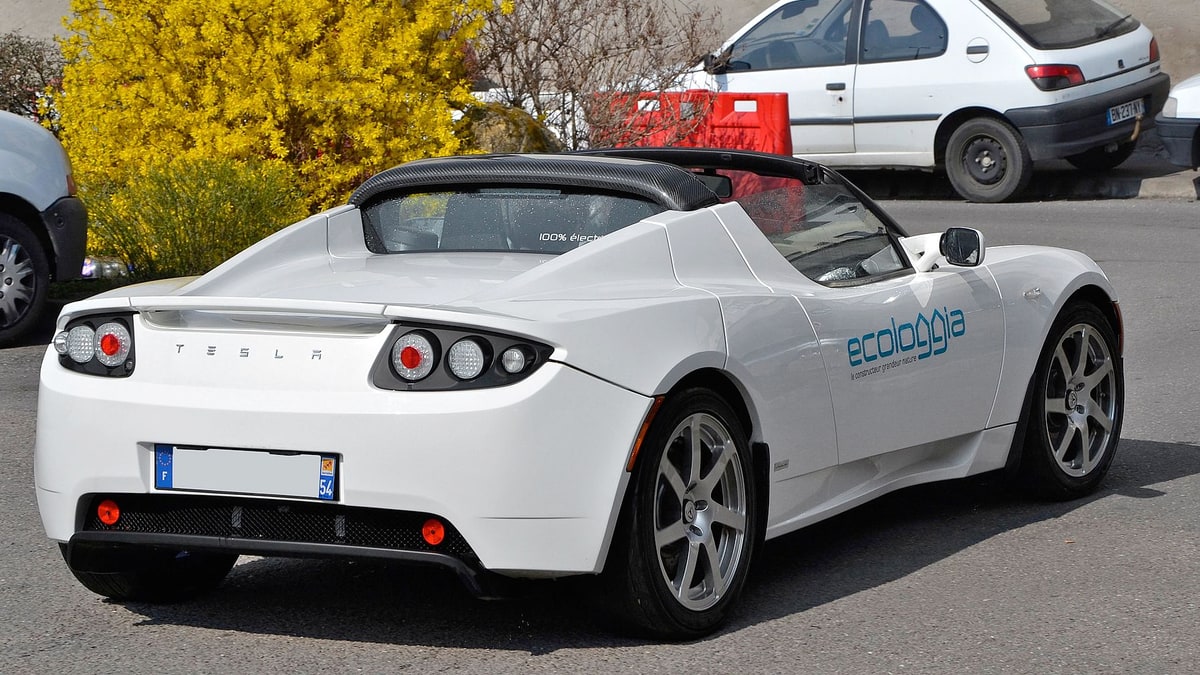
Tesla’s journey into public consciousness began not with a mass-market sedan, but with a high-performance sports car designed to challenge perceptions about electric vehicles: the Tesla Roadster.
Concept to Reality: Genesis of the Roadster
The original Tesla Roadster was officially unveiled to the public on July 19, 2006, at a private event Santa Monica, California. However, actual customer deliveries began much later, in March 2008. This marked a monumental moment, as the Roadster was the first production electric vehicle to use lithium-ion battery cells and the first EV to travel more than 200 miles on a single charge. Built on a Lotus Elise chassis, the Roadster fused cutting-edge battery technology with a lightweight sports car design, demonstrating that electric vehicles could deliver exhilarating performance without sacrificing range or design. Its 0-60 mph time of 3.7 seconds for the Sport model was comparable to high-end sports cars of the era, shattering the misconception that electric cars were slow or impractical.
Impact and Innovation: Setting the Stage
The Roadster’s launch was more than just the debut of a new car; it was a powerful statement of intent from a nascent company. It proved that EVs weren’t merely golf carts or niche curiosities, but viable, exciting alternatives to internal combustion engine (ICE) vehicles. Technologically, it paved the way for future advancements in battery thermal management, motor control, and powertrain integration. While expensive and produced in limited numbers (around 2,500 units worldwide), the Roadster served as Tesla’s initial proof of concept, establishing the brand as a serious contender in the automotive and technology sectors. It also generated crucial capital and garnered invaluable engineering experience that would be poured into Tesla’s subsequent, more ambitious projects.
Mainstream Electrification: The Model S Revolution
Following the Roadster’s success, Tesla set its sights on a larger, more accessible market, culminating in the release of the Model S, a vehicle that would fundamentally redefine the premium sedan segment and accelerate the global EV transition.
Redefining Luxury and Performance EVs
The Tesla Model S was first revealed as a prototype in March 2009, generating significant buzz for its sleek design, spacious interior, and ambitious performance targets. The production version of the Model S began customer deliveries on June 22, 2012. This date is arguably the most significant in Tesla’s history, as the Model S was designed from the ground up as a mass-market (albeit luxury) electric vehicle. It offered compelling range, rapid acceleration, and a host of innovative features that differentiated it from traditional luxury sedans. Its success wasn’t just in being electric; it was in being a superior product that happened to be electric. The Model S garnered widespread critical acclaim, winning numerous awards and quickly becoming a benchmark for automotive innovation.
Software and Over-the-Air Updates: A Paradigm Shift
Beyond its impressive range and performance, the Model S introduced a revolutionary approach to car ownership centered around software. Its large, central touchscreen display served as the primary interface for most vehicle functions, eliminating many physical buttons. More critically, Tesla pioneered over-the-air (OTA) software updates, a concept previously common in smartphones but unheard of in automobiles. These updates allowed Tesla to introduce new features, enhance existing ones, improve performance, and even fix bugs remotely, much like updating a computer. This continuous improvement model meant a Tesla could get better over time, radically altering consumer expectations for vehicle longevity and technological relevance. This capability also laid the groundwork for sophisticated features like Autopilot.
Building the Supercharger Network
The Model S’s long-distance viability was significantly bolstered by Tesla’s commitment to building its proprietary Supercharger network. The first six Supercharger stations were opened in California in September 2012, coinciding with Model S deliveries. This network of fast-charging stations strategically located along major travel routes addressed one of the biggest anxieties for potential EV buyers: range anxiety. By providing rapid charging capabilities for long journeys, Tesla effectively removed a major barrier to EV adoption, demonstrating an integrated ecosystem approach that few traditional automakers could replicate at the time.
Expanding the Portfolio: Model X, Model 3, and Model Y
With the Model S firmly established, Tesla continued its expansion, aiming to cover more segments of the market with technologically advanced and increasingly affordable electric vehicles.
The Falcon Wing Doors and SUV Entry: Model X
Tesla ventured into the SUV market with the Model X, first shown as a prototype in February 2012, but actual customer deliveries didn’t commence until September 29, 2015. The Model X retained much of the Model S’s underlying technology and performance, but introduced unique features like its distinctive “falcon wing” doors, which articulate upwards for easier access to the second and third rows. While the doors proved complex to engineer and manufacture, they underscored Tesla’s willingness to innovate in design and engineering. The Model X was crucial for Tesla, demonstrating its ability to translate its EV platform into different body styles and capture a share of the booming SUV market.
The Mass-Market Vision: Model 3
The Model 3 represented Tesla’s most ambitious project: an affordable, mass-market electric vehicle. Unveiled to immense fanfare and hundreds of thousands of pre-orders on March 31, 2016, the first production Model 3 vehicles were delivered on July 28, 2017. This car was designed from the ground up for manufacturing simplicity and scale, crucial for reaching a broader audience. With its minimalist interior, impressive range, and a starting price point accessible to many more consumers, the Model 3 became the best-selling electric car in history and a top-selling premium sedan globally. Its technological achievements included a new battery architecture and powertrain optimized for cost-effectiveness and efficiency, proving that compelling EVs could be produced at scale.
The Crossover for the Masses: Model Y
Following the success of the Model 3, Tesla introduced the Model Y, a compact crossover SUV that shared much of its platform and components with the Model 3. The Model Y was officially unveiled in March 2019, and the first customer deliveries began surprisingly quickly, in March 2020, ahead of initial projections. Leveraging the established success and manufacturing efficiency of the Model 3, the Model Y quickly became another sales powerhouse for Tesla, catering to the ever-growing demand for SUVs and crossovers. Its release further solidified Tesla’s multi-product strategy, offering an EV solution for nearly every major vehicle segment.
Beyond the Mainstream: Cybertruck, Semi, and Roadster 2.0
Tesla’s vision extends beyond conventional passenger vehicles, with several audacious projects pushing the boundaries of electric mobility into new and specialized categories.
Bold New Form Factors: Cybertruck and Semi
Tesla first unveiled its futuristic Cybertruck on November 21, 2019, with its angular stainless-steel exoskeleton and bulletproof glass (famously tested during the reveal). Intended to disrupt the fiercely competitive pickup truck market, the Cybertruck promised unprecedented utility, range, and performance for an electric truck. After several delays, initial deliveries began in November 2023.
Similarly, the Tesla Semi, an all-electric Class 8 truck, was first revealed in November 2017, promising long range and significantly lower operating costs compared to diesel trucks. Customer deliveries for the Semi began in December 2022, marking Tesla’s official entry into the commercial vehicle segment. Both the Cybertruck and Semi represent Tesla’s commitment to extending EV technology to heavy-duty applications, driven by innovations in battery technology and advanced manufacturing.
The Future of Speed: Roadster 2.0
As a nod to its origins, Tesla also announced a second-generation Roadster, simply referred to as Roadster 2.0, in November 2017. This iteration promises mind-boggling performance figures, including a claimed 0-60 mph time of 1.9 seconds, a top speed over 250 mph, and a range of 620 miles on a single charge. While production has been delayed, its announcement set a new benchmark for hypercar performance and demonstrated the immense potential still untapped in electric powertrain technology.
Tesla’s Enduring Technological Legacy
The timeline of “when Tesla came out” is not just a series of dates, but a chronicle of continuous technological innovation that has fundamentally reshaped the automotive landscape and accelerated the world’s transition to sustainable energy.
Accelerating the EV Transition
Each Tesla model, from the initial Roadster to the Cybertruck, has pushed the envelope of what’s possible with electric vehicles, inspiring both legacy automakers and new startups to invest heavily in EV research and development. Tesla’s technological prowess in battery design, electric powertrains, and integrated software systems forced competitors to adapt or risk being left behind. The company’s relentless pursuit of better range, performance, and charging infrastructure has normalized EVs, making them a mainstream choice rather than a niche curiosity.

Innovation in Battery Technology and AI
At the heart of Tesla’s success lies its deep expertise in battery technology and artificial intelligence. The constant drive to improve battery energy density, efficiency, and cost, alongside sophisticated battery management systems, has been crucial. Furthermore, Tesla’s advancements in AI, particularly for its Autopilot and Full Self-Driving (FSD) features, have pushed the boundaries of automotive software and sensor integration. While FSD remains a work in progress, the sheer volume of real-world driving data collected and processed by Tesla’s AI systems represents a significant technological lead, paving the way for safer and more autonomous transportation.
In conclusion, “when the Tesla came out” is not a singular moment, but a dynamic, unfolding narrative of technological disruption. From the trailblazing Roadster in 2008 to the mass-market Model 3 in 2017 and the unconventional Cybertruck in 2023, each product launch has marked a significant milestone, solidifying Tesla’s position as a technology leader and a primary catalyst in the global electric vehicle revolution. Its continuous innovation in power electronics, software, and AI continues to set the pace for an industry rapidly transforming towards a fully electric future.
aViewFromTheCave is a participant in the Amazon Services LLC Associates Program, an affiliate advertising program designed to provide a means for sites to earn advertising fees by advertising and linking to Amazon.com. Amazon, the Amazon logo, AmazonSupply, and the AmazonSupply logo are trademarks of Amazon.com, Inc. or its affiliates. As an Amazon Associate we earn affiliate commissions from qualifying purchases.