
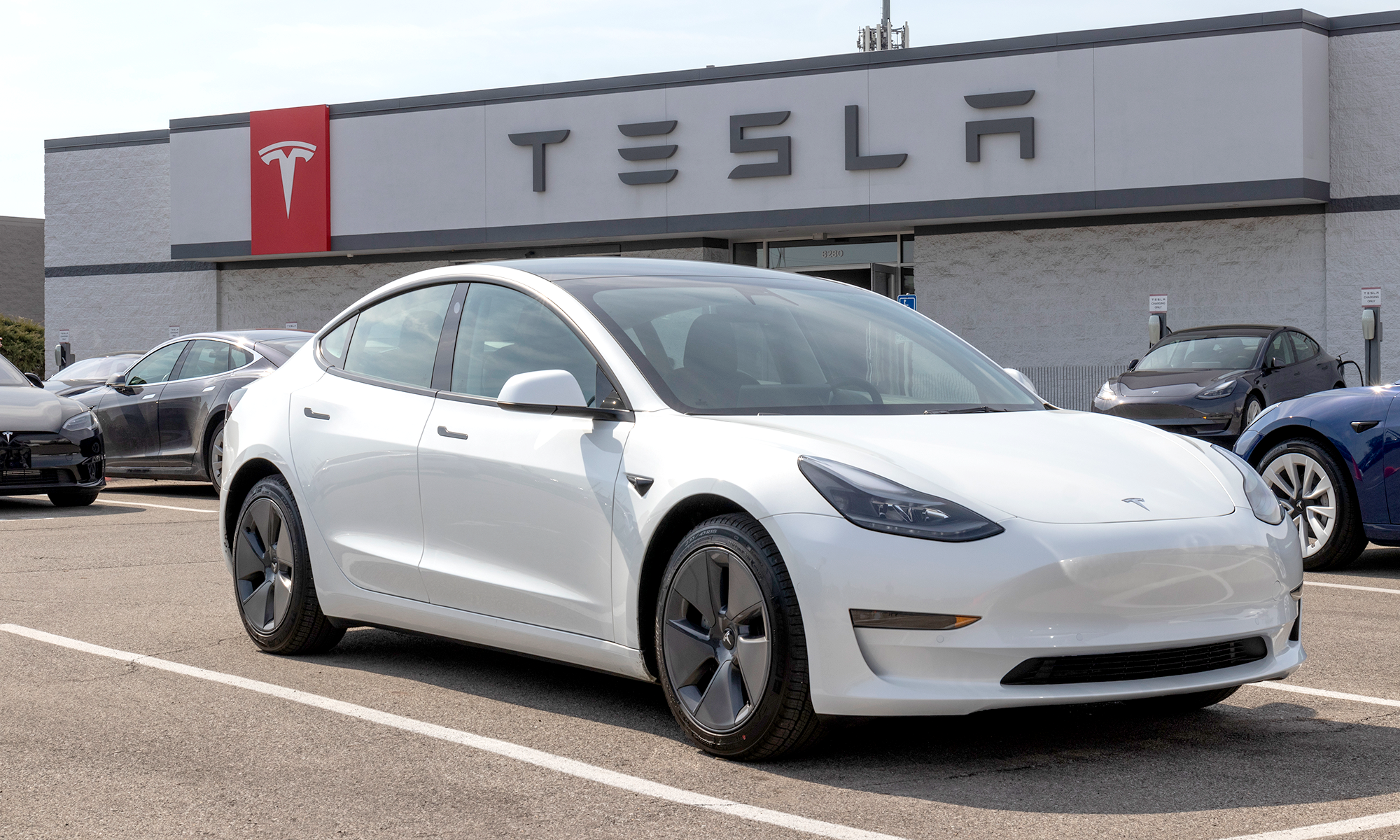
A Tesla car is far more than just an electric vehicle; it represents a profound paradigm shift in automotive engineering, manufacturing, and user experience. Born from Silicon Valley, Tesla Inc. approaches car manufacturing with a technology-first mindset, essentially treating its vehicles as sophisticated, software-defined computers on wheels. At its core, a Tesla is an advanced electric vehicle (EV) that prioritizes performance, efficiency, connectivity, and, increasingly, autonomous driving capabilities. It challenges conventional notions of personal transportation, integrating cutting-edge battery technology, artificial intelligence, and a unique direct-to-consumer model that collectively redefine what a car can be. This fusion of automotive and technological innovation has not only propelled Tesla to the forefront of the EV revolution but has also set new benchmarks for the entire industry.

The Core of Tesla’s Innovation: Electric Powertrain and Battery Technology
At the heart of every Tesla lies its revolutionary electric powertrain and sophisticated battery architecture, which serve as the foundational pillars of its technological prowess. Unlike traditional vehicles reliant on the internal combustion engine (ICE), Tesla cars operate purely on electricity, delivering a driving experience that is both exhilarating and environmentally conscious.
Beyond the Internal Combustion Engine
The fundamental shift from gasoline to electric propulsion is where Tesla truly diverges. Instead of a complex array of cylinders, pistons, and fuel lines, Tesla vehicles utilize highly efficient electric motors. These motors deliver instant torque, meaning that unlike an ICE car which needs to rev up to its optimal power band, a Tesla can provide maximum power from a standstill. This results in the characteristic rapid acceleration that Teslas are renowned for, often outperforming many high-performance gasoline cars. Furthermore, the absence of an internal combustion engine eliminates tailpipe emissions, contributing to cleaner air and reducing the carbon footprint associated with personal transportation. The simplicity of an electric powertrain also means fewer moving parts, potentially leading to lower maintenance requirements compared to traditional vehicles.
Pioneering Battery Architectures
Tesla’s leadership in the EV space is inextricably linked to its advancements in battery technology and packaging. The company’s unique “skateboard” chassis design integrates the battery pack into the floor of the vehicle. This low-slung, centrally located weight distribution not only lowers the car’s center of gravity for improved handling and stability but also enhances structural rigidity and occupant safety. Tesla has continuously pushed the boundaries of battery chemistry and energy density, allowing for impressive driving ranges that alleviate range anxiety—a common concern among early EV adopters.
Crucially, Tesla’s proprietary battery management system (BMS) is a marvel of engineering. It meticulously monitors and controls thousands of individual battery cells, optimizing charging, discharging, and thermal management to maximize battery life, performance, and safety. This sophisticated software and hardware integration ensures that the battery operates within optimal parameters, preventing overheating or overcharging and dynamically adjusting power delivery based on driving conditions. Complementing this, Tesla has built an extensive global Supercharger network, offering fast and convenient charging solutions that further enhance the practicality and usability of its electric vehicles for long-distance travel.
Performance Redefined
The combination of powerful electric motors and advanced battery technology redefines automotive performance. Tesla vehicles are not just efficient; they are incredibly fast. Models like the Model S Plaid can achieve 0-60 mph in under 2 seconds, placing them in the hypercar category. This blistering acceleration is not just for enthusiasts; it provides a sense of confidence and responsiveness in everyday driving situations. Beyond raw speed, the precise control of electric motors allows for advanced traction control and all-wheel-drive systems that react almost instantaneously to road conditions, offering superior grip and stability. The silent operation of the electric powertrain, coupled with the absence of gear shifts, provides a smooth, serene, and uniquely engaging driving experience that is distinct from traditional automobiles.
Software-Defined Vehicles: The Brains Behind the Machine
Perhaps the most radical departure from conventional automotive design is Tesla’s philosophy of treating its cars as software platforms. Unlike legacy automakers where software often plays a secondary role, in a Tesla, software is paramount, dictating everything from performance characteristics to user interaction and safety features. This approach transforms the car from a static piece of hardware into an evolving, intelligent system.
Over-the-Air (OTA) Updates
One of the most significant technological advantages of a Tesla is its capability for Over-the-Air (OTA) software updates. Similar to how smartphones receive updates, Tesla vehicles can download new features, performance enhancements, bug fixes, and even major functional upgrades directly over Wi-Fi or cellular networks. This means a Tesla car can literally improve and gain new capabilities while it’s parked in your driveway, without ever needing a visit to a service center. For instance, an OTA update might increase a vehicle’s range, improve charging speeds, add new games to the infotainment system, or enhance Autopilot functionalities. This continuous evolution contrasts sharply with traditional cars, which largely remain fixed in their capabilities from the moment they leave the factory. OTA updates ensure that Tesla vehicles remain current and valuable for longer, fundamentally changing the ownership experience.
Infotainment and User Interface
Central to the Tesla experience is its large, minimalist touchscreen display, typically 15 to 17 inches, which serves as the primary interface for nearly all vehicle functions. This screen replaces a multitude of physical buttons and dials found in traditional cars, offering a clean, uncluttered interior design. The intuitive user interface (UI) is designed to be highly responsive and user-friendly, mimicking the experience of a modern tablet. Drivers can control navigation, media playback, climate control, vehicle settings, charging parameters, and a host of entertainment options (like streaming services and games) all from this central display. The system is deeply integrated with online services, providing real-time traffic updates, live streaming music, and internet browsing, transforming the car’s cabin into a connected digital hub. The simplicity of the UI, combined with powerful underlying software, creates a seamless and highly personalized interaction between the driver and the vehicle.
Advanced Vehicle Control Systems
Beyond infotainment, software forms the backbone of every operational aspect of a Tesla. Sophisticated algorithms manage the electric powertrain, optimizing energy consumption, regenerative braking, and power delivery to maximize efficiency and performance. The software controls the vehicle’s thermal management system, ensuring the battery and motors operate at optimal temperatures under varying conditions. It also governs safety features, coordinating airbags, stability control, and braking systems. Every aspect, from how the doors unlock to how the climate system adjusts to occupants, is managed and refined through complex software routines. This deep integration allows for precise control, advanced diagnostics, and the ability to fine-tune the vehicle’s behavior and characteristics through software updates, providing an unprecedented level of dynamic adaptability in an automobile.
Autonomy and Advanced Driver-Assistance Systems (ADAS)
Tesla has been at the forefront of developing and deploying advanced driver-assistance systems (ADAS) and pushing towards full self-driving capabilities, making autonomy a defining characteristic of its vehicles. This ambitious pursuit is driven by a deep integration of hardware, software, and artificial intelligence, aiming to enhance safety and convenience.
Autopilot and Full Self-Driving (FSD) Capability
At the foundation of Tesla’s autonomous features is Autopilot, a sophisticated suite of ADAS functionalities standard on all new Tesla vehicles. Autopilot includes features like Traffic-Aware Cruise Control, which matches the speed of surrounding traffic, and Autosteer, which assists in steering within a clearly marked lane. Building upon Autopilot, Tesla offers an optional “Full Self-Driving” (FSD) capability package, which, despite its name, does not yet make the car fully autonomous without human supervision. FSD expands upon Autopilot with features such as Navigate on Autopilot (automatic lane changes, highway exits), Automatic Parking, Summon (moving the car in tight spaces), and Traffic Light and Stop Sign Control. More advanced FSD Beta features, available to eligible drivers, aim to handle city street driving, including making turns, navigating intersections, and interacting with various road users, albeit requiring constant driver attentiveness and readiness to intervene. The goal is to eventually achieve Level 5 autonomy, where the vehicle can operate completely without human input under all conditions.
Sensor Suite and AI Processing
To enable these advanced capabilities, Tesla vehicles are equipped with a comprehensive sensor suite and powerful on-board computing hardware. Initially, this suite included a combination of cameras, radar, and ultrasonic sensors. However, Tesla has increasingly shifted towards a “Tesla Vision” approach, primarily relying on a sophisticated network of eight external cameras providing 360-degree visibility around the car at up to 250 meters. These cameras feed real-time visual data to the vehicle’s custom-designed Full Self-Driving computer (FSD Computer), often referred to as Hardware 3.0 or 4.0. This specialized AI chip is engineered to process vast amounts of data at lightning speed, running complex neural networks to perceive the environment, predict the behavior of other road users, and make driving decisions. The integration of high-resolution cameras with a powerful AI processor allows the vehicle to “see” and interpret its surroundings with remarkable detail, crucial for safe and effective autonomous operation.
The Data-Driven Approach to Safety and Development
Tesla’s approach to developing its autonomous technology is heavily data-driven. The company leverages an immense fleet of vehicles on the road as a real-world data collection network. anonymized data from millions of miles driven by Tesla owners is continuously uploaded to Tesla’s servers. This data includes recordings of tricky driving scenarios, near misses, and human interventions, which are then used to train and refine Tesla’s neural networks. This feedback loop allows the AI models to learn from diverse driving conditions globally, continuously improving the system’s ability to perceive, predict, and plan. This iterative development process means that FSD capabilities are constantly evolving and improving through OTA software updates, making Tesla a leader in leveraging fleet learning for autonomous driving development. The ultimate aim is to make driving safer than human driving by meticulously analyzing data and refining the AI’s decision-making algorithms.
Engineering and Manufacturing Prowess
Beyond its electrical and software innovations, a Tesla car embodies advanced engineering and manufacturing techniques that set it apart in the automotive industry. Tesla’s vertically integrated approach, where it designs and manufactures a significant portion of its components in-house, allows for tighter control over quality, innovation, and cost.
Integrated Design and Manufacturing
Tesla distinguishes itself by its high degree of vertical integration. Unlike many traditional automakers that rely heavily on a vast supply chain of third-party component manufacturers, Tesla designs and produces many critical components internally. This includes not only battery packs and electric motors but also seats, interior components, and even the advanced computing hardware for its autonomous driving systems. This integrated design and manufacturing philosophy ensures that all components are meticulously optimized to work together seamlessly, enhancing overall vehicle performance, efficiency, and reliability. It also grants Tesla unparalleled agility in implementing design changes and technological advancements, accelerating product development cycles. The company’s Gigafactories are designed as highly automated, streamlined production facilities, leveraging robotics and advanced manufacturing processes to scale production efficiently.
Structural Innovation
Safety and structural integrity are paramount in Tesla’s engineering. The unique “skateboard” chassis, which houses the heavy battery pack at the vehicle’s floor, provides exceptional rigidity and a low center of gravity. This design contributes significantly to improved handling and superior occupant protection in the event of a collision. Tesla has also pioneered innovative manufacturing techniques like “Giga castings.” Using massive casting machines, the company can produce large single pieces of the vehicle’s underbody (e.g., the rear or front sections) that traditionally would consist of dozens or hundreds of stamped and welded parts. This significantly reduces manufacturing complexity, weight, and cost, while simultaneously increasing structural strength and crash safety. The development of structural battery packs, where the battery itself becomes a load-bearing part of the vehicle’s structure, further exemplifies Tesla’s commitment to re-thinking fundamental automotive engineering principles for enhanced safety and efficiency.
Aerodynamics and Efficiency
Every aspect of a Tesla’s exterior design is meticulously engineered for maximum aerodynamic efficiency. From the sleek, minimalist body lines to the flush door handles and the absence of a traditional grille (due to less cooling required for an electric motor compared to an ICE), every detail aims to reduce drag. A lower drag coefficient translates directly into improved range and energy efficiency, allowing the vehicle to travel further on a single charge. Advanced simulation and wind tunnel testing are employed to refine these designs. Beyond aerodynamics, Tesla optimizes for overall energy efficiency through lightweight materials, advanced thermal management systems that condition the battery for optimal performance, and highly efficient electric motors. This holistic approach to efficiency ensures that every watt of energy stored in the battery is utilized as effectively as possible, maximizing both performance and practicality.

Conclusion
In essence, a Tesla car is a sophisticated blend of cutting-edge technology, innovative engineering, and a visionary approach to personal transportation. It is defined not just by its electric powertrain, but by its identity as a software-first product that constantly evolves through over-the-air updates. It pushes the boundaries of autonomous driving with its advanced sensor suite and AI processing, while its manufacturing prowess introduces groundbreaking structural innovations. Tesla has fundamentally re-envisioned the automobile, transforming it from a mere mechanical conveyance into a highly intelligent, connected, and continuously improving technological platform. By integrating advanced battery technology, powerful computing, and a data-driven development philosophy, Tesla has not only redefined what a car can be but has also irrevocably set the trajectory for the future of the automotive industry, positioning itself as a technology company that happens to make cars.
aViewFromTheCave is a participant in the Amazon Services LLC Associates Program, an affiliate advertising program designed to provide a means for sites to earn advertising fees by advertising and linking to Amazon.com. Amazon, the Amazon logo, AmazonSupply, and the AmazonSupply logo are trademarks of Amazon.com, Inc. or its affiliates. As an Amazon Associate we earn affiliate commissions from qualifying purchases.