
Tesla (TSLA) has been a phenomenon in the financial markets, captivating investors with its ambitious vision, innovative products, and often volatile stock performance. For many, its journey represents the cutting edge of growth investing, while for others, it symbolizes speculative excess. Understanding its peak valuation offers crucial insights into market psychology, investment drivers, and the dynamics of high-growth equities.
A Historic Peak: Understanding Tesla’s Valuation Apex
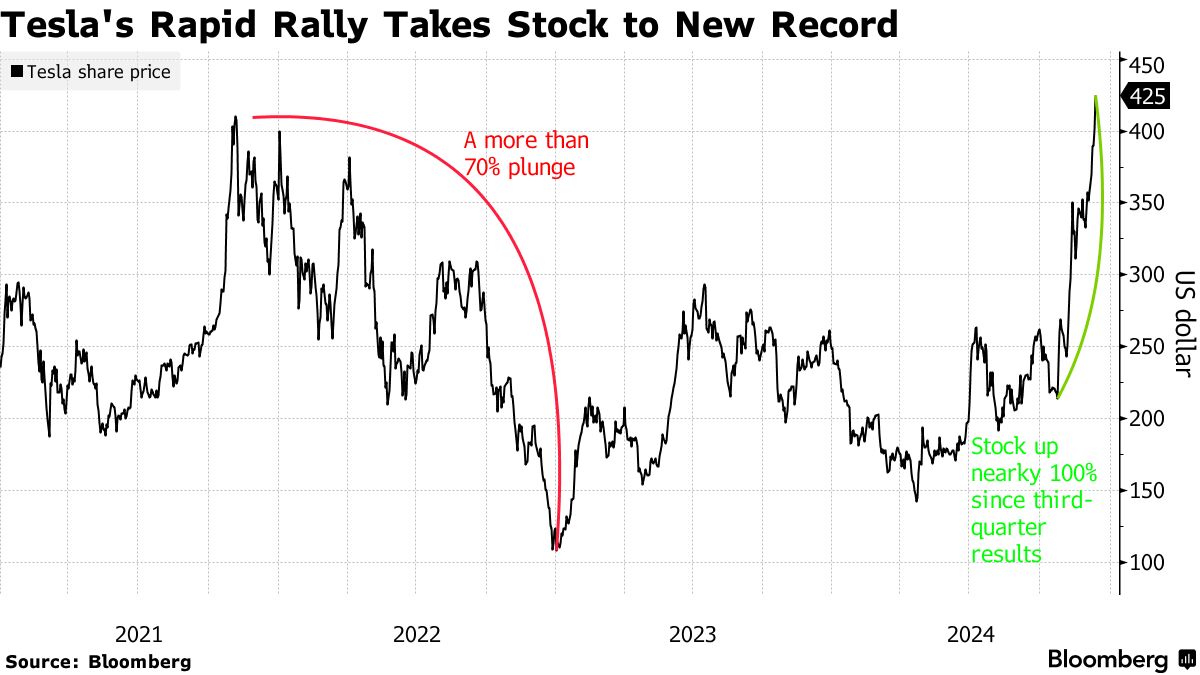
Tesla’s stock reached its all-time high on November 4, 2021, closing at $409.97 per share on a split-adjusted basis. Before its 3-for-1 stock split in August 2022, this corresponded to an unadjusted closing price of $1,229.91. The intraday high on that same day pushed even further, touching $1,243.49 before closing slightly lower. This monumental valuation placed Tesla’s market capitalization well over $1.2 trillion, solidifying its position among the world’s most valuable companies, a feat almost unimaginable just a few years prior.
The November 2021 Surge: Numbers and Context
The lead-up to November 2021 was a period of intense bullish sentiment surrounding Tesla. The stock had already experienced a 5-for-1 split in August 2020, making shares more accessible and further fueling retail interest. By late 2021, the company had consistently exceeded production and delivery targets, demonstrated robust profitability, and solidified its leadership in the nascent electric vehicle (EV) market. Analyst price targets were frequently revised upwards, and media coverage often highlighted the company’s transformative potential.
The specific catalysts around the November 2021 peak included strong third-quarter earnings reported in October, which showcased impressive margins and continued growth. Furthermore, a substantial order of 100,000 vehicles from Hertz, the rental car giant, announced in late October, sent a powerful signal to the market about the mainstream adoption of EVs and Tesla’s undisputed dominance. This order, valued at over $4 billion, not only boosted Tesla’s order book but also provided a narrative of expanding demand beyond early adopters, igniting a fresh wave of investor optimism that propelled the stock to its record levels. The confluence of fundamental strength, strategic partnerships, and overwhelming market enthusiasm created a unique environment for this historic valuation.
Driving Factors Behind Tesla’s Record Ascent
The journey to Tesla’s peak valuation was not a simple linear progression but rather a complex interplay of technological innovation, strategic leadership, market sentiment, and broader economic conditions. These factors converged to create a potent cocktail of investor confidence and speculative fervor.
Innovation and Market Dominance in EVs
At its core, Tesla’s rise was powered by its pioneering role in electric vehicle technology. The company was an early mover in a market segment that analysts increasingly recognized as the future of automotive transport. Tesla’s battery technology, range capabilities, charging infrastructure (Supercharger network), and advancements in autonomous driving (Full Self-Driving beta) were widely perceived as significantly ahead of traditional automakers. This technological lead, coupled with a direct-to-consumer sales model and innovative manufacturing processes, gave Tesla a competitive edge that translated into impressive delivery growth and expanding profit margins, fundamentally underpinning its valuation. Investors bet heavily on Tesla’s ability to maintain this technological gap and capture an ever-larger share of a rapidly expanding global EV market.
Elon Musk’s Influence and Vision
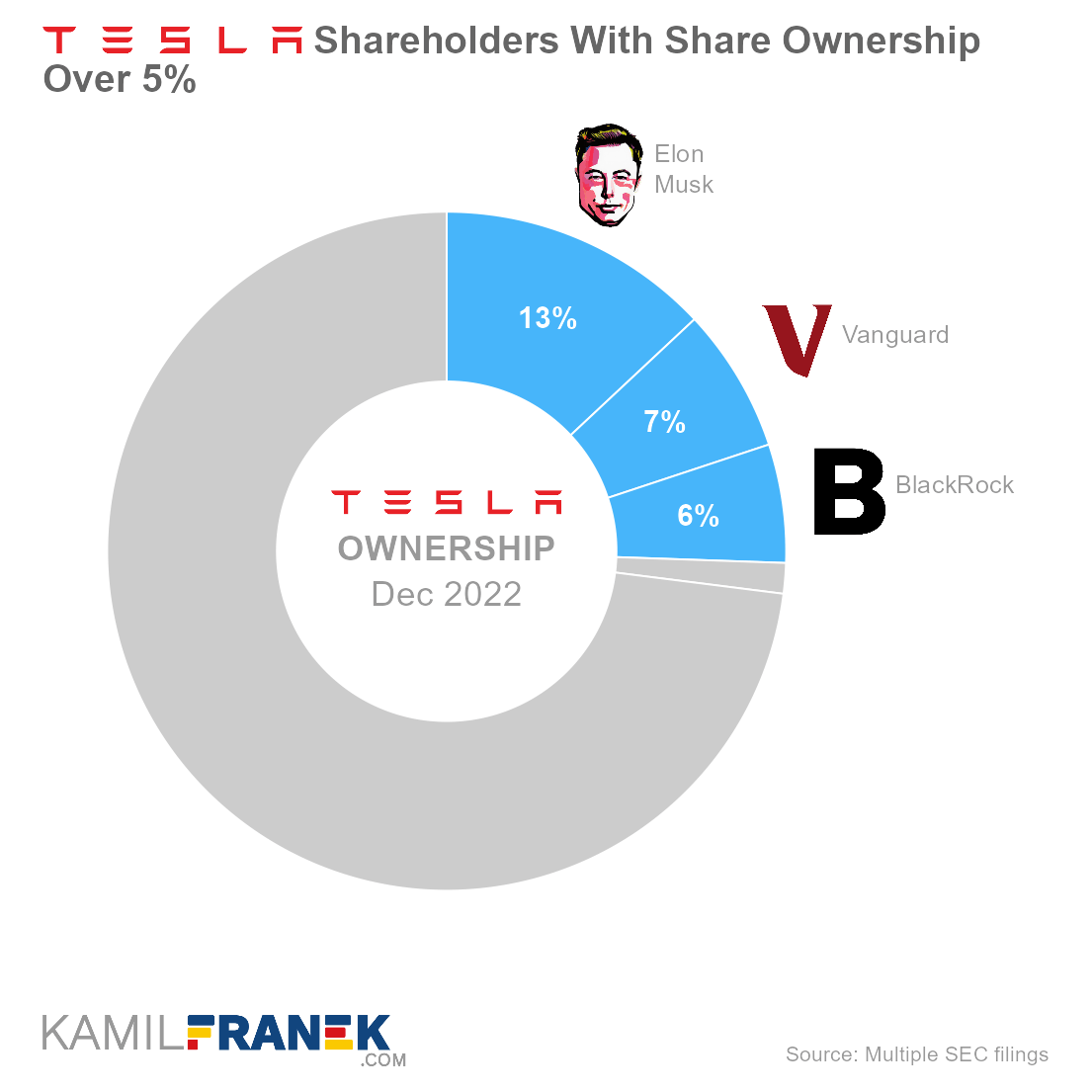
The unique personality and audacious vision of CEO Elon Musk played an undeniable role in Tesla’s market performance. Musk’s ability to articulate a compelling future – from sustainable energy to multi-planetary existence – resonated deeply with a segment of the investing public. His ambitious product roadmap, frequent interaction on social media, and unconventional leadership style fostered a strong community of supporters who believed in his capacity to deliver revolutionary change. This “cult of personality” often meant that negative news was downplayed, while positive announcements, or even just Musk’s tweets, could trigger significant stock movements. His drive and controversial pronouncements effectively became part of Tesla’s brand identity, influencing investor sentiment and contributing to the stock’s premium valuation.
Retail Investor Enthusiasm and Momentum Investing
The period leading up to Tesla’s peak also coincided with a broader surge in retail investor participation in the stock market, partly fueled by commission-free trading platforms and social media communities. Tesla, with its high-profile status and growth narrative, became a favorite among these individual investors. The phenomenon of “momentum investing,” where investors buy assets that have been performing well in anticipation of further gains, played a significant role. As the stock price climbed, it attracted more buyers, creating a positive feedback loop. This collective enthusiasm, sometimes bordering on FOMO (fear of missing out), propelled the stock higher, often decoupling its valuation from traditional financial metrics and pushing it into speculative territory.
Broader Market Conditions
It is also crucial to contextualize Tesla’s peak within the broader macroeconomic environment. The years 2020 and 2021 were characterized by historically low interest rates and massive monetary stimulus from central banks in response to the COVID-19 pandemic. This environment created abundant liquidity in financial markets, making growth stocks, particularly those with strong narratives like Tesla, exceptionally attractive. Investors were willing to pay a premium for future growth potential, as the cost of capital was low, and alternative, safer investments offered minimal returns. The general bullishness in the tech sector and a wider shift towards ESG (Environmental, Social, and Governance) investing further benefited Tesla, aligning its mission with emerging investor priorities.
Volatility and the Road Since the Peak
While the November 2021 peak marked a significant milestone, Tesla’s stock has always been characterized by substantial volatility. The journey since its all-time high has been a testament to the dynamic nature of markets and the multitude of factors that can influence even the most celebrated growth stocks.
Post-Peak Corrections and Market Dynamics
Following its November 2021 peak, Tesla’s stock experienced significant corrections. Several factors contributed to these pullbacks. Firstly, a general shift in monetary policy globally, particularly the aggressive interest rate hikes by the Federal Reserve starting in 2022, made growth stocks less attractive. Higher interest rates increase the discount rate applied to future earnings, effectively lowering the present value of companies expected to generate most of their profits far into the future. This macro-level shift broadly impacted tech and high-growth sectors.
Secondly, increased competition in the EV market became a more pronounced concern. While Tesla maintained a lead, traditional automakers and new EV startups began introducing compelling models, threatening to erode Tesla’s market share. Supply chain disruptions, particularly for semiconductors, also posed challenges to production, impacting delivery targets and investor confidence. Furthermore, Elon Musk’s acquisition of Twitter (now X) in late 2022 raised concerns among some investors about his divided attention and the potential for him to sell TSLA shares to finance the deal, adding another layer of uncertainty. Geopolitical tensions and concerns about a potential global economic slowdown also weighed on investor sentiment.
The Role of Financial Metrics vs. Growth Narratives
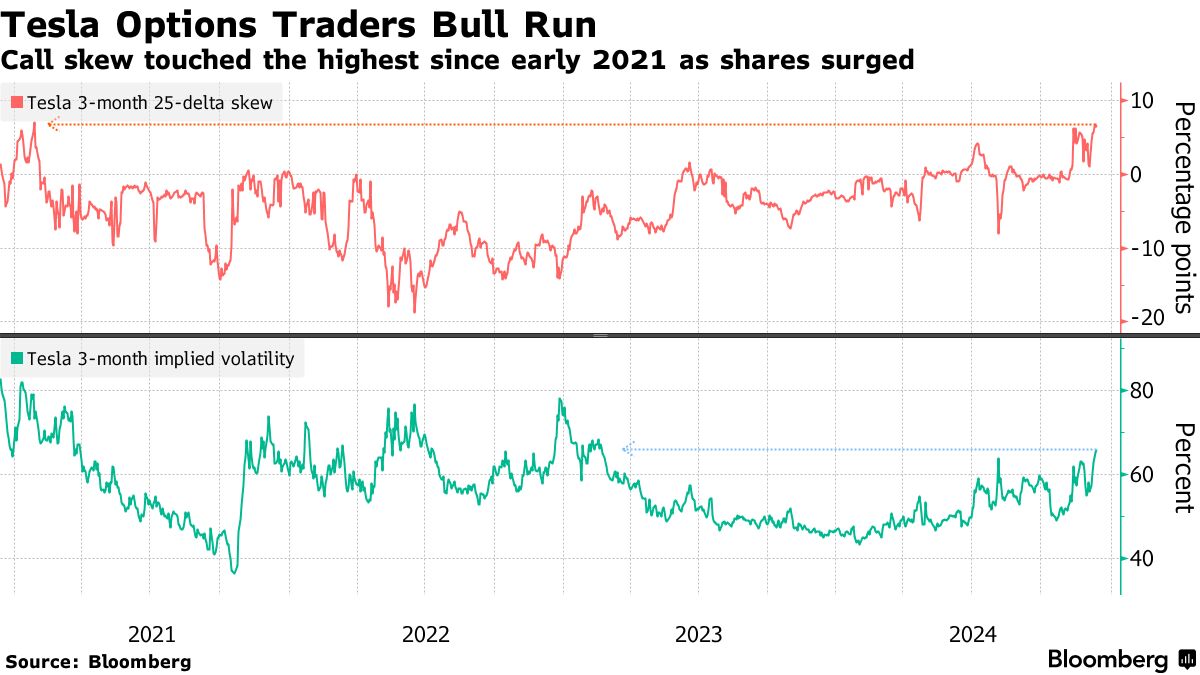
Tesla’s valuation has long been a subject of intense debate, especially concerning traditional financial metrics like the Price-to-Earnings (P/E) ratio. At its peak, Tesla’s P/E ratio was exceptionally high, far exceeding that of most established automakers and even many tech giants. Bulls argued that traditional metrics were irrelevant for a company fundamentally disrupting multiple industries and poised for exponential growth. They focused on revenue growth, increasing profitability, and the long-term potential of autonomous driving, energy storage, and AI.
However, bears consistently pointed to the stretched valuation, arguing that the stock was trading on pure speculation and narrative rather than sustainable fundamentals. The post-peak period has seen a re-evaluation of these narratives, with the market placing a greater emphasis on profitability, free cash flow, and more conventional valuation metrics as interest rates normalized and liquidity tightened. This shift highlights the constant tension between a company’s aspirational growth story and its tangible financial performance, particularly during different market cycles.
Implications for Investors and Future Outlook
Tesla’s trajectory to its peak and subsequent performance offers valuable lessons for investors navigating the complex world of high-growth equities. Understanding these dynamics is crucial for making informed financial decisions.
Understanding Valuation in High-Growth Stocks
Tesla’s journey underscores the critical balance investors must strike between a company’s future potential and its current fundamentals. While innovative companies often command a premium, the extent of that premium can become unsustainable. At its peak, Tesla was valued not just for its current sales and profits, but for what it might achieve decades into the future. This future-oriented valuation relies heavily on projections, which are inherently uncertain. Investors learned that while growth stories are compelling, a disconnection from profitability and tangible results, especially when macroeconomic conditions shift, can lead to sharp corrections. It emphasizes the need for thorough risk assessment and a clear understanding of what drivers are underpinning a stock’s price at any given time.
Diversification and Long-Term Strategy
The volatility experienced by TSLA stock, both in its ascent and descent from its peak, highlights the importance of diversification in an investment portfolio. Concentrating too heavily in a single, even highly promising, stock exposes an investor to outsized risk. Even companies with revolutionary technologies and strong leadership can be subject to market whims, economic downturns, and competitive pressures. A well-diversified portfolio, spread across different asset classes, industries, and geographies, helps mitigate the impact of sharp movements in any single investment. Furthermore, Tesla’s story reinforces the value of a long-term investment horizon, allowing investors to ride out short-term fluctuations and benefit from sustained growth over years, rather than reacting to daily or monthly price swings.
The Future of Tesla’s Stock Price
Looking ahead, Tesla’s stock performance will continue to be influenced by a myriad of factors. Technological advancements in battery efficiency, manufacturing innovation, and the progress of autonomous driving will remain critical. The company’s ability to scale production efficiently and penetrate new markets, particularly in regions like Asia and Europe, will also be key. Increased competition from both established automakers and emerging EV players will challenge its market share and pricing power. Global economic conditions, regulatory environments, and consumer adoption rates of EVs will also play significant roles.
While past performance is never indicative of future results, Tesla has demonstrated its capacity for disruption and innovation. Its future valuation will likely depend on its ability to maintain its technological edge, navigate competitive pressures, expand its product offerings (e.g., Robotaxis, Optimus humanoid robot), and continue to execute on its ambitious vision while consistently delivering profitable growth. For investors, understanding these ongoing dynamics and aligning them with personal financial goals and risk tolerance will be paramount in assessing Tesla’s continued investment viability.
aViewFromTheCave is a participant in the Amazon Services LLC Associates Program, an affiliate advertising program designed to provide a means for sites to earn advertising fees by advertising and linking to Amazon.com. Amazon, the Amazon logo, AmazonSupply, and the AmazonSupply logo are trademarks of Amazon.com, Inc. or its affiliates. As an Amazon Associate we earn affiliate commissions from qualifying purchases.