
In an increasingly digital world, the act of writing and mailing a physical check might seem like a relic of the past. Yet, for millions of Americans, sending a check to the Internal Revenue Service (IRS) remains a necessary and often preferred method for fulfilling their tax obligations. Whether you’re settling your annual tax bill, making estimated tax payments, or responding to an IRS notice, understanding the correct procedures for mailing your payment is paramount. An incorrectly addressed or improperly prepared check can lead to significant delays, penalties, and unnecessary stress.

This guide will demystify the process, offering clear instructions and critical insights into ensuring your payment reaches the IRS swiftly and securely. We’ll delve into the various scenarios that necessitate a mailed check, how to pinpoint the exact mailing address for your specific situation, and crucial steps to take before your envelope even leaves your hand. Beyond traditional mail, we’ll also briefly touch upon modern alternatives for those looking to transition to electronic payments. Our aim is to equip you with the knowledge needed to navigate this essential financial responsibility with confidence and precision.
Understanding Why and When You Might Mail a Check to the IRS
Despite the IRS’s robust push towards electronic filing and payment methods, there are several compelling reasons and scenarios where mailing a physical check remains a viable, or even preferred, option for taxpayers. Understanding these contexts is the first step in ensuring your payment journey is smooth and successful.
Common Scenarios for Check Payments
The decision to mail a check often arises from specific financial situations or personal preferences. Here are the most common scenarios:
- Year-End Tax Liability: Perhaps the most common reason is when you owe additional taxes after filing your annual income tax return (Form 1040). Even if you file electronically, you might choose to mail a check for the balance due rather than paying online or authorizing a direct debit. This could be due to a distrust of online systems, a preference for paper trails, or simply a last-minute decision where direct debit deadlines have passed.
- Estimated Tax Payments: Many self-employed individuals, retirees, and those with significant income not subject to withholding (like interest, dividends, rent, or alimony) are required to make estimated tax payments throughout the year using Form 1040-ES. These payments help ensure you pay income tax as you earn or receive income, avoiding a large tax bill and potential penalties at year-end. While electronic options exist, many taxpayers still opt to mail checks for their quarterly estimated taxes.
- Amended Returns: If you discover an error on a previously filed tax return and need to submit an amended return (Form 1040-X) that results in additional tax owed, you’ll typically mail a check along with the amended form. The IRS processes amended returns separately, and physical mail is often the standard procedure.
- Responding to IRS Notices or Audits: In some cases, the IRS might send you a notice indicating additional tax due following a review of your return or an audit. While the notice might provide instructions for online payment, mailing a check is a common response, often accompanied by a copy of the notice or a payment voucher provided by the IRS.
- Business Tax Payments: Businesses, depending on their structure and tax obligations, may also find themselves needing to mail checks for various federal tax liabilities, though many business payments are now mandated or strongly encouraged to be made electronically.
The Enduring Role of Traditional Mail in a Digital Age
In an era dominated by digital transactions, the persistence of mailed checks for IRS payments might seem counterintuitive. However, for many, there are valid reasons for this preference:
- Security Concerns: Despite advances in cybersecurity, some individuals harbor lingering anxieties about online security breaches or the vulnerability of their bank account information when entered into web portals. A physical check, while not without its own risks, is perceived by some as a more tangible and thus more controllable form of payment.
- Lack of Internet Access or Digital Literacy: Not everyone has reliable internet access, or the digital skills required to navigate complex online payment systems. For these individuals, the familiar process of writing a check and mailing it is a more accessible and less intimidating option.
- Preference for Paper Trails: Mailing a check creates a physical record that some taxpayers prefer. Keeping a copy of the check, the postmarked envelope, and certified mail receipts offers tangible proof of payment and submission date, which can be invaluable in case of a dispute with the IRS.
- Bank Account Management: Some individuals prefer to manage their payments directly through their bank’s bill pay service (which often mails a physical check on their behalf) or simply prefer the manual process for better oversight of their outgoing funds.
Recognizing these scenarios and preferences underscores why accurate mailing instructions are not just a nicety but a critical component of effective tax compliance.
Deciphering the Correct IRS Mailing Address: A State-by-State and Form-Specific Approach
The IRS is a vast organization, and knowing where to send your payment is not as simple as a single, universal address. Mailing your check to the wrong location can cause significant delays in processing, potentially leading to penalties and interest charges. The correct address is primarily determined by two key factors: the type of tax form you are filing (or responding to) and your state of residence.
The Criticality of Precision: Why the Right Address Matters
Imagine sending an important letter to a massive corporation without specifying the department. It might eventually get there, but only after significant internal routing delays. The IRS operates similarly, but with the added complexity of millions of submissions daily. Each type of form (e.g., Form 1040, Form 1040-ES, Form 1040-X) and payment (e.g., tax owed with return, estimated tax, amended return payment) is often processed by a specific IRS service center responsible for certain geographic regions or tax categories.
Mailing to the wrong address means your payment will need to be forwarded internally, delaying its official receipt date. If this delay pushes your payment past the tax deadline, you could face failure-to-pay penalties, even if you mailed it in good faith before the deadline. Furthermore, an unapplied payment due to incorrect routing can create discrepancies in your IRS account, potentially triggering unnecessary notices or audits.
Key Factors Determining Your Mailing Address
The IRS maintains several service centers across the United States, each handling specific types of tax forms and payments from taxpayers residing in particular states.
- Your State of Residence: This is perhaps the most significant factor. The IRS divides states into various processing regions. For instance, taxpayers in California, Alaska, and Oregon might send their Form 1040 payments to one service center, while those in New York, Connecticut, and Maine send theirs to another.
- The Specific IRS Form You Are Filing: Different forms often require different mailing addresses, even for taxpayers in the same state.
- Form 1040 (U.S. Individual Income Tax Return) with payment: The address will depend on your state.
- Form 1040-ES (Estimated Tax for Individuals): These payments often go to a specific estimated tax payment center, again depending on your state.
- Form 1040-X (Amended U.S. Individual Income Tax Return) with payment: Amended returns have their own dedicated mailing addresses.
- Responding to an IRS Notice: If you’re responding to a specific notice with a payment, the notice itself usually provides the correct address.
- Business Tax Forms (e.g., Form 1120, Form 941): These also have their own set of specific mailing addresses, often tied to the type of business entity and state.
Navigating IRS.gov for Up-to-Date Information
Given that mailing addresses can occasionally change, or new forms might be introduced, relying on outdated information is risky. The single most reliable source for current IRS mailing addresses is the official IRS website, IRS.gov.
Here’s how to find the correct address:
- For Form 1040 Payments: Search for “Where to File Paper Tax Returns With or Without a Payment.” This page provides tables categorized by state and whether you are enclosing a payment or not.
- For Estimated Tax Payments (Form 1040-ES): Refer to the instructions for Form 1040-ES. These instructions are typically updated annually and will list the correct mailing addresses for your state.
- For Amended Returns (Form 1040-X): Consult the instructions for Form 1040-X, which will provide the specific addresses for amended returns.
- For Business Taxes: Navigate to the “Businesses” section of IRS.gov and search for “Where to File” for your specific business form (e.g., Form 1120 instructions, Form 941 instructions).
- For Payments Responding to a Notice: Always use the address provided directly on the IRS notice you received.
Always verify the year of the tax form or instruction set you are consulting, as addresses can vary from one tax year to the next. Taking a few extra minutes to double-check the address on IRS.gov can save you significant time, money, and headaches down the line.
Essential Steps Before Dropping Your Check in the Mailbox
Once you’ve identified the correct IRS mailing address, your task isn’t quite finished. Properly preparing your check and accompanying documents, and ensuring proof of mailing, are crucial steps to safeguard your payment and provide peace of mind.
Preparing Your Check Correctly
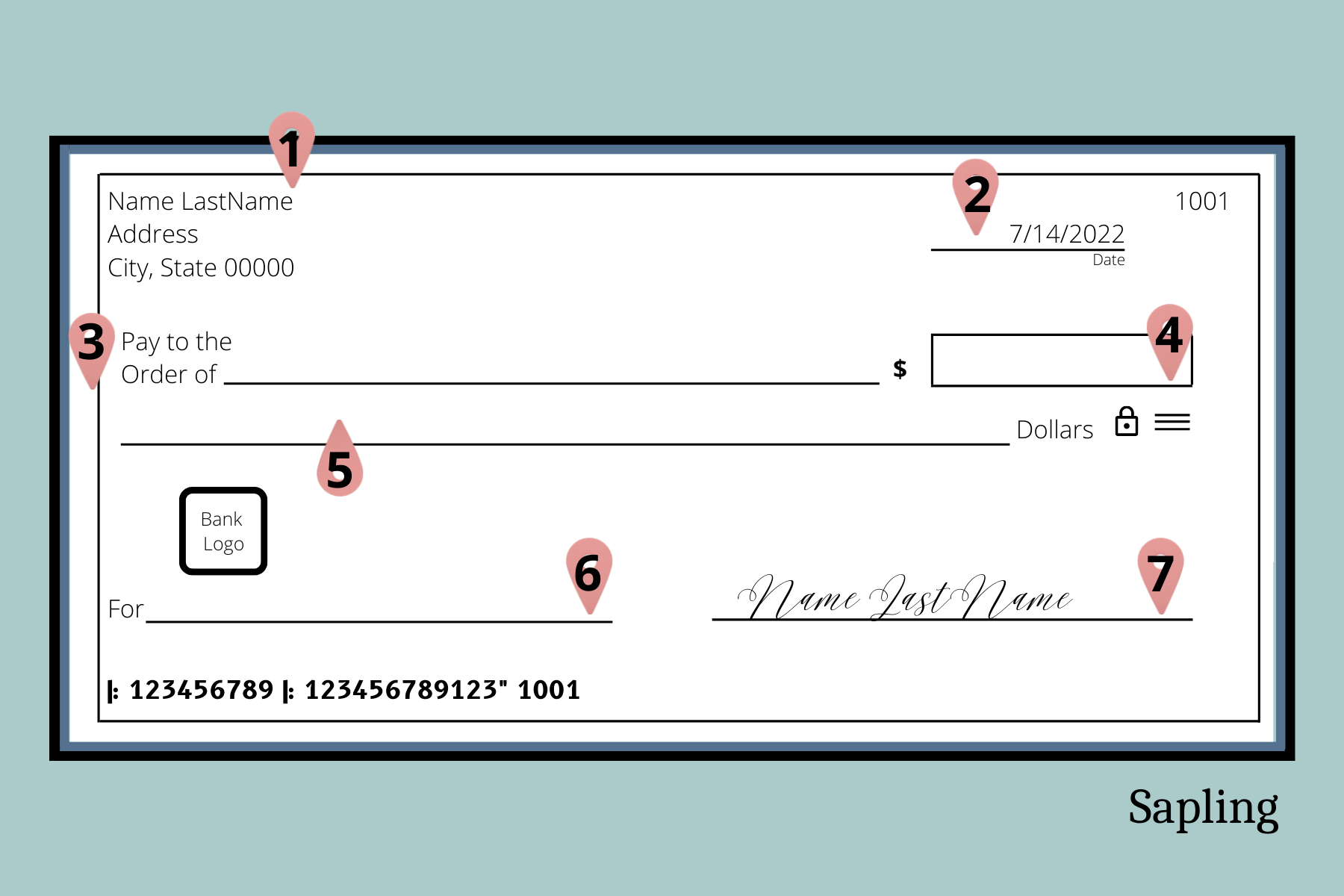
A common mistake is simply writing a check for the amount due without providing sufficient identifying information. The IRS receives millions of checks annually; yours needs to stand out with clear details to ensure it’s credited to your account.
-
Payee: Make your check payable to the “U.S. Treasury.” Do not write “IRS,” “Internal Revenue Service,” or any individual’s name. This is a critical detail to prevent the check from being misdeposited or held up.
-
Amount: Clearly write the numerical and written amount. Ensure they match perfectly.
-
Memo Line (Most Important): This is where you provide critical identifying information to the IRS. You must include:
- Your Tax ID Number: For individuals, this is your Social Security Number (SSN). If you have a business or are filing a joint return, include the SSN of the primary taxpayer (the one whose name appears first on the return). For businesses, it’s your Employer Identification Number (EIN).
- The Tax Year: Specify the tax year for which the payment is being made (e.g., “2023 Tax”).
- The Associated Tax Form: Indicate the form related to the payment (e.g., “Form 1040,” “Form 1040-ES,” “Form 1040-X”).
- Type of Payment: For estimated taxes, explicitly write “Form 1040-ES.”
Example Memo Line: “SSN: XXX-XX-XXXX, 2023 Form 1040-ES” or “EIN: XX-XXXXXXX, 2023 Form 1120.”
-
Sign and Date: Ensure your check is signed and dated appropriately.
What to Include with Your Payment
Simply sending a check alone is rarely sufficient. Most payments require an accompanying document that helps the IRS apply the funds correctly.
- Payment Voucher:
- Form 1040-V (Payment Voucher): If you are mailing a payment for your annual income tax liability with your Form 1040 (or if you filed electronically but are mailing the payment), you should print and include Form 1040-V. This is a small, easy-to-fill-out form that reiterates your SSN, the tax year, and the amount paid.
- Form 1040-ES Vouchers: For estimated tax payments, you use the specific voucher from Form 1040-ES for that quarter.
- The Specific Tax Form: If you are mailing a paper return (e.g., Form 1040, Form 1040-X) with a payment, the check and voucher (if applicable) should be securely attached to the tax form itself. Do not staple it to the back of the form or in a way that obscures information. The IRS instructions usually specify where to staple the check/voucher (often in the upper left corner).
- IRS Notice: If you are responding to an IRS notice requiring payment, include a copy of the notice (or at least the payment coupon from it) along with your check. This ensures the payment is matched to the correct outstanding balance or assessment.
Maintaining Records and Proof of Mailing
This step is perhaps the most overlooked, yet it can be your strongest defense if a payment is ever lost or misapplied.
-
Make a Copy of Everything: Before sealing the envelope, make a photocopy or scan of:
- The signed check (front and back, especially after it’s been filled out).
- The completed payment voucher (Form 1040-V or 1040-ES).
- Your entire tax return or amended return (if mailed with the payment).
- The IRS notice (if applicable).
Keep these copies in your tax records for at least three years, or longer if they pertain to property or business assets.
-
Use Certified Mail with Return Receipt: For significant payments, or any payment where proof of delivery is critical, consider using Certified Mail with a Return Receipt service from the U.S. Postal Service (USPS).
- Certified Mail: Provides proof that you mailed it and when.
- Return Receipt: Provides proof of delivery, including the date of delivery and who signed for it at the IRS service center. This is invaluable evidence if the IRS claims they never received your payment or if you face penalties for late payment. The green card returned to you serves as official proof.
- Electronic Tracking: The USPS tracking number also allows you to monitor its progress online.
-
Regular Mail and Postmark: If you opt for regular mail for smaller payments, ensure you send it well in advance of the deadline. The IRS considers your payment “timely” if it is postmarked by the due date. Many post offices offer to hand-stamp a postmark for you, which can provide clearer proof than machine-sorted mail.
By following these meticulous steps, you create a robust paper trail and significantly reduce the risk of your payment being misdirected or lost, providing crucial evidence should any questions arise from the IRS.
Beyond the Mailbox: Exploring Alternative IRS Payment Methods
While mailing a check remains a valid option, the IRS has significantly expanded its electronic payment capabilities, offering taxpayers convenient and often more secure alternatives. Understanding these options can help you decide if a digital approach is better suited for your financial habits and security preferences.
Electronic Payment Options
Electronic payments are increasingly becoming the standard, offering speed, accuracy, and often, an instant confirmation of payment.
-
IRS Direct Pay: This free service allows you to make tax payments directly from your checking or savings account. It’s accessible via IRS.gov and can be used for:
- Form 1040 series payments (tax due with return, estimated tax, amended return payments).
- Certain business tax payments.
- It’s quick, easy, and offers an immediate confirmation number. You can schedule payments up to 365 days in advance, and even modify or cancel them up to two days before the scheduled payment date. This is arguably the most straightforward electronic option for individual taxpayers.
-
Electronic Federal Tax Payment System (EFTPS): This free service is a secure way to pay federal taxes electronically for individuals and businesses. While IRS Direct Pay is simpler for one-off individual payments, EFTPS is more robust for those who make multiple and recurring payments, particularly businesses.
- You need to enroll first, which can take 5-7 business days to receive a PIN.
- Once enrolled, you can pay virtually any federal tax, including estimated taxes, corporate income tax, employment taxes, and excise taxes.
- Payments can be scheduled up to 365 days in advance, and you receive an immediate confirmation number.
- EFTPS is often the preferred method for businesses due to its comprehensive nature and scheduling capabilities.
-
Electronic Funds Withdrawal (EFW): If you e-file your tax return, you can often authorize the IRS to withdraw funds directly from your checking or savings account to pay any balance due. This is a convenient option as the payment information is submitted along with your tax return.
- You can specify the payment date, up to the return’s due date.
- It’s only available when filing electronically, either through tax software or a tax professional.
Credit Card and Debit Card Payments
The IRS allows you to pay your tax liability using a credit card, debit card, or digital wallet through approved third-party payment processors.
- Convenience: This offers immediate payment and the possibility of earning rewards points on your card.
- Fees: Be aware that these third-party processors charge a fee for their service (usually a percentage for credit cards and a flat fee for debit cards). The IRS does not receive any portion of this fee.
- When to Use: This option can be useful if you need to pay quickly, want to delay the actual cash outlay (by using a credit card), or want to earn credit card rewards. However, always weigh the transaction fees against potential rewards or interest charges if you don’t pay off your credit card balance immediately.
- Approved Processors: Always use one of the IRS-approved processors listed on IRS.gov to avoid scams.
The Advantages and Disadvantages of Each Method
| Payment Method | Advantages | Disadvantages |
|---|---|---|
| Mailing a Check | Tangible paper trail (with copies), no transaction fees, accessible to all. | Slower processing, risk of getting lost, no immediate confirmation, less secure. |
| IRS Direct Pay | Free, immediate confirmation, simple, can schedule payments, secure. | Requires internet access, only for certain payment types. |
| EFTPS | Free, secure, comprehensive for all federal taxes, powerful scheduling. | Requires enrollment (takes time), can be complex for first-time users. |
| Electronic Funds Withdrawal (EFW) | Convenient, integrated with e-filing, automatic. | Only available when e-filing, limited control after submission. |
| Credit/Debit Card | Immediate, earn rewards, pay later (credit card), convenient. | Transaction fees apply, potential credit card interest if not paid off. |
Choosing the right payment method depends on your personal financial situation, comfort with technology, the amount you owe, and your desired level of control and record-keeping. For many, a combination of methods (e.g., e-filing with EFW for annual taxes, and EFTPS for estimated taxes) provides the most efficient and secure approach.
Avoiding Common Pitfalls and Ensuring a Smooth Payment Process
Navigating your tax obligations, especially when it involves sending money to the IRS, requires diligence. Overlooking seemingly minor details can lead to significant headaches, penalties, and even interest accrual. Understanding common pitfalls and adopting best practices can streamline your payment process and prevent future complications.
Consequences of Incorrect Mailing or Late Payments
The IRS is strict about tax compliance, and errors in payment submission can have financial repercussions:
- Failure-to-Pay Penalties: If you don’t pay enough tax by the due date, you could face a failure-to-pay penalty. This penalty is typically 0.5% of the unpaid taxes for each month or part of a month that taxes remain unpaid, up to a maximum of 25% of your unpaid tax. It’s often compounded with interest. Even if you file an extension, that only extends the time to file, not the time to pay.
- Interest Charges: The IRS charges interest on underpayments and unpaid taxes from the due date of the tax until the date of payment. The interest rate is determined quarterly and can adjust, adding to your overall tax burden.
- Delayed Processing and Unapplied Payments: An incorrectly addressed check, or one lacking sufficient identifying information in the memo line, can significantly delay processing. The IRS might receive the check but struggle to match it to your account, leaving your payment “unapplied.” This can lead to the IRS sending you notices for unpaid taxes, even though you sent a check. Rectifying unapplied payments is a time-consuming administrative burden.
- Notices and Audits: Discrepancies between what the IRS records and what you claim to have paid can trigger automated notices or, in some cases, an audit. While many notices are easily resolved, they still require your time and attention.
Tips for Ensuring Timely and Accurate Submission
To mitigate these risks, adopt the following practices:
- Double-Check Everything: Before sealing the envelope, review the check (payee, amount, memo line), the payment voucher (if applicable), and the mailing address. Verify the tax year on all documents.
- Use the Latest Forms and Instructions: Always download current-year forms and instructions from IRS.gov. Do not rely on old forms saved on your computer or memory, as mailing addresses and requirements can change annually.
- Mail Well in Advance: Do not wait until the last minute. While the IRS uses the postmark date for timely filing/payment, unforeseen postal delays can occur. Aim to mail your payment at least a week before the deadline.
- Confirm Postmark: If mailing close to the deadline, ensure the envelope receives a clear postmark dated on or before the due date. You can request a hand-cancellation postmark at the post office for extra assurance.
- Maintain Excellent Records: As discussed, keep copies of everything and use certified mail with a return receipt for important payments. Organize your tax documents neatly so you can quickly retrieve proof of payment if needed.
- Update Contact Information: Ensure the IRS has your current mailing address. If you move, file Form 8822, Change of Address, to receive all official IRS correspondence.

When to Seek Professional Guidance
Sometimes, the complexities of tax payments extend beyond simple mailing instructions.
- Large or Complex Payments: If you owe a substantial amount, or if your tax situation is complex (e.g., business taxes, international income, multiple forms), a tax professional can ensure accuracy and help you choose the most appropriate payment method.
- Responding to IRS Notices: If you receive a confusing or concerning notice from the IRS, especially one demanding payment, consult a tax professional (EA, CPA, or tax attorney). They can interpret the notice, verify its accuracy, and guide you on the best course of action for payment and response.
- Payment Plans: If you cannot pay your full tax liability by the deadline, do not simply ignore it. The IRS offers various payment options, such as short-term payment plans or Offer in Compromise. A tax professional can help you negotiate these arrangements with the IRS.
- Errors or Disputes: If you believe the IRS has made an error regarding your payment or account balance, a professional can assist you in gathering evidence and communicating with the IRS to resolve the dispute.
By being proactive, meticulous, and knowing when to seek expert help, you can navigate the process of paying the IRS with confidence, ensuring your payments are properly credited and your tax obligations are fully met.
aViewFromTheCave is a participant in the Amazon Services LLC Associates Program, an affiliate advertising program designed to provide a means for sites to earn advertising fees by advertising and linking to Amazon.com. Amazon, the Amazon logo, AmazonSupply, and the AmazonSupply logo are trademarks of Amazon.com, Inc. or its affiliates. As an Amazon Associate we earn affiliate commissions from qualifying purchases.