
For any business with employees, navigating the intricate landscape of federal tax obligations is a cornerstone of responsible financial management. Among these, Form 941, the Employer’s Quarterly Federal Tax Return, stands as a critical document, detailing withheld income tax, Social Security tax, and Medicare tax. While the act of completing the form requires meticulous attention to detail, understanding where and how to submit it—especially when a payment is involved—is equally paramount. Incorrect submission can lead to costly penalties, audits, and unnecessary stress, making precise adherence to IRS guidelines an indispensable part of business finance. This guide aims to demystify the process, ensuring employers can confidently fulfill their quarterly tax responsibilities.
Understanding Form 941 and Your Payment Obligations
Before delving into the specifics of mailing addresses, it’s crucial to grasp the fundamental nature of Form 941 and how it intersects with your payment responsibilities. This understanding forms the bedrock of accurate and timely tax compliance.
What is Form 941?
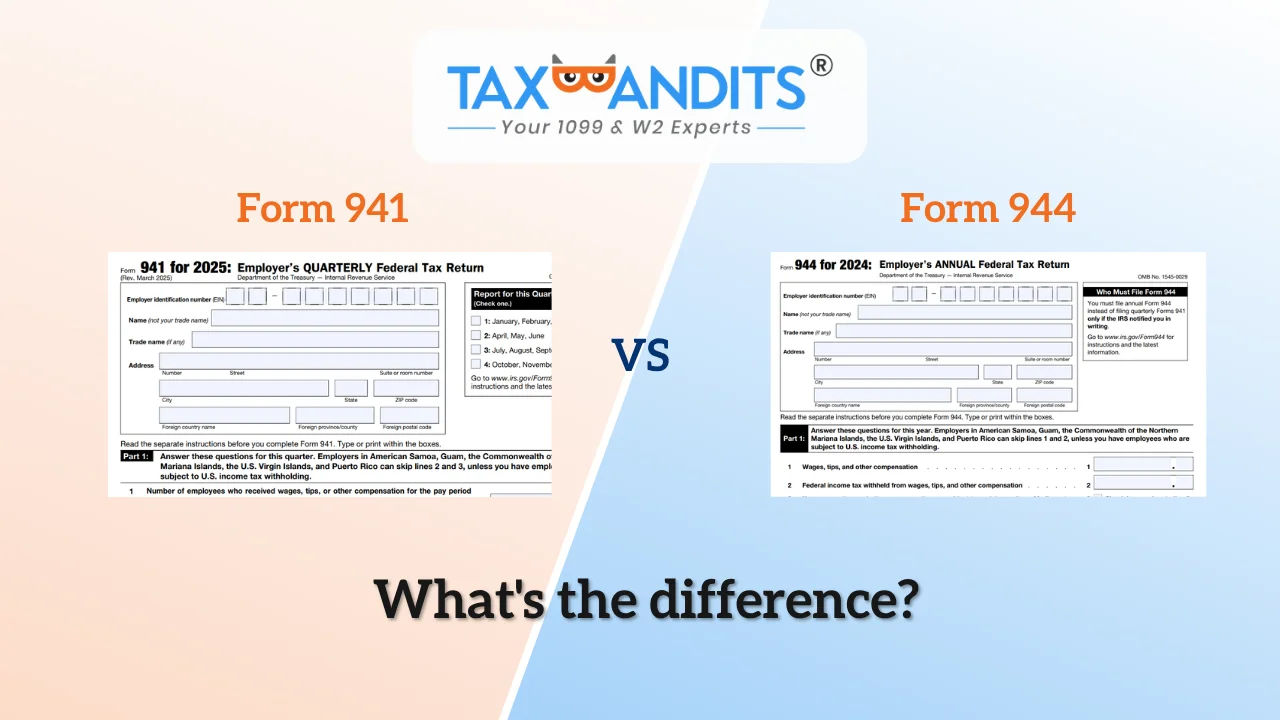
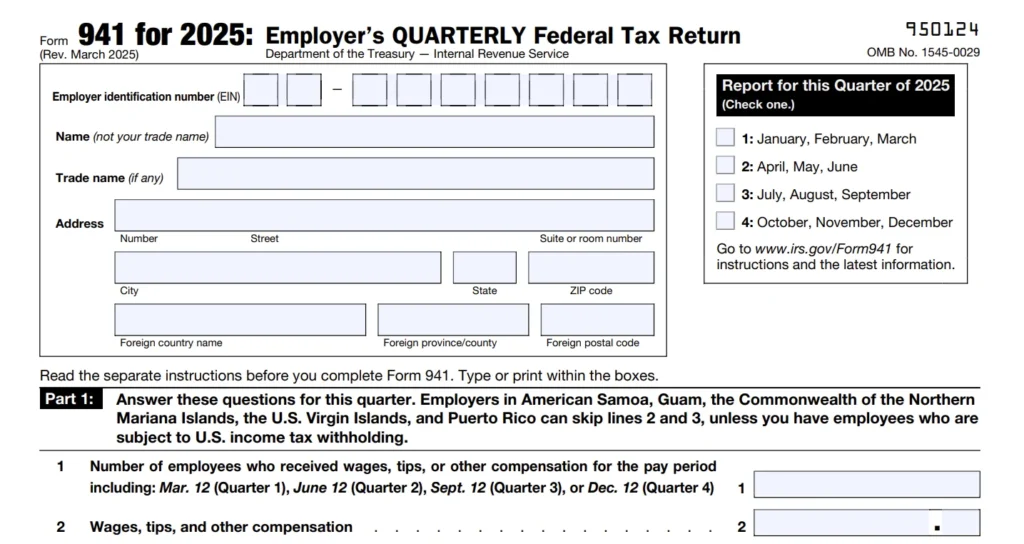
Form 941 serves as the primary mechanism for most employers to report their quarterly tax liabilities. It meticulously tracks the federal income tax, Social Security tax, and Medicare tax that you, as an employer, have withheld from your employees’ paychecks. Additionally, it accounts for the employer’s share of Social Security and Medicare taxes. The IRS uses this form to ensure that employers are collecting and remitting these critical taxes to the federal government on a regular basis.
Who needs to file? Generally, if you pay wages subject to income tax withholding and Social Security and Medicare taxes, you are required to file Form 941 each quarter. There are some exceptions, such as seasonal employers who don’t pay wages in certain quarters, or household employers and agricultural employers who typically use other forms (like Form 943 or Schedule H). For the vast majority of small and medium-sized businesses, Form 941 is a quarterly fixture. Missing a filing or submitting inaccurate information can trigger significant penalties, underscoring the importance of precision.
Distinguishing Between Form 941 and Payment Methods
A common area of confusion for employers is the distinction between filing Form 941 and making the actual tax payment. While both are related to your tax liability, they are often separate actions performed through different channels. Form 941 reports your liability; it doesn’t always serve as the vehicle for the payment itself.
The IRS primarily mandates and encourages electronic payment methods, particularly through the Electronic Federal Tax Payment System (EFTPS). This system is designed for efficiency, security, and accuracy, handling billions of dollars in federal tax payments annually. For many businesses, especially those with larger tax liabilities, using EFTPS is not just recommended but legally required.
However, there are specific circumstances where mailing a payment with Form 941 or its accompanying payment voucher (Form 941-V) remains a valid option. This method is typically reserved for smaller employers whose aggregate tax liability for the current quarter is less than $2,500 and who are not otherwise required to deposit electronically. Understanding when mailing is appropriate versus when electronic payment is mandatory is a key differentiator in ensuring compliance. The default, and increasingly universal, expectation is electronic payment, with mailed payments serving as a niche, less common alternative.
Navigating the IRS Mailing Addresses for Form 941 with Payment
For those situations where mailing a payment is permissible and chosen, knowing the exact IRS mailing address is paramount. The IRS maintains different addresses based on several factors, and sending your form and payment to the wrong location can lead to processing delays and potential penalties.
Determining Your Correct IRS Mailing Address
The IRS’s mailing addresses are not universal. Instead, they are geographically determined, primarily based on the state where your business’s principal office or agency is located. Furthermore, the address can differ depending on whether you are simply filing Form 941 without a payment or if you are enclosing a payment. The most authoritative and up-to-date source for these addresses is always the official IRS instructions for Form 941 for the specific tax period you are filing. These instructions are updated annually and are readily available on the IRS website (IRS.gov). Relying on outdated information or unofficial sources can lead to significant processing delays, which can then translate into late payment penalties. It is a critical step in the quarterly financial workflow for businesses to consult these instructions each filing period.
Specific Mailing Addresses and Payment Procedures (General Guidance)
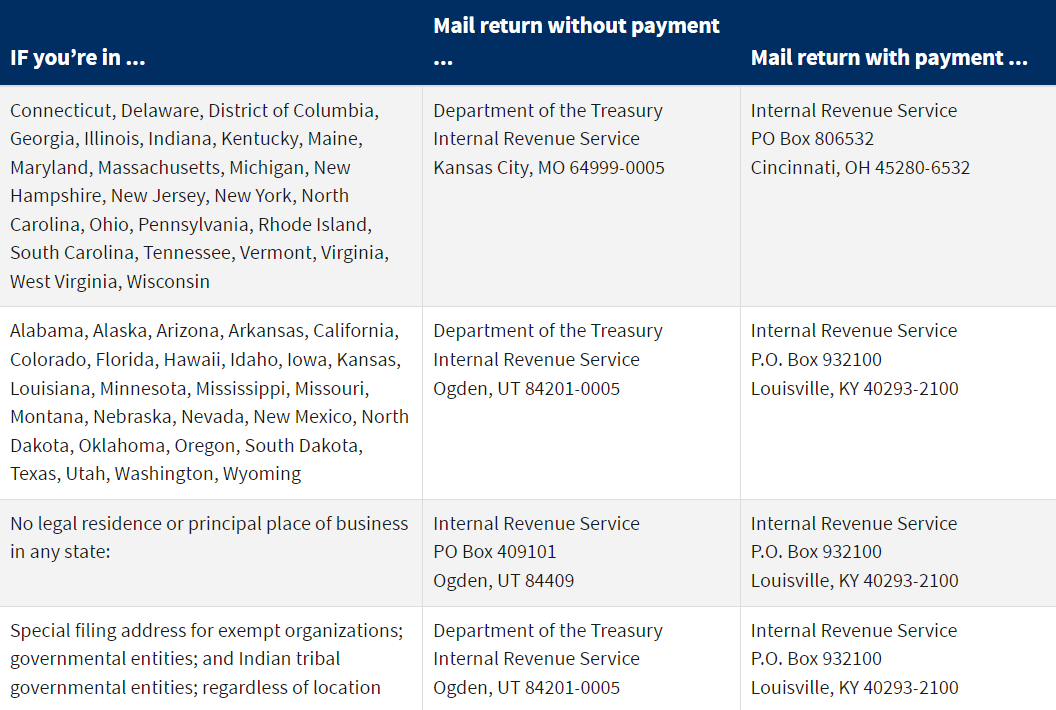
While I cannot provide an exhaustive, real-time list of IRS mailing addresses—as these are subject to change by the IRS—I can outline the general structure and guide you on how to find the precise address. The IRS typically divides addresses by regions or states. For example, the instructions might state:
- If you are in Connecticut, Delaware, District of Columbia, Georgia, Illinois, Indiana, Kentucky, Maine, Maryland, Massachusetts, Michigan, New Hampshire, New Jersey, New York, North Carolina, Ohio, Pennsylvania, Rhode Island, South Carolina, Tennessee, Vermont, Virginia, West Virginia, or Wisconsin, and are enclosing a payment, you would mail to a specific IRS address.
- If you are in Alabama, Alaska, Arizona, Arkansas, California, Colorado, Florida, Hawaii, Idaho, Iowa, Kansas, Louisiana, Minnesota, Mississippi, Missouri, Montana, Nebraska, Nevada, New Mexico, North Dakota, Oklahoma, Oregon, South Dakota, Texas, Utah, Washington, Wyoming, or a foreign country, and are enclosing a payment, you would mail to a different specific IRS address.
Crucial Advice: Always refer to the official “Instructions for Form 941” for the current year. This document will contain a section titled “Where to File” which clearly lists the applicable addresses. These instructions are available directly on IRS.gov and are updated for each tax year. Failing to consult the current instructions is a common error that can result in your payment being misrouted or significantly delayed, leading to late payment penalties.
What to Include with Your Mailed Payment
When you mail your Form 941 with a payment, it’s not just the form and a check. There’s a specific, crucial component designed to ensure your payment is correctly attributed: Form 941-V, Payment Voucher.
- Form 941-V, Payment Voucher: This voucher is absolutely essential. It contains critical identifying information, including your Employer Identification Number (EIN), the tax period for which the payment is made, and the payment amount. It acts as a routing slip for your check. You must fill out this voucher completely and accurately and send it along with your check or money order.
- Check or Money Order: Make your check or money order payable to the “United States Treasury.” Ensure your EIN, the tax period (e.g., “Q1 2024 Form 941”), and a contact phone number are clearly written on the check or money order. This helps the IRS identify your payment even if it gets separated from the voucher.
- Do Not Staple or Paperclip: The IRS processes millions of documents. Stapling or paperclipping documents can interfere with automated processing equipment. Simply place your Form 941, Form 941-V, and check loosely together in the envelope.
- Ensure EIN is on the Payment: Reiterating this point is vital. Without your EIN on the payment instrument, the IRS may have difficulty crediting the payment to your account, potentially leading to an erroneous notice of overdue taxes.
Electronic Payment: The Preferred and Most Secure Method
While mailing payments is an option under specific circumstances, the IRS strongly advocates for and increasingly mandates electronic payments. The Electronic Federal Tax Payment System (EFTPS) represents the gold standard for federal tax transactions, offering unparalleled convenience, security, and efficiency for businesses.
Introduction to EFTPS
EFTPS is a free service provided by the U.S. Department of the Treasury that allows businesses and individuals to make all federal tax payments electronically. It operates as a secure online portal or through a dedicated phone system, enabling taxpayers to schedule payments up to 365 days in advance. Since its inception, EFTPS has processed trillions of dollars in tax payments, establishing itself as a robust and reliable financial tool for American businesses.
The advantages of using EFTPS are numerous. Beyond mere convenience, it offers enhanced security features, providing a secure channel for sensitive financial transactions. Users receive immediate confirmation numbers for each payment, serving as undeniable proof of payment and greatly simplifying record-keeping. The system is available 24/7, allowing businesses to manage their tax payments on their schedule, rather than being beholden to post office hours. Furthermore, electronic payments significantly reduce the risk of human error associated with manual check processing and mail delivery.
How to Enroll and Use EFTPS
Enrollment in EFTPS is a straightforward process, though it requires a few days for completion due to security protocols. Employers can enroll either online at EFTPS.gov or by calling EFTPS Customer Service. During enrollment, you will provide your business’s EIN and other identifying information. Once enrolled, the IRS will mail you a Personal Identification Number (PIN) to the address of record, which typically arrives within 5-7 business days. This PIN, combined with a self-selected internet password (if enrolling online), will be your keys to accessing the system.
Once enrolled, making a payment is simple. You log in to EFTPS using your EIN, PIN, and password. You then select the type of tax you wish to pay (e.g., Form 941 taxes), the tax period, the payment amount, and the desired payment date. You can schedule payments for a future date, which is particularly useful for managing cash flow and ensuring timely submissions. After confirming the details, you receive an immediate EFTPS confirmation number, which should be saved for your records. This confirmation is crucial as proof that the payment was scheduled and processed.
When EFTPS is Mandatory
It’s vital for employers to understand that for many, EFTPS is not an option but a requirement. The IRS generally mandates electronic tax deposits if your total tax liability for a prior “lookback period” (typically a 12-month period ending June 30 of the prior year) was $2,500 or more. This threshold can change, so consulting the current IRS Publication 15 (Employer’s Tax Guide) is essential.
Failure to use EFTPS when required can result in significant penalties. These penalties are typically calculated as a percentage of the amount of the underpayment not deposited electronically. The IRS views timely and correct electronic deposits as a fundamental aspect of tax compliance for most businesses. Therefore, if your business meets the mandatory deposit thresholds, embracing EFTPS is not merely a convenience but a legal obligation that forms a core component of sound business finance.
Avoiding Common Pitfalls and Ensuring Timely Submission
Beyond knowing where and how to send your payment, understanding the common traps and implementing best practices for financial record-keeping can save your business from unnecessary penalties and administrative headaches.
Understanding Due Dates and Penalties
Form 941 is a quarterly return, and each quarter has a specific filing and payment deadline:
- Quarter 1 (January 1 to March 31): Due April 30
- Quarter 2 (April 1 to June 30): Due July 31
- Quarter 3 (July 1 to September 30): Due October 31
- Quarter 4 (October 1 to December 31): Due January 31 of the following year
If a due date falls on a weekend or holiday, the deadline shifts to the next business day. It’s crucial to understand that there are separate penalties for:
- Late Filing: A percentage of the unpaid tax for each month or part of a month the return is late.
- Late Payment: A percentage of the unpaid tax for each month or part of a month the tax remains unpaid.
- Failure to Deposit: If you don’t make your tax deposits on time, in the correct amount, or in the required manner (e.g., not using EFTPS when mandated), you can face penalties. This can be particularly punitive as these are funds you’ve already withheld from employees.
- Interest: In addition to penalties, the IRS may charge interest on underpayments and unpaid taxes from the due date until the payment date.
These penalties and interest charges can quickly erode a business’s financial stability, making proactive compliance an absolute necessity.
Best Practices for Mailed Submissions
For those instances where mailing a payment is appropriate, adopting rigorous best practices can provide an essential layer of protection and proof.
- Use Certified Mail with a Return Receipt: This is arguably the most important safeguard for mailed tax documents. Certified mail provides proof that you mailed the document, and a return receipt provides proof that the IRS received it and when. In the event of a dispute or if your payment is lost, this documentation is invaluable for demonstrating your timely compliance.
- Mail Well in Advance of the Deadline: Postal services can experience delays. To avoid a late-filing or late-payment penalty, mail your forms and payments at least a week before the official due date. The IRS uses the U.S. postmark as proof of timely filing.
- Double-Check All Information: Before sealing the envelope, meticulously review Form 941, Form 941-V, and your check for accuracy. Verify the EIN, tax period, payment amount, and ensure all necessary fields are completed. A simple transposition error can lead to significant headaches down the line.
Record Keeping Essentials
Comprehensive record-keeping is not merely good practice; it’s a legal requirement and a strategic financial tool. Maintaining accurate and accessible records is crucial for defending against audits, responding to IRS inquiries, and for your own internal financial analysis.
- Keep Copies of All Filed Forms and Payment Confirmations: For every Form 941 submitted, retain a complete copy. If you use EFTPS, print or save the confirmation pages for each payment. For mailed payments, keep copies of the check, Form 941-V, and particularly, the certified mail receipt and return receipt. These documents are your primary defense in case of an IRS query or audit.
- Maintain Detailed Payroll Records: Beyond the Form 941 itself, keep meticulous records of all wages paid, tips reported, fringe benefits, and the amounts of federal income tax, Social Security, and Medicare taxes withheld from each employee. These records underpin the figures reported on Form 941 and will be essential for reconciling any discrepancies.
- Importance for Future Audits or Inquiries: The IRS has a three-year statute of limitations for most tax assessments. Therefore, you should generally keep all employment tax records for at least four years after the date the tax becomes due or is paid, whichever is later. These records provide the necessary evidence to substantiate your filings and payments, protecting your business financially and legally.
In the complex world of business finance, precision and punctuality are virtues that directly translate into compliance and peace of mind. While the option to mail Form 941 with payment exists under certain conditions, understanding the broader landscape of electronic payment methods, meticulous record-keeping, and strict adherence to IRS guidelines is paramount. By prioritizing these practices, employers can confidently navigate their federal tax obligations, safeguarding their financial health and focusing on their core business operations. Always refer to the latest IRS instructions for Form 941 to ensure your information is current and accurate for the specific tax period.
aViewFromTheCave is a participant in the Amazon Services LLC Associates Program, an affiliate advertising program designed to provide a means for sites to earn advertising fees by advertising and linking to Amazon.com. Amazon, the Amazon logo, AmazonSupply, and the AmazonSupply logo are trademarks of Amazon.com, Inc. or its affiliates. As an Amazon Associate we earn affiliate commissions from qualifying purchases.