
For many individuals, the idea of tax payments conjures images of an annual scramble, often culminating in a single submission by April 15th. However, for a significant portion of the population – particularly the self-employed, freelancers, small business owners, and those with substantial income from investments or other non-wage sources – taxes are an ongoing responsibility, paid in installments throughout the year. This system, known as estimated tax, is the IRS’s way of ensuring that taxpayers remit income tax as they earn or receive income, rather than waiting until year-end. Failing to accurately estimate and pay these quarterly taxes can lead to unwelcome penalties, transforming a well-earned profit into a costly oversight.
Estimating quarterly tax payments isn’t just about compliance; it’s a critical component of sound financial planning. It allows individuals and businesses to budget effectively, avoid last-minute surprises, and maintain a healthier financial standing. This comprehensive guide will demystify the process, offering a clear, step-by-step approach to accurately project your tax liability and make timely payments, ensuring peace of mind and financial security. We’ll explore who needs to pay, how to gather the necessary data, the calculation methods, and strategies for managing these payments effectively, all within the strict confines of personal and business finance.
Understanding Quarterly Tax Payments: Who Needs to Pay?
The U.S. tax system operates on a “pay-as-you-go” principle. This means you’re expected to pay most of your tax liability throughout the year, either through payroll withholding if you’re an employee, or through estimated tax payments if your income isn’t subject to adequate withholding. Understanding who falls into this latter category is the crucial first step.
Identifying Your Obligation: Self-Employed, Freelancers, and More
Generally, you must pay estimated tax if you expect to owe at least $1,000 in tax for the year. This threshold catches a wide array of income earners:
- Self-Employed Individuals: If you run your own business, work as an independent contractor, or engage in freelancing, you are responsible for paying both income tax and self-employment taxes (Social Security and Medicare) on your net earnings. Since no employer is withholding these taxes for you, estimated payments are your responsibility.
- Partners and S-Corporation Shareholders: Those with income from partnerships or S-corporations often receive distributions or pass-through income that isn’t subject to withholding.
- Individuals with Significant Investment Income: Income from interest, dividends, capital gains, rents, or royalties can push you over the $1,000 tax liability threshold, necessitating estimated payments.
- Retirees and Pensioners: If your pension or annuity income isn’t adequately withheld, or if you have substantial IRA distributions, you might need to make estimated payments.
- Alimony Recipients: For divorce agreements executed before 2019, taxable alimony income requires consideration.
- Gig Economy Workers: The rise of the gig economy means many individuals earning income through platforms like Uber, Airbnb, or DoorDash will likely need to make estimated tax payments.
Even if you are an employee with a W-2 job, if you have additional income sources that result in substantial tax liability, you may still need to make estimated payments. Alternatively, you can adjust your W-4 form with your employer to increase your withholding and cover the additional tax, effectively using your employer as a “pay-as-you-go” mechanism for your other income.
The “Pay-as-You-Go” System Explained
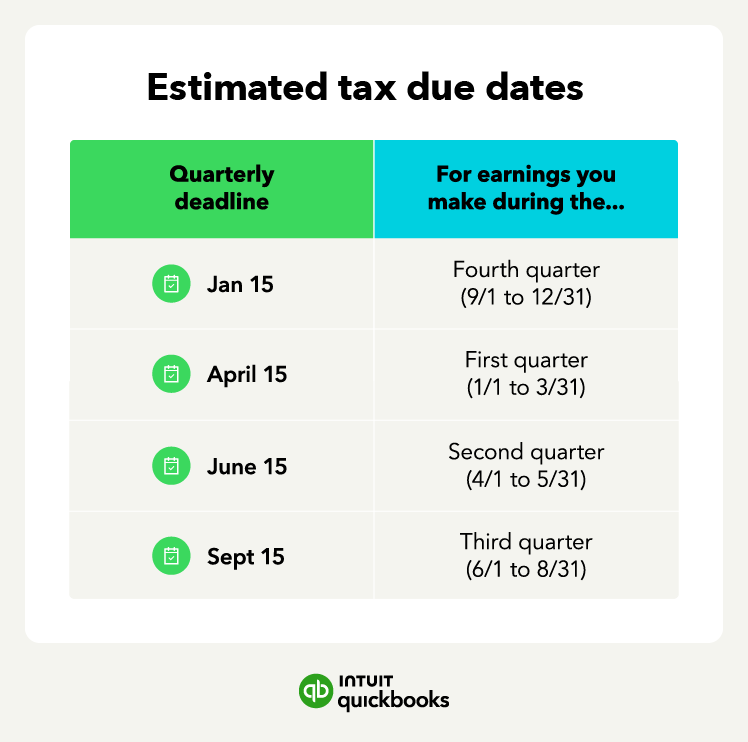
The “pay-as-you-go” system ensures a steady stream of revenue for the government and prevents taxpayers from facing a massive, unmanageable tax bill at year-end. For estimated taxes, the tax year is divided into four payment periods, each with a specific due date:
- Period 1: January 1 to March 31 — Due April 15
- Period 2: April 1 to May 31 — Due June 15
- Period 3: June 1 to August 31 — Due September 15
- Period 4: September 1 to December 31 — Due January 15 of next year
If any of these dates fall on a weekend or holiday, the deadline is shifted to the next business day. It’s crucial to understand that these aren’t simply equal quarterly installments; each payment covers a specific earning period, although for simplicity, many people divide their annual estimate by four.
Consequences of Underpayment: Penalties to Avoid
Failing to pay enough tax throughout the year, either through withholding or estimated tax payments, can result in an underpayment penalty. This penalty is essentially interest charged on the amount of underpaid tax. The IRS generally assesses a penalty if you owe more than $1,000 when you file, or if you paid less than 90% of your current year’s tax liability or 100% of your prior year’s tax liability (110% if your prior year’s Adjusted Gross Income was over $150,000, or $75,000 for married filing separately), whichever is smaller. Understanding and applying these “safe harbor” rules is key to avoiding penalties.
Gathering Your Financial Data: The Foundation of Accurate Estimates
The accuracy of your estimated tax payments hinges entirely on the quality of your financial projections. This requires a diligent review of past financial performance and a realistic outlook on your current year’s income and expenses.
Reviewing Past Tax Returns (Form 1040-ES)
Your prior year’s tax return (Form 1040) is an invaluable starting point. It provides a baseline for your income, deductions, credits, and overall tax liability. The IRS provides Form 1040-ES, Estimated Tax for Individuals, which includes a worksheet designed to help you calculate your estimated tax. This worksheet uses your previous year’s figures to project the current year’s, offering a structured approach to the calculation. Pay close attention to your total tax liability, any self-employment tax, and credits claimed.
Projecting Current Year Income: Sources and Variability
This is often the most challenging part, especially for those with variable income. You need to forecast your income from all sources:
- Self-Employment/Freelance Income: Estimate your gross revenue from services or sales.
- Business Income: For sole proprietors, this is your business profit.
- Investment Income: Project interest, dividends, and anticipated capital gains from stock sales or other investments.
- Rental Income: Gross rents minus allowable expenses.
- Other Income: Alimony (for pre-2019 agreements), gambling winnings, etc.
Be realistic, and if your income is highly variable, consider a conservative estimate or be prepared to adjust your payments throughout the year. It’s often safer to slightly overestimate and receive a refund than to underestimate and face penalties.
Itemizing Deductions and Credits: Maximizing Your Savings
Just as with your annual tax return, deductions and credits reduce your taxable income or directly reduce your tax liability, respectively. Factor in any anticipated deductions:
- Standard Deduction vs. Itemized Deductions: Determine which you’ll likely take. For itemizers, project medical expenses, state and local taxes (SALT cap $10,000), mortgage interest, and charitable contributions.
- Business Expenses: For the self-employed, deduct all ordinary and necessary business expenses (home office, supplies, software, travel, professional development, health insurance premiums, SEP IRA contributions, etc.).
- Credits: Anticipate any tax credits you might qualify for, such as the Child Tax Credit, education credits, or credits for energy-efficient home improvements.
Accurately projecting these can significantly lower your estimated tax payments.
Accounting for Withholding from Other Income Sources (e.g., W-2 Jobs)
If you have a W-2 job in addition to other income sources, your employer is already withholding taxes. Factor this into your calculation. You don’t want to double-pay. You can either adjust your W-4 with your employer to increase your withholding to cover the estimated tax on your other income, or simply subtract the anticipated withholding from your total estimated tax liability to determine how much you need to pay quarterly.
Step-by-Step Calculation: Using Form 1040-ES and Beyond
With your financial data in hand, the next phase involves the actual calculation of your estimated tax payments. The IRS provides a structured approach, but diligent record-keeping and strategic thinking are essential.

The IRS Form 1040-ES: Estimated Tax for Individuals
The Form 1040-ES package contains a worksheet designed to guide you through the process. It walks you through estimating your adjusted gross income (AGI), deductions, and credits to arrive at your total estimated tax. Key steps on the worksheet include:
- Estimate your total income: Combine all income sources you projected.
- Estimate your deductions and exemptions/standard deduction: Subtract these from your income to arrive at your estimated taxable income.
- Compute your estimated tax: Apply the relevant tax brackets to your taxable income. Don’t forget to include self-employment tax if applicable (which is 15.3% on the first $168,600 of net earnings for 2024, and 2.9% Medicare tax on all net earnings).
- Subtract credits: Reduce your tax by any anticipated credits.
- Account for prior year overpayment: If you had an overpayment on your prior year’s return that you elected to apply to the current year’s estimated tax, subtract that amount.
- Determine required annual payment: This is the total estimated tax you need to pay for the year.
- Divide by four: If your income is stable, divide this total by four for equal quarterly payments.
Income and Expense Tracking: Essential Tools and Practices
Accurate estimates require ongoing tracking. Utilize accounting software (like QuickBooks Self-Employed, FreshBooks, or Wave), spreadsheets, or even dedicated notebooks to record all income and expenses as they occur. Categorize transactions diligently to simplify deduction identification. Good record-keeping not only aids in estimated tax calculations but also simplifies year-end tax preparation and provides crucial documentation in case of an audit.
Adjusting for Life Changes: New Income, Deductions, or Dependents
Your initial estimate is just that – an estimate. Life rarely stays static. If you experience significant changes—such as a substantial increase or decrease in income, a major new deduction (e.g., purchasing a home), or a change in dependents—you’ll need to revise your estimated tax. Don’t wait until the next year; re-calculate your estimated tax and adjust your subsequent payments. The IRS recommends recalculating your entire annual estimate and then allocating the remaining payments appropriately.
Calculating Your Tax Liability and Payment Schedule
Once you have your total estimated annual tax, you’ll divide it into the four payment periods. For example, if your estimated tax liability is $10,000, you would generally pay $2,500 by each due date. If you only start earning significant self-employment income mid-year, you’d calculate your estimated tax from that point forward and divide it among the remaining payment periods, or use the annualized income method (discussed below). The most common method of paying is electronically through IRS Direct Pay or via the Electronic Federal Tax Payment System (EFTPS).
Strategies for Managing and Optimizing Quarterly Payments
Beyond the calculation, effective management of your quarterly tax payments involves strategic planning to avoid penalties and optimize your cash flow.
The “Safe Harbor” Rules: Avoiding Penalties
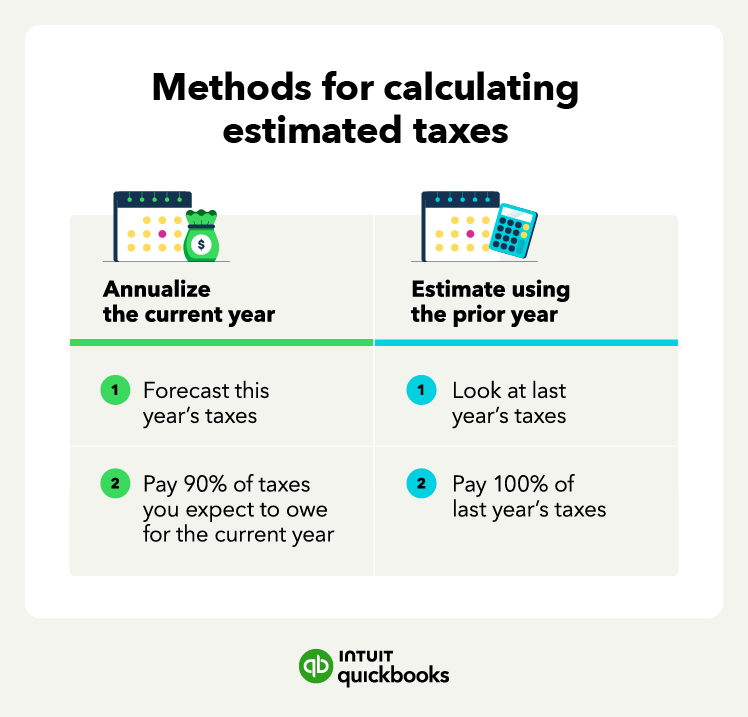
To avoid underpayment penalties, you generally need to pay at least 90% of your current year’s tax liability or 100% of your prior year’s tax liability, whichever is smaller. For those with an Adjusted Gross Income (AGI) over $150,000 ($75,000 for married filing separately) in the prior year, the 100% rule increases to 110% of the prior year’s tax. Leveraging these “safe harbor” rules is a crucial strategy. If your income is uncertain, paying 100% (or 110%) of your previous year’s tax liability can shield you from penalties, even if your current year’s actual tax liability turns out to be higher.
The Annualized Income Method: For Fluctuating Incomes
For taxpayers with income that varies significantly throughout the year (e.g., seasonal businesses, large capital gains in a specific quarter), the annualized income method can be beneficial. Instead of dividing your annual estimated tax into four equal installments, this method allows you to pay less tax in periods when your income is lower and more when it’s higher. You use Form 2210, Underpayment of Estimated Tax by Individuals, Estates, and Trusts, Part III, to calculate the required payment for each period. This method requires more diligent tracking and calculation but can prevent overpayment in early quarters and underpayment penalties if your income spikes later in the year.
Setting Aside Funds: A Dedicated Savings Strategy
The discipline of setting aside money for taxes is paramount. Many self-employed individuals open a separate savings account solely for tax purposes. A common recommendation is to set aside 25-35% of every payment or invoice received. This ensures that when quarterly due dates arrive, the funds are readily available, preventing the need to dip into operational funds or personal savings. Automating transfers from your business checking to this tax savings account after each deposit can be an excellent habit.
Reviewing and Adjusting Estimates Throughout the Year
Tax planning is an ongoing process, not a one-time event. Regularly review your income and expenses against your initial projections. At the end of each quarter, or whenever a significant financial event occurs, take the time to reassess your annual income and expense forecasts. If your projections have changed significantly, adjust your remaining quarterly payments accordingly. This proactive approach ensures your estimated payments remain accurate and minimizes the risk of penalties.
Tools and Resources for Simplified Estimation
While the process of estimating quarterly taxes can seem daunting, a variety of tools and resources are available to simplify the task and ensure accuracy.
Utilizing Tax Software and Online Calculators
Modern tax software (e.g., TurboTax Self-Employed, H&R Block Deluxe) often includes features specifically designed for estimated tax calculations. These tools can integrate with your income and expense tracking, automatically project your tax liability, and even help you generate the necessary payment vouchers. Many online calculators, some provided by the IRS or reputable financial websites, can also offer quick estimates. While helpful, always cross-reference their outputs with your own detailed figures.
The Role of Tax Professionals: When to Seek Expert Advice
For complex financial situations, significant income variability, or simply to gain peace of mind, consulting a qualified tax professional (CPA or Enrolled Agent) is highly recommended. They can help you:
- Accurately project income and expenses.
- Identify all applicable deductions and credits.
- Determine the most advantageous payment method (e.g., annualized income method).
- Navigate specific state estimated tax requirements (many states also require estimated payments).
- Assist with year-end tax planning strategies.
Their expertise can not only save you time and stress but also potentially identify tax savings you might otherwise overlook, making their fee a worthwhile investment.
Maintaining Diligent Records: Digital vs. Physical
Regardless of whether you use software or a professional, maintaining meticulous records is fundamental.
- Digital Records: Store invoices, receipts, bank statements, and payment confirmations digitally. Cloud storage solutions and scanning apps make this easy and provide backups.
- Physical Records: For critical documents, consider a secure physical filing system.
Consistently organizing your financial documents throughout the year will drastically simplify the estimation process and year-end tax preparation, proving invaluable should the IRS ever have questions about your filings.
In conclusion, estimating quarterly tax payments is an indispensable part of financial responsibility for those outside of traditional W-2 employment. By understanding your obligations, meticulously gathering financial data, utilizing available calculation methods, and proactively managing your payments, you can navigate the tax landscape with confidence. This diligent approach not only ensures compliance and avoids penalties but also empowers you with greater control over your financial future, transforming what could be a source of anxiety into a routine aspect of astute money management.
aViewFromTheCave is a participant in the Amazon Services LLC Associates Program, an affiliate advertising program designed to provide a means for sites to earn advertising fees by advertising and linking to Amazon.com. Amazon, the Amazon logo, AmazonSupply, and the AmazonSupply logo are trademarks of Amazon.com, Inc. or its affiliates. As an Amazon Associate we earn affiliate commissions from qualifying purchases.