
Navigating the complexities of personal finance often brings forth a crucial question: “Do I owe the IRS?” This isn’t just a matter of curiosity; it’s a fundamental aspect of responsible financial management. Ignoring potential tax liabilities can lead to significant penalties, accumulating interest, and considerable stress. Proactively understanding your tax situation with the Internal Revenue Service (IRS) is an empowering step towards financial health, providing peace of mind and allowing you to plan effectively.
Many factors can lead to an outstanding balance with the IRS, ranging from simple underpayment errors to more complex situations involving unreported income or audit adjustments. The good news is that the IRS provides several straightforward, official channels for individuals to check their account status, verify balances, and understand their tax obligations. This comprehensive guide will walk you through the essential steps, tools, and best practices to confidently determine if you owe the IRS, equipping you with the knowledge to manage your financial responsibilities effectively and avoid unwelcome surprises.
Understanding Your IRS Obligations: Why It Matters
Before diving into the “how,” it’s vital to grasp the “why.” Knowing your tax status isn’t merely about compliance; it’s a critical component of robust personal financial planning and risk mitigation.
The Importance of Proactive Tax Management
Ignoring potential tax debt is akin to letting a small leak turn into a flood. The IRS is a powerful entity, and unpaid taxes accrue penalties and interest over time, significantly increasing the original amount owed. These penalties can include failure-to-pay penalties, failure-to-file penalties, and accuracy-related penalties, each adding a percentage to your outstanding balance. By proactively checking your status, you can:
- Avoid Escalating Costs: Pay off balances promptly or arrange payment plans before penalties and interest make the debt unmanageable.
- Prevent Enforcement Actions: The IRS has various collection tools, including tax liens, levies (wage garnishments, bank account seizures), and passport revocation. Early intervention can prevent these severe consequences.
- Maintain Financial Stability: Unforeseen tax bills can derail budgets, savings goals, and investment plans. A clear understanding of your obligations allows for better financial forecasting and stability.
- Reduce Stress and Anxiety: The unknown can be daunting. Gaining clarity on your tax situation can significantly reduce financial anxiety and improve overall well-being.
Common Reasons for Owing the IRS
Understanding the typical scenarios that lead to tax debt can help you identify potential areas of concern in your own financial life.
- Underpayment of Estimated Taxes: This is common for self-employed individuals, freelancers, gig workers, or those with significant investment income. If you don’t have enough tax withheld from your paychecks (W-2 income), or if you don’t make sufficient quarterly estimated tax payments, you might owe at the end of the year.
- Insufficient Withholding: For employees, your W-4 form dictates how much tax is withheld from each paycheck. If you claim too many allowances or don’t adjust your W-4 for life changes (e.g., getting married, having a child, having a second job), you might under-withhold.
- Unreported Income: Failing to report all taxable income sources, such as freelance earnings, interest income, dividends, or capital gains, can lead to a balance due after the IRS receives third-party reporting (e.g., 1099 forms).
- Errors on Your Tax Return: Simple mistakes in calculations, claiming ineligible deductions or credits, or incorrect reporting can result in an underpayment discovered by the IRS during processing or audit.
- Audit Adjustments: If your return is audited and the IRS determines that you owe more tax, you’ll receive a notice of deficiency.
- Amended Returns: Sometimes, individuals file an amended return (Form 1040-X) to correct previous errors. If the correction results in a higher tax liability, you might then owe the IRS.
Official Channels: Your Primary Tools for Checking IRS Debt
The most reliable way to determine if you owe the IRS is to use their official resources. These tools are secure, accurate, and designed to provide you with a comprehensive view of your tax account.
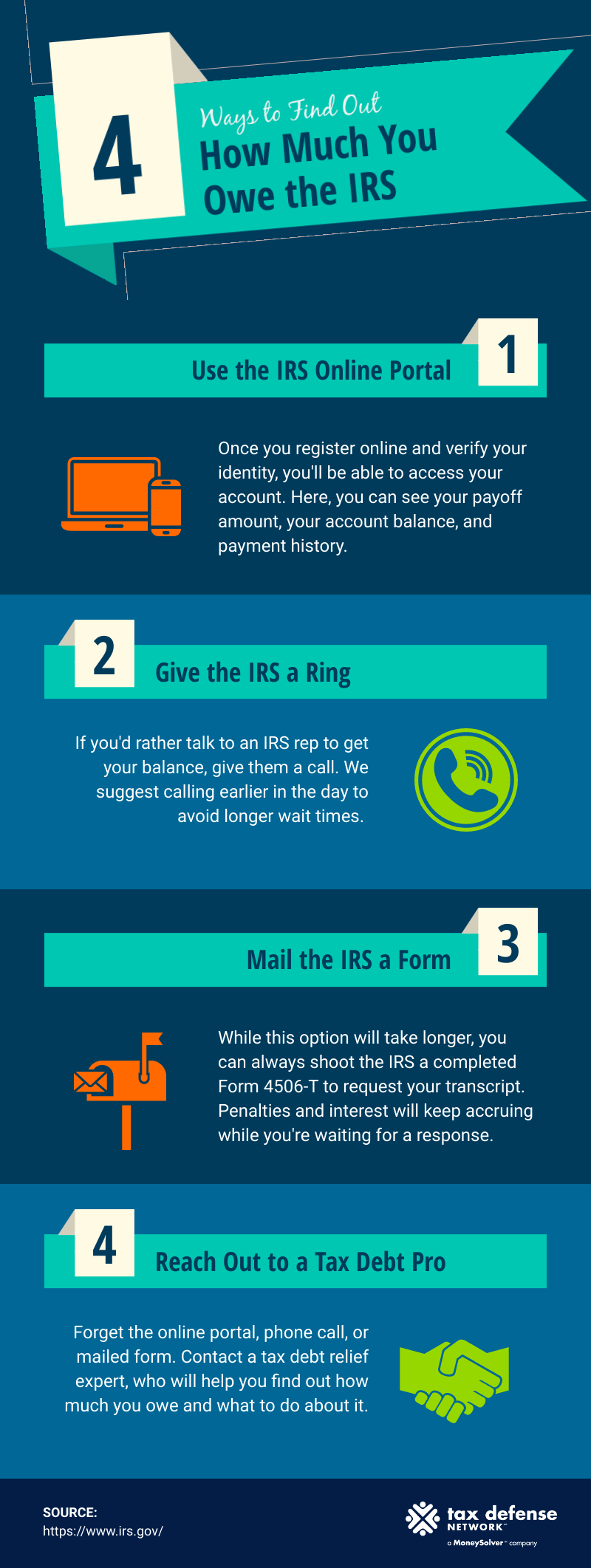
The IRS Online Account
The IRS Online Account is arguably the most powerful and convenient tool for checking your tax status. It’s a personalized portal that provides a wealth of information about your federal tax account.
- What it is: A secure online portal where individuals can access their tax information.
- How to set it up: You’ll need to verify your identity, which typically involves providing personal information (SSN, date of birth, filing status) and answering security questions based on financial records (e.g., a credit card, mortgage, student loan, or auto loan account number).
- What information it provides: Once logged in, you can see:
- Balance Due: Your current balance, including any accrued penalties and interest.
- Payment History: A record of your payments, including amounts and dates.
- Tax Records: Access to prior tax returns, payment plans, and certain notices.
- Payment Options: Set up direct debit payment plans, make one-time payments, or apply for an Offer in Compromise.
- Tax Transcripts: Request various types of transcripts (see below).
This tool is invaluable for anyone seeking a clear, real-time snapshot of their IRS financial standing.
Reviewing Your Tax Transcripts
IRS tax transcripts are detailed summaries of your tax returns and account activity. They provide a deeper dive into the information the IRS has on file for you.
- How to request them:
- Online: Through your IRS Online Account (the fastest method).
- By Mail: Use Form 4506-T, Request for Transcript of Tax Return.
- By Phone: Call the IRS automated transcript service at 800-908-9946.
- What they reveal: There are several types of transcripts, but the most relevant for checking if you owe are:
- Account Transcript: Shows basic data from your original return, your payment history, and any adjustments made by you or the IRS. It will also show if you have a balance due for a specific tax year.
- Record of Account Transcript: Combines the return transcript and account transcript, providing a complete picture of your filed return and subsequent account activity.
- Wage and Income Transcript: Shows data from information returns like W-2s, 1099s, and 1098s. Comparing this to your filed return can help identify unreported income.
While reading transcripts can be a bit like deciphering a code, they are incredibly useful for verifying reported income, payments, and any outstanding balances.
Contacting the IRS Directly
Sometimes, the most straightforward approach is to speak with a human. If you’re having trouble with online tools or need clarification on a specific notice, calling the IRS can be beneficial.
- When to call: If you’ve received a notice you don’t understand, have a complex situation not covered by online tools, or simply prefer to speak with a representative.
- What information you’ll need: Be prepared with your Social Security Number (SSN), date of birth, current address, and any relevant notices or previous tax returns. The IRS will also ask security questions to verify your identity.
- Limitations: Wait times can be long, especially during tax season. Ensure you have ample time and patience before calling. Also, IRS representatives can only discuss information related to your account and may not provide tax advice.
Interpreting IRS Communications and Notices
The IRS communicates through official letters and notices, which are crucial for understanding your current tax situation, including any outstanding balances. Ignoring these can lead to significant problems.
Understanding IRS Letters and Notices
The IRS sends various types of notices, each with a specific purpose. Recognizing the common ones related to balances due is key.
- CP14 (Balance Due): This is perhaps the most common notice for taxpayers who owe money. It typically notifies you of a balance due on your tax return, including any penalties and interest. It will specify the tax year and the amount.
- CP2000 (Underreported Income): This notice indicates that income reported to the IRS by third parties (like employers or financial institutions via W-2s or 1099s) doesn’t match the income you reported on your tax return. This often results in an additional tax liability.
- CP501, CP503, CP504 (Payment Reminder/Intent to Levy): These notices are part of a series of reminders about unpaid taxes. If ignored, they escalate, with the CP504 often indicating the IRS’s intent to levy (seize assets) if payment isn’t made.
- Letter 11 (Final Notice – Notice of Intent to Levy): This is a serious notice, informing you that the IRS intends to seize your property or assets to satisfy the tax debt. It also provides information about your right to a Collection Due Process (CDP) hearing.
The Importance of Timely Response

Every IRS notice comes with a response deadline. Timely action is paramount:
- Prevents Escalation: Responding promptly to a CP14 by paying or setting up a payment plan can prevent further penalties and more aggressive collection actions.
- Protects Your Rights: If you disagree with a notice, responding within the specified timeframe allows you to challenge the assessment or request a hearing.
- Clarifies Misunderstandings: Sometimes, a notice is sent due to an IRS error or a misunderstanding. A timely response can resolve these issues before they become larger problems.
Always open, read, and understand any letter or notice you receive from the IRS. If you’re unsure, seek professional advice immediately.
Beyond Direct Checks: Proactive Measures and Professional Assistance
While the IRS provides direct channels to check your debt, adopting proactive financial habits and leveraging professional help can significantly reduce the likelihood of owing the IRS in the first place, or help you manage it if you do.
Record-Keeping Best Practices
Meticulous record-keeping is the cornerstone of sound personal finance, especially concerning taxes.
- Organize Everything: Keep all W-2s, 1099s, 1098s, receipts for deductions, charitable contributions, investment statements, and bank records in an organized system.
- Digital vs. Physical: Whether you prefer digital files or physical binders, ensure your system is accessible and consistently updated.
- Retain Records: Keep tax records for at least three years from the date you filed your original return or two years from the date you paid the tax, whichever is later. For certain items, like property basis, keep records indefinitely.
- Track Payments: Keep confirmation numbers and bank statements for all tax payments made, whether through tax software, direct pay, or mail.
Good record-keeping simplifies tax preparation, helps you verify any IRS claims, and provides evidence if you ever need to dispute an assessment.
Utilizing Tax Software and Professional Preparers
Modern financial tools and expert advice are invaluable for accurate tax filing and identifying potential liabilities.
- Tax Software: Programs like TurboTax, H&R Block Tax Software, or TaxAct guide you through the filing process, helping to identify income, deductions, and credits. They often have features that estimate your tax liability throughout the year or flag potential issues. Using them consistently year-to-year can help you track your tax situation.
- Professional Preparers: Certified Public Accountants (CPAs) and Enrolled Agents (EAs) are tax specialists who can prepare your return, advise on tax planning, and represent you before the IRS. If your financial situation is complex (e.g., business income, significant investments, international income), a professional can ensure accuracy and help uncover any potential underpayments before they become a problem. They can also help you interpret IRS notices and navigate resolution options.
What to Do If You Owe
Discovering you owe the IRS can be unsettling, but there are established pathways to resolve the debt.
- Pay in Full: If possible, paying the balance in full by the due date (or as soon as possible after discovery) is the best option to avoid or minimize penalties and interest.
- Payment Plans:
- Short-Term Payment Plan: You might be granted up to 180 days to pay your tax liability in full, though interest and penalties still apply.
- Installment Agreement: If you can’t pay the full amount within 180 days, you can apply for an installment agreement, allowing you to make monthly payments for up to 72 months. You’ll still accrue interest and penalties, but at a reduced rate.
- Offer in Compromise (OIC): An OIC allows certain taxpayers to resolve their tax liability with the IRS for a lower amount than what they originally owe. This is typically an option when you are facing significant financial hardship and can demonstrate that you cannot pay the full amount due. The IRS considers your ability to pay, income, expenses, and asset equity.
- Seek Professional Help: A CPA or EA can help you understand your options, negotiate with the IRS, and ensure you choose the best resolution strategy for your financial circumstances.
Navigating Common Scenarios and Avoiding Pitfalls
Beyond the direct methods of checking, understanding common challenges and how to avoid them is crucial for long-term financial health.
What If You Can’t Pay?
Many taxpayers find themselves in a situation where they legitimately owe the IRS but lack the funds to pay. It’s imperative not to ignore this.
- File On Time, Even if You Can’t Pay: Always file your tax return by the deadline, even if you can’t pay the entire balance. The penalty for failure to file (5% per month on the unpaid taxes, capped at 25%) is significantly higher than the penalty for failure to pay (0.5% per month, capped at 25%).
- Explore Hardship Options: The IRS offers various programs for taxpayers experiencing financial difficulty. Besides OICs, you can explore “Currently Not Collectible” status, where the IRS temporarily delays collection when you can’t pay any of your debt due to financial hardship. Interest and penalties still accrue, but collection actions cease.
Beware of Scams
Unfortunately, the topic of owing the IRS is ripe for scammers. Protecting yourself from fraudulent attempts is vital.
- IRS Will Not Call or Email You First: The IRS typically initiates contact via postal mail. They will not call you threatening immediate arrest or demanding payment via unusual methods like gift cards or wire transfers.
- Verify Communications: If you receive a suspicious call or email claiming to be from the IRS, do not respond. Instead, check your IRS Online Account or call the official IRS phone numbers listed on their website (IRS.gov).
- Protect Your Information: Never give out personal financial information to unsolicited callers or through suspicious emails.
The Role of Estimated Taxes
For individuals with income not subject to withholding (e.g., self-employment, rental income, investments), estimated taxes are a critical component of preventing an end-of-year tax bill.
- Pay Quarterly: Estimated taxes are paid in quarterly installments throughout the year (April 15, June 15, September 15, January 15 of the following year).
- Adjust as Needed: If your income changes significantly during the year, adjust your estimated payments accordingly to avoid underpayment penalties.
- Use Form 1040-ES: This form helps you calculate and track your estimated tax payments.
Proactively managing estimated taxes is a key financial tool for many independent earners to avoid owing the IRS.

Conclusion
Determining whether you owe the IRS is a fundamental aspect of responsible personal finance. By utilizing the official IRS Online Account, requesting tax transcripts, and understanding the communications you receive, you can gain a clear and accurate picture of your tax liabilities. Proactive measures such as diligent record-keeping, strategic use of tax software, and engaging with professional tax preparers can further empower you to manage your tax obligations effectively.
Remember, the goal is not just to know if you owe, but to understand why you owe and what steps you can take to resolve the situation or prevent future tax debts. The IRS offers various options for those who owe, and ignoring the issue only leads to greater financial strain. By staying informed, leveraging the available financial tools, and seeking help when needed, you can maintain peace of mind and ensure your financial house is in order. Taking control of your tax situation is taking control of your financial future.
aViewFromTheCave is a participant in the Amazon Services LLC Associates Program, an affiliate advertising program designed to provide a means for sites to earn advertising fees by advertising and linking to Amazon.com. Amazon, the Amazon logo, AmazonSupply, and the AmazonSupply logo are trademarks of Amazon.com, Inc. or its affiliates. As an Amazon Associate we earn affiliate commissions from qualifying purchases.