
Navigating the complexities of tax season can be a daunting task for individuals and businesses alike. While preparing your tax return accurately is paramount, understanding the official and most efficient ways to settle your tax liability with the Internal Revenue Service (IRS) is equally critical. This guide provides an insightful look into the various payment methods, strategic considerations, and best practices to ensure your tax obligations are met promptly and without unnecessary stress or penalties.
Understanding Your Tax Obligation
Before diving into payment methods, it’s essential to grasp the fundamentals of your tax obligation. This includes knowing who needs to pay, key deadlines, and what documents are necessary to calculate your liability accurately.
Who Needs to Pay?
Virtually all U.S. citizens and residents are subject to federal income tax if their income exceeds certain thresholds. This includes wage earners, self-employed individuals, business owners, and those with investment income. For W-2 employees, taxes are typically withheld from each paycheck, but many still owe or receive a refund come tax time. Self-employed individuals and those with significant income from sources not subject to withholding (e.g., investments, rental income) are generally required to make estimated tax payments throughout the year to cover their tax liability. Failing to do so can result in underpayment penalties.
Key Deadlines to Remember
Adhering to IRS deadlines is crucial to avoid penalties and interest. The most widely known deadline is Tax Day, typically April 15th, for filing annual income tax returns and paying any taxes due for the previous calendar year. If April 15th falls on a weekend or holiday, the deadline shifts to the next business day. For self-employed individuals and those making estimated payments, quarterly deadlines are: April 15th (for January 1 to March 31 income), June 15th (for April 1 to May 31 income), September 15th (for June 1 to August 31 income), and January 15th of the following year (for September 1 to December 31 income). An extension to file (Form 4868) typically pushes the filing deadline to October 15th, but it does not extend the deadline to pay any taxes owed. Interest and penalties may still apply if the tax is not paid by the original April deadline.
Gathering Necessary Documentation
Accurate tax payment begins with accurate tax calculation, which relies heavily on organized documentation. Before you even consider payment, ensure you have all relevant forms: W-2s from employers, 1099s for various types of income (e.g., interest, dividends, independent contractor work), and K-1s for partnership or S-Corp income. Additionally, gather records for any deductions or credits you plan to claim, such as mortgage interest statements (Form 1098), student loan interest statements, charitable contribution receipts, medical expense records, and records of business expenses. A comprehensive financial overview will prevent errors and ensure you pay the correct amount.
Official Payment Methods for IRS Taxes
The IRS offers a variety of ways to pay your federal income taxes, accommodating different preferences and financial situations. Understanding each option allows you to choose the most convenient and secure method.
Direct Pay from Your Bank Account
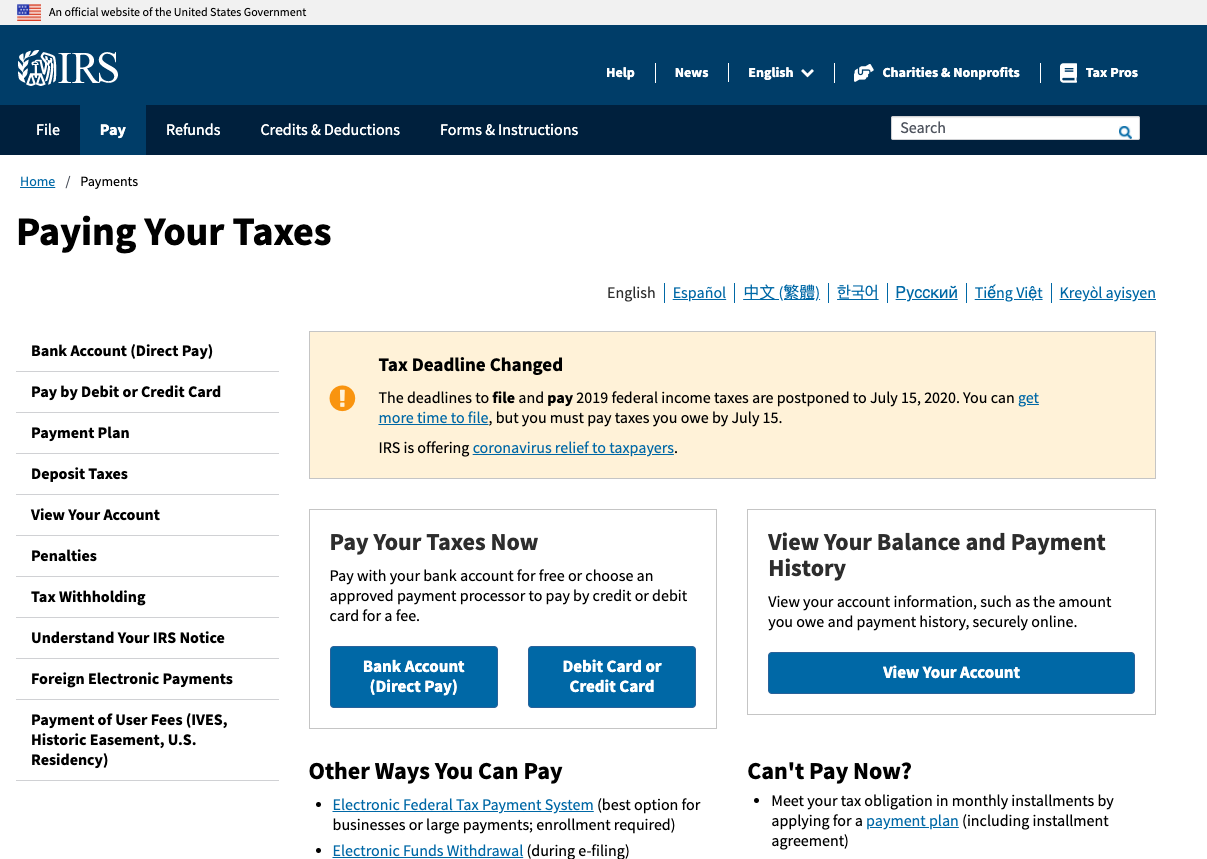
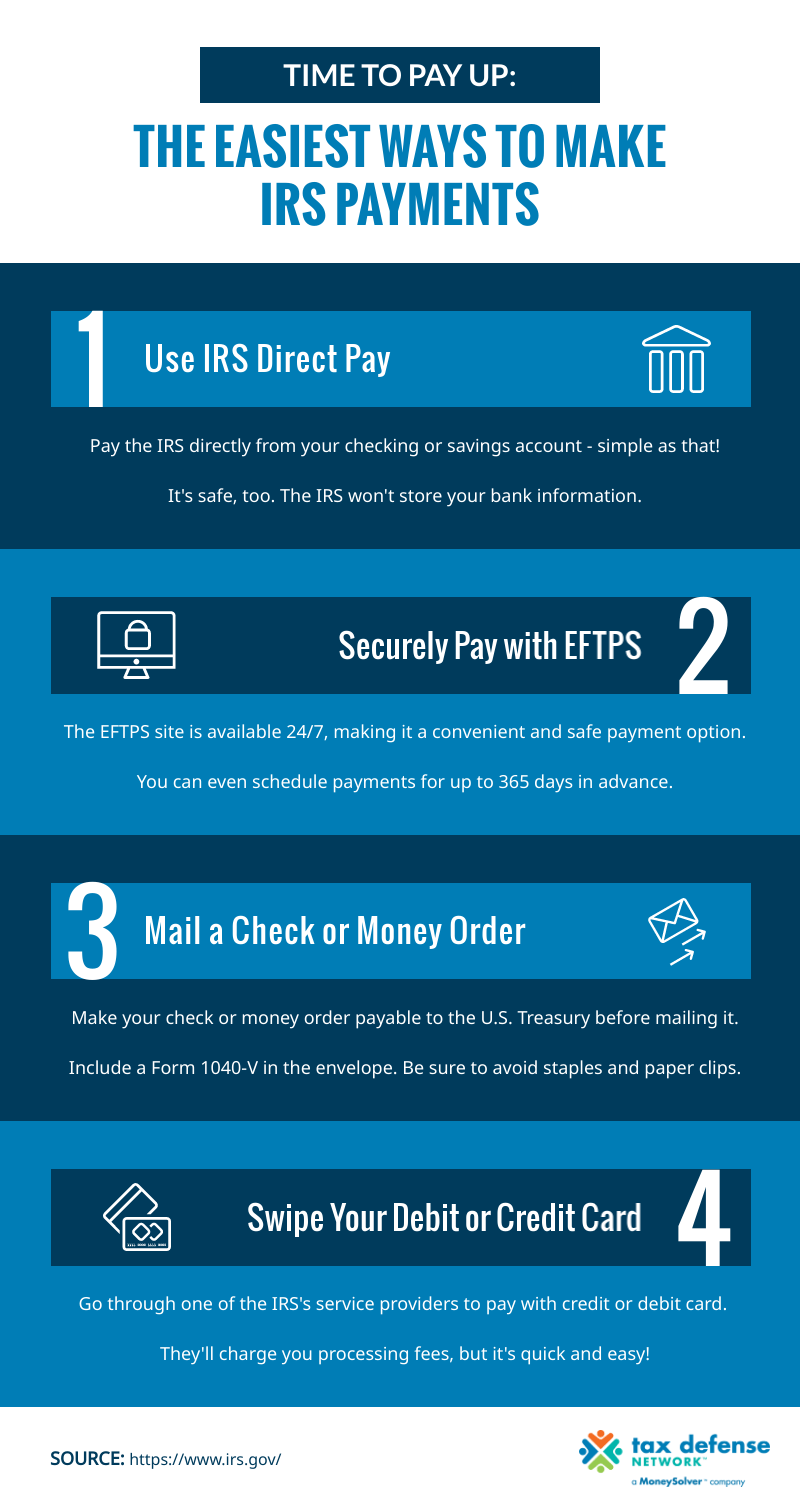
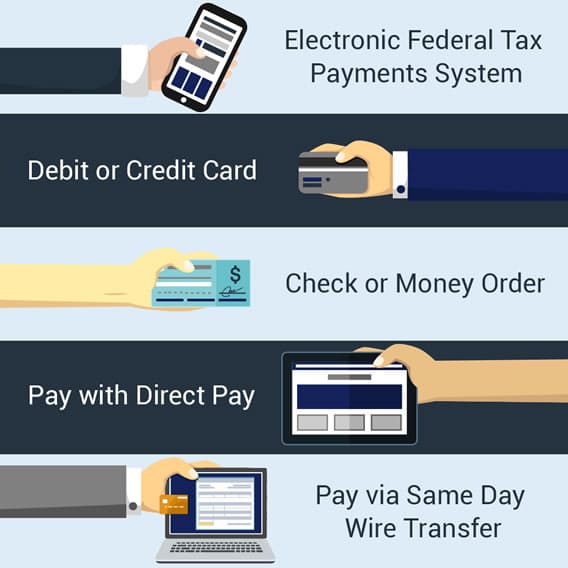
One of the most popular and recommended methods is IRS Direct Pay. This free, secure web-based service allows you to pay your taxes directly from your checking or savings account. You can schedule payments up to 365 days in advance and receive an immediate confirmation number. It’s available 24/7 and doesn’t require pre-registration. For businesses and individuals making estimated or payroll tax payments, the Electronic Federal Tax Payment System (EFTPS) is another robust and free option. EFTPS requires enrollment but offers greater flexibility for scheduling recurring payments and managing multiple tax types. Both methods are highly secure and eliminate the risk of mail delays or lost checks.
Debit Card, Credit Card, or Digital Wallet
The IRS allows tax payments via debit card, credit card, or digital wallet (e.g., PayPal, Click to Pay) through authorized third-party processors. While convenient, these processors charge a fee based on the payment amount, which can vary. The IRS does not receive any portion of these fees. This method can be particularly appealing if you want to earn credit card rewards, but you should always weigh the value of the rewards against the processing fees. Ensure you use an authorized processor listed on the IRS website to avoid scams and protect your financial information.
Electronic Funds Withdrawal (EFW)
When you file your federal tax return electronically, either through tax software or a tax professional, you have the option to pay any taxes due directly from your bank account through Electronic Funds Withdrawal (EFW). This is a convenient one-step process where you authorize the IRS to debit your account on a specified date, up to the annual tax deadline. You specify the payment amount and date during the e-filing process. It’s free of charge and provides immediate confirmation that your payment information has been submitted along with your return.
Check or Money Order
For those who prefer traditional methods, paying by check or money order is still an option. You should make your check or money order payable to the “U.S. Treasury.” It’s crucial to write your name, address, daytime phone number, Social Security number (or employer identification number for businesses), the tax year, and the related tax form number (e.g., “2023 Form 1040”) on the front of the payment. Do not staple or attach the payment to your return. Mail your payment along with a payment voucher (Form 1040-V for individuals) to the correct IRS address, which varies depending on your location. Always send certified mail with return receipt requested for proof of mailing and receipt.
Cash Payments
While less common, the IRS does facilitate cash payments through retail partners. You can pay your taxes in cash at thousands of retail locations nationwide, including participating 7-Eleven stores, Family Dollar, and Casey’s General Stores. To make a cash payment, you must first register online with a third-party processor, which will provide you with a payment code (often a QR code or barcode). You then take this code to a participating retail location and pay in cash. There may be a small processing fee for this service, and daily payment limits typically apply. This method offers a secure way to pay cash without sending it through the mail.
Strategic Considerations for Tax Payments
Beyond merely selecting a payment method, strategic planning can significantly impact your financial health and compliance. Proper tax planning can help avoid penalties and manage cash flow more effectively.
Estimated Tax Payments for Self-Employed and Business Owners
Self-employed individuals, independent contractors, and business owners often do not have taxes withheld from their income. To avoid a large tax bill and potential penalties at year-end, they are typically required to pay estimated taxes quarterly. The IRS uses Form 1040-ES, Estimated Tax for Individuals, to help calculate and make these payments. Accurately estimating income and deductions throughout the year is key. If your income fluctuates, you may need to adjust your estimated payments. Tools like IRS Direct Pay or EFTPS are ideal for managing these periodic payments efficiently.
Withholding Adjustments for W-2 Employees
For W-2 employees, reviewing and adjusting your federal income tax withholding is a proactive financial strategy. Using the IRS Tax Withholding Estimator tool and submitting a new Form W-4 to your employer can help you match your withholding more closely to your actual tax liability. This prevents under-withholding, which can lead to penalties, and over-withholding, which essentially gives the government an interest-free loan throughout the year. Adjusting withholding can free up more of your paycheck for immediate financial goals, saving, or investing.
Dealing with Underpayment Penalties
An underpayment penalty applies if you don’t pay enough tax through withholding or estimated payments, or if you pay it late. The IRS generally requires taxpayers to pay at least 90% of their current year’s tax liability or 100% of their previous year’s tax liability (110% for high-income earners) to avoid a penalty. If you find yourself in this situation, it’s important to understand how the penalty is calculated. While there are some exceptions (e.g., for certain farmers, fishermen, or those with significant income fluctuations), it’s generally best to proactively adjust your payments to meet these thresholds.
Payment Plans for Financial Hardship
If you owe taxes but cannot pay them by the deadline, it’s crucial to contact the IRS immediately to discuss payment options rather than ignoring the debt. The IRS offers several solutions for taxpayers facing financial hardship:
- Short-Term Payment Plan: You might be granted up to 180 additional days to pay your tax liability in full, though interest and penalties still apply.
- Offer in Compromise (OIC): An OIC allows certain taxpayers to settle their tax liability with the IRS for a lower amount than what they originally owe. This is typically an option when taxpayers are in significant financial difficulty.
- Installment Agreement: This allows you to make monthly payments for up to 72 months. While interest and penalties still accrue, they may be lower than if you did not set up a plan. Setting up an installment agreement can often be done online through the IRS’s Online Payment Agreement tool.
Post-Payment Best Practices and Record Keeping
After successfully paying your IRS taxes, your responsibilities don’t end. Implementing robust post-payment practices and maintaining meticulous records are vital for future reference and peace of mind.
Confirming Your Payment
Regardless of the payment method used, always confirm that your payment has been processed and recorded by the IRS. If you used IRS Direct Pay, you would have received a confirmation number, which you should retain. For EFTPS users, you can view your payment history online. If you paid by credit/debit card, check your bank or credit card statement for the transaction. For mailed checks, monitor your bank account to ensure the check has cleared. If you paid through EFW during e-filing, the confirmation from your tax software or preparer is usually sufficient. In case of any discrepancy, having immediate proof of payment is crucial.
Maintaining Accurate Records
Good record-keeping is a cornerstone of sound financial management, especially concerning taxes. Keep copies of your filed tax return, all supporting documents (W-2s, 1099s, receipts for deductions, etc.), and proof of payment for at least three years from the date you filed your original return or two years from the date you paid the tax, whichever is later. This is the general statute of limitations for the IRS to assess additional tax. For complex situations or certain types of income/expenses, retaining records for even longer periods (e.g., seven years for business property records) is advisable. Digital copies backed up in secure cloud storage, alongside physical copies, provide the best protection.
What to Do if You Made a Mistake
Discovering an error after filing and paying your taxes can be unsettling, but it’s not insurmountable. If you realize you made a mistake on your filed return that affects your tax liability (e.g., incorrect income, missed deduction, wrong credit), you’ll generally need to file an amended return using Form 1040-X, Amended U.S. Individual Income Tax Return. If the error results in you owing more tax, you should pay that additional amount as soon as possible to minimize interest and penalties. If the error leads to a refund, filing an amended return allows you to claim it. For minor errors or if you have specific questions about a payment or return, contacting the IRS directly can provide clarity and guidance.
aViewFromTheCave is a participant in the Amazon Services LLC Associates Program, an affiliate advertising program designed to provide a means for sites to earn advertising fees by advertising and linking to Amazon.com. Amazon, the Amazon logo, AmazonSupply, and the AmazonSupply logo are trademarks of Amazon.com, Inc. or its affiliates. As an Amazon Associate we earn affiliate commissions from qualifying purchases.