
Navigating the complexities of tax payments to the Internal Revenue Service (IRS) can often feel daunting. Whether you owe additional taxes after filing your annual return, need to make estimated tax payments throughout the year, or are dealing with a past-due balance, understanding the proper channels and methods is crucial. Making timely and accurate payments not only helps you fulfill your civic duty but also prevents the accrual of costly penalties and interest. This guide will demystify the process, walking you through the various secure and convenient options available for setting up your payments to the IRS, ensuring you stay compliant and financially sound.
Understanding Your IRS Payment Obligations
Before diving into the “how-to,” it’s essential to grasp the fundamental reasons and scenarios that necessitate payments to the IRS. Tax obligations are not static; they can arise from various financial activities and circumstances throughout the year. Being aware of these triggers is the first step toward effective tax planning and compliance.
When Payments Are Required
The most common reason for an IRS payment is when you owe additional tax after filing your annual federal income tax return. This typically happens if your employer withheld too little from your paycheck, or if you have income from sources not subject to withholding, such as self-employment income, investments, or rental properties.
However, payments aren’t just an annual event. If you expect to owe at least $1,000 in tax for the year (for individuals) or $500 (for corporations), you’re generally required to pay estimated taxes throughout the year. These payments are usually made quarterly to cover income not subject to withholding. Failure to do so can result in underpayment penalties, even if you pay your full balance by the April deadline.
Additionally, if you file an extension, it extends your time to file, not your time to pay. Any taxes you estimate you will owe must still be paid by the original tax deadline to avoid penalties and interest. Other scenarios that might trigger IRS payments include adjustments made after an audit, or if you’re on a payment plan for a previous tax liability.
Penalties for Non-Payment
Ignoring or delaying your IRS payment obligations can lead to significant financial repercussions. The IRS imposes various penalties designed to encourage timely compliance.
- Failure to Pay Penalty: This penalty applies if you don’t pay the tax shown on your return by the due date. The penalty is 0.5% of the unpaid taxes for each month or part of a month that the taxes remain unpaid, up to a maximum of 25% of your unpaid tax.
- Failure to File Penalty: This is a much stiffer penalty, generally 5% of the unpaid taxes for each month or part of a month that a tax return is late, capped at 25% of your unpaid tax. If both failure to file and failure to pay penalties apply in the same month, the failure to file penalty is reduced by the failure to pay penalty for that month.
- Underpayment of Estimated Tax Penalty: If you don’t pay enough tax throughout the year through withholding or estimated tax payments, you could be charged this penalty. The penalty amount can vary but is calculated based on the amount of underpayment, the period of underpayment, and the applicable interest rate.
- Interest: In addition to penalties, the IRS charges interest on underpayments, overpayments, and unpaid penalties. The interest rate is determined quarterly and can adjust, adding another layer of cost to delayed payments.
Understanding these penalties underscores the importance of being proactive and informed about your payment options.
Direct Payment Methods: Fast and Secure
In today’s digital age, the IRS offers several electronic payment options that are not only convenient but also highly secure. These methods ensure your payment is recorded promptly, minimizing the risk of errors and delays. For most taxpayers, these direct digital channels are the preferred way to settle their tax bills.
IRS Direct Pay
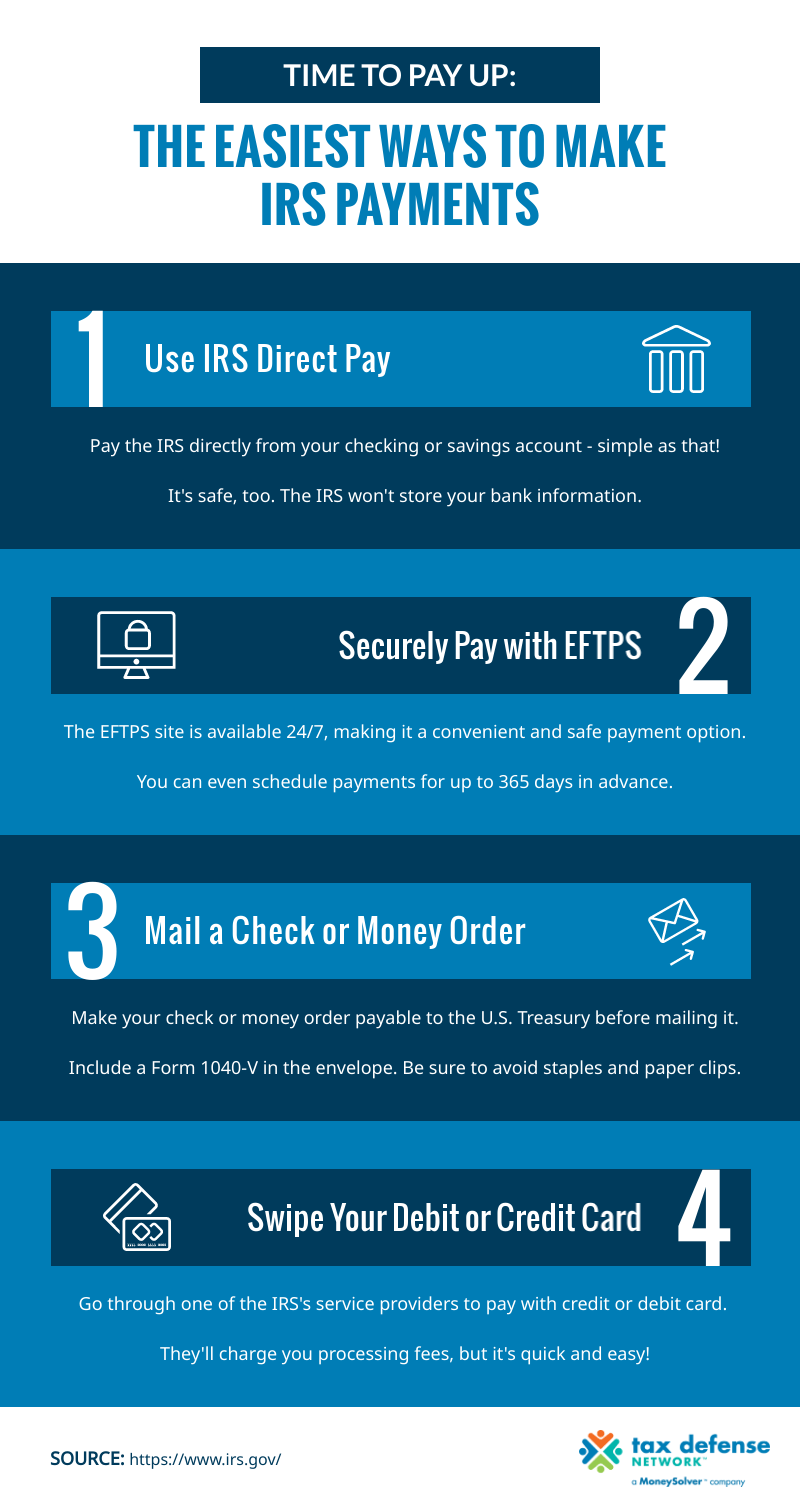
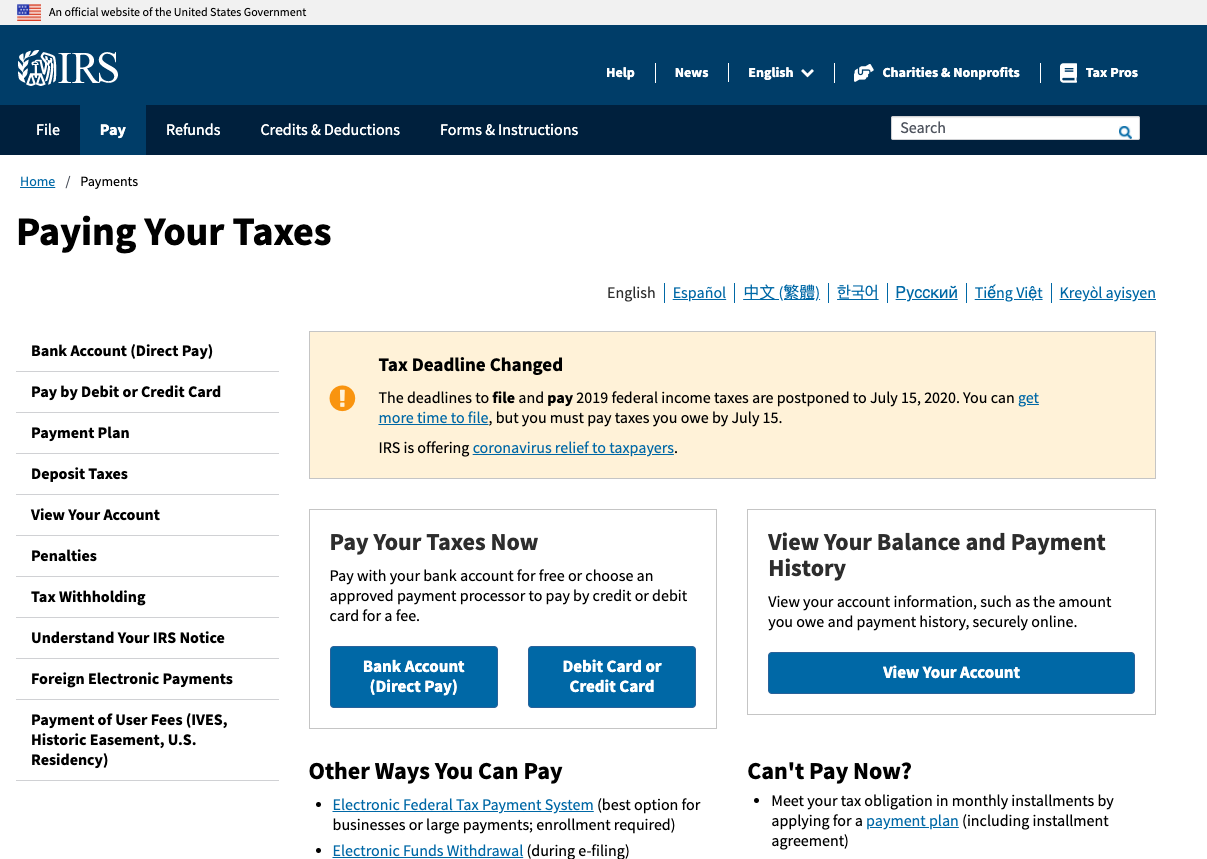
IRS Direct Pay is a free, secure web-based service offered directly by the IRS. It allows individuals to pay their federal taxes directly from their checking or savings account. This method is incredibly straightforward and doesn’t require any prior registration or special software.
Benefits:
- No Fees: Unlike credit/debit card payments, there are no processing fees involved.
- Direct Control: You initiate the payment directly with the IRS.
- Instant Confirmation: You receive an immediate confirmation number upon successful submission.
- Flexible Scheduling: Payments can be scheduled up to 365 days in advance.
- Multiple Payment Types: Can be used for Form 1040 series payments, estimated taxes, and even some non-filing penalties.
Step-by-Step Guide:
- Visit the IRS Direct Pay website.
- Select the reason for payment (e.g., “Balance Due,” “Estimated Tax”), the applicable tax year, and the payment recipient (e.g., “IRS”).
- Verify your identity using information from a previous tax return, a prior payment, or a Notice of Assessment.
- Enter your bank account information (routing and account number).
- Review and submit your payment. You will receive a confirmation number that should be saved for your records.
Electronic Federal Tax Payment System (EFTPS)
EFTPS is a robust electronic payment system primarily designed for businesses but also widely used by individuals, especially those who make frequent estimated tax payments. It offers more comprehensive features than IRS Direct Pay, including a full payment history.
For Individuals and Businesses: EFTPS is ideal for self-employed individuals, small businesses, and anyone needing to make regular or large tax payments. It handles all types of federal taxes, including income, employment, and excise taxes.
Enrollment Process: To use EFTPS, you must first enroll on their website or by mail.
- Online Enrollment: Visit the EFTPS website and click “Enroll.” You’ll need your taxpayer identification number (TIN) and bank account information.
- PIN Delivery: After enrollment, you’ll receive a personal identification number (PIN) via U.S. mail within 5-7 business days. This PIN is crucial for accessing your account.
- Activation: Once you receive your PIN, you can activate your account online.
Scheduling Payments: Once enrolled and activated, you can schedule payments up to 365 days in advance. You’ll receive an immediate confirmation number for each payment. EFTPS offers a secure and reliable way to manage all your federal tax payments from one centralized system.
Debit Card, Credit Card, or Digital Wallet
For those who prefer the convenience of using a card or digital wallet, the IRS allows payments through approved third-party payment processors. While this method offers flexibility and can sometimes earn rewards points (for credit cards), it comes with a crucial caveat: convenience fees.
Through Third-Party Processors: The IRS does not directly process card payments. Instead, it partners with several authorized processors, such as Official Payments, PayUSAtax, and ACI Payments, Inc. You select a processor, visit their website, and make your payment there.
Convenience Fees: Each processor charges a fee for their service, which varies depending on the payment amount, the type of card used (debit vs. credit), and the specific processor. Debit card fees are usually flat and lower, while credit card fees are typically a percentage of the payment amount. These fees are in addition to your tax liability.
Considerations:
- Rewards Points: For some, the opportunity to earn credit card rewards points might outweigh the convenience fee, especially for large payments.
- Cash Flow Management: Using a credit card can provide a short-term deferral of payment, which might be helpful for cash flow management, but remember that credit card interest rates can be much higher than IRS penalties if not paid off quickly.
- Proof of Payment: You’ll receive a confirmation from the third-party processor, which serves as your proof of payment.
Alternative and Specialized Payment Options
While direct digital methods are increasingly popular, the IRS also offers traditional and specialized options to accommodate various taxpayer needs and situations. These alternatives ensure everyone has a way to meet their tax obligations.
Electronic Funds Withdrawal (EFW)
If you’re e-filing your federal tax return (through tax software or a tax professional), Electronic Funds Withdrawal (EFW) is an integrated payment option you can choose at the time of filing. It allows you to authorize the IRS to directly debit your checking or savings account for the exact amount you owe.
How it Works:
- During E-filing: When preparing your return using tax software or with a preparer, you’ll be prompted to indicate how you want to pay any balance due.
- Provide Bank Details: You’ll enter your bank routing and account number.
- Schedule Date: You can choose to have the funds withdrawn on your tax due date or an earlier date.
- Integrated Process: The payment authorization is transmitted to the IRS along with your e-filed return.
Benefits: EFW is convenient because it’s part of the filing process. It’s free, secure, and you receive confirmation directly from your tax software or preparer that the payment instruction has been sent. It’s an excellent option for those who prefer to handle everything in one go when filing their return.
Payment by Check or Money Order
For those who prefer traditional paper transactions, payments can still be made by check or money order. This method requires careful attention to detail to ensure your payment is correctly processed and attributed.
What to Include:
- Payable To: Make your check or money order payable to the “U.S. Treasury.”
- Information on Payment: Write your full name, address, daytime phone number, taxpayer identification number (SSN, ITIN, or EIN), the tax year, and the related tax form number (e.g., “2023 Form 1040”) on the front of your payment.
- Payment Voucher: If you’re paying a balance due with your tax return, include Form 1040-V, Payment Voucher. For estimated taxes, use Form 1040-ES. These vouchers help the IRS quickly identify your payment.
Mailing Instructions: Mail your payment to the correct IRS address, which varies based on your state of residence and the type of form you are filing. Always refer to the instructions for the specific form you are using (e.g., Form 1040 instructions) for the most current mailing address. Sending it to the wrong address can cause delays and potential penalties.
Cash Payments
While less common, the IRS does facilitate cash payments through retail partners for taxpayers who prefer or need to pay in cash. This option requires an extra step and isn’t as direct as other methods.
Retail Partners: The IRS has partnered with payment processors like PayNearMe and ACI Payments, Inc. (through its Pay by Cash option) to allow taxpayers to pay their federal taxes with cash at participating retail stores (e.g., 7-Eleven, Family Dollar, CVS Pharmacy).
How it Works:
- Obtain a Payment Code: You must first access the payment processor’s website or app to generate a payment code or barcode. You’ll need your Social Security Number (SSN) or Individual Taxpayer Identification Number (ITIN) to do so.
- Visit a Retailer: Take the payment code (on your phone or printed out) to a participating retail location.
- Make Payment: Present the code to the cashier and make your cash payment. There may be a small fee charged by the retailer.
- Receipt: You’ll receive a receipt as proof of payment. It’s crucial to keep this receipt for your records.
Limitations: There may be daily or per-transaction limits on cash payments. This method is generally suitable for smaller amounts and for those without access to bank accounts or digital payment methods.
What If You Can’t Pay? Exploring Payment Plans
Sometimes, despite your best efforts, you might find yourself unable to pay your full tax liability by the deadline. It’s critical to address this situation proactively with the IRS rather than ignoring it. The IRS offers several options for taxpayers facing financial hardship, designed to help you get back on track without compounding penalties.
Short-Term Payment Plan
If you need a little more time to pay your tax liability, but expect to be able to pay it in full within 180 days, you might qualify for a short-term payment plan. This essentially grants you a brief extension to pay, but interest and penalties will continue to accrue during this period.
Eligibility and Duration: You can typically request this plan directly with the IRS when you file your return or by contacting them afterward. It’s generally available for up to 180 days.
Interest and Penalties: While this plan avoids additional failure-to-pay penalties during the extension period, interest and the original failure-to-pay penalty will still apply to the unpaid balance until it’s fully settled. The IRS charges interest on underpayments, which can add up quickly.
Installment Agreement
For taxpayers who need more than 180 days to pay their tax debt, an installment agreement allows you to make monthly payments for up to 72 months (6 years). This is a formal agreement with the IRS that sets up a structured payment schedule.
Setting Up a Monthly Payment Plan:
- Online Payment Agreement (OPA): The easiest way to set up an installment agreement is through the IRS’s Online Payment Agreement tool. You can apply if you owe a combined total of under $50,000 (tax, penalties, and interest) for individuals, or under $25,000 for businesses, and have filed all required tax returns.
- Form 9465: Alternatively, you can apply by mail using Form 9465, Installment Agreement Request.
- IRS Contact: You can also call the IRS directly to discuss an installment agreement.
Requirements and Benefits:
- You must be current on all filing requirements (have filed all necessary tax returns).
- While an installment agreement is in place, the failure-to-pay penalty rate is usually reduced (from 0.5% to 0.25% per month). However, interest still applies.
- You can choose your payment amount and due date.
- Payments can be made via direct debit (recommended for lower fees and convenience), mail, or online.
Offer in Compromise (OIC)
An Offer in Compromise (OIC) is an agreement between a taxpayer and the IRS that settles a tax liability for a lower amount than what is owed. The IRS considers an OIC when there’s doubt as to collectability, doubt as to liability, or when collecting the full amount would cause economic hardship. This is a significant step and usually considered a last resort.
When to Consider: An OIC is typically pursued when you have a significant tax debt that you genuinely cannot pay, even with an installment agreement, and your financial situation is such that the IRS believes it’s unlikely they will ever collect the full amount.
Eligibility Criteria: The IRS will scrutinize your ability to pay by looking at your income, expenses, asset equity, and future earning potential. They want to ensure the offer reflects the maximum you can realistically pay.
- You must have filed all required tax returns.
- You must have made all required estimated tax payments or federal tax deposits.
- You generally cannot be in an open bankruptcy proceeding.
“Fresh Start” Program: The IRS “Fresh Start” initiative has expanded access to OICs for financially distressed taxpayers, making it somewhat easier for some to qualify. However, it’s a complex process, and it’s highly recommended to consult with a qualified tax professional (like an Enrolled Agent or CPA) when considering an OIC. They can help you determine if you qualify and guide you through the intricate application process (Form 656, Offer in Compromise).
Essential Tips for Seamless IRS Payments
Regardless of the method you choose, a few best practices can help ensure your IRS payments are processed smoothly and accurately, saving you potential headaches down the line.
Verify Your Information
Accuracy is paramount when making payments to the IRS. Double-check all entered information:
- Bank Account Details: Ensure routing and account numbers are correct for electronic payments. A wrong number could lead to a failed payment or, worse, funds being debited from the wrong account.
- Taxpayer Identification Number (TIN): Verify your SSN, ITIN, or EIN is correctly entered. This is how the IRS identifies your payment.
- Payment Amount: Confirm the payment amount matches your tax liability.
- Tax Year and Form: Select the correct tax year and associated form for which the payment is intended. Misattributing a payment can cause it to not be applied correctly to your outstanding balance.
Keep Records
Always maintain thorough records of your tax payments. This is your proof that you fulfilled your obligations and is invaluable in case of any discrepancies or inquiries from the IRS.
- Confirmation Numbers: For electronic payments (IRS Direct Pay, EFTPS, third-party processors), save the confirmation numbers you receive.
- Bank Statements: Monitor your bank statements to ensure payments have cleared.
- Copies of Checks/Money Orders: If paying by mail, keep a copy of the check or money order.
- Receipts: For cash payments, retain the physical receipt from the retail partner.
- Correspondence: Save any IRS notices or correspondence related to your payments.
Beware of Scams
The IRS will never initiate contact with you via unsolicited email, text messages, or social media to request personal or financial information, including payment details. Scammers often impersonate the IRS to trick taxpayers into making fraudulent payments or revealing sensitive data.
- Legitimate Communication: The IRS primarily communicates via postal mail for official notices. They may call if you have an ongoing issue, but generally, not for initial contact.
- Verify Identity: If you receive a call claiming to be from the IRS, and you suspect it’s a scam, hang up and call the IRS directly using their official phone numbers (e.g., 1-800-829-1040) to verify.
- Report Scams: Report suspicious communications to the IRS and the Treasury Inspector General for Tax Administration (TIGTA).
Seek Professional Help
Tax laws are complex, and navigating payment options, especially under financial distress, can be overwhelming. Don’t hesitate to seek professional assistance.
- Tax Preparers/Accountants: A Certified Public Accountant (CPA) or Enrolled Agent (EA) can provide expert advice, help you understand your obligations, and guide you through payment strategies.
- Taxpayer Advocate Service (TAS): If you’re experiencing significant hardship or have an unresolved issue with the IRS that you haven’t been able to solve through normal channels, the TAS is an independent organization within the IRS that can help.

Conclusion
Successfully setting up and managing your payments to the IRS is a fundamental aspect of sound personal finance. By understanding the various payment methods available—from free, direct electronic options like IRS Direct Pay and EFTPS, to alternative methods and structured payment plans—you can choose the approach that best suits your financial situation. Proactive engagement with your tax obligations, coupled with diligent record-keeping and a watchful eye for scams, will help ensure you meet your responsibilities accurately and efficiently. Remember, the IRS provides numerous resources and pathways to help taxpayers, and being informed is your best defense against penalties and unnecessary stress. Take control of your tax payments, and secure your financial peace of mind.
aViewFromTheCave is a participant in the Amazon Services LLC Associates Program, an affiliate advertising program designed to provide a means for sites to earn advertising fees by advertising and linking to Amazon.com. Amazon, the Amazon logo, AmazonSupply, and the AmazonSupply logo are trademarks of Amazon.com, Inc. or its affiliates. As an Amazon Associate we earn affiliate commissions from qualifying purchases.