
In the dynamic world of technology and finance, few companies command as much attention, analysis, and debate as NVIDIA Corporation. From its humble beginnings as a graphics card manufacturer to its current stature as a dominant force in AI, data centers, and parallel computing, NVIDIA’s journey has been nothing short of spectacular. For investors, analysts, and market watchers, the perennial question isn’t just “what is the price of NVIDIA?” but rather “what drives its price, and what does that price signify for its future?” Understanding NVIDIA’s valuation means delving beyond a simple stock quote; it requires a deep dive into its market position, financial health, growth catalysts, and the broader economic landscape.

At its core, the “price” of NVIDIA, like any publicly traded company, is a reflection of what investors are collectively willing to pay for a share of its future earnings and growth potential. This price fluctuates constantly, influenced by a myriad of factors ranging from quarterly earnings reports and product launches to macroeconomic trends and competitive pressures. For a company at the forefront of transformative technologies like artificial intelligence, this valuation often incorporates a significant premium for anticipated future innovation and market expansion.
Decoding NVIDIA’s Market Valuation
Understanding NVIDIA’s price begins with dissecting its market valuation. This isn’t just a number; it’s a complex interplay of financial metrics, market sentiment, and forward-looking expectations.
Beyond the Ticker: Understanding Market Cap
When we talk about the “price” of NVIDIA, the most immediate reference is its per-share stock price. However, a more comprehensive measure of its total market value is its market capitalization (market cap). This is calculated by multiplying the current share price by the total number of outstanding shares. Market cap provides a holistic view of the company’s size and perceived worth in the eyes of the investment community. A high market cap, often in the hundreds of billions or even trillions of dollars for tech giants like NVIDIA, indicates significant investor confidence and a substantial stake in the global economy. It reflects not only current profitability but also the market’s belief in its ability to innovate and expand into new lucrative sectors. For NVIDIA, its market cap has surged dramatically in recent years, propelled by its strategic positioning in high-growth areas.
Key Metrics for Valuing a Tech Giant
Investors employ several key financial metrics to assess the “fairness” of NVIDIA’s price. The Price-to-Earnings (P/E) ratio is a fundamental valuation tool, comparing the company’s share price to its earnings per share (EPS). A high P/E ratio, often seen in high-growth tech companies, suggests that investors are willing to pay a premium for future earnings growth. However, it also implies higher expectations and potentially greater risk if those expectations aren’t met.
Beyond P/E, other critical metrics include Price-to-Sales (P/S), which can be particularly useful for companies with fluctuating or negative earnings, and Enterprise Value (EV) to EBITDA (Earnings Before Interest, Taxes, Depreciation, and Amortization), which offers a more comprehensive valuation picture by accounting for debt and cash. Investors also closely scrutinize NVIDIA’s gross margins, operating margins, and free cash flow generation. Strong and consistent margins indicate pricing power and efficient operations, while robust free cash flow provides the financial flexibility for R&D, acquisitions, and shareholder returns. For NVIDIA, consistent strength in these metrics underpins its premium valuation.
Historical Performance: A Glimpse into Growth
NVIDIA’s stock history is a testament to exponential growth, particularly over the last decade. Its shares have delivered significant returns, far outpacing broader market indices. This historical performance isn’t just a point of pride; it’s a critical component of investor sentiment and future expectations. Sustained revenue growth, driven by successive waves of technological innovation (from discrete GPUs for gaming to sophisticated accelerators for AI), has repeatedly demonstrated the company’s ability to capitalize on emerging trends. Analyzing past stock splits, dividend policies (though historically modest for growth companies), and share buybacks also provides insights into management’s capital allocation strategies and confidence in future prospects. The trajectory of NVIDIA’s price reflects its successful pivot from a niche hardware provider to a foundational technology enabler across multiple industries.
The Drivers Behind NVIDIA’s Stock Price
NVIDIA’s stock price isn’t merely a reflection of its balance sheet; it’s a dynamic response to its strategic positioning, market leadership, and the broader technological shifts it helps enable.
AI Dominance and Data Center Expansion
Perhaps the most significant driver of NVIDIA’s recent valuation surge is its unparalleled dominance in the Artificial Intelligence (AI) and Data Center markets. Its Graphics Processing Units (GPUs) have become the de facto standard for training and deploying AI models, from foundational language models to complex image recognition systems. The insatiable demand for computing power to fuel the AI revolution has translated directly into massive revenue growth for NVIDIA’s data center segment. This isn’t just about selling chips; it’s about providing an entire ecosystem, including CUDA software platform, networking solutions (Mellanox acquisition), and developer tools, which creates a powerful moat around its business. As AI adoption accelerates across industries, NVIDIA’s indispensable role positions it as a critical infrastructure provider, driving sustained investor interest and a premium valuation.
Gaming and Professional Visualization Segments
While AI and data centers capture headlines, NVIDIA’s foundational gaming segment remains a significant and highly profitable revenue stream. Its GeForce GPUs are the gold standard for PC gaming, constantly pushing the boundaries of visual fidelity and performance. The company’s ability to innovate with new architectures, ray tracing, and DLSS technologies keeps it ahead of competitors. Similarly, its Professional Visualization segment, catering to designers, engineers, and content creators with Quadro and RTX professional GPUs, provides stable, high-margin revenue. These segments, while growing at a different pace than data centers, contribute substantially to NVIDIA’s overall financial health, diversified revenue streams, and brand loyalty, offering a crucial buffer and consistent cash flow that supports its aggressive investments in emerging technologies.
Competitive Landscape and Innovation Pipeline
NVIDIA operates in highly competitive markets against formidable rivals like AMD, Intel, and a host of AI start-ups and hyperscalers developing their own custom silicon. Its ability to maintain its “price” premium relies heavily on its sustained innovation pipeline. The continuous introduction of next-generation GPUs (e.g., Hopper, Blackwell architectures), advancements in its software stack (CUDA), and strategic investments in new areas like Omniverse for industrial metaverse applications are crucial for fending off competition and expanding its total addressable market. Investors closely monitor R&D expenditures, patent filings, and product roadmaps as indicators of future growth potential and competitive advantage. The perception of NVIDIA as a perennial innovator underpins much of its high valuation.
Macroeconomic Factors and Investor Sentiment
Beyond company-specific fundamentals, NVIDIA’s stock price is also susceptible to broader macroeconomic factors and shifts in investor sentiment. Interest rate changes, inflation concerns, global supply chain disruptions, geopolitical tensions (particularly concerning semiconductor manufacturing and trade with China), and overall market risk appetite can all impact how investors value growth stocks. During periods of economic uncertainty, investors might become more risk-averse, leading to a de-rating of high-growth, high-P/E stocks like NVIDIA. Conversely, positive economic outlooks and a “risk-on” environment can fuel further appreciation. Investor sentiment, often driven by market narratives and analyst upgrades/downgrades, also plays a significant role, sometimes leading to volatility that doesn’t always align with immediate fundamentals.
Assessing NVIDIA as an Investment
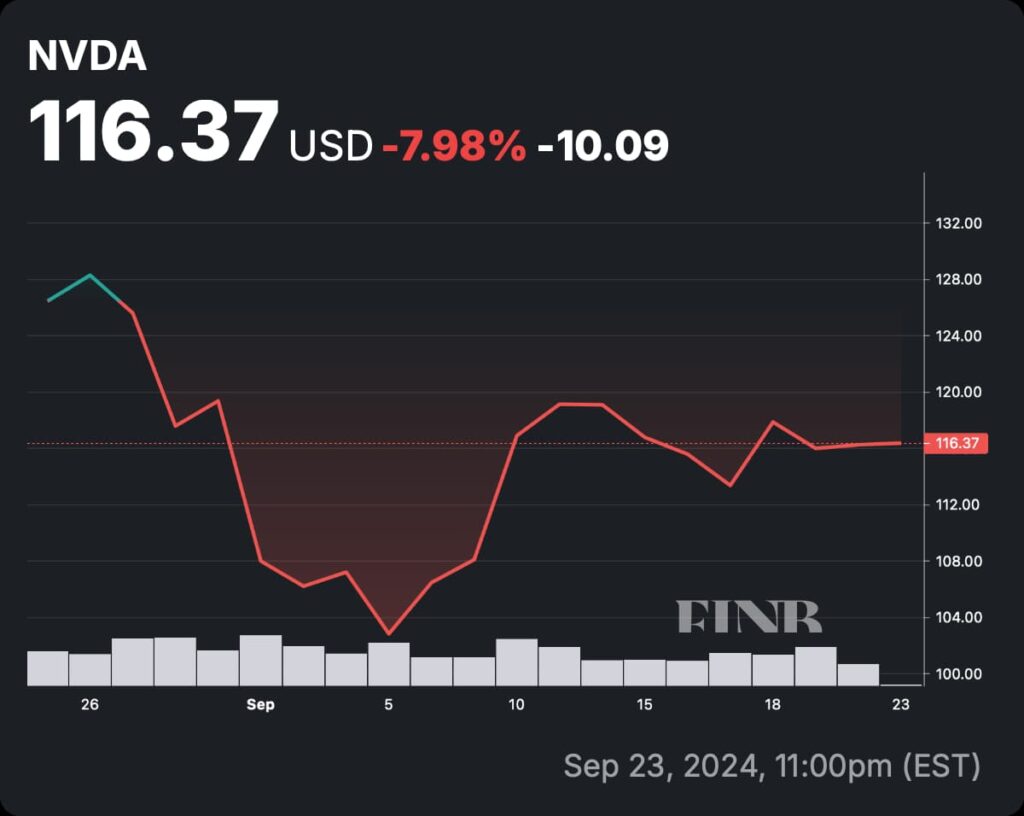
For prospective and current investors, understanding NVIDIA’s price means making an informed judgment about its investment profile, balancing its immense potential with inherent risks.
Growth vs. Value: Where Does NVIDIA Stand?
NVIDIA firmly sits in the growth stock category. Investors buy NVIDIA not primarily for its current dividends or deeply undervalued assets, but for its potential to deliver superior earnings growth and capital appreciation in the future. This implies a higher risk tolerance, as growth stocks can be more volatile and sensitive to changes in market expectations. While some might argue its valuation is stretched, proponents emphasize that its market leadership in transformative technologies justifies the premium. The debate between “growth” and “value” investors often centers on whether NVIDIA’s future growth prospects are adequately priced in, or if there’s still substantial upside left to capture.
Risks and Opportunities for Investors
Investing in NVIDIA comes with both significant opportunities and inherent risks.
Opportunities:
- Continued AI Expansion: The AI revolution is still in its early stages, promising decades of growth for companies providing foundational computing power.
- New Market Penetration: NVIDIA is actively exploring new verticals like autonomous vehicles, robotics, and the industrial metaverse, expanding its total addressable market.
- Software Ecosystem: The strength of its CUDA platform creates a sticky ecosystem, making it difficult for competitors to displace.
- Strong Financials: Consistent revenue growth, healthy margins, and robust free cash flow provide a strong financial foundation.
Risks:
- Intense Competition: Rivals are constantly developing new hardware and software, posing a threat to NVIDIA’s market share.
- Geopolitical Tensions: Restrictions on technology exports or trade disputes, especially with key markets like China, could severely impact revenue.
- Cyclicality: While AI growth provides some insulation, its gaming and professional segments can be subject to market cycles.
- High Valuation: A premium valuation means less room for error; any misstep or slowdown in growth could lead to a significant stock price correction.
- Regulatory Scrutiny: Its dominant market position could attract antitrust investigations.
Analyst Consensus and Future Price Targets
Wall Street analysts continually track NVIDIA, publishing research reports, earnings estimates, and price targets. These targets represent an analyst’s projection of where the stock price might be in the next 12-18 months, based on their financial models and industry outlook. While not guarantees, a strong consensus of “buy” ratings and rising price targets can influence investor sentiment and provide a benchmark for evaluating the company’s future prospects. However, investors should conduct their own due diligence, as analyst opinions can vary widely and are often backward-looking or subject to change.
Navigating Volatility: Strategies for NVIDIA Investors
Given NVIDIA’s prominence and often volatile nature, investors need a thoughtful strategy to navigate its price movements.
Long-Term vs. Short-Term Perspectives
For many, NVIDIA is a classic long-term hold. Investors who believe in the enduring power of AI and NVIDIA’s continued leadership are often willing to ride out short-term fluctuations, focusing on the company’s compounding growth over several years. They view temporary dips as buying opportunities. Short-term traders, on the other hand, might attempt to capitalize on daily or weekly price movements, often using technical analysis. However, given NVIDIA’s propensity for rapid changes driven by news or market sentiment, short-term trading can be highly risky. A long-term perspective generally aligns better with fundamental investing in a company with strong secular growth drivers.
Diversification and Portfolio Management
Even with a strong conviction in NVIDIA, no single stock should dominate an investment portfolio. Diversification across different companies, industries, and asset classes is crucial for managing risk. While NVIDIA might be a core holding for many growth-oriented portfolios, it should be balanced with other investments to mitigate the impact of any specific company or sector downturn. Position sizing, or determining how much capital to allocate to NVIDIA, should align with an investor’s overall risk tolerance and financial goals.
Due Diligence: Beyond the Headlines
The “price” of NVIDIA, especially in an era of rapid information flow, is often influenced by headlines and social media chatter. Savvy investors understand the importance of due diligence – going beyond surface-level news to analyze quarterly earnings reports, investor presentations, transcripts of conference calls, and independent research. Understanding the nuances of its financial statements, competitive positioning, and management’s strategic vision provides a much more robust foundation for investment decisions than simply reacting to price movements.
The Future Outlook: What Lies Ahead for NVIDIA’s Price?
Projecting the future “price” of NVIDIA is inherently challenging, but several factors point towards its continued influence and potential for growth.
Emerging Technologies and New Markets
NVIDIA isn’t resting on its laurels. It’s aggressively investing in next-generation technologies like quantum computing, advanced robotics, digital twins through its Omniverse platform, and expanding its presence in the automotive sector with autonomous driving platforms. Each of these represents a potential multi-billion dollar market opportunity that could fuel future revenue streams and justify continued premium valuations. Success in these emerging areas would demonstrate the company’s ability to not only dominate existing markets but also pioneer new ones, sustaining its growth trajectory.
Sustaining Innovation and Market Leadership
The key to NVIDIA’s long-term price appreciation will be its ability to sustain its pace of innovation and maintain its market leadership. This involves continuous investment in R&D, attracting top engineering talent, and effectively navigating the evolving technological landscape. As AI models become more complex and diverse, the demand for specialized, high-performance computing will only intensify, playing directly into NVIDIA’s strengths. Its ability to iterate on its hardware and software platforms will be paramount in fending off competitors and capturing new opportunities.

The Evolving Global Economic Landscape
Finally, the broader global economic landscape will continue to shape NVIDIA’s price. Factors such as global GDP growth, inflation, supply chain stability, and international trade relations will all impact its operational costs, market access, and ultimately, its financial performance. As a truly global company, NVIDIA is particularly exposed to geopolitical shifts and regulatory environments. Investors must remain attuned to these macro trends, as they can significantly influence the market’s perception of risk and, consequently, NVIDIA’s valuation.
In conclusion, “what’s the price of NVIDIA?” is a question that encapsulates the company’s present valuation, its historical journey, and its potential future. It’s a price driven by groundbreaking innovation, strategic market dominance, robust financial performance, and the collective sentiment of investors navigating a rapidly evolving technological and economic world. For those seeking to understand this powerhouse, the answer lies not just in a single number, but in a comprehensive analysis of its enduring impact on the digital age.
aViewFromTheCave is a participant in the Amazon Services LLC Associates Program, an affiliate advertising program designed to provide a means for sites to earn advertising fees by advertising and linking to Amazon.com. Amazon, the Amazon logo, AmazonSupply, and the AmazonSupply logo are trademarks of Amazon.com, Inc. or its affiliates. As an Amazon Associate we earn affiliate commissions from qualifying purchases.