
Embarking on a cruise can be an exhilarating way to explore multiple destinations, enjoy world-class entertainment, and indulge in diverse culinary experiences, all while only unpacking once. However, the seemingly straightforward price advertised for a cruise often represents just the tip of the iceberg when it comes to the total cost per person. Understanding the multifaceted financial landscape of cruising is crucial for effective budgeting and avoiding unwelcome surprises. From the base fare to a myriad of potential onboard and ashore expenses, the true cost can vary dramatically based on a multitude of factors, making diligent financial planning essential for any prospective cruiser.
The Variable Landscape of Cruise Pricing
The cost of a cruise is far from a fixed figure; it’s a dynamic calculation influenced by a spectrum of choices and market conditions. Recognizing these variables is the first step in estimating your personal expenditure.
Cruise Line and Ship Tier
The choice of cruise line significantly dictates the initial price point.
- Budget-Friendly Lines: Operators like Carnival Cruise Line, MSC Cruises, and sometimes Costa Cruises often offer the lowest entry prices, appealing to families and younger travelers looking for a lively atmosphere and good value. Expect a vibrant, often bustling environment with more à la carte options.
- Premium/Mainstream Lines: Royal Caribbean International, Norwegian Cruise Line, Princess Cruises, and Holland America Line typically occupy the mid-range. These lines offer a balance of amenities, dining options, and itineraries, catering to a broader demographic. Prices here can vary widely depending on the ship’s age and innovations.
- Upper-Premium Lines: Celebrity Cruises and Disney Cruise Line (which commands a premium for its family-focused experience) offer a step up in service, dining quality, and often more sophisticated itineraries.
- Luxury and Expedition Lines: Silversea, Regent Seven Seas Cruises, Seabourn, Viking Ocean Cruises, and expedition lines like Lindblad Expeditions or Hurtigruten are at the top tier. These cruises are often “all-inclusive” with high-end dining, drinks, gratuities, and even some excursions bundled into a significantly higher base fare, offering an ultra-refined and personalized experience.
Itinerary and Duration
The length and destination of your cruise play a pivotal role in its cost.
- Short Getaways: 3-to-5-day cruises, often to the Bahamas or Mexico, are typically the most affordable, ideal for first-timers or quick escapes.
- Standard Week-Long Cruises: 7-day itineraries to the Caribbean, Alaska, Europe, or Bermuda are very popular and offer a good balance of time and destination exploration. Prices for these are a benchmark for many cruise budgets.
- Extended Voyages: Longer cruises of 10 days or more, transoceanic crossings, or exotic itineraries to Asia, South America, or the Galapagos, naturally command higher prices due to increased days at sea and more complex logistics.
Time of Year and Booking Window
Seasonality and how far in advance you book also heavily influence pricing.
- Peak Seasons: Holidays (Christmas, New Year’s, Easter), summer months, and spring break periods see the highest demand and, consequently, the highest prices. Alaska cruises are most expensive in July and August.
- Off-Peak/Shoulder Seasons: Traveling during spring or fall (outside of major holidays) for Caribbean cruises, or early/late season for Alaska, can yield substantial savings. European cruises are often cheaper in the shoulder seasons of April-May and September-October.
- Booking in Advance: Generally, booking 6-12 months out for popular itineraries and cabin types secures better rates and choice.
- Last-Minute Deals: While rare for premium cabins, occasionally last-minute discounts surface for less popular sailings or cabin categories, though flexibility is key.
Cabin Category
Your choice of accommodation onboard is one of the biggest price differentiators.
- Inside Cabins: Located in the interior of the ship with no window, these are the most economical option.
- Oceanview Cabins: Feature a porthole or window, providing natural light and a view, at a moderate price increase.
- Balcony Cabins: Offer a private outdoor space, allowing fresh air and panoramic views. These are often the most popular and represent a significant jump in price over oceanview.
- Suites: Ranging from mini-suites to lavish multi-room accommodations, suites offer more space, premium amenities, and often exclusive perks (e.g., concierge service, priority boarding). Their cost can be several times that of an inside cabin.
Deconstructing the Base Fare: What’s Included (and What’s Not)
The initial price quoted for a cruise, the “base fare,” often covers essential services but rarely encompasses the entirety of your potential spending. A clear understanding of inclusions and, more importantly, exclusions, is vital for accurate financial planning.
Inclusions
Typically, the base fare includes:
- Accommodation: Your chosen cabin category.
- Most Meals: Access to the main dining rooms, casual buffet restaurants, and often some grab-and-go eateries (e.g., pizza, burgers).
- Basic Entertainment: Live shows, comedy clubs, access to pools, hot tubs, fitness centers (excluding specialty classes), and some onboard activities.
- Transportation: Travel between ports of call.
Exclusions (The Hidden Costs)
Many significant expenses are not covered by the base fare and must be factored into your budget.
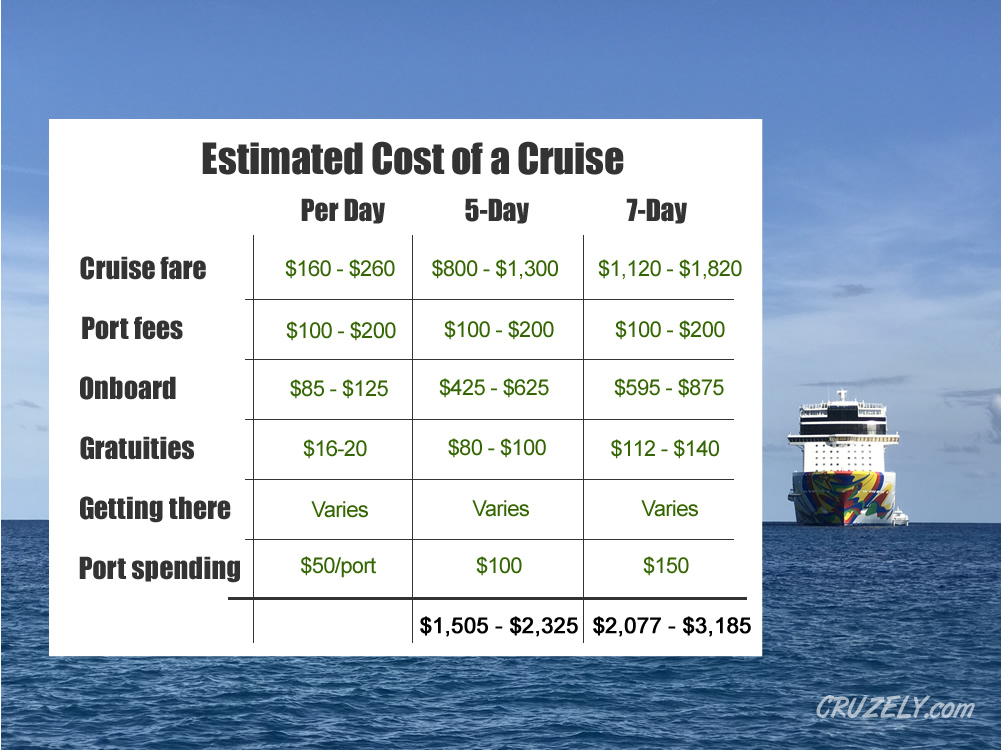
- Port Fees and Taxes: These are mandatory government charges and charges levied by ports of call. They are usually added to your fare at the time of booking and can range from $100 to $300+ per person, depending on the itinerary.
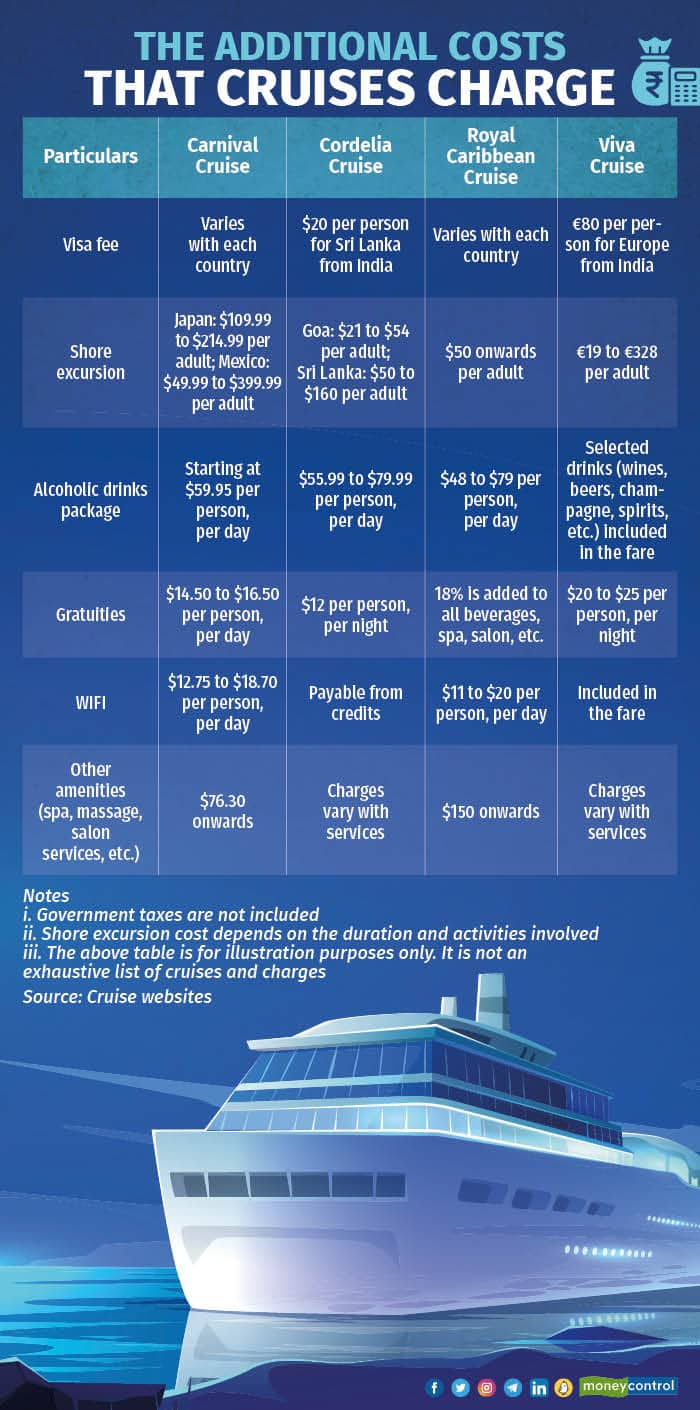
- Gratuities/Service Charges: An industry standard, these are daily charges for the crew’s service (dining staff, cabin stewards, etc.). They typically range from $14-$17 per person, per day, and can be prepaid or automatically added to your onboard account.
- Drinks: Water, basic coffee, tea, and some juices in the buffet are usually free. However, sodas, alcoholic beverages, specialty coffees, and bottled water are almost always extra. Drink packages can be purchased, often costing $60-$100+ per person, per day, plus an automatic gratuity on the package itself.
- Specialty Dining: Most ships offer premium restaurants with unique cuisines (e.g., steakhouses, Italian, Asian fusion) that incur an additional per-person charge or à la carte pricing. Costs can range from $25-$75+ per person, per meal.
- Shore Excursions: Guided tours, activities, and transportation in ports of call are extra. These can range from $30 for a basic bus tour to hundreds of dollars for more elaborate adventures (e.g., helicopter tours, scuba diving).
- Wi-Fi and Internet Packages: Connectivity at sea is satellite-based and often expensive. Packages can range from $15-$30+ per day, or hundreds for unlimited access over a week.
- Spa Services and Fitness Classes: Massages, facials, hair salon services, and specialized fitness classes (yoga, Pilates) come with additional charges.
- Gambling and Shopping: The onboard casino, duty-free shops, and boutiques are opportunities for discretionary spending.
- Travel Insurance: Highly recommended for financial protection against trip cancellations, medical emergencies, or lost luggage. Costs vary based on age, trip length, and coverage level.
- Airfare and Pre/Post-Cruise Accommodation: The cost of getting to and from the embarkation/disembarkation port, and any necessary hotel stays before or after the cruise, can be substantial.
- Onboard Photography: Professional photos taken during your cruise are available for purchase.
- Laundry Services: Self-service laundromats (if available) may require a fee, and full-service laundry/dry cleaning is an additional charge.
Budgeting Strategies for Cruise Travelers
Effective financial planning is paramount to enjoying your cruise without monetary stress. By adopting strategic approaches, you can control costs and maximize value.
Research and Compare Thoroughly
Don’t just jump at the first deal. Use reputable online travel agencies, cruise line websites, and travel advisors to compare prices, itineraries, and inclusions across different lines and sailings. Read reviews, particularly those detailing budget implications and hidden costs.
Account for All Potential Costs
Create a comprehensive budget spreadsheet that goes beyond the base fare. Include estimated costs for port fees, gratuities, drinks, excursions, specialty dining, Wi-Fi, travel to/from the port, and travel insurance. This holistic view prevents financial shocks.
Consider All-Inclusive Options (and their Caveats)
Some luxury cruise lines truly are all-inclusive (drinks, gratuities, some excursions, Wi-Fi). While their base fares are higher, they offer excellent value for those who plan to utilize many amenities. Mid-tier lines often run “free at sea” promotions which bundle perks like drink packages or specialty dining; always calculate if these genuinely save you money based on your expected usage.
Set a Daily Onboard Spending Limit
Once onboard, it’s easy to lose track of expenses. Decide on a daily budget for discretionary spending (drinks, souvenirs, casino) and regularly check your onboard account via the ship’s app or guest services. Utilize any onboard credit strategically to offset these costs.
Optimize Shore Excursions
Cruise line excursions are convenient but often pricier. Research independent local tour operators for potentially more affordable and personalized options. For some ports, you can easily explore independently via public transport or walking, eliminating tour costs entirely. Prioritize excursions that align with your interests and budget, and don’t feel compelled to book one in every port.
Manage Drink Costs
If you don’t anticipate consuming many alcoholic or specialty drinks daily, a drink package might not be cost-effective. Instead, purchase drinks à la carte, take advantage of happy hour specials, or bring allowed beverages onboard (some lines permit a limited amount of wine or soda).
Leverage Loyalty Programs and Promotions
If you’ve cruised with a particular line before, inquire about past guest discounts or loyalty perks. Sign up for email newsletters to receive notifications about sales and promotions. Consider using a travel credit card that offers points for travel purchases or specific cruise line benefits.
Travel Insurance is Non-Negotiable
While an added expense, travel insurance provides critical financial protection. It can cover non-refundable deposits if you need to cancel, medical emergencies at sea or in foreign ports (which are not covered by most standard health insurance plans), lost luggage, and trip interruptions.
Real-World Examples: A Cost Spectrum
To illustrate the range, let’s consider hypothetical per-person costs for different cruise experiences. These figures are illustrative and can fluctuate based on specific dates, promotions, and individual spending habits.
The Budget-Friendly Getaway
- Scenario: 3-4 day Caribbean cruise on a mainstream line (e.g., Carnival, MSC), inside cabin, off-peak season.
- Base Fare (per person): $200 – $400
- Port Fees & Taxes: $80 – $120
- Gratuities: $45 – $60
- Estimated Onboard Spending (drinks à la carte, one basic excursion): $150 – $250
- Total Per Person (excluding airfare/pre-cruise hotels): $475 – $830
The Mid-Range Week-Long Adventure
- Scenario: 7-day Alaska or European cruise on a premium line (e.g., Royal Caribbean, Princess), balcony cabin, shoulder season.
- Base Fare (per person): $1,000 – $2,000
- Port Fees & Taxes: $150 – $250
- Gratuities: $100 – $120
- Estimated Onboard Spending (drink package, one specialty dinner, 2-3 mid-tier excursions, Wi-Fi for 7 days): $800 – $1,500
- Total Per Person (excluding airfare/pre-cruise hotels): $2,050 – $3,870
The Luxury Expedition
- Scenario: 10+ day luxury or expedition cruise (e.g., Silversea, Viking), suite, often all-inclusive.
- Base Fare (per person): $5,000 – $15,000+ (often includes drinks, gratuities, some excursions, Wi-Fi)
- Port Fees & Taxes: (Often included or minimal additional cost)
- Gratuities: (Often included)
- Estimated Onboard Spending (minimal, for unique specialty items or extra premium excursions): $200 – $800
- Total Per Person (excluding airfare/pre-cruise hotels): $5,200 – $15,800+
These examples highlight the vast difference in cruise costs. A budget-conscious traveler focusing on the essentials can experience a short cruise for under $1,000 per person, while those seeking an opulent or extensive journey could spend well over $10,000.
Maximizing Value and Avoiding Overspending
Cruising offers incredible value for travel, but smart choices are key to keeping costs in check without sacrificing enjoyment.
Book Early for Best Selection/Prices
For popular itineraries, specific cabin types (especially suites or those in desirable locations), and peak travel times, booking 9-12 months in advance often secures better prices and ensures you get your preferred choice. Waiting too long risks higher prices or limited availability.
Consider Repositioning Cruises
These one-way voyages occur when ships move between seasonal cruising regions (e.g., Caribbean to Europe in spring). They often offer significantly lower per-day rates but require booking one-way airfare, which can sometimes be more expensive. They are ideal for travelers with flexibility and a love for sea days.
Pack Smart to Avoid Onboard Purchases
Bring essentials like sunscreen, over-the-counter medications, toiletries, and any specific clothing items you might need. Onboard shops have limited selections and higher prices for convenience items.
Utilize Onboard Credit Strategically
Onboard credit (OBC) is essentially free money to spend on the ship. It’s often given as a booking incentive or for loyalty. Use it for higher-cost items like specialty dining, shore excursions, spa treatments, or drink packages to reduce out-of-pocket expenses. Prioritize using it before resorting to your own cash or credit card.
Don’t Be Afraid to DIY in Port
While cruise line excursions offer convenience, many ports are perfectly safe and enjoyable to explore independently. Research public transportation options, local walking tours, or simply stroll through town. This can save significant money and offer a more authentic experience.
By carefully considering these factors and implementing strategic budgeting, you can determine how much a cruise will truly cost per person and ensure your voyage is both memorable and financially responsible.
aViewFromTheCave is a participant in the Amazon Services LLC Associates Program, an affiliate advertising program designed to provide a means for sites to earn advertising fees by advertising and linking to Amazon.com. Amazon, the Amazon logo, AmazonSupply, and the AmazonSupply logo are trademarks of Amazon.com, Inc. or its affiliates. As an Amazon Associate we earn affiliate commissions from qualifying purchases.