
The story of Microsoft, a name synonymous with personal computing and digital innovation, begins not in the bustling tech hubs we associate with Silicon Valley, but in a rather unassuming city that served as the unlikely cradle for one of the world’s most influential technology companies. The “where” of Microsoft’s creation is more than just a geographical point; it represents the nascent conditions, the challenging technical problems, and the visionary spirit that laid the groundwork for a technological revolution. This article delves into the precise locations and technological milestones that defined Microsoft’s formative years, strictly focusing on the technical advancements and strategic decisions that propelled its ascent.
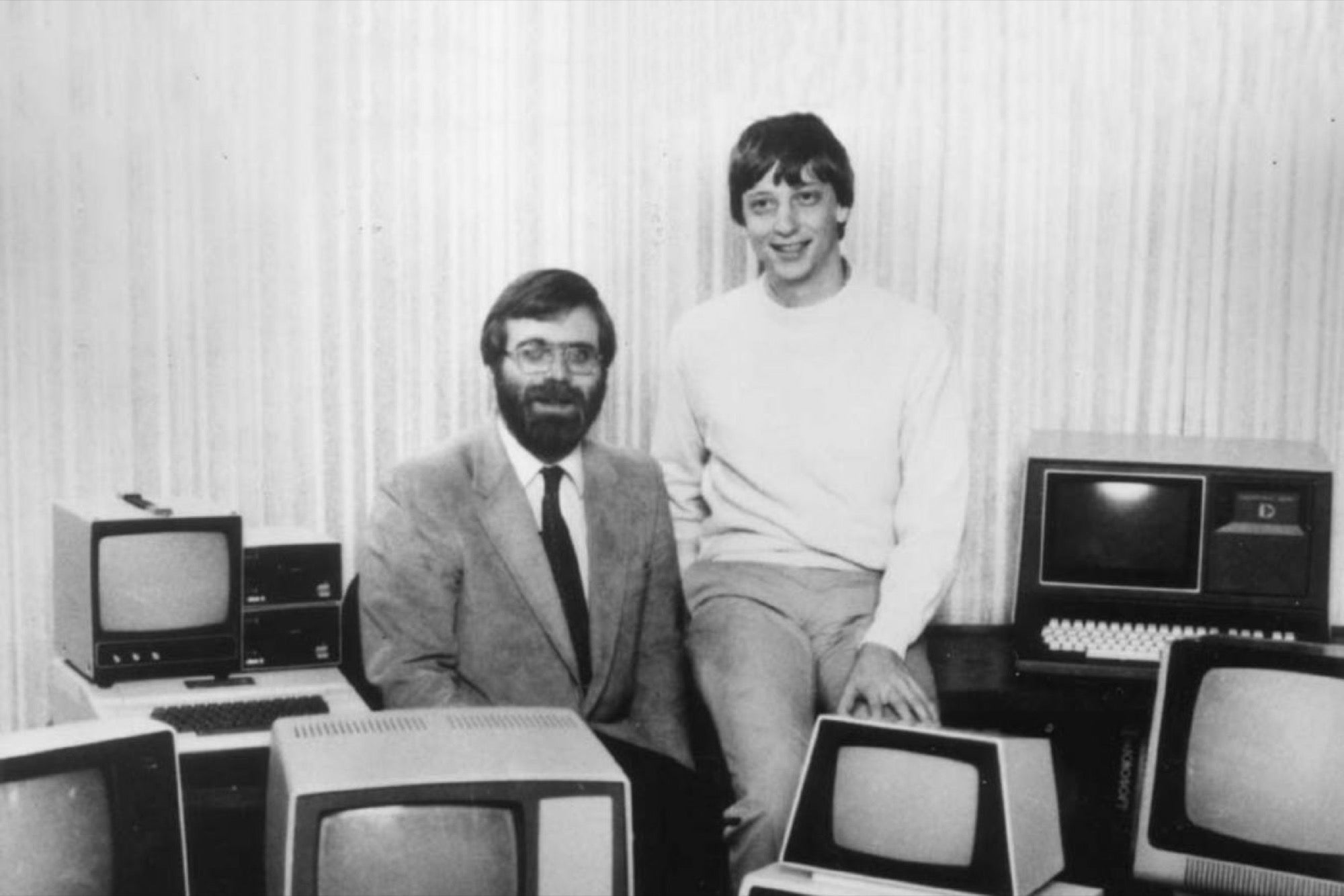
The Unlikely Cradle: Albuquerque, New Mexico (1975-1979)
Microsoft’s journey commenced in Albuquerque, New Mexico, a location chosen not for its existing tech infrastructure, which was virtually non-existent at the time, but out of convenience and necessity tied to a crucial early partnership. This desert city became the intense, focused environment where two young visionaries would embark on a mission to bring computing power to the masses.
The Spark: Paul Allen, Bill Gates, and the Altair 8800
The true genesis of Microsoft can be traced back to January 1975, when Paul Allen, then working for Honeywell, stumbled upon the cover of Popular Electronics magazine featuring the Altair 8800 microcomputer. Developed by Micro Instrumentation and Telemetry Systems (MITS) in Albuquerque, the Altair was one of the first commercially successful personal computers, albeit in kit form. Allen, recognizing its potential, immediately shared the magazine with his childhood friend, Bill Gates, then a Harvard student.
Their shared passion for computing, nurtured through countless hours spent programming on various early computer systems, instantly identified a critical technological void: the Altair, powerful as it was for its time, lacked a user-friendly programming language. Operating in raw machine code was cumbersome and inaccessible to the average enthusiast. This realization sparked an audacious idea: to develop a BASIC interpreter for the Altair 8800. The technical challenge was immense. The Altair had only 256 bytes (not kilobytes, but bytes!) of memory in its base configuration, making the task of fitting a complete programming language interpreter into such limited space a formidable feat of software engineering and optimization. This was not merely about writing code; it was about inventing highly efficient coding practices and pioneering memory management techniques for microcomputers.
Crafting Microsoft BASIC: A Foundational Technological Triumph
Responding to the challenge, Gates and Allen contacted MITS, claiming to have a BASIC interpreter for the Altair, despite not having written a single line of code yet. This bluff provided the necessary deadline and motivation. For two intense months, Allen and Gates, working tirelessly in Harvard’s Aiken Computation Lab and later a small office in Albuquerque, poured their energies into developing the interpreter. Allen, particularly skilled in reverse engineering and low-level programming, created a simulator for the Altair on a larger DEC PDP-10 minicomputer, allowing them to develop and debug their BASIC code without direct access to the Altair hardware initially. Gates focused on the intricate logic and functionality of the BASIC language itself.
The result was Altair BASIC, successfully demonstrated to MITS in March 1975. It was a remarkable technical achievement: a powerful and compact version of the BASIC programming language that could run effectively on the Altair’s limited resources. This software allowed hobbyists and early adopters to program their Altair computers without needing deep knowledge of assembly language, effectively democratizing access to computing power. Altair BASIC became Microsoft’s first product and revenue stream, directly leading to the formal establishment of “Micro-Soft” (hyphen later dropped) in Albuquerque on April 4, 1975. The very act of creating this interpreter established a core technical competency for Microsoft: developing robust, efficient software tailored for specific hardware platforms, a skill that would define much of its early success.
Early Operations: A Blueprint for Software Development
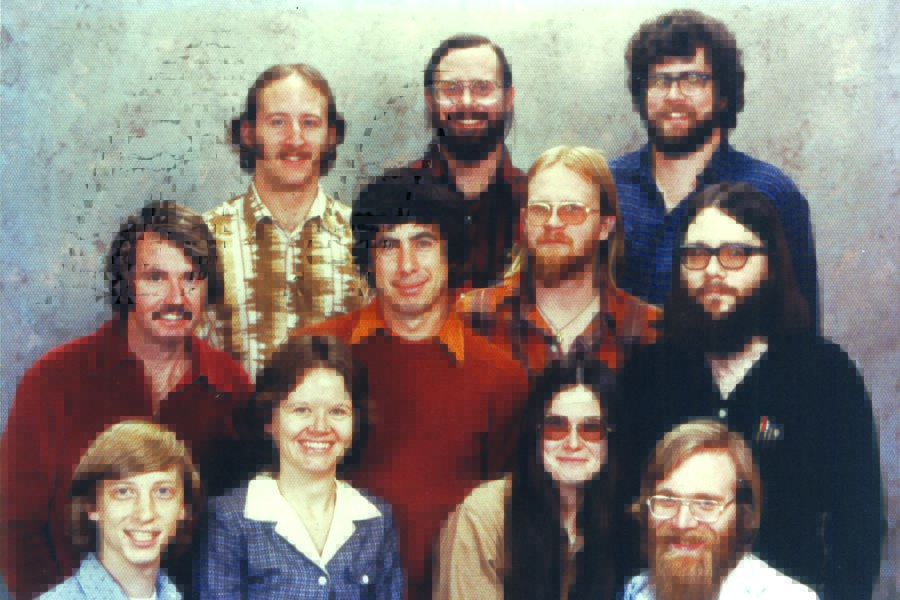
The initial Microsoft office in Albuquerque was a small, intense, and highly collaborative environment. It quickly grew from Gates and Allen to include a handful of brilliant, dedicated programmers like Marc McDonald, Ric Weiland, and Steve Wood. These early employees worked directly on refining Altair BASIC and porting it to other microprocessors and computer platforms. The technical focus was on optimization, portability, and creating development tools that could efficiently generate and test software for diverse hardware architectures.
This period saw Microsoft establish a business model centered on licensing software, a relatively novel concept at the time when hardware manufacturers often bundled proprietary software. This strategy allowed Microsoft’s BASIC to become the dominant standard across numerous early microcomputers, including those from Apple, Commodore, and RadioShack. The technical implications were profound: by standardizing the programming language layer, Microsoft was inadvertently fostering an ecosystem for software development, enabling a wider array of applications to be built for these disparate machines. The “where” in Albuquerque, though geographically isolated, became a crucible for software engineering best practices and a testing ground for a revolutionary business model that would shape the entire software industry.
The Strategic Shift: Microsoft’s Move to the Pacific Northwest (1979 onwards)
While Albuquerque provided the initial spark and a focused environment for early development, its limitations soon became apparent as Microsoft’ began to grow and its ambitions expanded beyond just interpreters. The quest for greater talent, strategic partnerships, and a more robust ecosystem necessitated a significant relocation. In January 1979, Microsoft moved its operations from Albuquerque to Bellevue, Washington, a suburb of Seattle, marking a pivotal moment in its journey from a small startup to a global technology leader.
Proximity to Talent and Opportunity: A Growth Imperative
The decision to move to Bellevue was primarily driven by strategic considerations related to talent acquisition and ecosystem development. Both Gates and Allen had grown up in the Seattle area, fostering a natural inclination to return. More importantly, the Pacific Northwest offered a burgeoning pool of skilled engineers and computer science graduates from universities like the University of Washington. Unlike Albuquerque, which had a limited tech talent base, Seattle provided access to individuals with the expertise necessary to tackle more complex software projects and scale operations.
This relocation was a critical technical move. It allowed Microsoft to transition from a small group focused on interpreters to a larger organization capable of developing operating systems, application software, and a broader range of development tools. The proximity to a larger talent pool enabled the company to hire specialized engineers, fostering deeper expertise in areas like compiler design, operating system kernels, and user interface development, which would become crucial in the coming years. The move was not just geographical; it was an investment in intellectual capital, positioning Microsoft for its next phase of technological expansion.
The IBM PC Deal: A Catalyst for OS Dominance
The move to the Pacific Northwest serendipitously coincided with one of the most significant technological partnerships in computing history: the deal with IBM for their forthcoming Personal Computer (PC). In 1980, IBM approached Microsoft, initially seeking a BASIC interpreter and other programming languages for their new PC. However, the crucial element of the deal evolved into IBM needing an operating system. Famously, Microsoft did not have an OS of its own readily available.
Under immense pressure and a tight deadline, Microsoft acquired 86-DOS (later QDOS for “Quick and Dirty Operating System”) from Seattle Computer Products (SCP) for $50,000. This raw, command-line operating system, developed by Tim Paterson, was quickly refined and rebranded as MS-DOS (Microsoft Disk Operating System). Microsoft then licensed MS-DOS to IBM, which subsequently released it as PC-DOS with their revolutionary IBM PC in August 1981. This was a technological masterstroke. While MS-DOS was initially rudimentary, its strategic importance was unparalleled. It provided the foundational software layer for the rapidly expanding personal computer market.
Microsoft retained the right to license MS-DOS to other hardware manufacturers who began building IBM PC “clones.” This strategy led to MS-DOS becoming the de facto standard operating system for the vast majority of personal computers, propelling Microsoft from a respected language vendor to a dominant force in the nascent software industry. The technical implications were vast: MS-DOS defined the basic architecture, file system, and command-line interface that would underpin personal computing for years, creating a massive installed base for future Microsoft software.
Pioneering Graphical User Interfaces and Applications
With the success of MS-DOS, Microsoft’s focus quickly shifted towards enhancing the user experience beyond the command line. Inspired by early graphical user interfaces (GUIs) developed at Xerox PARC and implemented by Apple on the Lisa and Macintosh, Microsoft embarked on its own ambitious project: to develop a graphical operating environment that could run on top of MS-DOS. This project, codenamed “Interface Manager” and eventually released as “Windows” in 1985, represented a monumental technical undertaking.

Developing Windows involved overcoming significant hardware limitations of the time, including limited memory, slow processors, and low-resolution displays. Microsoft engineers had to design innovative ways to manage system resources, render graphics efficiently, and provide a multi-tasking environment that was stable enough for everyday use. Early versions of Windows were, by modern standards, primitive, but they laid the technical foundation for the GUI revolution.
Concurrently, Microsoft was also developing a suite of application software designed to run on these new graphical environments, as well as on MS-DOS and even Apple Macintosh computers. Products like Microsoft Word, Microsoft Excel, and PowerPoint (acquired later) began to take shape. The technical challenge here was not just functionality but interoperability, ease of use, and robust performance across different platforms. The development of these applications, particularly their eventual integration into the “Office” suite, marked Microsoft’s foray into comprehensive productivity solutions, further solidifying its technical prowess in diverse software domains.
Architecting the Digital World: Foundational Technologies and Ecosystems
From its initial base in the Pacific Northwest, Microsoft systematically built out its technological offerings, transforming from a company known for an operating system and a few applications into an architect of the entire digital world. This era saw the relentless evolution of its core products and the strategic development of developer tools that would fuel a global software ecosystem.
From MS-DOS to Windows: Operating System Evolution
The evolution from the command-line interface of MS-DOS to the rich graphical environment of Windows was a testament to continuous technological innovation. Each subsequent version of Windows, from Windows 3.0 (which brought Windows to mainstream popularity) to Windows 95, NT, XP, and beyond, represented significant leaps in computing capability.
Key technical advancements included:
- Memory Management: Moving from segmented memory architectures to protected mode and virtual memory, allowing applications to access more memory and preventing crashes from affecting the entire system.
- Multitasking: Evolving from cooperative multitasking to pre-emptive multitasking, improving system responsiveness and stability.
- Hardware Abstraction: Developing robust device driver models that allowed Windows to run on a vast array of hardware configurations, a critical factor in its widespread adoption.
- Networking and Internet Integration: Incorporating networking protocols (like TCP/IP) directly into the operating system and later integrating web browsers, positioning Windows at the center of the internet revolution.
These innovations made personal computers more powerful, stable, and user-friendly, democratizing access to complex computing tasks and enabling an explosion of software development atop the Windows platform.
The Microsoft Office Suite: Redefining Productivity Software
While Windows provided the platform, the Microsoft Office suite of applications provided the essential tools that millions used daily. Word, Excel, PowerPoint, and Outlook became the de facto standard for professional and personal productivity. The technical achievement here was not just in individual application brilliance but in their integration and interoperability.
Microsoft invested heavily in common user interfaces, shared code libraries, and object linking and embedding (OLE) technologies, which allowed components from one application to be embedded and edited within another. This seamless integration revolutionized workflow and became a powerful selling point. The suite itself became an ecosystem, with features like macro languages (VBA) empowering users to automate tasks and extend functionality, fostering a community of power users and developers who built custom solutions on top of Office applications. This comprehensive approach to productivity software cemented Microsoft’s position as a software powerhouse.
Empowering Developers: Programming Languages and Tools
Microsoft understood early on that a thriving ecosystem depended on empowering developers. This led to a sustained focus on creating and supporting a wide range of programming languages and development tools. From the ubiquitous C and C++ compilers to the revolutionary Visual Basic, Microsoft provided the means for millions to create software.
Visual Basic, launched in 1991, democratized application development by providing a visual, event-driven programming environment that allowed developers to build Windows applications much faster than with traditional languages. This fostered an explosion of custom business applications and utilities. Later, the introduction of the .NET Framework and C# in the early 2000s marked another significant technical pivot. .NET provided a unified platform for building a wide array of applications (desktop, web, mobile, cloud) with a modern, object-oriented language (C#) and a powerful runtime environment (CLR). Tools like Visual Studio became the industry standard integrated development environment (IDE), offering comprehensive features for coding, debugging, and deployment across multiple platforms and languages. By providing these robust and accessible tools, Microsoft ensured a continuous stream of innovation from third-party developers, further solidifying the reach and utility of its platforms.
The Enduring Technological Legacy and Future Frontiers
From its humble beginnings in an Albuquerque garage (or rather, a small office), Microsoft’s technological journey has been one of continuous evolution, adaptation, and an unwavering commitment to empowering users through software. The “where” of its creation tells only part of the story; the “how” and “what” in terms of technological development reveal its lasting impact.
Democratizing Access to Computing Power
Microsoft’s most profound technological legacy is arguably its role in democratizing access to computing. By making operating systems and productivity software affordable, relatively easy to use, and compatible with a vast array of hardware, Microsoft moved computing from specialized labs and large corporations into homes, small businesses, and classrooms worldwide. This widespread adoption fueled digital literacy, created new industries, and fundamentally reshaped how people work, learn, and communicate. The technical decisions made in those early days, particularly the licensing model for MS-DOS and Windows, directly led to the ubiquity of personal computers.
Cloud Computing and AI: Microsoft Azure’s Transformative Role
In the 21st century, Microsoft has skillfully navigated the shift from the desktop-centric world to the era of cloud computing and artificial intelligence. Microsoft Azure, launched in 2010, represents a monumental technological pivot and a reinvention of the company’s core offerings. Azure is a comprehensive suite of cloud services that provides computing power, storage, networking, databases, analytics, machine learning, and AI capabilities on a massive, global scale.
The development of Azure involved building a colossal global infrastructure of data centers, designing sophisticated virtualization technologies, developing distributed systems for massive data processing, and integrating cutting-edge AI services. Azure isn’t just about hosting applications; it’s about providing the underlying technological fabric for the modern digital economy. It empowers startups, enterprises, and governments to innovate without the burden of managing their own physical infrastructure. Microsoft’s deep investments in AI research and development, particularly in areas like natural language processing, computer vision, and machine learning, are now seamlessly integrated into Azure and its other products, positioning the company at the forefront of the next technological wave.
The Continuum of Innovation: From Bits to Billions
The journey from a two-person team writing a BASIC interpreter in Albuquerque to a global technology behemoth powering everything from cloud infrastructure to intelligent edge devices is a remarkable testament to sustained innovation. The geographical locations, from New Mexico to Washington, provided the changing backdrops for this evolution, but the consistent thread has been Microsoft’s focus on solving complex technical problems and creating software that empowers individuals and organizations.
The spirit of ingenuity that allowed a rudimentary BASIC interpreter to fit into 4KB of memory is the same spirit that now drives Azure’s global scale or the intricate algorithms powering OpenAI’s advancements through Microsoft’s partnership. The “where” Microsoft was created provided the initial conditions, but it is the continuous, relentless pursuit of technological excellence and its commitment to developers and users that has defined its enduring legacy and charted its course into the future.
aViewFromTheCave is a participant in the Amazon Services LLC Associates Program, an affiliate advertising program designed to provide a means for sites to earn advertising fees by advertising and linking to Amazon.com. Amazon, the Amazon logo, AmazonSupply, and the AmazonSupply logo are trademarks of Amazon.com, Inc. or its affiliates. As an Amazon Associate we earn affiliate commissions from qualifying purchases.