
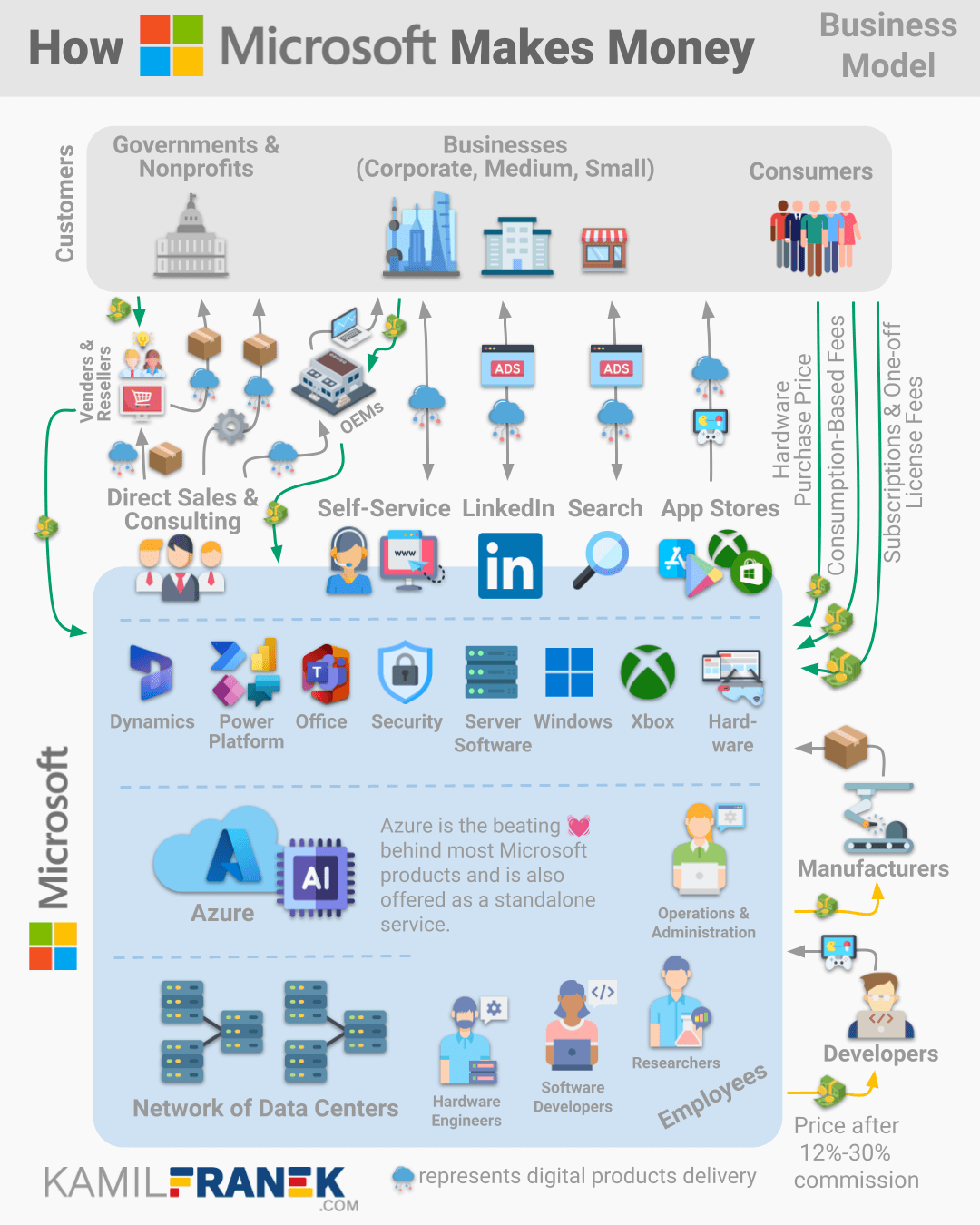
Microsoft Corporation stands as an enduring titan in the technological landscape, a name almost universally recognized, yet the sheer breadth and depth of its operations often surprise. Far from being solely an operating system vendor, Microsoft has evolved into a multifaceted global technology company whose products and services permeate nearly every aspect of personal and professional digital life. From the foundational software that powers billions of computers to the advanced cloud infrastructure supporting enterprise giants, and from the immersive entertainment experiences of gaming consoles to the forefront of artificial intelligence research, Microsoft’s reach is expansive and its impact profound. This exploration delves into the intricate web of technologies and services that define what Microsoft Corporation does today, highlighting its pivotal role in shaping the digital world.
Powering the Personal & Professional Digital Experience
At its core, Microsoft has built its legacy on empowering individuals and organizations with essential tools. Its suite of productivity software and pervasive operating systems remain foundational pillars, constantly evolving to meet contemporary demands. Beyond software, Microsoft has also made significant strides in hardware, blending form and function to create compelling devices that enhance user interaction with its vast ecosystem.
The Enduring Legacy of Windows and Office
The narrative of Microsoft Corporation is inextricably linked to Windows, its flagship operating system that has defined personal computing for decades. What started as a graphical interface for MS-DOS blossomed into the dominant OS, providing the fundamental platform for software applications, hardware peripherals, and internet access for billions worldwide. Each iteration of Windows, from the ubiquitous Windows XP to the modern Windows 11, has introduced significant technological advancements, improving user interface, security, performance, and compatibility, cementing its position as the bedrock of digital work and play.
Complementing Windows is the Microsoft Office suite, an unparalleled collection of productivity applications that has become the de facto standard in professional and academic environments. Word, Excel, and PowerPoint revolutionized document creation, data analysis, and presentations, respectively. Outlook transformed email and calendar management. In its journey to Microsoft 365, Office has transitioned into a cloud-powered subscription service, integrating collaboration features, cloud storage via OneDrive, and robust security, ensuring users always have access to the latest tools and can work seamlessly across devices and locations. This suite isn’t just software; it’s a vital technological ecosystem that underpins global productivity.
Hardware Innovations: From Surface to Xbox
While famous for software, Microsoft has demonstrated remarkable innovation in hardware. The Surface line represents Microsoft’s vision for premium computing devices, seamlessly integrating hardware and software. Beginning with the Surface RT and Pro, the family has expanded to include sleek laptops (Surface Laptop), versatile 2-in-1 devices (Surface Pro), powerful all-in-one desktops (Surface Studio), and even dual-screen phones (Surface Duo). These devices are engineered to showcase the full potential of Windows and Microsoft 365, offering touch capabilities, pen input, and high-performance specifications tailored for creative professionals, students, and business users. They embody Microsoft’s commitment to designing holistic experiences where hardware and software are harmonized.
On the entertainment front, the Xbox gaming console stands as a testament to Microsoft’s technological prowess in interactive entertainment. Since its debut, Xbox has challenged industry norms, offering cutting-edge graphics, powerful processing capabilities, and a robust online multiplayer experience through Xbox Live. The evolution through Xbox 360, Xbox One, and the current Xbox Series X/S has seen continuous innovation in console design, gaming technology (like ray tracing and ultra-fast SSDs), and the development of services like Xbox Game Pass, which offers a vast library of games on-demand. Xbox represents a significant pillar in Microsoft’s strategy to deliver high-quality, immersive digital experiences to consumers globally.
Bridging Communication with Microsoft Teams
The shift towards remote and hybrid work models accelerated the prominence of Microsoft Teams, a technological marvel that has become indispensable for modern communication and collaboration. More than just a video conferencing tool, Teams is an integrated platform combining persistent workplace chat, video meetings, file storage (integrated with SharePoint and OneDrive), and application integration. Its advanced features include live captions, background effects, breakout rooms, and sophisticated security protocols, enabling seamless communication and project management for organizations of all sizes. Teams’ rapid evolution and adoption underscore Microsoft’s agility in developing and deploying critical technology solutions that address contemporary business needs, connecting dispersed teams and fostering a collaborative digital environment.
Architecting the Cloud and Enterprise Solutions
Beyond the individual user, Microsoft is a dominant force in enterprise technology, providing the foundational cloud infrastructure and business applications that power countless companies worldwide. This segment represents a significant technological undertaking, requiring massive investment in data centers, network infrastructure, and advanced software development.
Azure: The Foundation of Modern Cloud Computing
Microsoft Azure is a cornerstone of Microsoft’s current strategy and a technological marvel in itself. It is one of the world’s leading cloud computing platforms, offering a comprehensive suite of services for businesses. Azure provides Infrastructure as a Service (IaaS), Platform as a Service (PaaS), and Software as a Service (SaaS), allowing companies to host websites and applications, store vast amounts of data, run virtual machines, and leverage powerful computing resources without managing physical hardware. Its extensive range of services includes computing, networking, storage, databases, analytics, machine learning, and Internet of Things (IoT) solutions. Azure’s global network of data centers provides reliability, scalability, and security, making it the backbone for many Fortune 500 companies and startups alike, driving digital transformation through accessible, on-demand computing power.
Dynamics 365: Streamlining Business Operations
To complement its cloud infrastructure, Microsoft offers Dynamics 365, an integrated suite of intelligent business applications designed to streamline core operational processes. Dynamics 365 combines traditional Enterprise Resource Planning (ERP) and Customer Relationship Management (CRM) functionalities into a unified, cloud-based platform. This includes modules for sales automation, customer service, field service, finance, supply chain management, human resources, and marketing. Leveraging Azure’s capabilities and infused with artificial intelligence, Dynamics 365 provides businesses with actionable insights, automates workflows, and helps improve decision-making, enabling organizations to connect their operations, understand their customers better, and drive efficiency across various departments.
Empowering Developers and IT Professionals
Microsoft has historically been a strong advocate for developers and IT professionals, providing a rich ecosystem of tools and platforms. Visual Studio, a comprehensive Integrated Development Environment (IDE), remains a preferred choice for millions of developers building applications across various platforms, from web and mobile to desktop and cloud. The .NET framework and its open-source evolution, .NET Core, offer a powerful and versatile platform for creating diverse applications.
For IT professionals, Microsoft provides essential management and security tools. Solutions like Microsoft Intune and System Center enable organizations to manage and secure devices, applications, and data across their enterprise environments. These technologies ensure operational efficiency, enforce compliance, and protect against cyber threats, underscoring Microsoft’s commitment to supporting the entire lifecycle of enterprise technology.
Pioneering the Future: AI, Mixed Reality, and Cybersecurity
Looking ahead, Microsoft is not just maintaining its current technological leadership but actively investing in and shaping the future of computing. Its advancements in artificial intelligence, mixed reality, and robust cybersecurity solutions are testaments to its innovative spirit and long-term vision.
Advancing Artificial Intelligence Across the Board
Microsoft is at the forefront of Artificial Intelligence (AI) research and development, integrating AI capabilities throughout its product portfolio and offering specialized AI services. This includes sophisticated machine learning models, natural language processing, computer vision, and speech recognition. AI powers features across Microsoft 365 (e.g., smart suggestions in Word, Excel analysis), enhances search capabilities in Bing, and underpins the intelligent services offered through Azure AI (e.g., Cognitive Services, Azure Machine Learning). The company has also made significant investments in large language models and generative AI, exemplified by its partnership with OpenAI and the integration of AI capabilities like Copilot into its productivity suite, transforming how users interact with software and data. Microsoft’s commitment extends to ethical AI development, striving to ensure AI technologies are responsible and beneficial to society.
Exploring Mixed Reality with HoloLens
Microsoft’s foray into Mixed Reality (MR) is epitomized by its groundbreaking HoloLens platform. Unlike virtual reality, HoloLens blends digital content with the real world, allowing users to interact with holograms as if they were physical objects. This cutting-edge technology is not primarily aimed at consumers but at enterprise applications, transforming industries such as manufacturing, healthcare, and education. HoloLens is used for remote assistance, complex assembly instructions, surgical training, architectural visualization, and collaborative design. It represents a bold step towards an immersive computing future where the boundaries between the physical and digital realms are blurred, offering new ways to work, learn, and interact with information.
Fortifying the Digital Frontier with Comprehensive Security
In an increasingly interconnected and threat-laden digital landscape, cybersecurity is paramount. Microsoft offers a vast array of sophisticated security solutions designed to protect individuals, businesses, and critical infrastructure. This includes robust identity and access management through Azure Active Directory, comprehensive threat protection solutions like Microsoft Defender for Endpoint and Microsoft Sentinel (a cloud-native SIEM), and data governance and compliance tools. These technologies leverage AI and machine learning to detect and respond to evolving threats, safeguard sensitive data, and ensure regulatory compliance. Microsoft’s end-to-end security offerings are crucial for navigating the complexities of modern digital risk, making it a trusted partner in defending the digital frontier.
Driving Innovation and Ecosystem Growth
Microsoft’s technological leadership is also defined by its strategic approach to fostering innovation and expanding its ecosystem through open collaboration and targeted acquisitions.
Fostering Open Source and Developer Communities
In a significant strategic shift, Microsoft has embraced the open-source community over the past decade. This is evident in its acquisition of GitHub, the world’s leading platform for software development and version control, which has deepened its engagement with millions of developers globally. Microsoft contributes extensively to open-source projects, supports Linux on Azure, and has open-sourced major components of its own platforms, such as .NET. This commitment fosters a collaborative environment, accelerates innovation, and ensures Microsoft’s technologies remain accessible and relevant to a diverse developer base.
Strategic Partnerships and Acquisitions
Microsoft’s journey of innovation is punctuated by strategic acquisitions and partnerships that bolster its technological capabilities and market presence. The acquisition of LinkedIn integrated the world’s largest professional network, enhancing Microsoft’s social and enterprise connectivity. The acquisition of Nuance Communications significantly strengthened its position in ambient intelligence and healthcare AI. More recently, the acquisition of Activision Blizzard dramatically expanded its footprint in the gaming industry, adding a vast library of iconic games and intellectual property to the Xbox ecosystem. These strategic moves allow Microsoft to integrate diverse technologies, talent, and market insights, continuously expanding its portfolio and impact across various technological domains.

Conclusion
What does Microsoft Corporation do? It builds the fundamental digital infrastructure that powers the world, develops the productivity tools that empower billions, crafts the entertainment experiences that captivate global audiences, and pioneers the cutting-edge technologies that promise to redefine our future. From the ubiquitous Windows operating system and Microsoft 365 suite to the expansive Azure cloud platform, the immersive Xbox console, and its ambitious ventures in AI and mixed reality, Microsoft’s technological scope is immense and ever-growing. It is a company that has not only adapted to the relentless pace of technological change but has consistently been a driving force behind it, ensuring its place as an indispensable architect of the digital age for individuals, businesses, and society at large.
aViewFromTheCave is a participant in the Amazon Services LLC Associates Program, an affiliate advertising program designed to provide a means for sites to earn advertising fees by advertising and linking to Amazon.com. Amazon, the Amazon logo, AmazonSupply, and the AmazonSupply logo are trademarks of Amazon.com, Inc. or its affiliates. As an Amazon Associate we earn affiliate commissions from qualifying purchases.