
Our bodies are intricate marvels, built from a complex set of instructions encoded within our DNA. This genetic blueprint dictates everything from our hair color to our susceptibility to certain diseases. While we often think of DNA as a fixed entity, the reality is far more dynamic. The subtle variations within these genetic instructions are what make each of us unique. These variations are known as gene variants, and understanding them is crucial for fields ranging from personalized medicine and cutting-edge technology to even understanding consumer behavior and market trends.
The Foundation: Genes and DNA
Before diving into gene variants, it’s essential to grasp the basics of DNA and genes. Deoxyribonucleic acid (DNA) is a molecule that carries the genetic instructions for the development, functioning, growth, and reproduction of all known organisms and many viruses. It’s structured as a double helix, with its “rungs” made up of four chemical bases: Adenine (A), Guanine (G), Cytosine (C), and Thymine (T). The sequence of these bases forms the genetic code.
A gene is a specific segment of DNA that contains the instructions for building a particular protein or performing a specific function within the body. Think of DNA as a massive library, and genes as individual books within that library, each with its own chapter on how to make a specific component or carry out a specific task. Humans have an estimated 20,000-25,000 genes.
Unpacking Gene Variants: The Spectrum of Differences
Gene variants (also known as mutations or polymorphisms) are changes in the DNA sequence that can occur at any point along a gene. These changes can be as small as a single base pair alteration or as large as the deletion or insertion of entire segments of DNA. It’s important to note that the term “mutation” often carries a negative connotation, but in reality, most gene variants are neutral or even beneficial. They are simply differences that contribute to the vast diversity of life.
Imagine our genetic code as a sentence: “The cat sat on the mat.” A gene variant could be changing a single letter: “The cot sat on the mat” (a minor change with a different meaning), or replacing a word: “The dog sat on the mat” (a more significant change in meaning).
Types of Gene Variants
Gene variants can manifest in several ways:
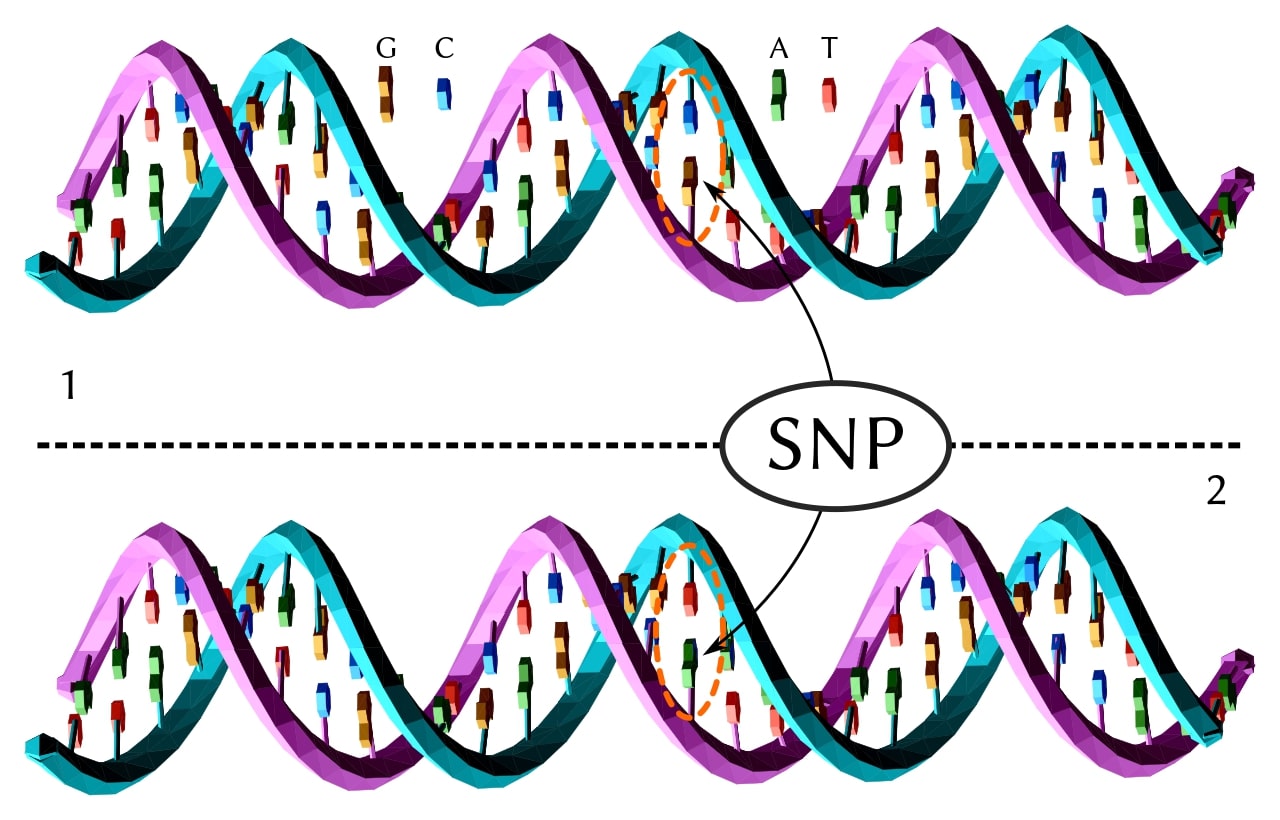
- Single Nucleotide Polymorphisms (SNPs): These are the most common type of genetic variation, occurring when a single base (A, T, C, or G) in the DNA sequence is altered. For instance, at a specific position in the genome, one person might have an ‘A’ while another has a ‘G’. SNPs don’t always cause disease; they can be responsible for variations in traits like eye color or even influence how our bodies metabolize certain medications.
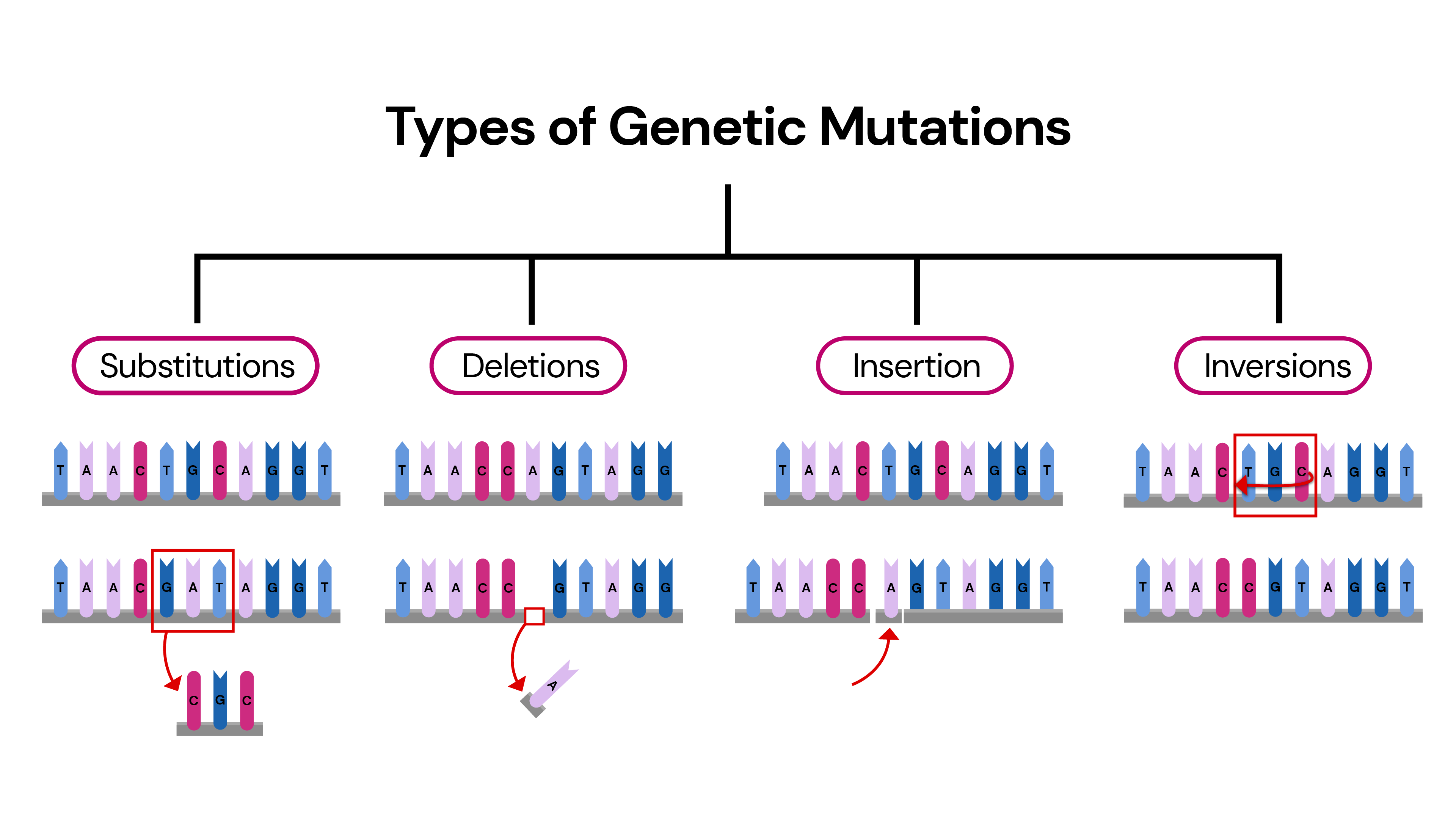
- Insertions and Deletions (Indels): These variants involve the addition (insertion) or removal (deletion) of one or more DNA bases. These can have more significant impacts than SNPs, as they can shift the reading frame of the genetic code, leading to altered protein production.
- Copy Number Variations (CNVs): CNVs are structural variations where there are differences in the number of copies of a particular gene or DNA segment. Some individuals might have more copies of a gene than others, which can affect gene expression and function.
- Structural Variants: These encompass larger-scale changes, including inversions (a segment of DNA is flipped), translocations (a segment of DNA moves from one chromosome to another), and duplications (a segment of DNA is copied). These can have profound effects on gene regulation and function.
The Impact of Gene Variants: From Health to Behavior
The presence and type of gene variants can have a wide-ranging impact on various aspects of our lives, influencing not only our health but also our predispositions and even our interactions with the world.
Gene Variants and Health
Perhaps the most widely understood impact of gene variants is on our health. Many diseases have a genetic component, and specific variants can increase or decrease an individual’s risk of developing certain conditions.
- Disease Susceptibility: Variants in genes related to immune function, metabolism, or cellular repair can predispose individuals to conditions like diabetes, heart disease, certain cancers, and autoimmune disorders. For example, variants in the BRCA1 and BRCA2 genes are strongly associated with an increased risk of breast and ovarian cancer.
- Drug Response (Pharmacogenomics): Gene variants can influence how our bodies process and respond to medications. This field, known as pharmacogenomics, is revolutionizing medicine by allowing for personalized drug prescriptions. A drug that is effective and safe for one person might be ineffective or even harmful for another due to their unique genetic makeup. For instance, variants in certain liver enzymes can significantly alter how quickly a person metabolizes a particular antidepressant, impacting its efficacy and side effect profile.
- Rare Genetic Disorders: In some cases, a single gene variant can cause a specific, often severe, genetic disorder. These are typically inherited and can manifest from birth. Examples include cystic fibrosis, sickle cell anemia, and Huntington’s disease.
Gene Variants and Personal Traits
Beyond disease, gene variants contribute to the remarkable diversity of human traits that make us individuals.
- Physical Characteristics: Many observable traits are influenced by gene variants. This includes variations in eye color (e.g., variants in the OCA2 and HERC2 genes), hair color and texture, height, and even how our sense of taste and smell function.
- Behavioral Predispositions: While behavior is incredibly complex and influenced by a multitude of environmental factors, gene variants can play a role in certain predispositions. For example, research has explored the link between variants in dopamine receptor genes and personality traits like novelty-seeking or risk-taking. It’s crucial to emphasize that these are predispositions, not deterministic pathways, and environmental influences are paramount.
Gene Variants in Technology and Marketing
The insights gained from studying gene variants are increasingly being leveraged in technological advancements and sophisticated marketing strategies.
- Personalized Medicine and Health Tech: The ability to identify specific gene variants allows for highly personalized healthcare. Wearable devices and health apps can incorporate genetic information to provide tailored health recommendations, dietary advice, and exercise plans. Companies are developing genetic testing services that empower individuals to understand their genetic predispositions and make informed lifestyle choices.
- AI and Data Analysis: The sheer volume of genetic data generated by sequencing technologies requires advanced computational tools. AI and machine learning are instrumental in analyzing vast genomic datasets, identifying patterns, and predicting the impact of gene variants on health and behavior. This fuels research into disease mechanisms, drug discovery, and the development of new diagnostic tools.
- Consumer Insights and Targeted Marketing: Understanding genetic predispositions can offer unique insights into consumer preferences and behaviors. For example, if certain gene variants are correlated with a preference for bitter tastes, marketers can tailor food and beverage advertising accordingly. Similarly, understanding genetic influences on stress responses or sleep patterns could inform the development of personalized wellness products and marketing campaigns. This area is ethically sensitive, requiring careful consideration of privacy and data usage.
- Biotechnology and Genetic Engineering: Gene variants are the very building blocks for advancements in biotechnology. Scientists can identify desirable variants or understand the impact of undesirable ones to develop new crops with improved yields or disease resistance, engineer microbes for industrial processes, or even explore gene therapies to correct genetic defects.

The Future of Gene Variants: Unlocking Potential
As our understanding of the human genome deepens and technological capabilities advance, the study of gene variants is poised to unlock even greater potential.
- Precision Medicine: The ultimate goal of precision medicine is to tailor medical treatment to the individual characteristics of each patient, and gene variants are a cornerstone of this approach. By understanding an individual’s genetic makeup, doctors can select the most effective treatments, avoid adverse drug reactions, and implement preventative strategies for diseases.
- Early Disease Detection: Identifying specific gene variants associated with an increased risk of certain diseases can enable earlier and more proactive screening and intervention, potentially saving lives.
- Ethical Considerations and Societal Impact: The growing ability to understand and even alter our genetic makeup raises significant ethical questions. Issues of genetic privacy, the potential for genetic discrimination, and the equitable access to genetic technologies must be carefully navigated as we move forward.
In conclusion, gene variants are not merely academic curiosities. They are fundamental to human diversity, health, and even our digital interactions. From shaping our personal identities to driving innovation in technology and marketing, understanding gene variants offers a profound lens through which to view ourselves and the world around us. As research continues to illuminate the intricate interplay between our genes and our lives, the implications for personalized approaches to health, well-being, and even our engagement with the marketplace will only continue to grow.
aViewFromTheCave is a participant in the Amazon Services LLC Associates Program, an affiliate advertising program designed to provide a means for sites to earn advertising fees by advertising and linking to Amazon.com. Amazon, the Amazon logo, AmazonSupply, and the AmazonSupply logo are trademarks of Amazon.com, Inc. or its affiliates. As an Amazon Associate we earn affiliate commissions from qualifying purchases.