
For many aspiring investors, the allure of the Nasdaq is palpable. Synonymous with innovation, disruptive technology, and high-growth potential, the Nasdaq Stock Market has become a beacon for those looking to tap into the future economy. However, navigating the world of investing can seem daunting, especially when targeting a specific market like the Nasdaq. This comprehensive guide will demystify the process, outlining practical steps and crucial considerations for anyone looking to invest in Nasdaq-listed companies.
Understanding the Nasdaq Market
Before diving into how to invest, it’s essential to understand what the Nasdaq is and why it holds such significance in the investment landscape.
What is the Nasdaq?
The Nasdaq Stock Market is the second-largest stock exchange in the world by market capitalization, trailing only the New York Stock Exchange (NYSE). Unlike the NYSE, which historically used a physical trading floor, Nasdaq pioneered electronic trading, making it a truly digital marketplace. It is perhaps best known as the home for many of the world’s most prominent technology and growth companies.
When people talk about “the Nasdaq,” they often refer to two key indices:
- Nasdaq Composite Index: This broad index includes nearly all stocks listed on the Nasdaq Stock Market. It’s a comprehensive measure of the entire exchange’s performance.
- Nasdaq 100 Index: This is a more concentrated index composed of the 100 largest non-financial companies listed on the Nasdaq based on market capitalization. It excludes financial companies, giving it a heavier weighting towards technology, communication services, and consumer discretionary sectors. Companies like Apple, Microsoft, Amazon, Google (Alphabet), and Tesla are prominent constituents of the Nasdaq 100.
Why Invest in Nasdaq-Listed Companies?
Investing in Nasdaq-listed companies offers several compelling advantages, particularly for those with an appetite for growth and innovation.
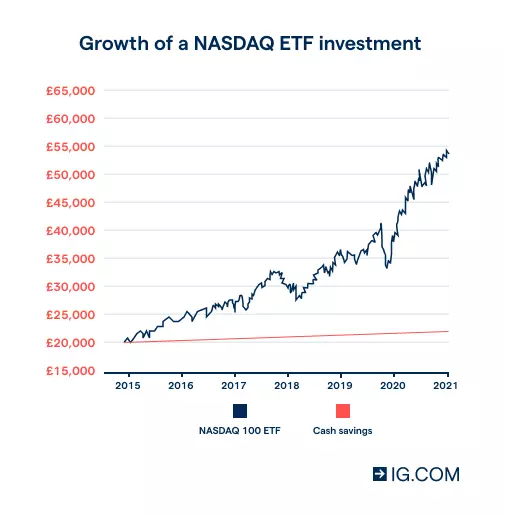
- Growth Potential: Nasdaq is a hub for companies that are often at the forefront of technological advancement and market disruption. This can translate into significant growth potential, as these companies strive to innovate and capture new markets.
- Innovation and Technology Focus: If you believe in the long-term trends of technology, artificial intelligence, biotechnology, e-commerce, and other high-growth sectors, Nasdaq provides direct exposure to the leaders in these fields.
- Transparency and Liquidity: As a major global exchange, Nasdaq offers high liquidity, meaning it’s generally easy to buy and sell shares without significantly impacting their price. Its electronic nature also contributes to market transparency.
Key Characteristics of Nasdaq
The Nasdaq market is characterized by its strong emphasis on innovation, often featuring companies with high research and development expenditures and unique business models. While this offers significant upside potential, it also means that many Nasdaq stocks can be more volatile than those on other exchanges, particularly those with a strong presence of blue-chip industrial companies. Understanding this inherent volatility is crucial for any investor considering this market.
Direct vs. Indirect Investment Approaches
Once you understand the Nasdaq, the next step is to decide how you want to gain exposure. There are several popular methods, each with its own level of risk, required effort, and diversification.
Investing in Individual Nasdaq-Listed Stocks
The most direct way to invest in Nasdaq is to purchase shares of individual companies listed on the exchange. This approach allows for targeted investment in specific businesses you believe in.
- Pros: High potential returns if you pick successful stocks; direct control over your portfolio; alignment with personal values or specific industry beliefs.
- Cons: Higher risk due to lack of diversification (putting all your eggs in a few baskets); requires extensive research and continuous monitoring; potential for significant losses if individual stocks underperform.
- How to do it: You’ll need a brokerage account (discussed later). Through your brokerage platform, you can search for companies like “AAPL” (Apple), “MSFT” (Microsoft), or “GOOG” (Alphabet) and place orders to buy their shares.
This method is suitable for investors who have the time, expertise, and willingness to conduct thorough due diligence on individual companies, understand their financials, competitive landscape, and growth prospects.
Utilizing Exchange-Traded Funds (ETFs) for Nasdaq Exposure
For most investors, especially those new to the market or seeking broader diversification with less effort, Exchange-Traded Funds (ETFs) are an excellent option. An ETF is a type of investment fund that holds a collection of underlying assets (like stocks, bonds, or commodities) and trades on stock exchanges like individual stocks.
- Pros: Instant diversification across many Nasdaq companies; lower risk than individual stocks; typically lower expense ratios than actively managed mutual funds; easy to buy and sell throughout the trading day.
- Cons: You don’t get to pick individual winners; diversification means average market returns rather than outsized individual stock gains (though you avoid outsized individual stock losses); subject to market risk.
- Popular Nasdaq ETFs:
- Invesco QQQ Trust (QQQ): This is by far the most popular ETF for tracking the Nasdaq 100 Index. It offers exposure to the 100 largest non-financial companies on the Nasdaq.
- Fidelity Nasdaq Composite Index Tracking Stock (ONEQ): This ETF aims to track the broader Nasdaq Composite Index, offering wider exposure.
- Invesco Nasdaq Next Gen 100 ETF (QQQM): A newer, lower-cost version of QQQ that tracks the Nasdaq Next Generation 100 Index, focusing on the next 100 largest non-financial companies after the Nasdaq 100.
ETFs are bought and sold just like stocks through a brokerage account. They are ideal for investors who want broad exposure to the Nasdaq’s growth potential without the intense research required for individual stock picking.
Exploring Mutual Funds with a Nasdaq Focus
Mutual funds are another pooled investment vehicle managed by professional fund managers. While ETFs are generally passively managed and track an index, mutual funds can be either actively or passively managed.
- Pros: Professional management; diversification; suitable for setting up automatic investments.
- Cons: Can have higher expense ratios and management fees than ETFs; only traded once a day (after market close); some funds might have minimum investment requirements.
- Types: You can find passively managed index mutual funds that track the Nasdaq Composite or Nasdaq 100, similar to ETFs. There are also actively managed growth funds that might invest heavily in Nasdaq-listed companies based on the fund manager’s expertise.
Mutual funds are often preferred by investors who appreciate professional management and wish to contribute regularly to their investment without needing to time the market.
Steps to Begin Your Nasdaq Investment Journey
Once you’ve decided on your approach, the process of getting started is relatively straightforward.
Setting Up a Brokerage Account

This is the foundational step. A brokerage account is an investment account that allows you to buy and sell securities like stocks and ETFs.
- Choose a Broker: Research online brokers (e.g., Fidelity, Charles Schwab, Vanguard, E*TRADE, Robinhood, Interactive Brokers). Consider factors like fees (commissions, expense ratios), available investment products, research tools, customer service, and ease of use.
- Open an Account: The application process is typically online and requires personal information (name, address, Social Security number) and bank account details to fund your account.
- Fund Your Account: You can transfer money from your bank account via ACH, wire transfer, or sometimes by mailing a check.
- Account Types:
- Taxable Brokerage Account: A standard investment account where investment gains are subject to capital gains tax.
- Individual Retirement Account (IRA): Tax-advantaged accounts designed for retirement savings (e.g., Traditional IRA for tax-deductible contributions, Roth IRA for tax-free withdrawals in retirement). Many brokers offer both.
Research and Due Diligence
Regardless of whether you choose individual stocks, ETFs, or mutual funds, research is paramount.
- For Individual Stocks: Dive deep into company financials (revenue, earnings, debt), management team, competitive landscape, industry trends, and future growth catalysts. Use financial news sites, company investor relations pages, and analyst reports.
- For ETFs/Mutual Funds: Understand the fund’s objective, what index it tracks (if applicable), its holdings (top companies), expense ratio, and historical performance.
Crafting Your Investment Strategy
Before placing any trades, define your investment goals, time horizon, and risk tolerance.
- Investment Goals: Are you saving for retirement, a down payment on a house, or a child’s education? Your goals will influence your strategy.
- Time Horizon: Long-term investors (5+ years) can typically weather short-term market fluctuations better than short-term investors. Nasdaq is generally considered a long-term growth play.
- Risk Tolerance: How comfortable are you with potential losses in exchange for higher potential gains? Nasdaq can be volatile; ensure your risk tolerance aligns with this characteristic.
- Diversification: While investing in Nasdaq provides exposure to growth, it’s crucial not to put all your money into a single market or sector. Consider diversifying across different asset classes (bonds, real estate), geographies, and sectors to mitigate risk.
Placing Your First Trade
Once your account is funded and you’ve done your research, you can place your first trade.
- Select Your Investment: Decide on the specific stock, ETF, or mutual fund.
- Choose Order Type:
- Market Order: Buys/sells immediately at the best available current market price.
- Limit Order: Buys/sells at a specific price or better. This gives you more control over the execution price but isn’t guaranteed to fill if the market doesn’t reach your price.
- Specify Quantity: Decide how many shares or units you want to buy.
- Review and Confirm: Always double-check your order details before executing.
Essential Considerations and Risk Management
Investing in the Nasdaq, while potentially rewarding, comes with inherent risks that must be understood and managed.
Volatility and Market Fluctuations
The technology-heavy nature of the Nasdaq means it can be more volatile than broader market indices. Economic shifts, interest rate changes, regulatory news, and company-specific announcements can cause significant price swings. Be prepared for ups and downs and avoid making rash decisions based on short-term movements.
Diversification Beyond Nasdaq
While this article focuses on Nasdaq, true risk management involves broader diversification. Don’t put all your investment capital into tech stocks or even just into the Nasdaq. Consider allocating funds to other sectors, value stocks, international markets, and potentially fixed-income investments (bonds) to create a well-rounded portfolio that can cushion against downturns in any single area.
Long-Term Perspective vs. Speculation
Successful investing, especially in growth-oriented markets like Nasdaq, often requires a long-term perspective. Trying to time the market or chase hot stocks for quick profits is typically a speculative endeavor that carries significant risk and often leads to underperformance. Focus on quality companies or broad-market ETFs with the intention of holding them for years, allowing compounding returns to work in your favor.
Fees and Expenses
Be mindful of the costs associated with your investments.
- Brokerage Commissions: While many brokers now offer commission-free stock and ETF trades, always check for any hidden fees.
- Expense Ratios: For ETFs and mutual funds, the expense ratio is the annual fee charged as a percentage of your investment. Even seemingly small percentages can eat into your returns over time. Opt for funds with low expense ratios.
Advanced Strategies and Continuous Learning
As you gain experience, you might explore more sophisticated strategies, but always proceed with caution and thorough understanding.
Dollar-Cost Averaging
This is a simple yet powerful strategy where you invest a fixed amount of money at regular intervals (e.g., $200 every month), regardless of the market price. This strategy helps reduce the impact of volatility by averaging out your purchase price over time. When prices are high, you buy fewer shares; when prices are low, you buy more.
Options and Derivatives (Higher Risk)
While beyond the scope of a beginner’s guide, investors with significant experience and a deep understanding of market mechanics might explore options contracts on Nasdaq-listed stocks or ETFs. These are complex financial instruments that can offer leverage but also carry substantially higher risk and are not recommended for novice investors.
Staying Informed
The investment landscape is constantly evolving. Make a habit of staying informed about market news, economic trends, and company-specific developments. Follow reputable financial news sources, read company earnings reports, and regularly review your portfolio to ensure it still aligns with your goals and risk tolerance.
Investing in Nasdaq offers a compelling pathway to participate in the growth of leading-edge companies. By understanding the market, choosing appropriate investment vehicles, diligently researching, and adhering to sound risk management principles, you can build a robust investment strategy geared towards long-term financial success. Remember, patience and discipline are as crucial as the initial investment itself.
aViewFromTheCave is a participant in the Amazon Services LLC Associates Program, an affiliate advertising program designed to provide a means for sites to earn advertising fees by advertising and linking to Amazon.com. Amazon, the Amazon logo, AmazonSupply, and the AmazonSupply logo are trademarks of Amazon.com, Inc. or its affiliates. As an Amazon Associate we earn affiliate commissions from qualifying purchases.