
The Nasdaq isn’t just a stock exchange; it’s a vibrant ecosystem, a bellwether for technological innovation, and a critical barometer for a significant portion of the global economy. Often synonymous with high-growth tech companies, understanding “what the Nasdaq is doing” offers profound insights into market sentiment, economic trends, and the future trajectory of industries ranging from software and biotechnology to e-commerce and artificial intelligence. For investors, financial analysts, and even casual observers, monitoring the Nasdaq’s movements is essential for comprehending the broader financial landscape and making informed decisions.
Understanding the Nasdaq: More Than Just an Index
To truly grasp the Nasdaq’s current activity, one must first appreciate its multifaceted nature. It is simultaneously a stock exchange, a market index, and a powerful brand representing growth and innovation.

The Nasdaq Composite vs. Nasdaq 100: Key Distinctions
When people refer to “the Nasdaq,” they are often, implicitly or explicitly, talking about one of two primary indices: the Nasdaq Composite or the Nasdaq 100. Understanding the difference is crucial.
The Nasdaq Composite Index is the broadest measure, encompassing virtually all common stocks listed on the Nasdaq stock market, which numbers over 3,000 companies. This index is market-capitalization weighted, meaning larger companies have a greater impact on its movements. Because the Nasdaq exchange is a magnet for technology and growth companies, the Composite is heavily skewed towards these sectors, though it does include companies from various industries. Its breadth makes it an excellent indicator of the overall health and sentiment towards growth-oriented firms across many sectors.
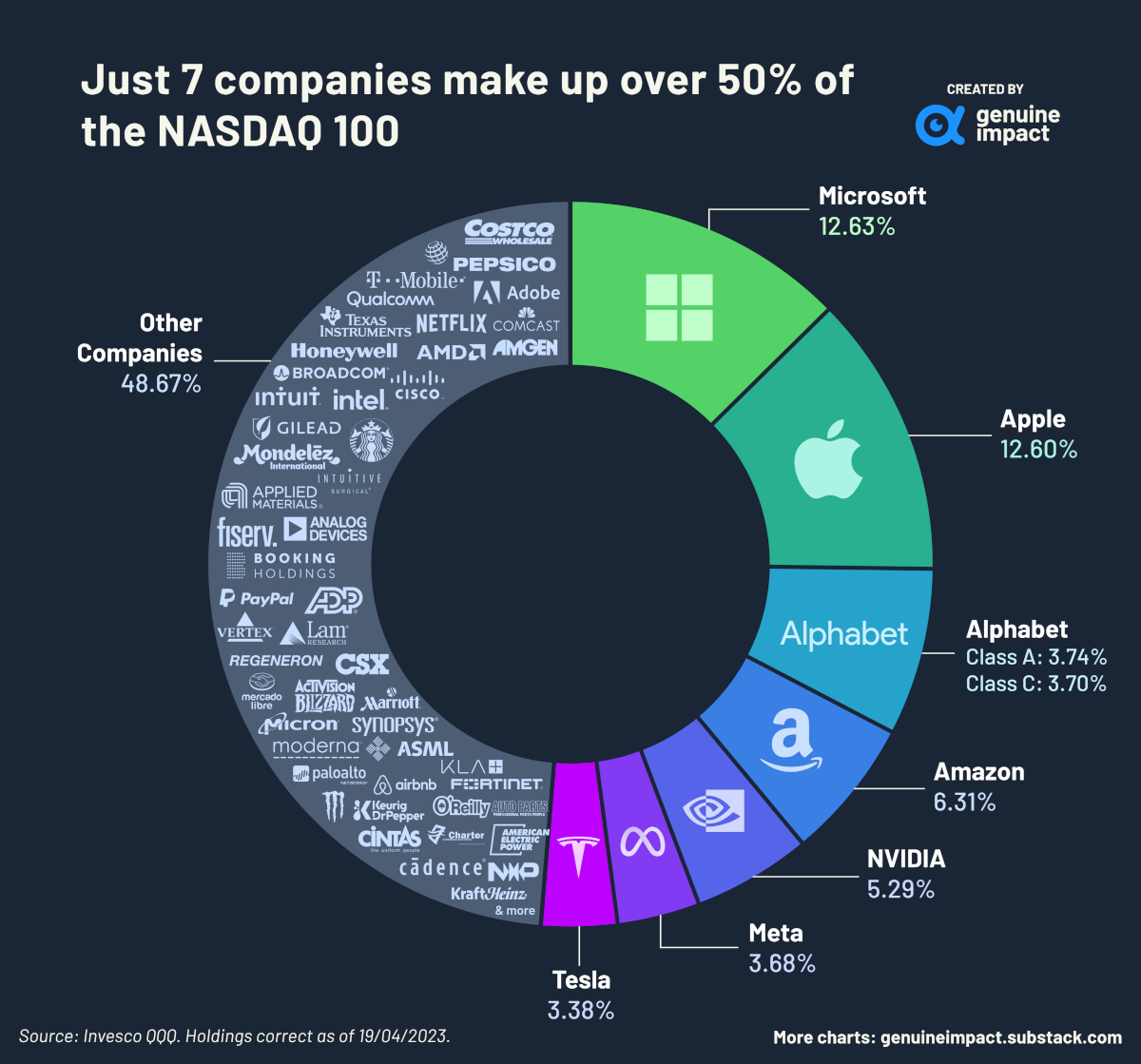
The Nasdaq 100 Index, on the other hand, is a more focused index. It comprises the 100 largest non-financial companies listed on the Nasdaq Stock Market, also market-capitalization weighted. By excluding financial companies and focusing on the top 100 by market cap, the Nasdaq 100 becomes an even more concentrated proxy for large-cap technology and innovative growth stocks. Giants like Apple, Microsoft, Amazon, Alphabet (Google), and Tesla consistently feature prominently, making its performance a direct reflection of the fortunes of these influential firms. Due to its concentration in mega-cap tech, the Nasdaq 100 often exhibits higher volatility and can lead or lag the broader market depending on the performance of these influential constituents.
Nasdaq’s Role in the Global Financial Landscape
The Nasdaq’s significance extends far beyond its indices. As a global electronic marketplace, it revolutionized trading by offering a faster, more transparent, and accessible platform compared to traditional floor-based exchanges. It has become the preferred listing venue for companies pioneering new technologies and business models, from nascent startups seeking capital to established innovators pushing the boundaries of what’s possible. This role positions Nasdaq as a critical engine for capital formation, facilitating the growth of companies that often drive economic progress and job creation worldwide. Its global reach means that its performance can influence investment flows and market sentiment across continents.
Key Sectors Dominating Nasdaq Listings
While often simplified to “tech,” the sectors dominating Nasdaq listings are diverse within the innovation spectrum. These include:
- Information Technology: Software, semiconductors, IT services, hardware. This is undeniably the largest and most influential sector.
- Communication Services: Internet services, media, entertainment (e.g., Netflix, Meta Platforms).
- Consumer Discretionary: E-commerce, automotive (e.g., Amazon, Tesla).
- Healthcare: Biotechnology, pharmaceuticals, medical devices, health tech.
- Industrials: Innovative industrial technology, robotics, automation.
This specialized focus means that while the S&P 500 offers a broader representation of the U.S. economy, the Nasdaq provides a sharper lens into the health of the innovation economy and the companies driving future trends.
Decoding Current Market Performance and Trends
To understand “what the Nasdaq is doing” today, one must analyze its recent performance in the context of prevailing macroeconomic conditions and sector-specific dynamics.
Recent Performance Snapshot: Gains, Losses, and Volatility
The Nasdaq, particularly the Nasdaq 100, is renowned for its volatility. Its high-growth constituents often carry higher risk premiums and are more sensitive to changes in economic outlook, interest rates, and investor sentiment. In recent years, it has experienced periods of explosive growth, followed by significant corrections, reflecting market uncertainty and shifts in monetary policy. For instance, post-pandemic, it saw a massive surge as digital transformation accelerated, only to face headwinds from rising inflation and interest rates. A snapshot of its performance would detail percentage changes over various periods (daily, weekly, year-to-date), highlighting periods of strong momentum or sharp pullbacks, and comparing these against broader market indices like the S&P 500 to contextualize its movements.
Macroeconomic Factors Influencing Nasdaq’s Trajectory
The Nasdaq’s trajectory is heavily influenced by a confluence of macroeconomic factors:
- Inflation: High inflation can erode corporate profits and consumer purchasing power, hurting growth companies whose valuations often rely on future earnings potential.
- Interest Rates: As a market heavily populated by growth stocks, the Nasdaq is particularly sensitive to interest rate changes. Higher interest rates increase the cost of capital for businesses and reduce the present value of future earnings, making growth stocks less attractive. Conversely, lower rates can fuel valuations.
- Economic Growth & Recession Fears: Periods of robust economic growth tend to favor growth stocks, while recession fears can trigger significant sell-offs as investors flock to safer assets.
- Geopolitics: International tensions, trade disputes, and geopolitical instability can disrupt supply chains, increase commodity prices, and create uncertainty, impacting global businesses listed on the Nasdaq.
- Monetary Policy: Decisions by central banks regarding quantitative easing or tightening directly influence market liquidity and investor risk appetite, having a profound effect on Nasdaq valuations.
Sector-Specific Performance: Tech Giants vs. Emerging Innovators
Within the Nasdaq, performance can vary significantly between different segments. Mega-cap tech giants, often referred to as “Magnificent Seven” or similar groupings, due to their immense market capitalization and robust balance sheets, can often weather economic storms better than smaller, emerging innovators. Their sheer size and diversified revenue streams can make them defensive growth plays.
Conversely, smaller, unprofitable but high-growth companies (often in biotech, cutting-edge software, or renewable energy) are more susceptible to market downturns and higher interest rates. Their valuations are heavily dependent on future projections, and a higher discount rate can severely impact their perceived worth. Therefore, analyzing “what the Nasdaq is doing” also involves dissecting which sub-sectors are leading or lagging and understanding the specific catalysts or headwinds affecting them.
Key Drivers and Challenges Shaping the Nasdaq’s Future
The Nasdaq’s future performance will be shaped by a combination of inherent strengths and evolving challenges.
Innovation and Disruption: The Engine of Growth
At its core, the Nasdaq is a market for innovation. Breakthroughs in artificial intelligence, biotechnology, sustainable energy, quantum computing, and space technology continue to drive new industries and opportunities. Companies at the forefront of these advancements often choose to list on Nasdaq, attracting significant investor capital. This perpetual cycle of innovation is the primary engine of long-term growth for the exchange and its constituents. The ability of these companies to disrupt existing markets and create new ones will remain a crucial driver.
Regulatory Scrutiny and Antitrust Concerns
As many Nasdaq-listed tech giants have grown to unprecedented scale, they’ve attracted increasing regulatory scrutiny. Concerns around market dominance, data privacy, content moderation, and antitrust issues have led to investigations and potential legislative action in various jurisdictions. These regulatory challenges can introduce uncertainty, impact business models, and potentially lead to costly legal battles or fines, posing a significant headwind for some of the Nasdaq’s largest companies. The outcomes of these regulatory battles will undoubtedly influence investor confidence and valuations.
Geopolitical Tensions and Supply Chain Resilience
The interconnectedness of the global economy means that geopolitical tensions (e.g., U.S.-China relations, conflicts in Europe) can have direct implications for Nasdaq companies. Many rely on global supply chains for manufacturing and distribution, and export markets for revenue. Disruptions due to trade wars, sanctions, or conflicts can increase operational costs, limit market access, and negatively impact profitability. Furthermore, competition for technological supremacy between nations can lead to protectionist policies or restrictions on technology transfer, affecting international growth prospects. Companies are increasingly focused on building more resilient and diversified supply chains to mitigate these risks.
Investor Implications and Strategic Considerations
For investors, understanding the Nasdaq’s movements is paramount for portfolio construction and risk management.
Navigating Volatility: Strategies for Long-Term Investors
The Nasdaq’s inherent volatility means that a long-term perspective is often beneficial. Trying to time the market in high-growth sectors can be challenging and often leads to suboptimal outcomes. Long-term investors might consider strategies like dollar-cost averaging to mitigate the impact of short-term price fluctuations. Diversifying within the tech sector itself – investing in a mix of mega-cap established players, mid-cap growth companies, and smaller innovative firms – can help balance risk and reward. Patience and conviction in the underlying innovative businesses are key.
Diversification Beyond Tech: Balancing a Nasdaq-Heavy Portfolio
While the Nasdaq offers exposure to compelling growth stories, an overly concentrated portfolio in tech and growth stocks can expose investors to significant sector-specific risk. A well-diversified portfolio typically balances growth-oriented assets with value stocks, income-generating assets (like bonds or dividend stocks), and potentially commodities or real estate. This diversification across different asset classes and sectors can help smooth out returns during periods when tech stocks are underperforming, providing a more stable overall portfolio performance. Investors should assess their risk tolerance and financial goals to determine the appropriate allocation to Nasdaq-listed assets.
Utilizing Financial Tools and Insights for Informed Decisions
Making informed investment decisions requires access to and understanding of various financial tools and insights. This includes using analytical platforms to track company fundamentals, technical indicators, market news, and expert analyses. Financial advisors can also provide personalized guidance tailored to individual circumstances. Understanding metrics like P/E ratios, revenue growth, profit margins, and debt levels, especially for growth companies, is critical. Furthermore, keeping abreast of economic forecasts, central bank policies, and geopolitical developments provides the broader context necessary for evaluating potential impacts on Nasdaq-listed companies.
The Nasdaq’s Enduring Relevance in a Dynamic Economy
Despite its cyclical nature and periods of intense volatility, the Nasdaq remains an indispensable pillar of the global financial system. Its ability to attract and fund the most innovative companies ensures its continued relevance.
A Barometer for Innovation and Growth
The Nasdaq consistently serves as a barometer for innovation and economic growth. Its performance often reflects the health of industries that are shaping the future. As technology continues to permeate every aspect of life and business, the companies listed on Nasdaq will remain at the forefront of driving progress, creating new products, services, and efficiencies that benefit society. Monitoring “what the Nasdaq is doing” is thus not just about tracking stock prices; it’s about observing the pulse of global innovation.
Adapting to New Economic Realities
The Nasdaq, and its listed companies, have demonstrated remarkable adaptability over decades. From the dot-com bubble to the global financial crisis, and more recently through a pandemic and inflationary pressures, the market has shown resilience. Companies continually evolve their business models, embracing new technologies and market opportunities. This dynamic adaptability ensures that the Nasdaq will continue to be a leading indicator and a critical platform for capital markets, helping to allocate resources to the most promising ventures that promise to define the next era of economic development. For anyone invested in or simply observing the future of finance and technology, the Nasdaq will always be a critical entity to watch.
aViewFromTheCave is a participant in the Amazon Services LLC Associates Program, an affiliate advertising program designed to provide a means for sites to earn advertising fees by advertising and linking to Amazon.com. Amazon, the Amazon logo, AmazonSupply, and the AmazonSupply logo are trademarks of Amazon.com, Inc. or its affiliates. As an Amazon Associate we earn affiliate commissions from qualifying purchases.