
In the intricate world of finance, few concepts are as ubiquitous and fundamental as the bank interest rate. Whether you’re saving for a down payment, taking out a loan for a new home, or simply holding money in a checking account, interest rates are constantly at play, silently influencing your financial present and future. Far from being a mere technicality, understanding what a bank interest rate is, how it functions, and what drives its fluctuations is crucial for informed decision-making, both for individuals and businesses alike. At its core, an interest rate is the cost of borrowing money or the reward for lending it, expressed as a percentage of the principal amount over a specific period. It is the engine that drives financial transactions, enabling economic growth, facilitating investment, and shaping the financial landscape for every participant.
The Fundamental Concept of Interest
To truly grasp the significance of bank interest rates, one must first understand the fundamental concept of interest itself. It’s the lifeblood of the financial system, a mechanism that compensates lenders for the risk and opportunity cost of parting with their capital, and conversely, a price borrowers pay for the immediate utility of funds they don’t yet possess.
Interest as the Cost of Borrowing and Reward for Lending
Imagine you need to buy a car, but you don’t have all the cash upfront. A bank offers to lend you the money, but they won’t do it for free. The extra amount you pay back on top of the principal loan amount is the interest. This is the “cost of borrowing.” From the bank’s perspective, this interest is their revenue for providing a service and taking a risk. Conversely, if you deposit your savings into a bank account, you are essentially lending your money to the bank. In return for using your funds, the bank pays you interest. This is the “reward for lending.” It’s a compensation for you foregoing immediate access to your money and allowing the bank to utilize it, typically by lending it out to others at a higher rate. This differential is a key component of how banks generate profit.
Simple vs. Compound Interest: The Power of Growth
Interest can be calculated in different ways, with the distinction between simple and compound interest being profoundly important.
Simple Interest is calculated only on the original principal amount of a loan or deposit. For example, if you deposit $1,000 at a 5% simple interest rate for three years, you would earn $50 each year ($1,000 * 0.05). After three years, you would have earned $150 in total interest. Simple interest is straightforward but less common for long-term investments or loans.
Compound Interest, often hailed as the “eighth wonder of the world” by Albert Einstein, is far more powerful. With compound interest, the interest earned or paid is added to the principal, and subsequent interest calculations are then made on this new, larger principal. Using the same example: $1,000 at a 5% compound interest rate.
- Year 1: $1,000 * 0.05 = $50. New principal = $1,050.
- Year 2: $1,050 * 0.05 = $52.50. New principal = $1,102.50.
- Year 3: $1,102.50 * 0.05 = $55.13. New principal = $1,157.63.
In three years, you would have earned $157.63, which is more than with simple interest. The longer the money is invested or borrowed, and the more frequently it compounds, the more significant the difference becomes. For savers, compounding is a powerful engine of wealth growth; for borrowers, it underscores the importance of managing debt responsibly, as interest can quickly accumulate on unpaid balances.
Types of Bank Interest Rates and Their Applications
Bank interest rates are not monolithic; they come in various forms, each tailored to specific financial products and serving distinct purposes. Understanding these different types is essential for navigating your financial choices effectively.
Lending Rates: Mortgages, Personal Loans, Credit Cards
When you borrow money from a bank, you encounter lending rates. These are the rates banks charge you for the privilege of using their capital.
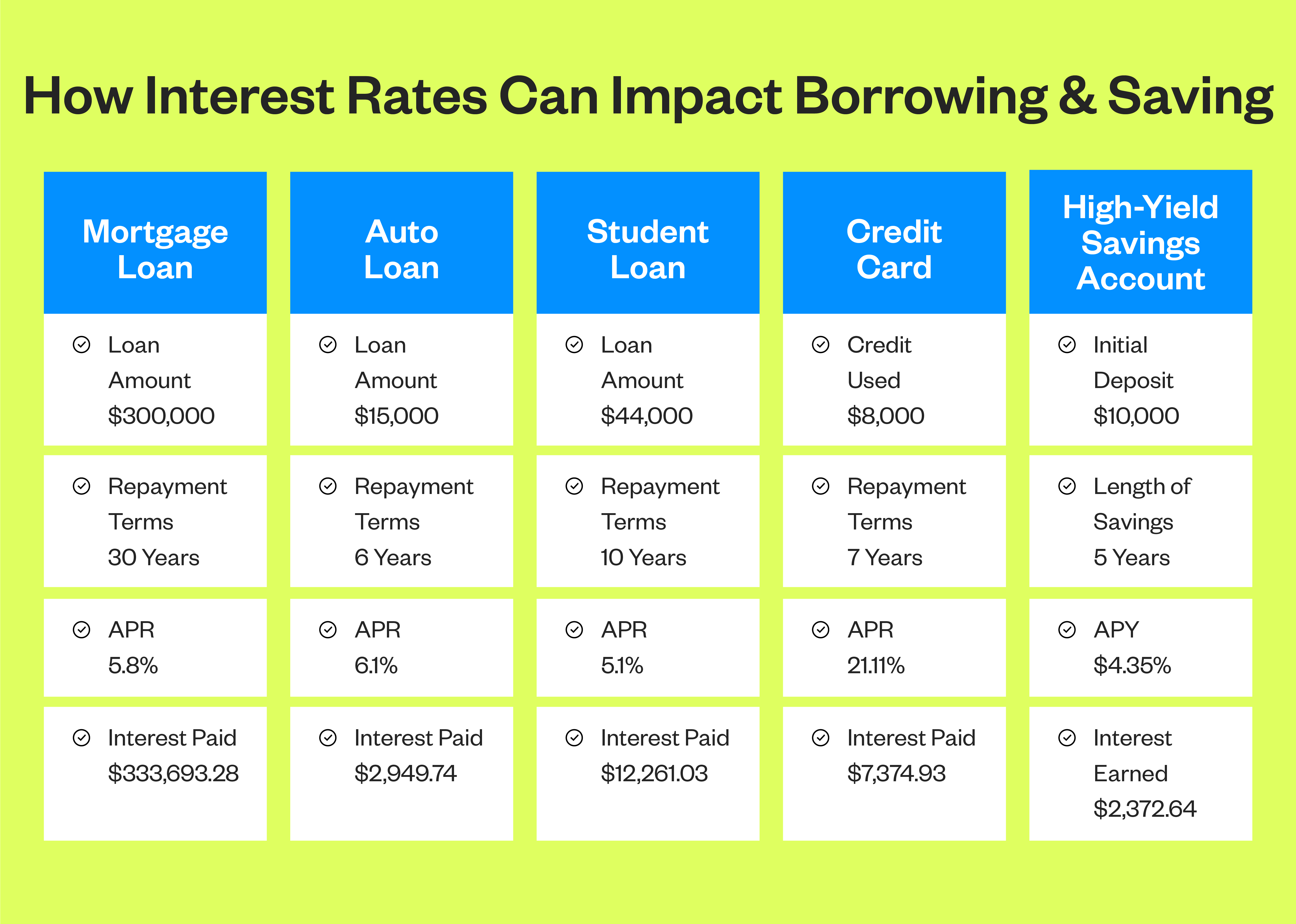
- Mortgages: These are arguably the largest loans most people will take out. Mortgage interest rates determine the cost of financing a home purchase over decades. They can be fixed-rate, meaning the interest rate remains constant for the life of the loan, offering predictability in monthly payments, or adjustable-rate (ARM), where the rate can change periodically based on market indexes, potentially leading to lower initial payments but higher future risk.
- Personal Loans: These are typically unsecured loans (not backed by collateral like a house or car) used for a variety of purposes, such as consolidating debt, funding a vacation, or covering unexpected expenses. Interest rates on personal loans tend to be higher than secured loans due to the increased risk to the lender.
- Credit Cards: Credit cards represent a form of revolving credit, allowing users to borrow money up to a certain limit. Interest rates on credit cards are often among the highest, particularly for cash advances, reflecting the unsecured nature and the flexibility they offer. These rates are typically expressed as an Annual Percentage Rate (APR).
Deposit Rates: Savings Accounts, Certificates of Deposit (CDs)
Conversely, when you deposit money with a bank, you earn deposit rates. These are the rates banks pay you for holding your money with them.
- Savings Accounts: Designed for liquidity and convenience, savings accounts offer a modest interest rate in exchange for easy access to funds. While the rates are generally lower than other deposit products, they still allow your money to grow over time.
- Certificates of Deposit (CDs): CDs offer higher interest rates than standard savings accounts, but they come with a catch: your money is locked in for a fixed term (e.g., 3 months, 1 year, 5 years). Withdrawing funds before the term matures usually incurs a penalty. CDs are ideal for money you won’t need immediate access to, providing a predictable return.
- Money Market Accounts: These accounts often bridge the gap between savings accounts and checking accounts, offering slightly higher interest rates than traditional savings accounts while retaining some check-writing capabilities, though they may have higher minimum balance requirements.
Prime Rate and Its Influence
The prime rate is a benchmark interest rate that commercial banks charge their most creditworthy corporate customers. It’s heavily influenced by the federal funds rate target set by the central bank (e.g., the Federal Reserve in the U.S.). When the central bank raises or lowers the federal funds rate, the prime rate typically moves in tandem. This rate is crucial because many other variable interest rates, such as those on credit cards, home equity lines of credit (HELOCs), and some adjustable-rate mortgages, are often indexed to the prime rate (e.g., Prime + 2%). Therefore, changes in the prime rate have a cascading effect across a wide range of consumer and business lending products.
Key Factors Influencing Bank Interest Rates
Bank interest rates are not arbitrarily set; they are dynamic figures influenced by a complex interplay of macroeconomic forces, central bank policies, and individual risk assessments. Understanding these drivers provides insight into why rates rise and fall and how these movements affect your financial decisions.
Central Bank Policies: The Role of the Federal Reserve (or equivalent)
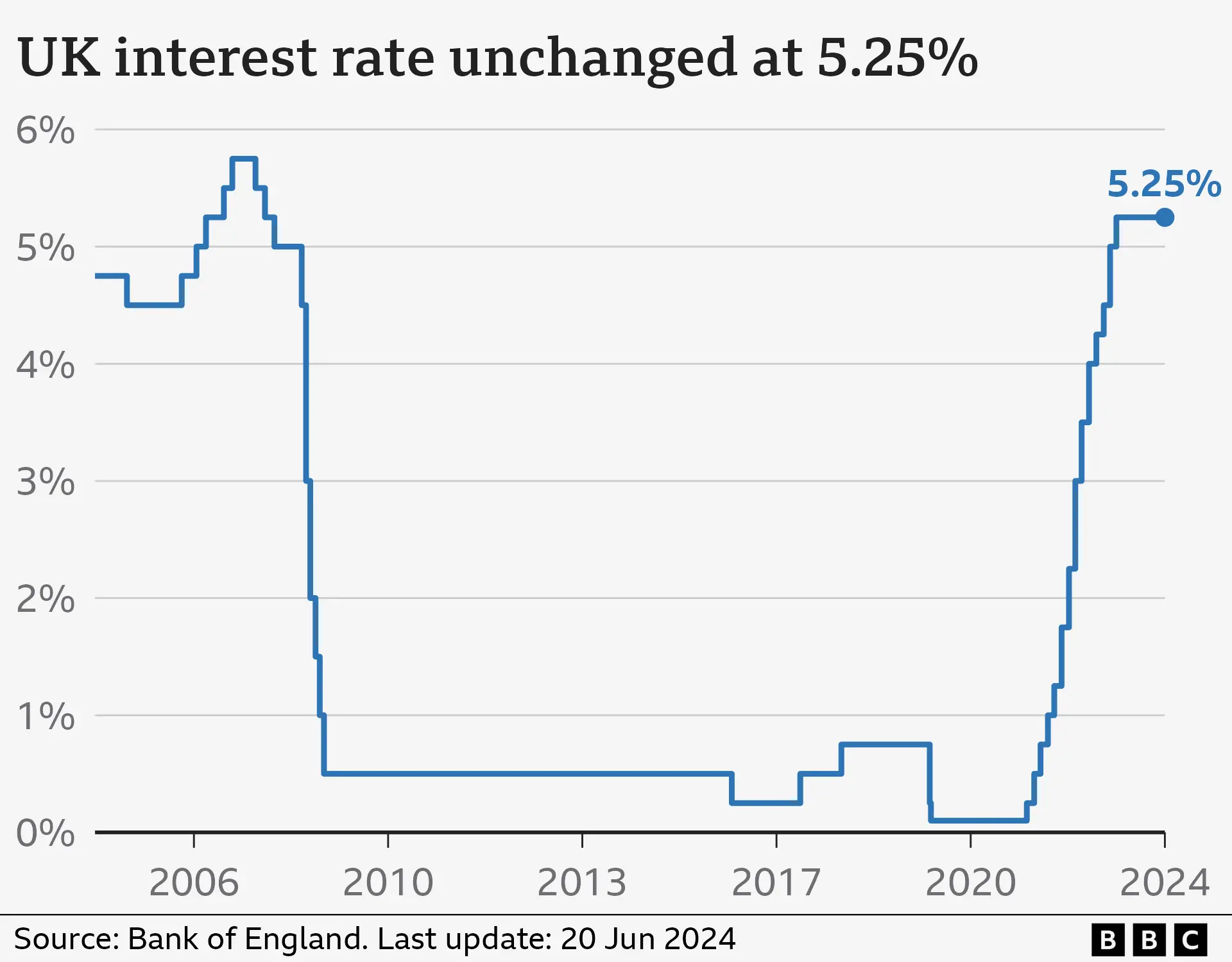
At the pinnacle of influence is the country’s central bank. In the United States, this is the Federal Reserve (the “Fed”). The Fed’s primary tool for influencing interest rates is the federal funds rate target. This is the rate at which commercial banks lend their excess reserves to each other overnight. By raising or lowering this target rate, the Fed signals its monetary policy stance to the broader financial market.
- Raising the target rate: Makes it more expensive for banks to borrow money, which in turn leads banks to raise their lending rates to consumers and businesses. This is often done to curb inflation by slowing down economic activity.
- Lowering the target rate: Makes it cheaper for banks to borrow, encouraging them to lower their lending rates, stimulating borrowing, spending, and investment to boost a sluggish economy.
The Fed’s decisions have a ripple effect, impacting everything from mortgage rates to savings account yields. Other central banks around the world, such as the European Central Bank (ECB) or the Bank of England (BOE), play similar roles within their respective jurisdictions.
Inflation and Economic Conditions
Inflation, the rate at which the general level of prices for goods and services is rising, significantly impacts interest rates.
- High Inflation: When inflation is high, the purchasing power of money erodes over time. Lenders demand higher interest rates to compensate for this erosion, ensuring that the real return on their loans remains positive. If they lend at 5% but inflation is 7%, they are effectively losing money. Central banks also tend to raise rates to combat high inflation.
- Economic Growth: A robust economy with high employment and strong consumer demand can lead to higher interest rates as businesses expand and individuals borrow more, increasing the demand for credit. Conversely, during an economic slowdown or recession, central banks often lower rates to stimulate activity.
Market Demand and Supply for Credit
Like any other commodity, the price of money (i.e., the interest rate) is subject to the forces of supply and demand.
- High Demand for Loans: If many individuals and businesses want to borrow money, but the supply of available funds is limited, banks can charge higher interest rates.
- Low Demand for Loans: If there’s ample money available for lending but few borrowers, banks may lower their interest rates to attract customers and deploy their capital.
The aggregate savings within an economy form the supply of credit, while the borrowing needs of consumers, businesses, and governments constitute the demand.
Borrower’s Creditworthiness and Risk Assessment
While the macroeconomic factors determine the general level of interest rates, an individual’s specific rate on a loan is heavily influenced by their perceived creditworthiness.
- Credit Score: A higher credit score (e.g., FICO score) indicates a lower risk of default to lenders, typically resulting in access to lower interest rates on loans, mortgages, and credit cards. A lower score signals higher risk, leading to higher rates.
- Debt-to-Income Ratio: Lenders assess how much of your income is already dedicated to debt payments. A high ratio suggests a greater financial strain and higher risk, potentially leading to higher interest rates or loan denial.
- Collateral: Loans secured by collateral (like a home for a mortgage or a car for an auto loan) generally have lower interest rates than unsecured loans because the collateral provides the lender with recourse if the borrower defaults.
How Bank Interest Rates Impact You (and the Economy)
The fluctuations in bank interest rates are not abstract economic phenomena; they have tangible and often significant impacts on personal finances, business operations, and the overall health of the economy. Understanding these effects allows individuals and businesses to anticipate changes and adjust their financial strategies accordingly.
For Savers: Maximizing Returns
For individuals and entities holding cash, interest rates determine the potential for wealth accumulation through savings and investments.
- Rising Interest Rates: Generally good news for savers. Higher rates on savings accounts, certificates of deposit (CDs), and money market accounts mean your money earns more. This incentivizes saving, as the reward for deferring consumption increases. Fixed-income investments like bonds also see their yields rise, though existing bond prices may fall.
- Falling Interest Rates: Less favorable for savers. Lower rates mean less income from interest-bearing accounts. This can encourage individuals to seek higher returns elsewhere, potentially in riskier investments like stocks, or to spend their money rather than save it.
For Borrowers: Managing Debt and Affordability
The impact of interest rates on borrowers is often the most directly felt, affecting everything from monthly budgets to major life decisions.
- Rising Interest Rates: Bad news for borrowers, especially those with variable-rate loans. Monthly payments on adjustable-rate mortgages (ARMs), credit cards, and lines of credit can increase, straining budgets. New loans, like fixed-rate mortgages or auto loans, become more expensive, potentially making homeownership or large purchases less affordable. This can lead to reduced consumer spending.
- Falling Interest Rates: Favorable for borrowers. Lower rates mean cheaper borrowing costs. This can make mortgages more affordable, reducing monthly payments for new homebuyers or allowing existing homeowners to refinance their loans at lower rates. It also makes personal loans and credit card debt cheaper to carry, potentially freeing up disposable income and stimulating borrowing and spending.
Impact on Businesses and Investment
Businesses, like individuals, are significantly affected by interest rates, influencing their investment decisions, expansion plans, and profitability.
- Rising Interest Rates: Increases the cost of borrowing for businesses, making it more expensive to finance new projects, acquire assets, or expand operations. This can lead to reduced capital expenditure, slower job creation, and potentially lower profits. Small businesses, which often rely on short-term loans, can be particularly vulnerable.
- Falling Interest Rates: Reduces the cost of capital for businesses, encouraging investment in new equipment, research and development, and expansion. This can stimulate economic growth, create jobs, and boost corporate earnings. It also makes it cheaper for companies to refinance existing debt, improving their financial health.
The Broader Economic Ripple Effect
Beyond individual and business finance, interest rates play a critical role in shaping the broader economic landscape.
- Inflation Control: As discussed, central banks use interest rates as a primary tool to manage inflation. Higher rates can cool an overheating economy and curb price increases, while lower rates can stimulate demand and prevent deflation.
- Currency Value: Higher interest rates can attract foreign investment, increasing demand for a country’s currency and strengthening its value. Conversely, lower rates can make a currency less attractive, leading to depreciation.
- Asset Markets: Interest rates influence the valuation of various assets. Lower rates can make stocks more attractive (as borrowing costs for companies decrease and future earnings are discounted less), and can also push up real estate prices. Higher rates can have the opposite effect.
Navigating Interest Rates: Strategies for Financial Well-being
Understanding what bank interest rates are and how they operate is the first step; the next is to develop strategies to navigate their movements effectively. Whether you’re aiming to save more, borrow less, or invest wisely, proactively managing your relationship with interest rates is key to achieving financial well-being.
Understanding APR vs. APY
Before making any financial decision involving interest, it’s crucial to distinguish between Annual Percentage Rate (APR) and Annual Percentage Yield (APY).
- APR (Annual Percentage Rate): This represents the annual cost of a loan, including any fees, expressed as a percentage. It typically reflects the simple interest rate over a year. When you borrow money (e.g., credit cards, mortgages), you’ll primarily see APR. It gives you a standardized way to compare the cost of different loans.
- APY (Annual Percentage Yield): This represents the effective annual rate of return earned on an investment, taking into account the effect of compounding interest. When you deposit money (e.g., savings accounts, CDs), you’ll see APY. Because APY accounts for compounding, it will always be equal to or higher than the simple interest rate if compounding occurs more than once a year. For savers, comparing APYs gives a truer picture of potential earnings.
Always pay close attention to which rate is being quoted for a product, as it can significantly impact the actual cost of borrowing or the real return on savings.
Shopping Around for the Best Rates
One of the simplest yet most effective strategies is to actively shop around for the best available interest rates.
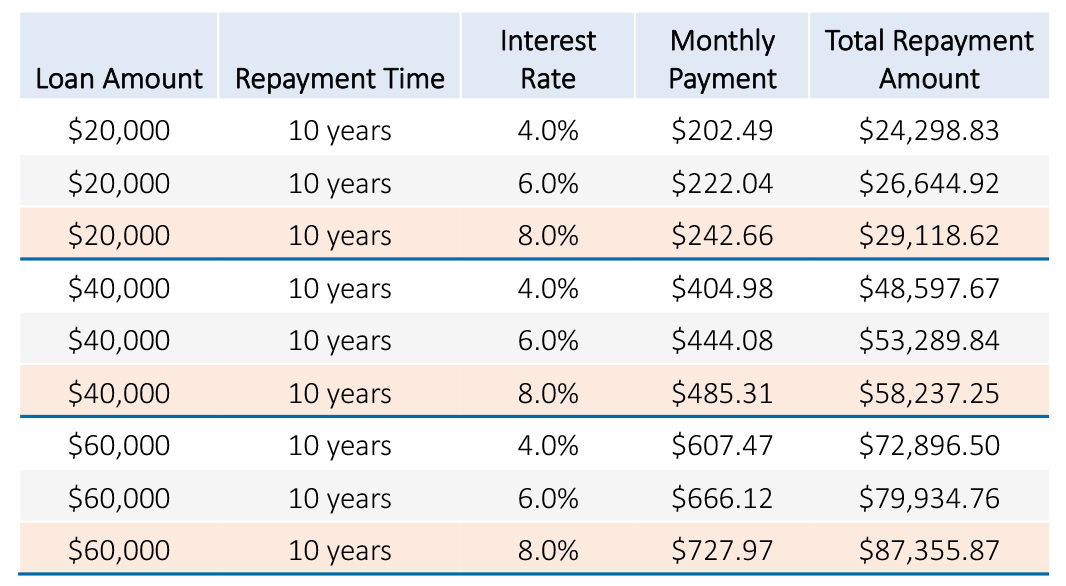
- For Loans: Don’t just accept the first loan offer. Compare rates from multiple banks, credit unions, and online lenders for mortgages, auto loans, personal loans, and credit cards. A seemingly small difference in interest rate can translate into thousands of dollars over the life of a loan, especially for large sums like mortgages.
- For Savings: Similarly, compare APYs offered by different financial institutions for savings accounts, money market accounts, and CDs. Online banks often offer higher rates due to lower overhead costs. Even a fractional percentage point can add up to substantial extra earnings over time, thanks to the power of compounding. Tools like online rate aggregators can be invaluable for this comparison shopping.
Debt Management Strategies
For borrowers, managing debt in an environment of fluctuating interest rates requires strategic thinking.
- Prioritize High-Interest Debt: Focus on paying off debts with the highest interest rates first (e.g., credit card debt), as these accrue the most cost over time. The “debt snowball” (paying smallest balance first) and “debt avalanche” (paying highest interest rate first) methods are popular approaches.
- Refinancing: If interest rates have fallen significantly since you took out a loan (especially a mortgage or personal loan), consider refinancing. This involves taking out a new loan at a lower rate to pay off your existing loan, potentially reducing your monthly payments and total interest paid over the life of the loan.
- Fixed vs. Variable Rates: Understand the trade-offs. Fixed-rate loans offer predictability, protecting you from rising rates but preventing you from benefiting from falling rates. Variable-rate loans might offer lower initial payments but expose you to the risk of future increases. Choose based on your risk tolerance and market outlook.
Leveraging Interest for Wealth Accumulation
For those looking to grow their wealth, strategically utilizing interest-bearing products and understanding its mechanisms is paramount.
- Long-Term Savings in CDs or High-Yield Accounts: For funds you don’t need immediately, locking them into CDs or high-yield savings accounts can provide a better return than traditional checking accounts.
- Investment in Interest-Bearing Securities: Beyond bank accounts, consider investments like bonds, bond funds, or dividend-paying stocks, which also generate income in the form of interest or dividends. These are typically higher-risk investments than bank deposits but offer potentially greater returns.
- Automated Savings and Investing: Set up automatic transfers to savings accounts or investment vehicles. This leverages the power of consistent contributions and compounding interest over the long term, making wealth accumulation a passive and powerful process.
In conclusion, the bank interest rate is far more than an abstract economic figure; it is a vital mechanism that permeates every aspect of our financial lives. From the cost of our homes to the growth of our savings, its ebb and flow dictate financial opportunities and challenges. By demystifying its core concepts, understanding its various forms, recognizing the forces that drive it, and implementing informed strategies, individuals and businesses can confidently navigate the financial landscape, making wise decisions that foster stability, growth, and long-term prosperity.
aViewFromTheCave is a participant in the Amazon Services LLC Associates Program, an affiliate advertising program designed to provide a means for sites to earn advertising fees by advertising and linking to Amazon.com. Amazon, the Amazon logo, AmazonSupply, and the AmazonSupply logo are trademarks of Amazon.com, Inc. or its affiliates. As an Amazon Associate we earn affiliate commissions from qualifying purchases.