
The world of cell biology is a realm of intricate structures and fascinating functions, often operating far beyond our everyday comprehension. Among these microscopic marvels, basal bodies stand out as vital components, playing crucial roles in cellular motility and the development of specialized structures. While their name might sound technical, their significance touches upon fundamental biological processes, from how certain cells move to how they reproduce. This exploration will delve into the nature of basal bodies, their structure, function, and their surprising connections to broader scientific and technological advancements.

The Foundation of Cellular Movement: Understanding Basal Bodies
At their core, basal bodies are complex proteinaceous structures found at the base of cilia and flagella, hair-like appendages that extend from the surface of many eukaryotic cells. Think of them as the foundational anchors or the “launchpads” from which these motile appendages emerge. Without basal bodies, cilia and flagella would be unable to form, and consequently, the cells that rely on them for movement would be significantly impaired.
Structural Elegance: The Microtubule-Based Architecture
The structure of a basal body is remarkably sophisticated and highly organized. It shares a striking resemblance to another cellular organelle called the centriole, and indeed, they are closely related. Basal bodies are typically cylindrical and composed of nine sets of triplet microtubules arranged in a characteristic “9+0” pattern. This means there are nine groups of three microtubules arranged around the periphery, with no microtubules in the central core – hence the “0”.
This precise arrangement of microtubules is not accidental. It provides a rigid scaffolding that is essential for the assembly and function of cilia and flagella. Within the basal body, the microtubules are further stabilized by a network of proteins, creating a robust and enduring structure. The intricate molecular machinery involved in forming these microtubule triplets and organizing them into the characteristic cylinder is a testament to the precision of cellular self-assembly.
The Nucleation of Motility: Basal Bodies as Microtubule Organizing Centers
The primary role of a basal body is to act as a Microtubule Organizing Center (MTOC). In essence, they serve as templates or seeds for the growth of the microtubules that form the axoneme, the internal structure of cilia and flagella. The axoneme itself has a “9+2” arrangement of microtubules, with nine outer doublet microtubules surrounding a central pair. The basal body, with its “9+0” organization, directly dictates and initiates this “9+2” structure of the growing appendage.
When a cell decides to produce a cilium or flagellum, the basal body serves as the nucleation site. Tubulin proteins, the building blocks of microtubules, are recruited to the basal body and polymerized according to the precise arrangement of the basal body’s own microtubules. This controlled assembly ensures that the resulting cilium or flagellum has the correct structure and is capable of generating the characteristic beating or whipping motion required for cellular locomotion or fluid manipulation.
Beyond Movement: The Multifaceted Roles of Basal Bodies
While their involvement in cellular motility is perhaps their most well-known function, basal bodies are far from being one-trick ponies. Their influence extends to other critical cellular processes, highlighting their fundamental importance in cell biology.
A Role in Cell Division: The Centrosome Connection
As mentioned earlier, basal bodies are structurally identical to centrioles. In many animal cells, basal bodies are found in pairs and are a core component of the centrosome, the main MTOC in the cytoplasm. The centrosome plays a pivotal role in cell division, specifically in the formation of the mitotic spindle. This spindle is a dynamic structure of microtubules that segregates chromosomes into two daughter cells.
During interphase, the centrosome duplicates, and the two resulting centrosomes migrate to opposite poles of the cell. As the cell enters mitosis, these centrosomes organize the microtubules of the spindle apparatus. While basal bodies themselves are not directly involved in the physical segregation of chromosomes, their presence and structural integrity as part of the centrosome are indispensable for the proper formation and function of the mitotic spindle, thus ensuring accurate cell division.
Orchestrating Sensory Perception: Cilia as Sensory Organs
Many specialized cells utilize cilia not for bulk movement, but for sensing their environment. These are often referred to as “sensory cilia” or “primary cilia.” These cilia lack the central pair of microtubules, exhibiting a “9+0” axoneme structure, and are immotile. However, they are densely packed with receptor proteins that allow the cell to detect a wide range of stimuli, from light and chemicals to mechanical forces and hormones.
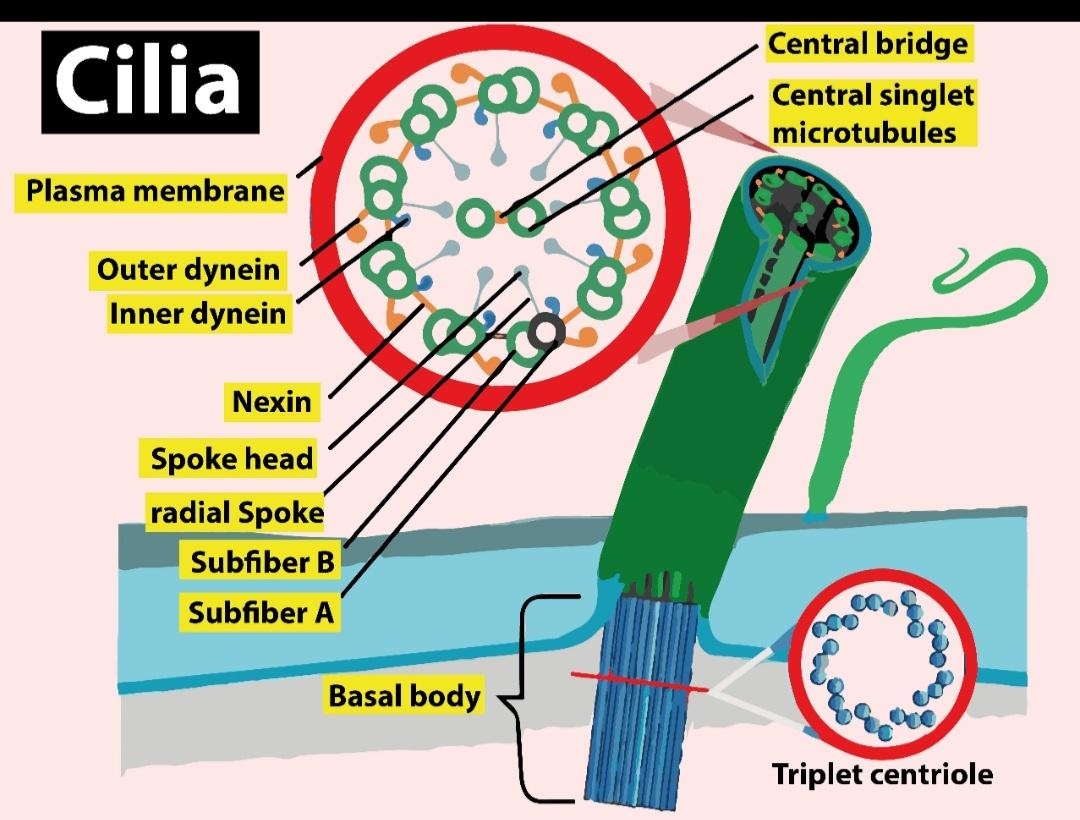
Basal bodies are the essential foundation upon which these sensory cilia are built. They provide the structural framework and nucleation site for the “9+0” axoneme, allowing it to extend from the cell surface and embed the necessary sensory machinery. Without basal bodies, these crucial sensory appendages would not exist, severely compromising the ability of these specialized cells to interact with and respond to their surroundings. Examples include photoreceptor cells in the retina and olfactory neurons in the nose.
The Unseen Architects of Reproduction: Basal Bodies in Gametes
The role of basal bodies in reproduction is profound, particularly in the formation of sperm. Mature sperm cells possess a flagellum that is critical for their motility and their ability to reach and fertilize an egg. This flagellum is assembled and anchored by a basal body. The precise structure and function of the sperm’s basal body are paramount for successful fertilization.
Furthermore, recent research has suggested that basal bodies may also play a role in the development and function of egg cells, although this area is still under active investigation. The ability of an egg to be fertilized and to initiate embryonic development is a complex process, and the contribution of basal bodies, potentially through their role in organizing cytoskeletal elements or other cellular components, is a subject of ongoing scientific inquiry.
From Cellular Mechanics to Technological Inspiration: The Broader Impact of Basal Bodies
The study of basal bodies, while rooted in fundamental cell biology, has surprising implications and connections that extend into various fields, including technology and medicine. Understanding these microscopic structures can offer insights that inspire innovation and address significant health challenges.
Biomimicry and Nanotechnology: Learning from Nature’s Design
The intricate and efficient design of basal bodies, with their precise self-assembly and functional elegance, serves as a compelling example for biomimicry. Researchers in nanotechnology and materials science are inspired by these cellular structures to develop novel self-assembling materials and nanoscale devices.
The controlled organization of protein subunits to form a functional entity like a basal body offers blueprints for engineers looking to create complex molecular machines. Imagine self-assembling drug delivery systems or nanoscale robots that can navigate biological environments, drawing inspiration from the principles of basal body formation. The highly ordered arrangement of microtubules and associated proteins can inform the design of new materials with specific mechanical properties or self-repair capabilities.
Medical Applications: Unraveling Disease Mechanisms and Developing Therapies
Defects in basal bodies and the cilia or flagella they produce are linked to a spectrum of human diseases known as ciliopathies. These disorders can manifest in a wide range of symptoms affecting various organ systems, as cilia and flagella are involved in so many critical cellular functions.
For instance, ciliopathies can cause respiratory problems due to impaired mucociliary clearance, kidney cysts, liver disease, infertility, and developmental abnormalities of the brain and skeleton. By studying the structure and function of basal bodies in healthy cells, scientists can identify the molecular basis of these diseases when basal body function is compromised. This understanding is crucial for developing diagnostic tools and, more importantly, for designing targeted therapies. Research into gene therapies, small molecule drugs, and stem cell-based approaches are all being explored to address the underlying causes of ciliopathies, with a deep understanding of basal bodies being central to these efforts.
The Digital Realm: AI, Data Analysis, and the Complexity of Biological Systems
While not a direct technological output of basal bodies, the study of these complex cellular structures benefits immensely from advancements in the digital realm. The sheer complexity of their molecular composition and the dynamic nature of their functions necessitate sophisticated analytical tools.
Artificial intelligence (AI) and machine learning are increasingly being employed to analyze the vast datasets generated from biological experiments, such as microscopy imaging, genetic sequencing, and protein interaction studies related to basal bodies. AI can help identify subtle patterns, predict protein functions, and even model the assembly processes of these organelles. This allows researchers to gain deeper insights into how basal bodies are built, how they interact with other cellular components, and how their dysfunction leads to disease. The ability to process and interpret complex biological data through AI tools is revolutionizing our understanding of cellular machinery like basal bodies.

Conclusion: The Enduring Significance of a Microscopic Marvel
In conclusion, basal bodies are far more than just the anchors for cilia and flagella. They are fundamental cellular architects, indispensable for motility, reproduction, and sensory perception. Their precise, self-assembling, microtubule-based structure underscores the elegance and efficiency of biological design.
From inspiring advancements in nanotechnology to providing crucial insights into human health and disease, the study of basal bodies continues to be a vibrant and impactful area of scientific research. As technology progresses and our understanding deepens, we can expect basal bodies to reveal even more of their secrets, further bridging the gap between the microscopic world of the cell and the macro-level innovations that shape our lives and technologies. They serve as a powerful reminder that even the smallest components of life can hold immense significance and unlock profound possibilities.
aViewFromTheCave is a participant in the Amazon Services LLC Associates Program, an affiliate advertising program designed to provide a means for sites to earn advertising fees by advertising and linking to Amazon.com. Amazon, the Amazon logo, AmazonSupply, and the AmazonSupply logo are trademarks of Amazon.com, Inc. or its affiliates. As an Amazon Associate we earn affiliate commissions from qualifying purchases.