
The year 2019 presented a dynamic and often surprising landscape for mortgage rates, offering a unique window of opportunity for many homebuyers and those looking to refinance. After a period of gradual increases in late 2018, the start of 2019 saw a distinct shift, with rates largely trending downwards, creating a favorable environment for borrowing. Understanding the specific movements and underlying factors of mortgage rates in 2019 is crucial for anyone analyzing past financial markets, evaluating property investments, or simply gaining a deeper appreciation for the intricate dance between global economics and personal finance.

This period was characterized by significant global economic anxieties, a somewhat dovish Federal Reserve, and shifting investor sentiment, all of which played critical roles in shaping the cost of borrowing for homeownership. From the perspective of personal finance, the relatively low rates of 2019 meant reduced monthly payments, increased purchasing power, and substantial savings for those who seized the moment. For the broader financial sector, it underscored the responsiveness of the mortgage market to macroeconomic pressures and policy decisions. This article delves into the specifics of 2019’s mortgage rate environment, exploring the drivers behind its fluctuations, the rates experienced by consumers, and the lasting impact on the housing market and individual financial decisions.
The Economic Landscape: A Precursor to Rate Movements
To truly grasp why mortgage rates behaved as they did in 2019, it’s essential to first understand the broader economic context. Mortgage rates are not set in a vacuum; they are highly sensitive to a complex interplay of domestic and international economic forces, bond market movements, and central bank policies. The year 2019 was particularly notable for several key economic narratives that directly influenced the cost of borrowing.
Global Economic Headwinds and Investor Sentiment
Throughout 2019, global economic growth showed signs of cooling, largely due to ongoing trade tensions, particularly between the United States and China. These disputes created significant uncertainty for businesses and investors worldwide, leading to a general shift towards safer assets. When investors flock to safe-haven assets like U.S. Treasury bonds, the demand for these bonds increases, which in turn drives down their yields. Since mortgage rates typically track the yield of the 10-year Treasury note, a decrease in Treasury yields often translates to lower mortgage rates. This “flight to safety” dynamic was a consistent theme in 2019, pushing rates downward for much of the year. Beyond trade, geopolitical uncertainties in various regions also contributed to a cautious global outlook, reinforcing the demand for stability that U.S. markets often provide.
The Federal Reserve’s Shifting Stance
Perhaps one of the most significant influences on mortgage rates in 2019 was the pivot in monetary policy by the U.S. Federal Reserve. After raising the federal funds rate four times in 2018, signaling a tightening monetary policy, the Fed adopted a more dovish stance in 2019. It began the year by pausing rate hikes and, by mid-year, initiated a series of rate cuts. The Fed cut its benchmark interest rate three times in 2019 (July, September, and October). While the federal funds rate directly impacts short-term borrowing costs, its movements signal the Fed’s outlook on the economy, which in turn influences longer-term rates like those for mortgages. A more accommodative monetary policy, aimed at stimulating economic growth, generally translates to lower borrowing costs across the board, including for home loans. This shift provided a strong tailwind for declining mortgage rates, making homeownership more accessible and refinancing more attractive.
Domestic Economic Performance
Domestically, the U.S. economy was characterized by strong employment figures but moderating inflation. Unemployment remained at historic lows throughout 2019, indicating a robust labor market. However, inflation, a key concern for the Fed, remained relatively subdued, hovering below the central bank’s 2% target for much of the year. Low and stable inflation typically allows bond yields to remain lower, as bondholders are less concerned about their returns being eroded by rising prices. This combination of strong employment and contained inflation gave the Fed room to cut rates without immediate concerns about overheating the economy, further contributing to the favorable mortgage rate environment.
A Closer Look at Mortgage Rate Trends in 2019
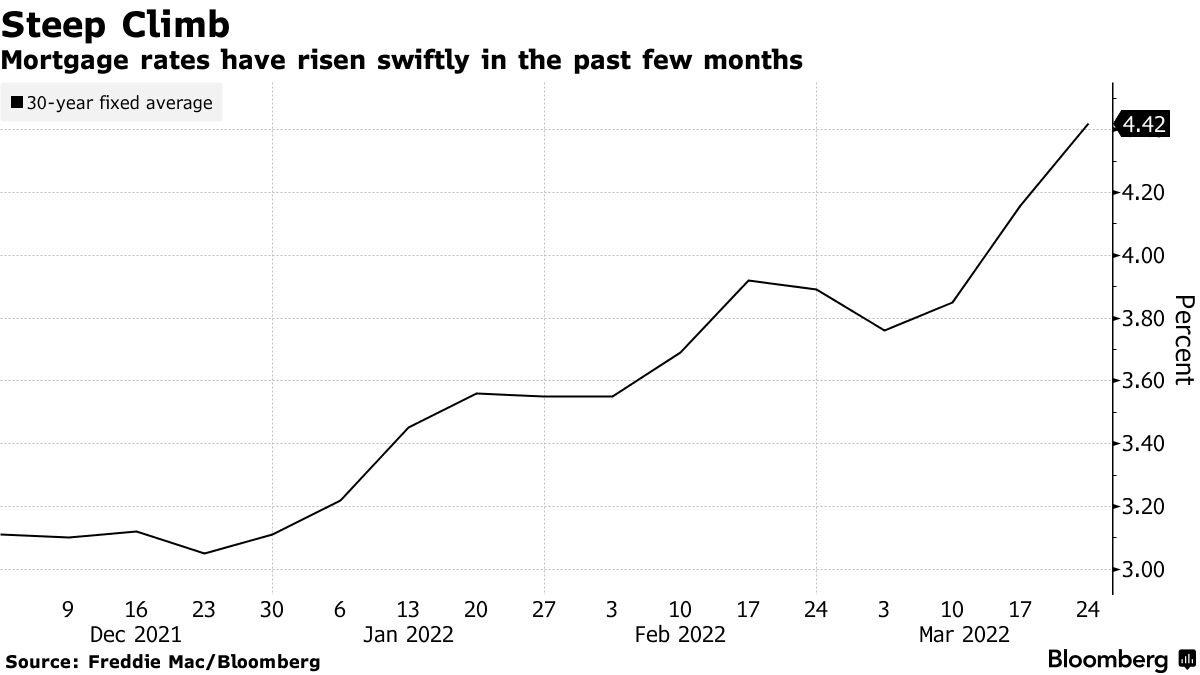
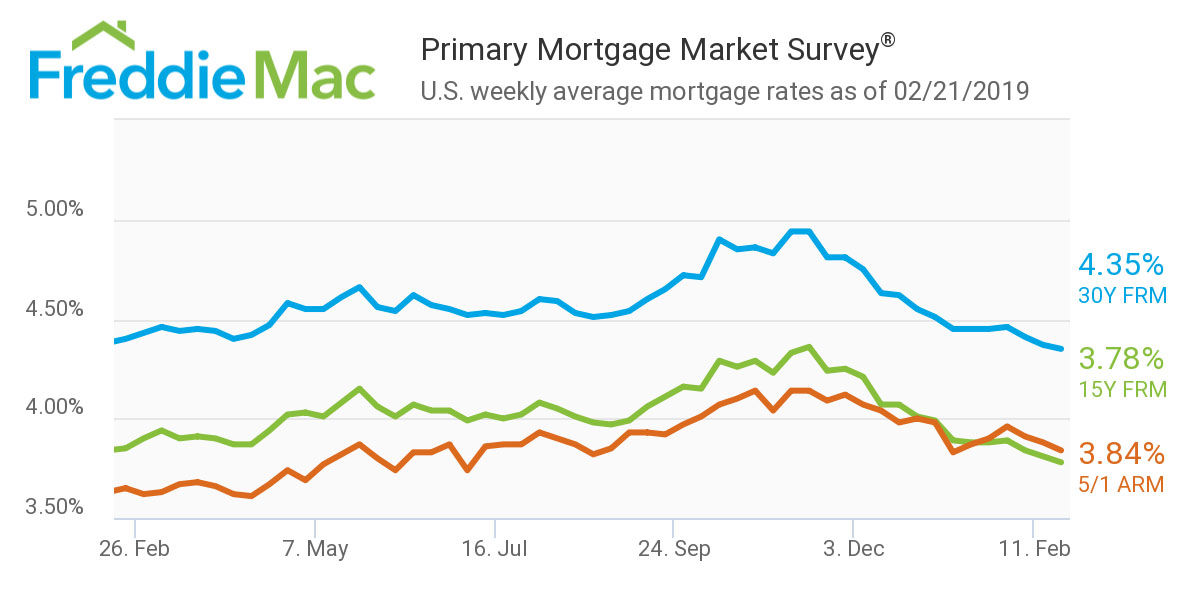
The average 30-year fixed-rate mortgage (FRM), the most popular loan product, saw significant fluctuations throughout 2019 but largely trended downwards from its end-of-2018 highs. This downward trajectory made the year particularly memorable for prospective homeowners and those looking to optimize their existing loans.
Average 30-Year Fixed-Rate Mortgages
At the very beginning of 2019, the average 30-year FRM was hovering around 4.51%. However, driven by the factors mentioned above, rates began a steady decline. By the spring, they had dipped below 4.00% and continued to fall, reaching their lowest point for the year in early September, when they averaged around 3.49%. This was a remarkable drop of over a full percentage point from the start of the year, representing substantial savings for borrowers.
- Q1 2019: Rates started high (mid-4s) but began a consistent descent, reacting to global concerns and the Fed’s dovish pivot. By the end of March, they were closer to 4.06%.
- Q2 2019: The downward trend accelerated, with rates consistently staying below 4.2% and often dipping under 4.0%. The average for June was around 3.80%.
- Q3 2019: This quarter saw the lowest rates of the year. The Fed’s first rate cut in July, followed by another in September, pushed the 30-year FRM to its yearly low of approximately 3.49% in early September.
- Q4 2019: Rates saw a slight rebound from their absolute lows but remained historically favorable. By December, the average 30-year FRM was generally in the range of 3.70% to 3.80%, still significantly lower than at the start of the year.
15-Year Fixed-Rate Mortgages
The 15-year fixed-rate mortgage, known for its lower interest rates and quicker payoff, also followed a similar pattern. Starting the year around 3.99%, these rates also saw a significant decline. By September, the 15-year FRM had reached an annual low of approximately 2.95%, offering even more aggressive savings for those who could manage the higher monthly payments associated with a shorter loan term. This product became particularly attractive for those refinancing and looking to pay off their homes faster.
Adjustable-Rate Mortgages (ARMs)
Adjustable-rate mortgages (ARMs), particularly the 5/1 ARM, also saw their rates decrease in 2019. Starting the year around 3.98%, the average 5/1 ARM rate declined to around 3.30% by early September. While less popular than fixed-rate options during periods of falling rates, ARMs still provided a competitive option for borrowers seeking lower initial rates, especially those planning to sell or refinance before the adjustable period began.
Factors Driving Mortgage Rate Movements
Beyond the broad economic context, several specific mechanisms and market forces directly translated into the observed mortgage rate movements of 2019. Understanding these helps demystify how the daily or weekly fluctuations occur.
The Treasury Yield Connection
The primary driver of long-term mortgage rates is the yield on the 10-year U.S. Treasury note. Mortgage lenders use this benchmark as a base rate for pricing home loans. When the yield on the 10-year Treasury falls, mortgage rates typically follow suit, albeit with a slight lag and spread. In 2019, the 10-year Treasury yield experienced a significant drop, starting the year above 2.6% and falling to below 1.5% by early September, mirroring the decline in mortgage rates. This inverse relationship between bond prices and yields, coupled with the “flight to safety” mentioned earlier, directly translated into more affordable mortgages.
Inflation Expectations and Economic Growth
Lenders and investors consider future inflation when pricing loans. If inflation is expected to rise, they demand higher yields to compensate for the erosion of their purchasing power over time. Conversely, subdued inflation expectations, as seen in 2019, contribute to lower long-term rates. Furthermore, outlooks for economic growth also play a role; strong growth can sometimes lead to higher rates as demand for capital increases, while concerns about slowing growth can push rates down. In 2019, moderating global growth forecasts and contained domestic inflation were key factors in keeping rates low.
Mortgage-Backed Securities (MBS) Market
Mortgage rates are also influenced by the performance of the mortgage-backed securities (MBS) market. MBS are bonds backed by a pool of mortgages, and they are bought and sold by investors. When demand for MBS is high, their prices rise, and their yields (which determine mortgage rates) fall. The Fed’s actions, particularly its balance sheet policies and interest rate cuts, often influence the MBS market, as the expectation of lower rates makes existing MBS more attractive, leading to increased demand and lower yields.
Impact on Homebuyers and Refinancers
The favorable mortgage rate environment of 2019 had a profound impact on both prospective homebuyers and existing homeowners. It created significant opportunities that many were quick to seize, shaping the housing market for years to come.
Opportunities for Affordability and Homeownership
For first-time homebuyers and those looking to purchase property, the lower rates dramatically improved affordability. A lower interest rate means a smaller monthly payment for the same loan amount, or conversely, it allows buyers to qualify for a larger loan amount while keeping their monthly payments similar. This expanded the pool of eligible buyers and stimulated demand in the housing market, making homeownership a more tangible goal for many who might have been priced out previously. The confidence injected into the market by lower borrowing costs helped sustain home sales even amidst broader economic uncertainties.
The Refinancing Boom
Perhaps the most significant impact was on existing homeowners. The decline in rates triggered a substantial refinancing boom throughout 2019. Many homeowners who had taken out loans at higher rates in previous years found themselves in an ideal position to refinance into a lower rate, thereby reducing their monthly payments, cutting down on the total interest paid over the life of the loan, or even converting adjustable-rate mortgages to more stable fixed-rate options. This surge in refinancing activity provided a significant boost to household disposable income for many, acting as a form of economic stimulus by freeing up funds for other spending or savings.
Regional Variations and Market Nuances
While national averages paint a clear picture, it’s important to remember that mortgage rates can exhibit regional variations and depend on specific lender offerings, borrower credit profiles, and loan-to-value ratios. However, the overarching trend of declining rates in 2019 was generally observed across most markets. Borrowers with excellent credit scores were consistently able to secure the most competitive rates, highlighting the enduring importance of financial health in accessing favorable borrowing terms. The increased demand, fueled by lower rates, also impacted housing inventory and price appreciation in various local markets.
Lessons Learned and Looking Ahead
The year 2019 serves as an excellent case study in the interconnectedness of global economics, monetary policy, and personal financial well-being. The rapid shift from rising to falling rates underscored the unpredictable nature of financial markets and the need for vigilance.
The Unpredictable Nature of Rates
One of the key takeaways from 2019 is that mortgage rates can change quickly and significantly, often in response to unexpected economic data or geopolitical events. What might seem like a stable trend can reverse course, presenting both challenges and opportunities. For individuals, this highlights the importance of not waiting too long to act when favorable rates emerge, as market conditions can swiftly evolve.
Importance of Market Monitoring for Financial Decisions
For anyone involved in personal finance, real estate investing, or business finance, 2019 demonstrated the critical value of continuously monitoring economic indicators and central bank communications. These insights allow for more informed decisions regarding borrowing, investing, and financial planning. Understanding the drivers behind rate movements enables individuals to better time their mortgage applications, refinancing efforts, or real estate purchases to maximize financial advantage. The ability to identify when rates are historically low, as they were for much of 2019, can lead to substantial long-term savings.
In conclusion, 2019 was a remarkably favorable year for mortgage borrowers, marked by a significant and sustained decline in rates, driven by global economic anxieties and a pivotal shift in Federal Reserve policy. The resulting affordability and refinancing opportunities had a tangible positive impact on countless individuals and contributed to the overall health of the U.S. housing market. It remains a testament to how macroeconomic forces can directly influence the most significant financial decisions made by households.
aViewFromTheCave is a participant in the Amazon Services LLC Associates Program, an affiliate advertising program designed to provide a means for sites to earn advertising fees by advertising and linking to Amazon.com. Amazon, the Amazon logo, AmazonSupply, and the AmazonSupply logo are trademarks of Amazon.com, Inc. or its affiliates. As an Amazon Associate we earn affiliate commissions from qualifying purchases.