
In the annals of corporate history, few names resonate with the same blend of innovation, design, and cultural impact as Apple Inc. When one asks, “where is Apple from?”, the answer isn’t merely a geographical location; it’s an intricate tapestry woven from entrepreneurial spirit, counter-cultural ideals, and a relentless pursuit of user-centric design that ultimately forged one of the most powerful brands the world has ever known. Understanding Apple’s origins is not just a historical exercise; it’s a deep dive into the foundational elements that shaped its enduring corporate identity, brand strategy, and unparalleled market positioning. This origin story is a blueprint for how a brand’s beginnings can become its most potent strategic asset, continually influencing its narrative and global perception.
The Humble Genesis: Crafting a Corporate Identity in a Garage
Every legendary brand has an origin story, and Apple’s is particularly evocative, rooted in the archetypal American dream of innovation springing from humble beginnings. It’s a narrative that has been meticulously cultivated and leveraged, defining the brand’s pioneering spirit from its very inception.
The Birthplace: A Mythical Garage in Cupertino, California
The image of Steve Jobs and Steve Wozniak toiling in a garage is more than just a historical fact; it’s a foundational myth that underpins Apple’s brand identity. While the actual garage in Los Altos, California, owned by Jobs’ parents, might not have been the sole factory floor for their initial products, it symbolizes the DIY, rebellious spirit that fueled the early personal computer revolution. This setting speaks volumes about the brand’s origins: unpretentious, driven by raw passion, and born outside the established corporate structures of the time. For the brand, this “garage origin” communicates authenticity, ingenuity, and a customer-centric focus, suggesting that Apple products are born from a deep-seated desire to empower individuals, not merely from corporate mandates. It’s a powerful brand narrative that champions the underdog and celebrates grassroots innovation, resonating with consumers who value genuine creativity over corporate polish.
The Foundational Minds: Jobs, Wozniak, and Wayne’s Brand Vision
Apple’s brand identity is intrinsically linked to the distinct personalities and complementary skills of its co-founders. Steve Jobs, the visionary and marketing genius, possessed an uncanny ability to understand consumer desires, even before consumers themselves articulated them. His focus was on the entire user experience, from product design to packaging and advertising – a holistic brand approach far ahead of its time. Steve Wozniak, the engineering savant, was the technical wizard who could turn Jobs’ audacious visions into tangible products. His passion for making technology accessible and fun for ordinary people was encoded into the brand’s DNA, emphasizing simplicity and user-friendliness. Less known but equally significant in the very early days was Ronald Wayne, who provided administrative oversight and drew the very first Apple logo. Though Wayne departed early, the initial triad represented a crucial combination: design vision, engineering prowess, and practical acumen. This blend laid the groundwork for a brand that values aesthetics, functionality, and ease of use above all else, establishing a unique corporate identity that prioritizes seamless integration and intuitive interaction.
Naming the Future: Simplicity as a Core Brand Tenet
The choice of “Apple” as the company name is a masterstroke of brand strategy, reflecting an intentional departure from the convoluted, technical jargon prevalent in the burgeoning tech industry. Jobs famously recounted choosing the name after visiting an apple orchard, perhaps influenced by his fruitarian diet, and liking the sound of it – simple, fresh, and friendly. This name instantly differentiated the company. Instead of abstract acronyms or complex descriptors, “Apple” was organic, approachable, and memorable. It conveyed a sense of simplicity, purity, and naturalness, themes that would become central to the brand’s product design and marketing philosophy. This name choice set a precedent: Apple would strive to demystify technology, making it accessible and inviting rather than intimidating. It was an early, powerful signal of a brand committed to humanizing technology, a core tenet that continues to define its corporate identity and resonate with a global audience.
Cultivating a Distinct Brand Identity: From Counterculture to Cultural Touchstone
Apple’s journey from a garage startup to a global powerhouse wasn’t just about making great products; it was about meticulously crafting and propagating a distinct brand identity that transcended technology, embedding itself deeply within culture. This strategic cultivation turned a tech company into a lifestyle brand.
Design as Differentiator: Early Principles of User Experience
From the outset, Apple understood that design was not merely about aesthetics; it was about function, intuition, and the entire user experience. While competitors focused on specifications and raw power, Apple prioritized how users would interact with their machines. The original Apple II, with its integrated keyboard and plastic casing, was a radical departure from the beige boxes of the era, presenting a friendlier, more inviting presence. This commitment deepened with the Macintosh, which introduced the graphical user interface (GUI) and mouse to the masses, revolutionizing how people interacted with computers. This wasn’t just product innovation; it was a brand statement. Apple positioned itself as the champion of the user, the brand that understood human needs and translated them into elegant, easy-to-use technology. This early emphasis on design as a fundamental brand differentiator became a core tenet of Apple’s corporate identity, signaling a commitment to not just sell products, but to enhance lives through thoughtful, human-centric design.
The Iconic Logo: Evolution of a Brand Symbol
The Apple logo is perhaps one of the most recognizable brand symbols in the world, embodying simplicity, intrigue, and sophisticated design. The first logo, designed by Ronald Wayne, depicted Isaac Newton under an apple tree, which was quickly replaced by Rob Janoff’s iconic rainbow-striped apple in 1977. The bite mark (initially to distinguish it from a cherry) added a playful, intellectual twist – a nod to the “forbidden fruit” of knowledge and the brand’s mission to empower individuals with information. The rainbow colors symbolized Apple’s commitment to color graphics, a pioneering feature at the time. This logo conveyed an irreverent, friendly, and accessible brand, contrasting sharply with the conservative imagery of established tech giants. Over time, the logo evolved, shedding its stripes for monochromatic sleekness, reflecting Apple’s shift towards a more sophisticated, minimalist aesthetic. Yet, the core symbol – the apple with a bite – remained, a powerful testament to the brand’s enduring identity: approachable yet profound, simple yet iconic. The evolution of the logo perfectly mirrors the brand’s growth and refinement, always maintaining its core essence while adapting to new design sensibilities.
Marketing the Revolution: Crafting a Narrative of Innovation

Apple’s marketing strategy has always been as revolutionary as its products, masterfully crafting narratives that resonate deeply with consumer aspirations. Early campaigns, such as the iconic “1984” Super Bowl commercial introducing the Macintosh, framed Apple not just as a technology company, but as a liberator, a champion against conformity. This ad didn’t just sell a computer; it sold an idea: freedom, individuality, and rebellion against the status quo. After Steve Jobs’ return, the “Think Different” campaign revitalized the brand, celebrating visionaries and rebels who changed the world, subtly aligning Apple products with creativity and disruptive innovation. This campaign wasn’t about features; it was about values. It positioned Apple as a brand for those who dared to challenge, to create, and to innovate. By consistently marketing a philosophy rather than just a product, Apple cultivated a powerful brand identity that went beyond functionality, appealing to consumers’ emotional and intellectual desires. This approach cemented Apple’s status as a cultural touchstone, a brand synonymous with groundbreaking thought and creative empowerment.
Apple’s Enduring Roots: Californian Spirit, Global Brand Resonance
While Apple’s influence spans the globe, its brand identity remains firmly anchored in its Californian origins. This geographical and cultural birthplace has imbued the brand with a distinct ethos that continues to shape its corporate culture, design philosophy, and global appeal.
Cupertino: The Heart and Soul of Apple’s Brand Ethos
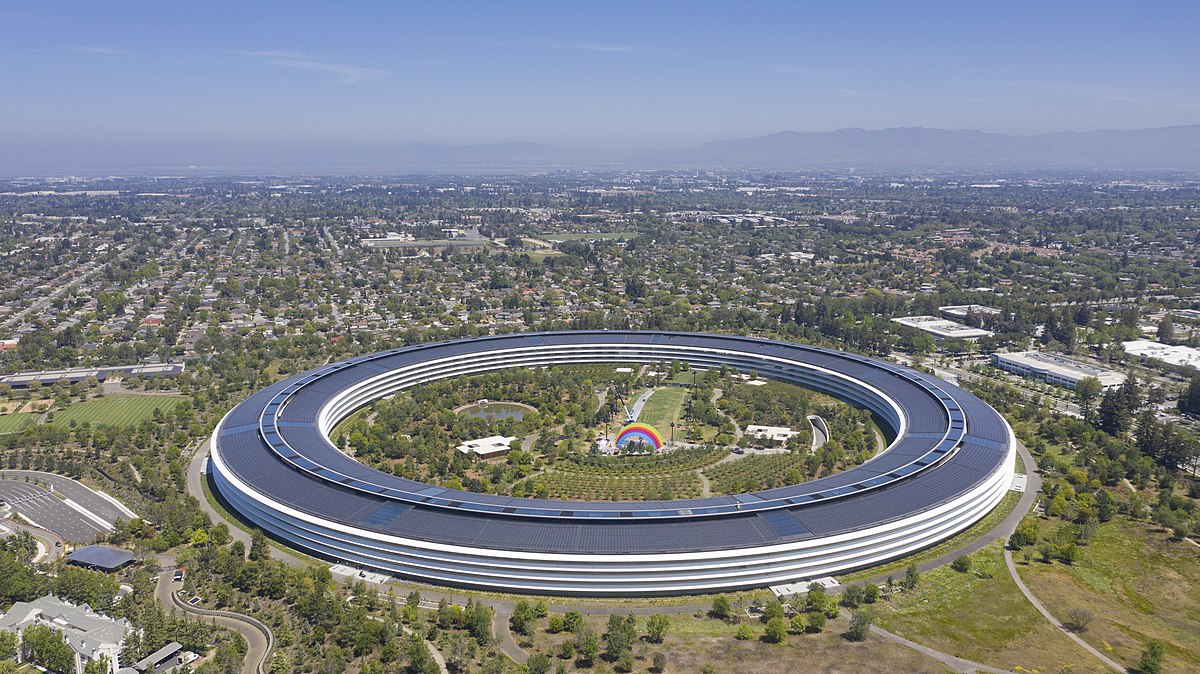
Cupertino, California, isn’t just a corporate address; it’s the spiritual home of Apple. From the modest garage to the sprawling, futuristic Apple Park, this location has nurtured the company’s growth and infused its brand with a particular Californian spirit. This ethos is characterized by optimism, an embrace of innovation, and a relaxed yet driven corporate culture. Apple Park, with its seamless integration of nature and technology, stands as a physical manifestation of Apple’s brand values: transparency, collaboration, and a deep respect for design and environment. The decision to maintain its headquarters in Cupertino, despite its global reach, reinforces the brand’s commitment to its origins. It signifies that the company’s foundational values – innovation, artistic design, and a future-forward mindset – are deeply tied to this specific cultural landscape. For the brand, Cupertino represents an unwavering commitment to its core identity, a constant reminder of where it came from and the principles it was built upon.
Silicon Valley’s Influence on Corporate Culture and Identity
Apple’s brand identity is inseparable from the broader cultural and intellectual currents of Silicon Valley. This region, a hotbed of technological innovation, entrepreneurial risk-taking, and disruptive thinking, heavily influenced Apple’s corporate culture and subsequently, its brand image. The valley’s emphasis on meritocracy, rapid iteration, and a rejection of traditional corporate hierarchies resonated with Apple’s early rebellious spirit. This environment fostered a culture of relentless innovation, where challenging the status quo was not just encouraged but expected. For Apple, this meant a brand identity synonymous with pushing boundaries, thinking differently, and always striving for the next big breakthrough. The “move fast and break things” mentality, albeit refined over time, contributed to Apple’s brand perception as a nimble, forward-thinking entity, even as it grew into a colossal corporation. This regional influence is a cornerstone of Apple’s brand narrative, positioning it as a vanguard of progress and a leader in shaping the future.
The Global Reach: Maintaining Origin Identity Across Markets
Despite its global dominance, operating in virtually every market worldwide, Apple has masterfully maintained its core origin identity. The Californian spirit – innovative, design-centric, and aspirational – is exported with every product and every marketing campaign. Whether in Tokyo, Berlin, or São Paulo, the Apple Store experience, the product aesthetic, and the brand messaging consistently echo the company’s Cupertino roots. This consistency is a critical element of its brand strategy, ensuring a unified and recognizable brand identity regardless of geographical location. Rather than diluting its origins, Apple leverages them to create a universal appeal, suggesting that the spirit of innovation and elegant design transcends cultural boundaries. The brand doesn’t just adapt to local markets; it brings its distinctive “where from” identity to them, inviting consumers worldwide to partake in a global culture of creativity and technological sophistication rooted in a specific place and a specific set of values.
The Strategic Value of Origin: How “Where We’re From” Shapes “Who We Are”
Apple’s origin story is not a mere historical footnote; it is a living, breathing component of its brand strategy, continually leveraged to reinforce its identity, build trust, and inspire future innovations. Understanding where Apple is from provides invaluable insights into the strategic power of a well-articulated brand narrative.
Authenticity and Trust: Leveraging the Foundational Story
In an increasingly skeptical marketplace, authenticity is a priceless brand commodity. Apple’s foundational story, rooted in the genuine passion of its founders and its humble origins, imbues the brand with a deep sense of authenticity. This narrative helps build immense trust with consumers, who perceive the company as genuinely committed to its original mission of empowering individuals through technology. The story of Jobs and Wozniak in a garage, driven by a desire to create something extraordinary, humanizes a multi-trillion-dollar corporation. It suggests that despite its size and complexity, Apple remains true to its core values. This leveraged authenticity is a powerful brand asset, allowing Apple to command premium prices and cultivate unparalleled customer loyalty. Consumers don’t just buy a product; they buy into a legacy, a vision, and a promise that is inherently linked to “where it all started.”
Brand Storytelling: Engaging Audiences Through History
Apple is a master of brand storytelling, and its origin story is perhaps its most compelling narrative. From documentaries about its founders to subtle nods in product launches, the company continuously references its history to engage audiences on an emotional level. This storytelling isn’t about bragging; it’s about connecting. By reminding consumers of its journey from a startup to a global force, Apple reinforces its image as an innovator, a challenger, and a brand that understands the transformative power of technology. This historical narrative serves as a constant point of reference, grounding the brand in a rich legacy and providing context for its latest innovations. It allows Apple to weave a continuous thread between its past achievements and its future aspirations, ensuring that every new product launch feels like a continuation of a grand, inspiring saga. Effective brand storytelling ensures that “where Apple is from” is always relevant to “where Apple is going.”

The Blueprint for Future Brand Evolution
The origins of Apple are not just a static story; they serve as a dynamic blueprint for its future brand evolution. The core values established at its genesis – simplicity, elegant design, user-centricity, and a rebellious spirit – continue to guide its product development, marketing campaigns, and corporate strategy. Even as Apple diversifies into new areas like services, augmented reality, and potentially autonomous vehicles, its brand identity remains steadfast, rooted in those early principles. This strong foundational identity allows Apple to innovate boldly without losing its essence. Consumers trust that any new Apple product, regardless of its function, will embody the core brand values they have come to expect. Thus, “where Apple is from” is a continuous source of inspiration and strategic direction, ensuring that even as the company expands and transforms, its brand remains authentic, coherent, and profoundly impactful. It’s a testament to the power of an origin story that doesn’t just define the past but shapes the future.
aViewFromTheCave is a participant in the Amazon Services LLC Associates Program, an affiliate advertising program designed to provide a means for sites to earn advertising fees by advertising and linking to Amazon.com. Amazon, the Amazon logo, AmazonSupply, and the AmazonSupply logo are trademarks of Amazon.com, Inc. or its affiliates. As an Amazon Associate we earn affiliate commissions from qualifying purchases.