
The allure of creating a proprietary digital currency, a “cryptocurrency,” resonates deeply with innovators and technologists alike. Far beyond mere digital tokens, cryptocurrencies represent a profound paradigm shift in how we conceive of and interact with value, data, and decentralized systems. At its core, a cryptocurrency is a digital asset designed to work as a medium of exchange using strong cryptography to secure financial transactions, verify the transfer of assets, and control the creation of additional units. This entire architecture is built upon the intricate dance of blockchain technology, cryptographic principles, and distributed networks.
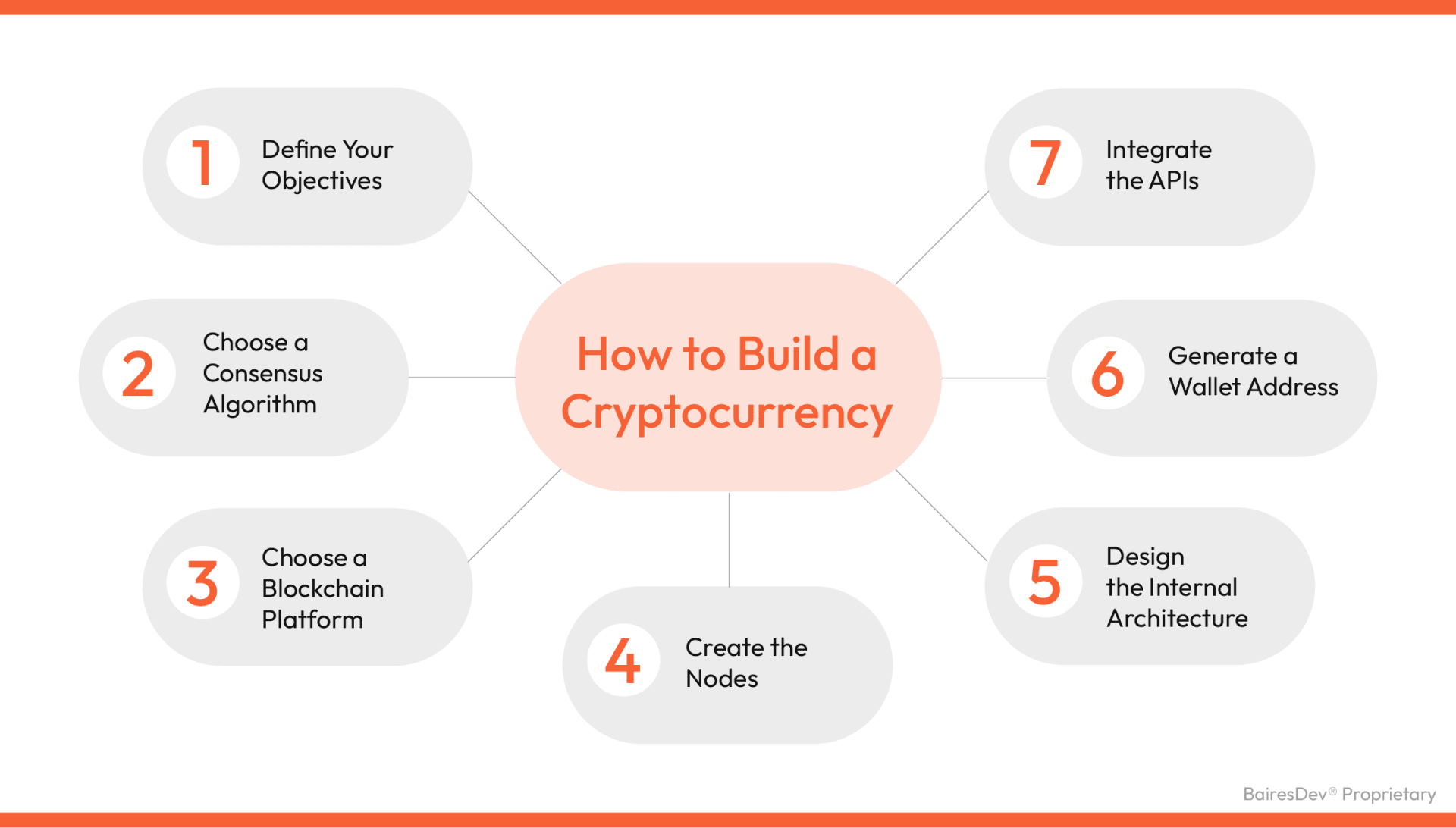
Embarking on the journey of creating a cryptocurrency is fundamentally a technological endeavor. It demands a sophisticated understanding of distributed ledger technology (DLT), computer science, network architecture, and robust security protocols. This guide delves into the essential technical aspects of bringing a new cryptocurrency to life, emphasizing the underlying software, algorithms, and infrastructure required to build a resilient and functional digital asset. From the foundational blockchain mechanisms to advanced deployment strategies, we will explore the engineering challenges and solutions inherent in this complex undertaking.
Understanding the Foundational Technology: Blockchain Principles
At the heart of every cryptocurrency lies a blockchain, a distributed, immutable ledger that records all transactions. Grasping its fundamental principles is the absolute first step in developing any new digital currency.
The Immutable Ledger: Blocks and Chains
A blockchain is precisely what its name suggests: a chain of blocks. Each “block” is a data structure containing a list of verified transactions, a timestamp, and a cryptographic hash of the previous block. This hash is crucial as it cryptographically links the current block to its predecessor, forming an unbroken “chain.” If any data within a past block were to be altered, its hash would change, invalidating all subsequent blocks and immediately signaling tampering. This inherent immutability is one of blockchain’s most powerful security features.
Technically, a block is filled with transaction data, often organized into a Merkle tree (or hash tree). A Merkle tree efficiently summarizes all the transactions in a block by recursively hashing pairs of transactions until a single root hash remains. This Merkle root is then included in the block header. This design allows for quick verification of transaction inclusion within a block without needing to process all individual transactions, significantly improving network efficiency and auditability. The integrity of the chain relies on strong cryptographic hash functions, which produce a fixed-size output (hash) from any input data, making it computationally infeasible to reverse-engineer the input from the hash or find two different inputs that produce the same hash. SHA-256 is a common example used in Bitcoin.
Decentralization and Distributed Consensus
The blockchain’s power isn’t just in its immutability but also in its decentralization. Instead of a single central authority maintaining the ledger, copies of the entire blockchain are distributed across a vast network of independent computers, known as “nodes.” These nodes constantly communicate, verify, and synchronize the ledger, ensuring that no single entity has control over the system. This distributed nature eliminates single points of failure and censorship.
For the network to function cohesively without a central arbiter, all nodes must agree on the state of the ledger and the validity of new blocks. This agreement is achieved through consensus mechanisms. The most famous is Proof of Work (PoW), pioneered by Bitcoin, where “miners” compete to solve a complex computational puzzle. The first to find a solution (the “nonce”) broadcasts it, and if other nodes verify it, the block is added to the chain, and the miner receives a reward. This process is energy-intensive but provides robust security against malicious actors. Another prominent mechanism is Proof of Stake (PoS), used by Ethereum 2.0, where validators are chosen to create new blocks based on the amount of cryptocurrency they “stake” as collateral. PoS is generally more energy-efficient and can offer higher transaction throughput, but requires different security considerations. Other mechanisms like Delegated Proof of Stake (DPoS), Proof of of Authority (PoA), and variations offer different trade-offs in terms of decentralization, scalability, and security. Designing a robust consensus mechanism is paramount for any new cryptocurrency.
Cryptography: The Backbone of Security
Cryptography is the underlying technological bedrock that secures transactions and identities within a cryptocurrency network. It’s what transforms raw data into a trustworthy, immutable record. Public-key cryptography is central to this. Each user has a pair of keys: a public key, which can be shared widely and acts like an address to receive funds, and a private key, which must be kept secret and acts like a digital signature to authorize transactions.
When a user wants to send cryptocurrency, they use their private key to “sign” the transaction. This digital signature proves ownership of the funds without revealing the private key itself. The network can then verify this signature using the sender’s public key. The mathematical properties of public-key cryptography ensure that only the holder of the private key can create a valid signature, preventing unauthorized spending. Beyond digital signatures, cryptographic hash functions (as mentioned with Merkle trees) are used extensively for data integrity, linking blocks, and generating unique identifiers. The careful implementation and robust security of these cryptographic primitives are non-negotiable for the integrity and security of the entire cryptocurrency ecosystem. Any vulnerability here could lead to catastrophic losses or systemic failure.
Choosing Your Blockchain Architecture and Development Path
Once the core technical principles are understood, the next critical step is to decide on the architectural approach for your cryptocurrency. This choice largely dictates the complexity of development, the required technical expertise, and the potential features of your digital asset.
Building from Scratch: A Deep Dive into Core Development
Developing a blockchain and its native cryptocurrency entirely from the ground up is the most challenging and resource-intensive path, but it offers unparalleled customization and control. This involves writing all the core components yourself: the peer-to-peer networking protocol, the consensus mechanism, the cryptographic libraries, the transaction validation logic, and the data storage layers.
Popular low-level programming languages like C++ (for performance-critical systems, like Bitcoin Core), Go (for its concurrency features, used in Ethereum’s Geth client), Rust (for its memory safety and performance, gaining traction in newer projects like Solana and Polkadot), or even Java and Python for specific components, are typically employed. This path requires a deep understanding of network programming, distributed systems, cryptography, and operating system internals. The advantages include complete control over every aspect of the blockchain’s behavior, optimized performance for specific use cases, and the potential for groundbreaking innovation in consensus or network architecture. However, the immense complexity, the need for a large and highly skilled development team, and the inherent security risks of building foundational software from scratch make this a monumental undertaking, often reserved for projects aiming to create entirely new blockchain ecosystems rather than just a token. Rigorous testing, extensive security audits, and continuous maintenance become a fundamental part of the development lifecycle.
Leveraging Existing Blockchain Platforms (Forking & Sidechains)
A more common and less resource-intensive approach is to leverage or adapt existing, proven blockchain codebases. This can involve “forking” an established blockchain like Bitcoin or Ethereum or building a “sidechain” or Layer 2 solution.
Forking an existing blockchain means taking its open-source codebase, modifying it to suit your needs, and launching it as a new, independent blockchain. This method provides the immediate benefit of inheriting a battle-tested and peer-reviewed codebase, which significantly reduces development time and potential vulnerabilities compared to building from scratch. For instance, Litecoin is a fork of Bitcoin with modified parameters (faster block times, different hashing algorithm). While offering customization, the downside is that you also inherit some of the original blockchain’s limitations and security assumptions. You’re responsible for maintaining your modified code, securing your network with your own set of nodes, and building a community around it.
Sidechains, on the other hand, are separate blockchains that run parallel to a main blockchain and are designed to extend its functionality or scalability. They typically allow assets to be moved between the main chain and the sidechain through a two-way peg mechanism. This allows for experimentation with new features, consensus mechanisms, or higher transaction throughput without burdening the main chain. Layer 2 solutions, like Lightning Network for Bitcoin or Optimism/Arbitrum for Ethereum, are also technically distinct from forking, as they build on top of the main blockchain to process transactions off-chain, then periodically settle them on the main chain, significantly enhancing scalability and reducing transaction costs. These approaches allow you to create a new cryptocurrency (or token) that benefits from the security and infrastructure of a larger network while still offering unique features.
Smart Contract Platforms: The Easier Entry Point
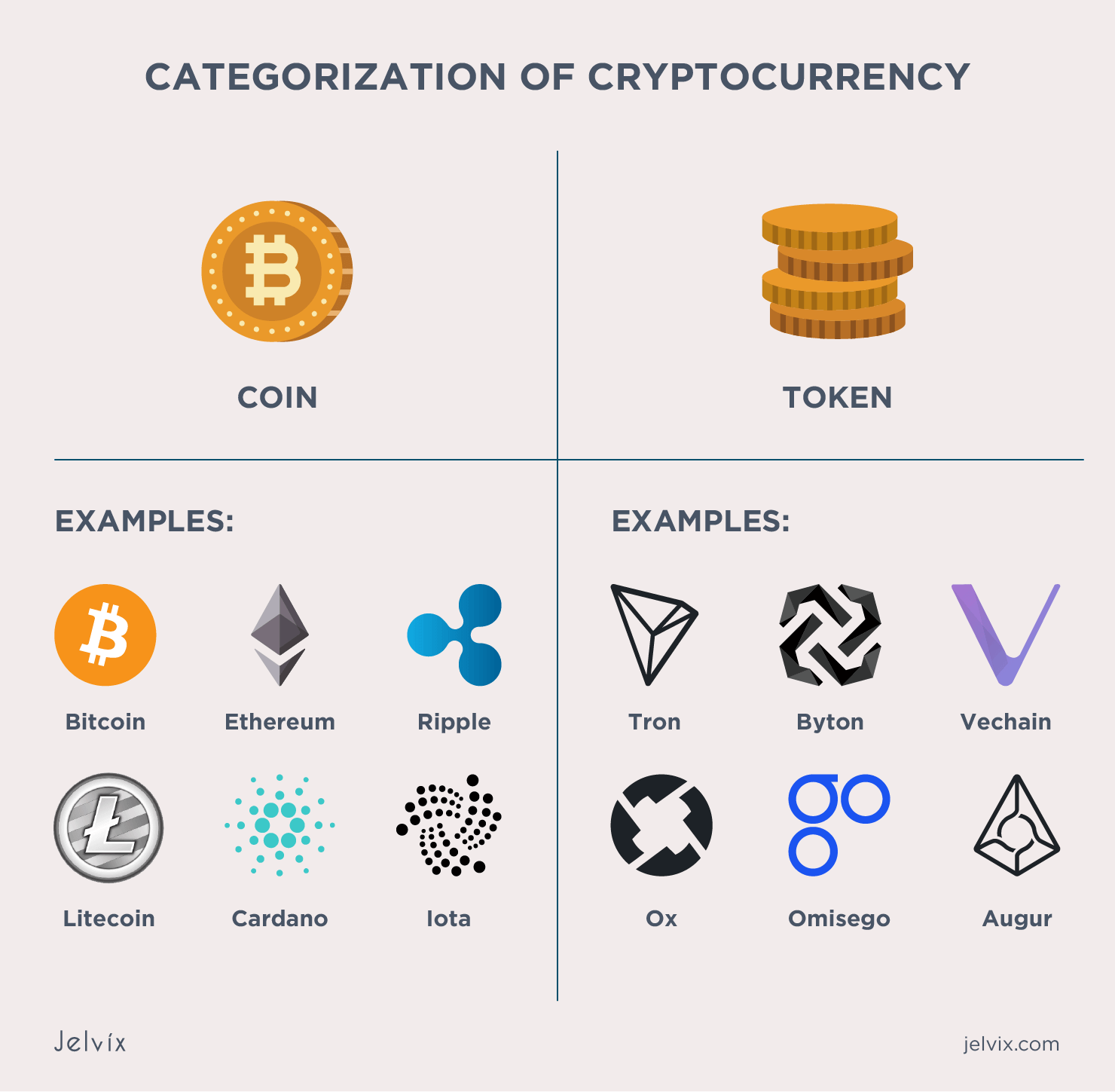
For many projects, especially those focused on decentralized applications (dApps) or specific utility tokens, building on an existing smart contract platform offers the most accessible entry point. Platforms like Ethereum, Binance Smart Chain (BSC), Solana, Cardano, and Polkadot provide a robust infrastructure upon which developers can deploy custom tokens and smart contracts.
Ethereum, with its Solidity programming language and ERC-20 token standard, is perhaps the most popular for creating fungible tokens. The ERC-20 standard defines a common set of functions that an Ethereum-based token contract must implement, making it interoperable with various wallets, exchanges, and other dApps. Creating an ERC-20 token involves writing a Solidity smart contract, compiling it, and deploying it to the Ethereum blockchain. This process is significantly simpler than building an entire blockchain from scratch, as the developer only needs to focus on the logic of their token and its associated smart contracts, relying on the underlying Ethereum network for security, decentralization, and transaction processing. Similarly, ERC-721 is a standard for non-fungible tokens (NFTs), while BEP-20 is the equivalent standard on Binance Smart Chain. Other platforms offer their own standards and virtual machines, each with unique technical characteristics regarding transaction speed, cost, and developer tools. While this approach limits control over the core blockchain infrastructure, it drastically reduces development complexity and allows projects to focus on their unique value proposition and application logic.
Designing Your Cryptocurrency’s Technical Specifications
Beyond choosing the underlying architecture, a crucial phase involves meticulously defining the technical specifications of your cryptocurrency. This includes designing its fundamental parameters, core features, and robust security measures.
Tokenomics from a Technical Perspective
“Tokenomics” often refers to the economic model of a cryptocurrency, but from a technical standpoint, it dictates how the currency’s supply is managed and how network participants are incentivized. You must define the total supply: whether it’s fixed (like Bitcoin’s 21 million limit), inflationary (new units are continuously minted, perhaps to reward miners/stakers), or deflationary (units are burned, reducing supply over time). Technically, this involves implementing precise algorithms for minting new coins (e.g., through block rewards in PoW, or staking rewards in PoS) and potentially for burning them.
For mining-based systems, you’ll need to define the block reward, how it halves over time, and the difficulty adjustment algorithm. Difficulty adjustment is a critical piece of code that automatically recalibrates the computational effort required to mine a block, ensuring a consistent block production rate despite fluctuating network hash power. For staking systems, the technical design includes the staking reward mechanism, the minimum stake amount, slashing conditions (penalties for misbehavior), and delegate selection processes. Furthermore, transaction fees are a technical component: how they are calculated (e.g., based on transaction size, computational complexity, or network congestion—like Ethereum’s gas model), whether they go to miners/validators or are burned, and how they interact with network scalability. These parameters are not just economic; they are hard-coded into the blockchain protocol and dictate its operational mechanics.
Core Features and Utility
The technical features baked into your cryptocurrency will define its utility and capabilities. Programmability, for example, is enabled through a smart contract engine (like the Ethereum Virtual Machine, EVM), allowing developers to create self-executing contracts and decentralized applications that interact with your token. If your cryptocurrency aims for high-frequency transactions, its technical design must prioritize scalability and transaction speed (Transactions Per Second, TPS). This might involve sharding, optimistic rollups, zero-knowledge rollups, or other Layer 2 solutions, all of which are complex technical implementations.
Privacy features, such as zero-knowledge proofs (e.g., zk-SNARKs used in Zcash) or confidential transactions (e.g., Mimblewimble in Grin), require sophisticated cryptographic engineering. These features allow transactions to occur with varying degrees of anonymity while maintaining network integrity. Interoperability, the ability to communicate and transfer assets between different blockchains, is another key technical feature that might require the development of cross-chain bridges or adherence to specific communication protocols. Defining these features early dictates the complex software engineering that will follow. Each choice has significant implications for the codebase, security model, and overall performance.
Security Considerations
Security is paramount and must be ingrained in every layer of your cryptocurrency’s technical design. Beyond the inherent cryptographic security of the blockchain itself, additional measures are crucial. The consensus mechanism must be robust against various attacks, notably the “51% attack” where a single entity controls a majority of the network’s hash rate (PoW) or staked capital (PoS) and can manipulate transaction order or double-spend. Technical defenses include sufficiently high mining/staking difficulty, large decentralized node networks, and fast block finality.
Smart contracts, if utilized, are a common attack vector. Their code must be meticulously audited by independent security experts to identify and rectify vulnerabilities (e.g., reentrancy attacks, integer overflows) before deployment. Secure wallet development is also critical, focusing on robust private key generation, storage, and transaction signing mechanisms. Implementing multi-signature wallets, hardware wallet integration, and secure seed phrase generation are essential for user asset protection. Furthermore, the network must be designed to resist Sybil attacks (where a single entity creates multiple fake identities to gain disproportionate influence) and DDoS attacks. Continuous monitoring, bug bounty programs, and rapid patch deployment mechanisms are essential for ongoing security maintenance of the entire system.
Deployment, Testing, and Ongoing Maintenance
The creation of a cryptocurrency extends far beyond coding its core logic; it encompasses rigorous testing, strategic deployment, and a commitment to continuous maintenance and evolution.
Setting Up Your Network
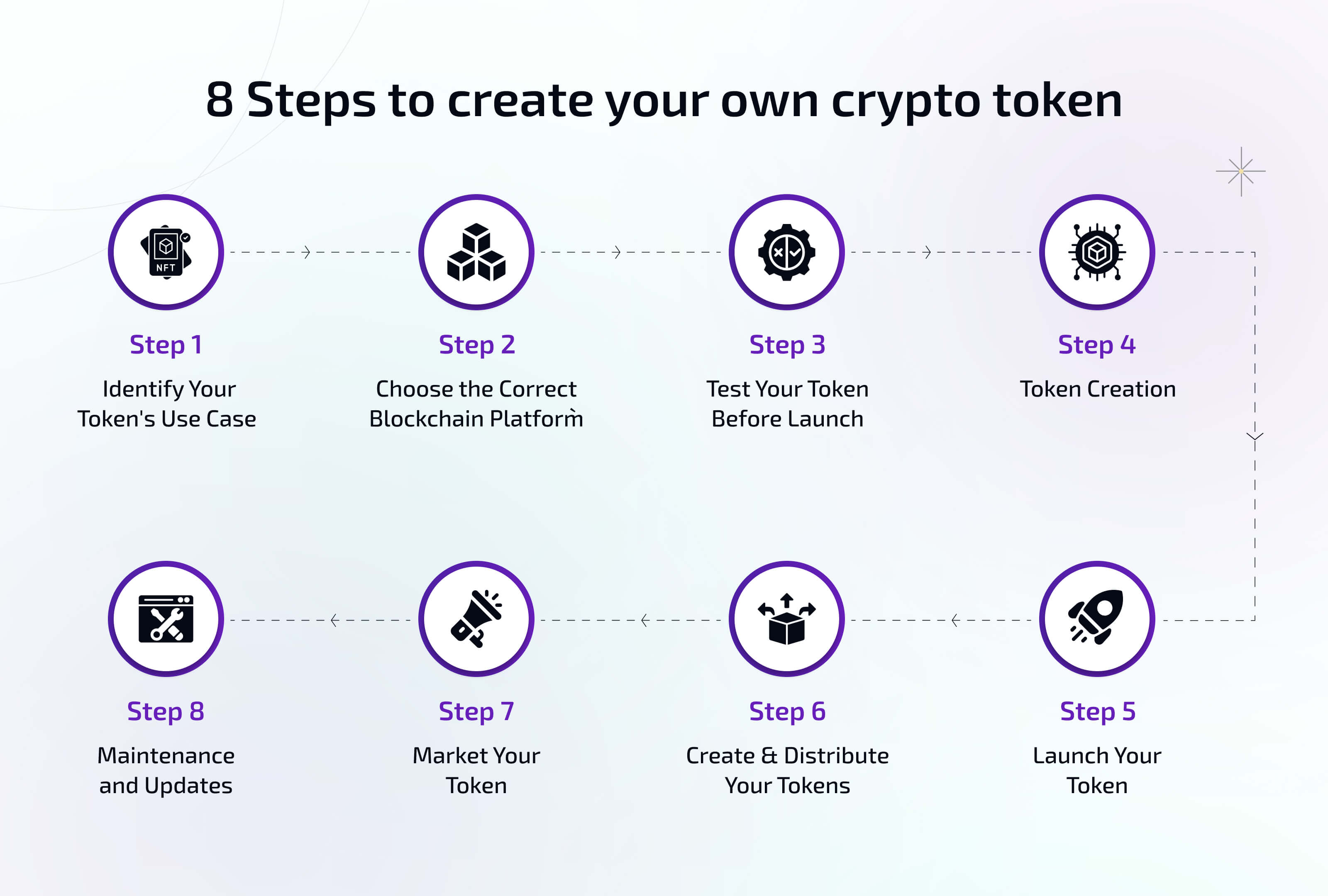
Once the codebase is robust and thoroughly reviewed, the next technical hurdle is to set up the network infrastructure. This involves deploying the “genesis block” – the very first block in your blockchain, which has no preceding block and often contains initial parameters and an initial coin distribution. You’ll need to establish a sufficient number of initial nodes to ensure decentralization from the start. These nodes will run your blockchain software, store a copy of the ledger, and participate in the consensus process.
The deployment typically begins with a “testnet” – a separate instance of your blockchain designed purely for testing. Testnets use real blockchain mechanics but with worthless tokens, allowing developers and early users to experiment, find bugs, and test dApps without financial risk. Only after exhaustive testing on the testnet, and when the codebase is deemed stable and secure, should you plan for a “mainnet” launch. The mainnet is the live, production version of your blockchain where real value transactions occur. This transition often involves a launch event, coordinating with initial node operators, and ensuring broad accessibility for users to download client software and connect to the network.
Rigorous Testing and Auditing
Thorough testing and auditing are non-negotiable for the long-term viability and security of any cryptocurrency. This involves multiple layers of testing: unit tests for individual functions, integration tests for how different components interact, and end-to-end tests for the entire system workflow. Stress testing the network with high transaction volumes and simulating various attack scenarios is crucial to gauge its resilience and scalability.
Crucially, the entire codebase, especially smart contracts and consensus mechanisms, should undergo independent security audits by specialized blockchain security firms. These audits involve expert review of the code to identify vulnerabilities, logical flaws, and potential attack vectors that internal teams might overlook. A public bug bounty program, where ethical hackers are incentivized to find and report vulnerabilities, can also significantly enhance security post-launch. Technical documentation, including API specifications, developer guides, and architectural diagrams, must also be meticulously maintained and kept up-to-date to facilitate adoption and future development.
Community & Governance (Tech Aspect)
While “community” often implies marketing, its technical dimension is vital for decentralized cryptocurrency. For the blockchain to evolve, there must be a mechanism for proposing and implementing protocol upgrades. This often involves technical governance models, such as Decentralized Autonomous Organizations (DAOs). A DAO, enabled by smart contracts, allows token holders to vote on technical proposals like changes to block size, consensus parameters, or new features.
Implementing a DAO requires developing the smart contracts that facilitate voting, proposal submission, and automated execution of approved changes. Whether your governance is entirely “on-chain” (where voting directly triggers code changes) or “off-chain” (where votes signal intent, and developers manually implement changes), the technical framework for this decision-making process is critical. A robust upgrade path is essential; otherwise, your blockchain could become stagnant or vulnerable if bugs are discovered later. This also includes technical mechanisms for hard forks (backward-incompatible changes requiring all nodes to upgrade) and soft forks (backward-compatible changes), each demanding precise technical coordination across the network.
Wallet Development and Ecosystem Integration
For users to interact with your cryptocurrency, accessible and secure wallets are essential. This involves developing various wallet solutions: command-line interface (CLI) wallets for technical users, desktop applications, mobile apps, and web-based wallets (often browser extensions). Each requires specific development efforts to integrate with your blockchain’s RPC (Remote Procedure Call) API, manage cryptographic keys securely, and display transaction history.
Beyond basic wallets, integrating your cryptocurrency into a broader ecosystem is critical for its utility. This means creating well-documented APIs and SDKs (Software Development Kits) that allow third-party developers to build decentralized applications (dApps), exchanges, and other services that interact with your currency. Technical support for developers, comprehensive documentation, and developer events are vital for fostering an ecosystem around your blockchain. This technical infrastructure facilitates adoption, liquidity, and the overall growth of your cryptocurrency’s functional network.
Conclusion
Creating a cryptocurrency is an ambitious journey that requires profound technical expertise, meticulous planning, and a steadfast commitment to security and innovation. From the foundational understanding of blockchain principles and cryptographic security to the intricate decisions regarding architecture, technical specifications, and ongoing maintenance, every step is deeply rooted in complex computer science and engineering challenges.
It is a testament to the power of decentralized technologies that individuals and teams can now conceptualize and build entirely new digital economic systems. However, the path is fraught with technical hurdles, from designing robust consensus mechanisms and secure smart contracts to managing network decentralization and ensuring scalability. Success hinges not just on initial development, but on continuous innovation, rigorous security audits, and a well-defined technical roadmap that allows the cryptocurrency to adapt and evolve within an ever-changing technological landscape. By focusing on sound engineering, robust security, and scalable infrastructure, developers can contribute to the next wave of decentralized innovation.
aViewFromTheCave is a participant in the Amazon Services LLC Associates Program, an affiliate advertising program designed to provide a means for sites to earn advertising fees by advertising and linking to Amazon.com. Amazon, the Amazon logo, AmazonSupply, and the AmazonSupply logo are trademarks of Amazon.com, Inc. or its affiliates. As an Amazon Associate we earn affiliate commissions from qualifying purchases.