
Blockchain technology, once a niche concept primarily associated with Bitcoin, has rapidly evolved into a foundational technology poised to reshape industries ranging from finance and supply chain to healthcare and entertainment. Its core principles of decentralization, immutability, and transparency offer compelling solutions to many long-standing challenges, driving a surge of interest from innovators, businesses, and investors alike. For those looking to capitalize on this transformative technology, understanding the various investment avenues and their associated risks and rewards is paramount. This guide delves into the strategic approaches to investing in blockchain, focusing on practical considerations within the financial landscape.
Understanding the Blockchain Ecosystem for Investors
Before diving into specific investment strategies, it’s crucial to grasp what blockchain is and the diverse components of its burgeoning ecosystem. This foundational knowledge empowers investors to make informed decisions beyond mere speculation.
What is Blockchain? A Quick Primer
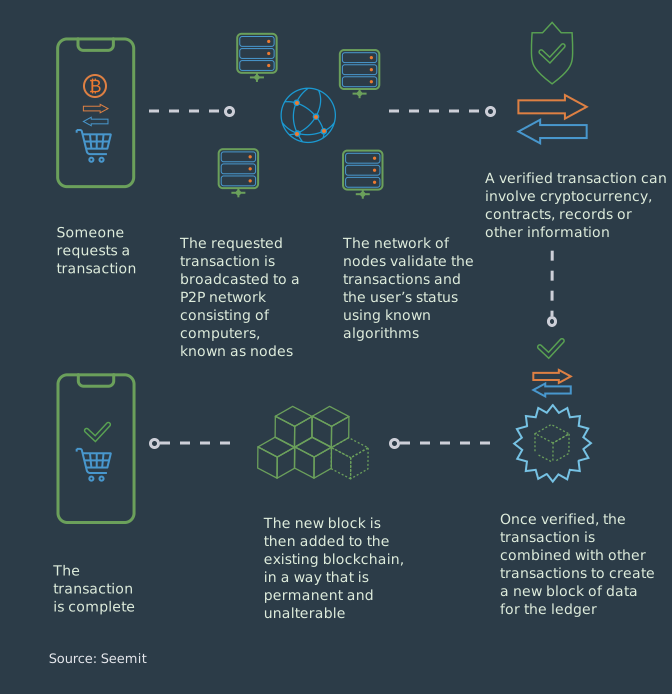
At its heart, blockchain is a distributed, immutable ledger that records transactions across a network of computers. Unlike traditional centralized databases, there is no single point of control; instead, participants collectively validate and maintain the ledger. Each “block” contains a timestamped batch of transactions and is cryptographically linked to the previous block, forming a “chain.” This structure ensures security, transparency, and resistance to tampering.
From an investment perspective, blockchain’s value proposition stems from its ability to:
- Enhance Security: Cryptographic principles make it incredibly difficult to alter past transactions.
- Increase Transparency: All validated transactions are publicly viewable (though often pseudonymously).
- Boost Efficiency: It can streamline processes by removing intermediaries and automating trust through smart contracts.
- Foster Innovation: It enables entirely new business models and applications, from decentralized finance (DeFi) to digital identity.
Key Investment Avenues
Investing in blockchain isn’t a one-size-fits-all endeavor. The ecosystem offers several distinct pathways, each with its own risk profile and potential returns:
- Direct Investment in Cryptocurrencies: The most direct way to gain exposure is by buying digital assets like Bitcoin (BTC), Ethereum (ETH), or various altcoins that power blockchain networks or applications.
- Blockchain-Related Stocks: Investing in publicly traded companies that are directly involved in developing blockchain technology, mining cryptocurrencies, or integrating blockchain solutions into their existing business models.
- Blockchain Exchange-Traded Funds (ETFs): For a more diversified and professionally managed approach, ETFs that hold a basket of blockchain-related stocks offer exposure without requiring individual stock picking.
- Venture Capital/Private Equity: For accredited investors, participating in early-stage funding rounds for promising blockchain startups.
The Underlying Value Proposition
Why is blockchain an attractive long-term investment? Beyond the speculative hype, the technology addresses real-world problems. Its ability to create immutable records, facilitate peer-to-peer transactions without intermediaries, and enable self-executing agreements (smart contracts) holds immense potential. Industries poised for disruption include:
- Finance: Decentralized lending, stablecoins, faster cross-border payments.
- Supply Chain: Transparent tracking of goods, provenance verification.
- Healthcare: Secure sharing of patient records, drug authenticity.
- Real Estate: Tokenization of assets, fractional ownership.
- Identity Management: Self-sovereign digital identities.
Investors are betting on the long-term adoption and integration of these solutions, believing that blockchain technology will become an integral part of the global digital infrastructure, much like the internet did.
Direct Investment in Cryptocurrencies
Investing directly in cryptocurrencies is often the first entry point for many interested in blockchain. It offers the most direct exposure to the technology’s performance but also carries significant risks.
Major Cryptocurrencies and Their Use Cases
The cryptocurrency market is vast and constantly evolving, but a few key players form its backbone:
- Bitcoin (BTC): Often dubbed “digital gold,” Bitcoin was the first cryptocurrency and remains the largest by market capitalization. Its primary use case is as a store of value and a medium for peer-to-peer transactions. Investors typically view it as an inflation hedge or a long-term asset.
- Ethereum (ETH): The second-largest cryptocurrency, Ethereum is much more than just a digital currency. It’s a decentralized platform that enables smart contracts and decentralized applications (dApps). ETH is the “gas” that powers the Ethereum network, making it foundational for sectors like Decentralized Finance (DeFi), Non-Fungible Tokens (NFTs), and various enterprise blockchain solutions.
- Other Prominent Altcoins: Beyond Bitcoin and Ethereum, thousands of “altcoins” (alternative coins) exist, each with specific purposes. Examples include:
- Solana (SOL): Known for its high transaction speed and low fees, aiming to be a scalable platform for dApps.
- Cardano (ADA): Focuses on scientific peer-reviewed research for its development, aiming for sustainability and scalability.
- Polkadot (DOT): Facilitates interoperability between different blockchains, creating a multi-chain ecosystem.
- Ripple (XRP): Aims to facilitate fast and low-cost international payments for financial institutions.
Understanding the underlying technology, team, whitepaper, and real-world utility of each cryptocurrency is crucial before investing.
Risks and Volatility
Cryptocurrency investments are characterized by extreme volatility and inherent risks that differentiate them from traditional assets:
- High Price Volatility: Prices can fluctuate wildly, often by double-digit percentages in a single day, driven by news, market sentiment, regulatory changes, and broader economic factors.
- Regulatory Uncertainty: The regulatory landscape for cryptocurrencies is still developing globally. Government crackdowns, bans, or new restrictive laws can significantly impact market prices.
- Security Risks: While blockchain itself is secure, the exchanges and wallets used to store cryptocurrencies are targets for hackers. Investors must prioritize strong security practices.
- Market Manipulation: The relatively smaller market capitalization compared to traditional assets makes cryptocurrencies more susceptible to manipulation by large holders (“whales”) or coordinated pump-and-dump schemes.
- Technological Risks: Underlying blockchain projects can fail, suffer from bugs, or face competition from superior technologies, leading to a loss of value.
Strategies for Crypto Investing
Given the unique nature of cryptocurrency markets, specific strategies can help manage risk:
- Dollar-Cost Averaging (DCA): Instead of making a single lump-sum investment, DCA involves investing a fixed amount of money at regular intervals (e.g., weekly or monthly), regardless of the asset’s price. This strategy helps mitigate the impact of volatility by averaging out the purchase price over time.
- Long-Term Holding (HODLing): Many investors believe in the long-term potential of blockchain and its native cryptocurrencies. HODLing involves buying and holding assets for an extended period, often years, with the conviction that their fundamental value will increase over time. This approach requires patience and resilience to short-term market fluctuations.
- Diversification: Just as with traditional portfolios, diversifying across different cryptocurrencies and blockchain sectors can reduce risk. Instead of putting all capital into one asset, spread investments across Bitcoin, Ethereum, and a selection of promising altcoins with distinct use cases.
- Thorough Research (DYOR): Never invest based on hype or recommendations without conducting your own due diligence. Research includes reading whitepapers, evaluating the development team, understanding the technology’s utility, assessing market capitalization, and examining the project’s community and roadmap.
- Cold Storage: For significant holdings, consider storing cryptocurrencies in hardware wallets (cold storage) to protect them from online threats and exchange hacks.
Indirect Investment Through Traditional Markets
For investors who prefer the regulatory oversight and familiarity of traditional financial markets, or those seeking diversified exposure without directly managing cryptocurrencies, indirect investment avenues offer a compelling alternative.

Blockchain-Related Stocks
Investing in companies that are actively involved in the blockchain space can provide exposure to the technology while remaining within the traditional stock market framework. These companies fall into several categories:
- Direct Blockchain Innovators: These are companies whose core business revolves around blockchain technology. Examples include:
- Cryptocurrency Mining Companies: Publicly traded companies that mine Bitcoin or other cryptocurrencies (e.g., Marathon Digital Holdings, Riot Platforms). Their fortunes are closely tied to crypto prices and mining profitability.
- Crypto Exchanges & Brokers: Companies that facilitate the buying, selling, and custody of cryptocurrencies (e.g., Coinbase Global, Robinhood). Their revenue is often linked to trading volumes and asset prices.
- Blockchain Software & Hardware Providers: Companies developing enterprise blockchain solutions, specialized chips for mining, or security protocols (e.g., IBM’s blockchain initiatives, Canaan Inc.).
- Companies Benefiting Indirectly: These are established corporations that are integrating blockchain into their existing operations or exploring its potential. Examples include:
- Tech Giants: Companies like Microsoft, Amazon, and Google are investing in blockchain R&D and offering blockchain-as-a-service solutions.
- Financial Institutions: Banks and payment processors (e.g., JPMorgan Chase, Visa, Mastercard) are experimenting with digital currencies, tokenized assets, and blockchain-based payment systems.
- Logistics & Supply Chain Firms: Companies using blockchain for enhanced tracking and transparency (e.g., Maersk).
Investing in these stocks requires traditional equity analysis, considering factors like financial health, management quality, competitive landscape, and the company’s specific blockchain strategy.
Blockchain ETFs and Funds
Exchange-Traded Funds (ETFs) and other investment funds dedicated to blockchain offer a convenient way to gain diversified exposure. These funds typically hold a basket of companies involved in the blockchain ecosystem, ranging from crypto miners to software developers and payment processors.
- Advantages:
- Diversification: ETFs automatically diversify your investment across multiple companies, reducing single-stock risk.
- Professional Management: Fund managers conduct the research and selection of underlying assets.
- Accessibility: Easily traded on traditional stock exchanges through standard brokerage accounts.
- Regulatory Oversight: ETFs are regulated financial products, offering a layer of investor protection not always present in direct crypto investments.
- Considerations:
- Expense Ratios: Investors pay a management fee, known as an expense ratio, which can eat into returns.
- Underlying Holdings: It’s crucial to examine the ETF’s holdings to understand what companies and sectors you are investing in. Some may focus heavily on mining, others on enterprise solutions.
- Indirect Exposure: While blockchain ETFs offer exposure to the technology, they don’t directly hold cryptocurrencies (though some may hold companies that hold crypto). Their performance is tied to the stock market performance of blockchain-related firms.
- Thematic Risk: While diversified within the blockchain theme, they are still exposed to sector-specific risks.
Several blockchain ETFs have emerged in recent years, each with a slightly different investment mandate, providing options for various investor preferences.
Venture Capital and Private Equity
For accredited investors with a higher risk tolerance and access to substantial capital, participating in venture capital (VC) or private equity (PE) rounds of promising blockchain startups offers the potential for significant early-stage returns. This avenue involves investing directly into private companies before they go public.
- Potential Rewards: Early entry into potentially disruptive companies can yield substantial returns if the startup succeeds.
- High Risks: Private investments are illiquid (difficult to sell quickly), highly speculative, and carry a high risk of complete loss. Valuation can be challenging, and success is far from guaranteed.
- Accessibility: Typically reserved for institutional investors, family offices, or high-net-worth individuals due to minimum investment thresholds and regulatory requirements.
This pathway is not suitable for most retail investors but represents a significant source of funding for innovation within the blockchain space.
Essential Considerations Before Investing
Regardless of the chosen investment avenue, a disciplined approach, thorough due diligence, and a clear understanding of the broader financial and regulatory landscape are non-negotiable for anyone looking to invest in blockchain.
Risk Management and Due Diligence
Blockchain investments, especially direct cryptocurrency exposure, are inherently speculative. A robust risk management strategy is vital:
- Only Invest What You Can Afford to Lose: This is perhaps the most critical rule. Given the volatility and potential for significant drawdowns, allocate only a portion of your portfolio that, if lost entirely, would not compromise your financial well-being.
- Thorough Research (DYOR – Do Your Own Research): Beyond the basics, delve deep into any project or company before investing. For cryptocurrencies, understand the whitepaper, the development team, the community, the project’s utility, market capitalization, and competitor landscape. For stocks, conduct traditional fundamental and technical analysis.
- Cybersecurity Best Practices: If directly investing in cryptocurrencies, prioritize security. Use strong, unique passwords for exchanges, enable two-factor authentication (2FA), be wary of phishing scams, and consider hardware wallets for significant holdings. Never share your private keys.
- Portfolio Allocation: Determine an appropriate percentage of your overall investment portfolio to allocate to blockchain-related assets based on your risk tolerance and financial goals. This might range from a small speculative portion to a more significant allocation for those with high conviction and a long-term horizon.
Regulatory Landscape
The regulatory environment for blockchain and cryptocurrencies is fragmented and continuously evolving across different jurisdictions. What is legal and acceptable in one country might be restricted or banned in another.
- Impact on Markets: Regulatory clarity (or lack thereof) can significantly impact market sentiment and asset prices. Positive regulatory developments can fuel rallies, while crackdowns can trigger sell-offs.
- Compliance: Investors must be aware of and comply with local laws regarding cryptocurrency ownership, trading, and taxation. Regulatory bodies are increasingly scrutinizing exchanges and stablecoins.
- Future Trends: Keep an eye on global regulatory trends, as major economies establish frameworks for digital assets, which will likely influence the long-term viability and growth of various blockchain sectors.
Tax Implications
Gains and losses from cryptocurrency investments are generally subject to taxation, similar to traditional assets like stocks. The specific rules vary significantly by country.
- Capital Gains Tax: Selling cryptocurrency for a profit (or exchanging it for another cryptocurrency) typically incurs capital gains tax. The tax rate often depends on how long the asset was held (short-term vs. long-term).
- Income Tax: Earning cryptocurrency through mining, staking, airdrops, or as payment for goods/services may be considered taxable income.
- Record Keeping: Maintaining meticulous records of all transactions, including purchase dates, costs, sale dates, and proceeds, is essential for accurate tax reporting. Consulting with a tax professional experienced in cryptocurrency is highly recommended to ensure compliance.
Long-Term vs. Short-Term Perspective
Given the nascent stage of blockchain technology and the immaturity of cryptocurrency markets, a long-term investment perspective is generally advisable.
- Building the Foundation: The technology is still in its foundational stages, and widespread adoption will take time. Short-term speculation is fraught with risk.
- Compounding Growth: A long-term outlook allows for the potential of compounding growth as the ecosystem matures and real-world use cases expand.
- Market Cycles: Long-term investors are better equipped to weather the inevitable market cycles (bull and bear markets) without making emotional decisions based on short-term price movements.

Conclusion
Investing in blockchain offers a compelling opportunity to participate in a technology with truly transformative potential. From direct cryptocurrency holdings like Bitcoin and Ethereum to diversified investments in blockchain-related stocks and ETFs, the avenues are numerous. However, this promising landscape is also characterized by significant volatility, regulatory uncertainty, and inherent risks.
Successful navigation of the blockchain investment space demands a combination of diligent research, strategic risk management, and a long-term vision. Understanding the underlying technology, staying abreast of regulatory developments, and meticulously managing cybersecurity and tax obligations are paramount. By approaching blockchain investments with a professional, insightful, and cautious mindset, investors can position themselves to potentially benefit from the ongoing evolution and widespread adoption of this groundbreaking technology. As with any emerging market, education and prudence remain your most valuable assets.
aViewFromTheCave is a participant in the Amazon Services LLC Associates Program, an affiliate advertising program designed to provide a means for sites to earn advertising fees by advertising and linking to Amazon.com. Amazon, the Amazon logo, AmazonSupply, and the AmazonSupply logo are trademarks of Amazon.com, Inc. or its affiliates. As an Amazon Associate we earn affiliate commissions from qualifying purchases.