
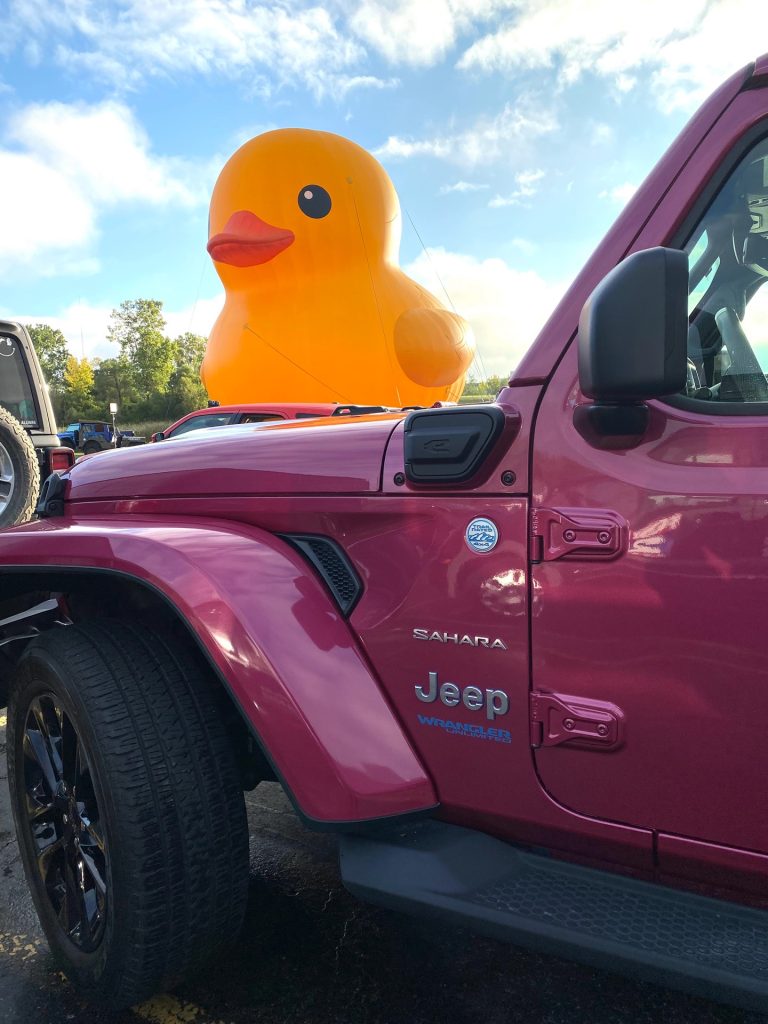
The sight is an odd one, yet surprisingly commonplace if you know where to look. A rugged Jeep, traversing a dusty trail or navigating city streets, adorned with a bright yellow, plastic rubber duck perched prominently on its dashboard. It’s a visual paradox: the utilitarian, off-road capable Jeep, a symbol of adventure and ruggedness, juxtaposed with the playful, childlike icon of a rubber duck. This seemingly nonsensical pairing has blossomed into a genuine subculture, a quiet but persistent phenomenon within the vast Jeep enthusiast community. But what exactly is “up” with Jeeps and rubber ducks? And how does this quirky tradition connect with the broader themes of technology, brand, and even money?
The Birth of a Tradition: More Than Just a Dashboard Decoration
To understand the Jeep ducking phenomenon, we need to delve into its origins, which are as lighthearted and organic as the practice itself. While there’s no single, definitive inventor, the consensus points to the Jeep community’s inherent desire for connection, fun, and shared identity.
The Accidental Origin Story
The most widely accepted narrative of how Jeep ducking began involves a Jeep owner in Canada, who placed a rubber duck on their dashboard as a playful gesture. Another Jeep owner spotted it, was charmed by the unexpected whimsy, and decided to do the same. This simple act of noticing and reciprocating, of spreading a little joy, is at the heart of the tradition. It’s an unwritten rule, a silent acknowledgment of shared passion. When you see another Jeep, and you have a duck, you place it on their vehicle. It’s a spontaneous act of kindness and community building, a small token that says, “I see you, fellow Jeeper.”
Spreading Like Wildfire: The Power of Organic Community
What started as a few isolated acts quickly gained momentum. Social media played a crucial role in disseminating the trend. Photos of ducked Jeeps began appearing online, sparking curiosity and inspiring others to join in. Facebook groups, Instagram hashtags, and dedicated forums became hubs for sharing ducking experiences, showcasing unique duck designs, and strategizing ducking missions. The ease with which this simple act could be replicated and shared made it incredibly viral within the Jeep community. It taps into a fundamental human desire for belonging and recognition, especially within niche enthusiast groups.
Jeeps: A Brand Built on Adventure and Identity
The Jeep brand itself provides fertile ground for such a quirky tradition to take root. Jeep has cultivated an image that extends far beyond mere transportation. It’s a lifestyle, a statement, and a community.
The “Jeep Wave” and Beyond: Fostering a Sense of Kinship
Jeep owners are known for the “Jeep Wave,” a casual acknowledgment between drivers of different Jeep models. It’s a sign of camaraderie, a shared understanding of what it means to own a Jeep. Ducking can be seen as an extension and evolution of this ingrained sense of kinship. It’s a more tangible, playful, and memorable way to connect. While the Jeep Wave is a quick gesture, ducking is a lasting memento, a small treasure left for another enthusiast to discover. This reinforces the idea that being a Jeep owner isn’t just about the vehicle; it’s about being part of an exclusive, albeit informal, club.
Designing for the Spirit: How Brand Identity Fuels Connection
Jeep’s brand strategy has always emphasized freedom, adventure, and rugged capability. Their marketing campaigns consistently depict Jeeps conquering challenging terrains, exploring uncharted territories, and fostering a sense of boundless possibility. This powerful brand narrative creates a loyal following, a group of individuals who resonate with these values. The rubber duck, in its inherent innocence and playfulness, doesn’t contradict this brand identity; it complements it. It adds a layer of lightheartedness and personality to the rugged exterior, suggesting that while Jeeps are built for adventure, their owners also know how to have fun and not take themselves too seriously. It’s this blend of capability and character that makes the Jeep brand so enduring and allows for the flourishing of traditions like ducking.

The Tech Behind the Ducking Phenomenon: Amplification and Connection
While the act of ducking is analog, the spread and amplification of this phenomenon are undeniably intertwined with modern technology.
Social Media as the Ducking Dispatch: Hashtags, Groups, and Visual Storytelling
The rise of platforms like Instagram, Facebook, and even TikTok has been instrumental in the proliferation of Jeep ducking. Dedicated hashtags like #JeepDuck, #DuckedJeep, and #JeepDucking allow enthusiasts to share photos and videos of their ducked Jeeps, discover others who have been ducked, and participate in the community. Online groups, often with tens of thousands of members, serve as virtual meeting places where people can share ducking stories, organize “duck hunts,” and even coordinate large-scale ducking events. This digital infrastructure transforms a simple act into a global phenomenon, connecting individuals across geographical boundaries through a shared, whimsical interest. The visual nature of these platforms perfectly suits the colorful and often creatively decorated rubber ducks, making the content highly shareable and engaging.
Beyond the Basics: Customization and Digital Design
The evolution of ducking has also seen a rise in customization. Enthusiasts are no longer limited to standard yellow ducks. They are now ordering custom-designed ducks with specific themes, colors, and even incorporating small accessories. This is where a touch of tech can be seen in the design process. Online marketplaces and custom printing services allow for the creation of unique ducks, from glow-in-the-dark varieties to ducks representing favorite movie characters or sports teams. While the act of placing the duck is physical, the inspiration, design, and ordering process often involve digital tools and online platforms, blurring the lines between the analog and the digital in this quirky tradition.
The Money Behind the Merriment: From Side Hustle to Community Investment
The Jeep ducking phenomenon, like many online communities, has also found its way into the realm of personal finance and entrepreneurship.
The Ducking Economy: From Hobby to Hustle
What started as a simple act of kindness has, for some, evolved into a small entrepreneurial endeavor. The demand for unique and themed rubber ducks has created a niche market. Many individuals and small businesses now sell custom-designed Jeep ducks online through platforms like Etsy, eBay, and their own websites. These can range from simple variations on the classic yellow duck to elaborately crafted figures that appeal to specific interests within the Jeep community. For some, this is a fun side hustle, a way to monetize a passion and contribute to their Jeep hobby financially. It taps into the “online income” and “side hustles” categories of the website’s money section, demonstrating how even the most whimsical trends can have economic underpinnings.
Investing in the Experience: Community and Content Creation
Beyond direct sales, the ducking phenomenon also fosters a sense of community investment. Many enthusiasts happily spend money on acquiring new ducks, not just for themselves, but to “duck” other Jeeps. This creates a circular economy of sorts, where money is exchanged for the joy of participating in the tradition. Furthermore, the popularity of ducking has inspired content creators, such as YouTubers and bloggers, who focus on documenting their ducking adventures, reviewing custom ducks, and offering tips on how to be a successful ducking enthusiast. These creators, in turn, can monetize their content through advertising, sponsorships, and affiliate marketing, further embedding the phenomenon within the broader landscape of online business and income generation.

Conclusion: A Testament to Connection in a Digital Age
The phenomenon of “what’s up with Jeeps and rubber ducks” is a delightful testament to the power of organic community, clever branding, and the unexpected ways technology and even economics can intersect with simple human gestures. It’s a reminder that in an increasingly digital world, acts of kindness, shared passion, and a touch of playful whimsy can still thrive and even blossom into a widespread cultural trend. From the rugged trails to the digital ether, the humble rubber duck has found an unlikely but perfect home, perched atop a Jeep, symbolizing a connection that is both unique and universally understood within its ever-growing community. It’s a simple joy, amplified by technology, sustained by brand loyalty, and in some cases, even providing a little bit of financial fuel for the adventure.
aViewFromTheCave is a participant in the Amazon Services LLC Associates Program, an affiliate advertising program designed to provide a means for sites to earn advertising fees by advertising and linking to Amazon.com. Amazon, the Amazon logo, AmazonSupply, and the AmazonSupply logo are trademarks of Amazon.com, Inc. or its affiliates. As an Amazon Associate we earn affiliate commissions from qualifying purchases.