
Navigating the complexities of tax season can be daunting, especially when dealing with retirement accounts like a 401(k). For many, a 401(k) is a cornerstone of their financial future, offering significant tax advantages for long-term savings. However, understanding how your contributions, distributions, and other 401(k) activities interact with your annual tax return is crucial for accurate filing and maximizing your financial well-being. This guide will demystify the process, providing a comprehensive overview of how to correctly report your 401(k) activities to the IRS.
Understanding Your 401(k) and Its Tax Implications
Before diving into the specifics of reporting, it’s essential to grasp the fundamental nature of a 401(k) and the tax benefits it offers. This understanding forms the bedrock of accurate tax reporting.
What is a 401(k)?
A 401(k) is an employer-sponsored retirement savings plan that allows employees to invest a portion of their paycheck before taxes are withheld. This pre-tax contribution means your taxable income for the year is reduced, leading to immediate tax savings. The money grows tax-deferred, meaning you don’t pay taxes on the investment gains until you withdraw the funds, typically in retirement. Many employers also offer a Roth 401(k) option, where contributions are made with after-tax dollars. While Roth contributions don’t offer an upfront tax deduction, qualified withdrawals in retirement are entirely tax-free, including all earnings.
The Tax-Deferred Advantage
The primary allure of a traditional 401(k) is its tax-deferred growth. Contributions reduce your current taxable income, and your investments grow without being subject to annual capital gains or dividend taxes. This allows your money to compound more aggressively over time. However, this deferral comes with a future tax obligation: all withdrawals in retirement, including both contributions and earnings, will be taxed as ordinary income at your then-current marginal tax rate.
Roth 401(k) Considerations
For those contributing to a Roth 401(k), the tax treatment is different. Contributions are made with after-tax dollars, meaning they do not reduce your current taxable income. The benefit comes later: qualified distributions from a Roth 401(k) are completely tax-free. A distribution is considered “qualified” if it occurs after you reach age 59½, or are disabled, or the distribution is paid to a beneficiary or to your estate after your death, AND at least five years have passed since your first Roth 401(k) contribution. This makes the Roth option particularly attractive for individuals who anticipate being in a higher tax bracket in retirement.
Key Tax Concepts for 401(k)s
Understanding certain tax concepts is vital. These include the difference between pre-tax and after-tax contributions, the concept of qualified vs. non-qualified distributions, and the implications of employer matching contributions (which are always pre-tax, even if your own contributions are Roth). Keeping these distinctions clear will help you accurately interpret your tax forms and file correctly.
Reporting Your 401(k) Contributions
For most individuals, reporting 401(k) contributions is relatively straightforward as much of the heavy lifting is done by your employer. However, it’s crucial to verify the information and understand how it impacts your tax return.
Employee Contributions vs. Employer Contributions
When you contribute to a 401(k), you’re typically making employee contributions. Your employer might also make contributions on your behalf, either as a match to your contributions or as a profit-sharing contribution. From a tax perspective, both types of contributions for a traditional 401(k) are considered pre-tax and are generally excluded from your taxable income for the year. For Roth 401(k)s, only employee contributions are made after-tax; any employer contributions (match or profit-sharing) must always go into a traditional (pre-tax) account.
Locating Your Contribution Information on Form W-2
The most critical document for reporting your 401(k) contributions is your Form W-2, Wage and Tax Statement, issued by your employer.
- Traditional 401(k) Contributions: Your pre-tax contributions to a traditional 401(k) will be reported in Box 12 of your W-2. Look for Code D, E, F, G, or S, followed by the amount of your contribution. The key thing to remember is that these amounts are already excluded from Box 1 (Wages, Tips, Other Compensation), Box 3 (Social Security Wages), and Box 5 (Medicare Wages and Tips). This means you don’t need to deduct them again on your tax return; your employer has already handled the reduction of your taxable income.
- Roth 401(k) Contributions: Contributions to a Roth 401(k) will also appear in Box 12, typically with Code AA. Unlike traditional 401(k) contributions, Roth contributions ARE included in Box 1, Box 3, and Box 5 because they are made with after-tax dollars. You will not claim a deduction for these contributions on your tax return.
Understanding Contribution Limits
The IRS sets annual limits on how much you can contribute to your 401(k). For instance, in 2024, the elective deferral limit for employees is $23,000, with an additional catch-up contribution of $7,500 allowed for those age 50 or older. If you exceed these limits, the excess contributions are taxable in the year they were made and again when distributed. Your plan administrator should alert you if you’re approaching the limit, and generally, they won’t allow you to exceed it. However, if you worked for multiple employers and contributed to separate 401(k)s, you are responsible for ensuring your total contributions across all plans don’t exceed the limit. If an excess deferral occurs, you must work with your plan administrator to have it distributed by April 15 of the following year to avoid double taxation.
Handling 401(k) Distributions and Withdrawals
While contributions generally reduce your current tax burden (for traditional 401(k)s), distributions and withdrawals from your 401(k) often trigger a tax event. Correctly reporting these transactions is paramount to avoid penalties and ensure compliance.
When Distributions Occur
Distributions from a 401(k) can happen for various reasons:
- Retirement: The most common reason, typically after age 59½.
- Job Change: When you leave an employer, you can often roll over your 401(k) to an IRA or a new employer’s plan, or take a cash distribution.
- Hardship Withdrawals: Permitted in certain circumstances (e.g., medical expenses, preventing eviction).
- Loans: While not technically a distribution, a defaulted loan can become a taxable distribution.
- Required Minimum Distributions (RMDs): Mandated withdrawals once you reach a certain age (currently 73 for most individuals).

The Importance of Form 1099-R
Any time you receive a distribution from your 401(k), your plan administrator will issue Form 1099-R, Distributions From Pensions, Annuities, Retirement or Profit-Sharing Plans, IRAs, Insurance Contracts, etc. This form is your roadmap for reporting the distribution on your tax return.
- Box 1 (Gross Distribution): Shows the total amount distributed.
- Box 2a (Taxable Amount): Indicates the portion of the distribution that is taxable. For traditional 401(k)s, this is often the same as Box 1, unless you made after-tax contributions. For Roth 401(k)s, this amount could be zero if it’s a qualified distribution.
- Box 4 (Federal Income Tax Withheld): Any federal tax withheld from your distribution.
- Box 7 (Distribution Code): This single- or two-character code is critical as it tells the IRS the reason for the distribution and whether it’s subject to an early withdrawal penalty. Common codes include ‘7’ for normal distribution, ‘G’ for direct rollover, ‘1’ for early distribution (no known exception), and ‘2’ for early distribution (exception applies).
Reporting Rollovers to an IRA or New 401(k)
One of the most common “distributions” is a rollover. If you move funds from one 401(k) to another 401(k) or to an IRA (either directly or indirectly), this is generally a tax-free event.
- Direct Rollover: If your former employer sends the funds directly to your new plan or IRA, Box 2a of your 1099-R should show a taxable amount of zero, and Box 7 will have code ‘G’. You report this on your tax return (e.g., on Form 1040, lines 5a and 5b, indicating ‘0’ taxable amount) but generally don’t owe tax.
- Indirect Rollover (60-day rule): If you receive the check yourself and deposit it into another retirement account within 60 days, your employer might withhold 20% federal income tax from the distribution. You will receive a 1099-R showing the full distribution, but you must replace the withheld amount from your other funds to roll over the full amount. The 20% withheld is credited against your total tax liability, and if you complete the rollover, no tax is due on the distribution. If you fail to roll over the entire amount within 60 days, the unrolled portion becomes a taxable distribution, and potentially subject to a 10% early withdrawal penalty.
Taxable vs. Non-Taxable Distributions
- Traditional 401(k) (Pre-tax): Generally, all distributions are taxable as ordinary income, unless it’s a qualified rollover or contains after-tax contributions.
- Roth 401(k) (After-tax): Qualified distributions are entirely tax-free. Non-qualified distributions will have the earnings portion taxed as ordinary income, potentially with a 10% early withdrawal penalty. Your original contributions are never taxed again.
- After-Tax Non-Roth Contributions: If you made after-tax contributions to a traditional 401(k) (rare, but possible for “mega backdoor Roth” strategies), you have a “cost basis.” When you take distributions, a portion equal to your after-tax contributions is tax-free. Your plan administrator will track this and report the taxable amount correctly on Form 1099-R.
Navigating Special Situations and Complexities
Beyond standard contributions and distributions, several specific scenarios can complicate 401(k) tax reporting, each requiring careful attention.
Early Withdrawals and the 10% Penalty
If you take a distribution from your 401(k) before age 59½, it’s generally considered an “early withdrawal” and is subject to your ordinary income tax rate plus an additional 10% penalty. This penalty applies to the taxable portion of the distribution. However, there are several exceptions to this penalty, such as:
- Distributions due to total and permanent disability.
- Distributions made upon death to a beneficiary or estate.
- Distributions made after separation from service if the separation occurs in or after the year you reach age 55 (or age 50 for qualified public safety employees).
- Distributions for certain unreimbursed medical expenses exceeding 7.5% of your adjusted gross income.
- Distributions due to an IRS levy.
- Qualified reservist distributions.
- Distributions from an IRA converted from a 401(k) used to pay for higher education expenses or qualified first-time homebuyer expenses (up to $10,000 lifetime limit).
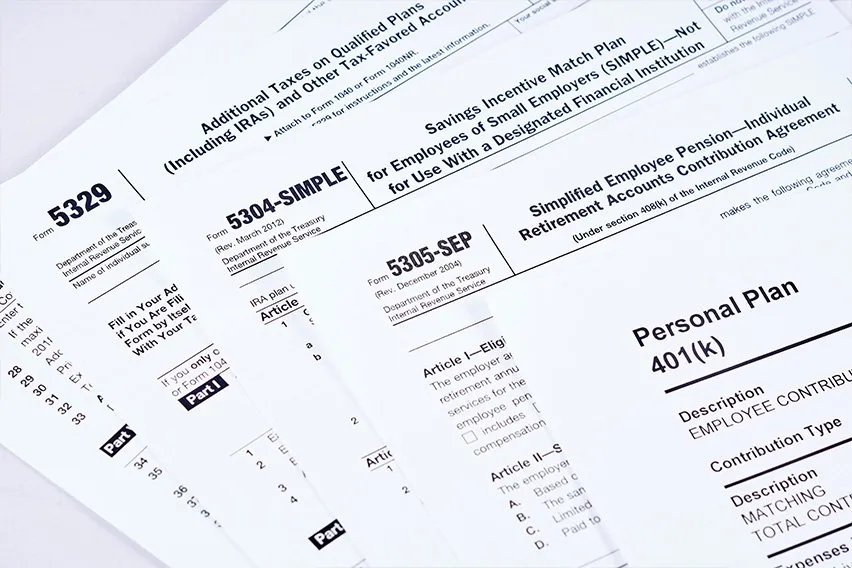
If an exception applies, your Form 1099-R, Box 7, should have a corresponding code (e.g., ‘2’ for early distribution, exception applies). If the code is ‘1’ (early distribution, no known exception), and you believe an exception applies, you’ll need to file Form 5329, Additional Taxes on Qualified Plans (Including IRAs) and Other Tax-Favored Accounts, to claim the exception.
401(k) Loans and Their Tax Implications
Some 401(k) plans allow you to borrow from your own account. As long as you follow the repayment schedule, a 401(k) loan is not considered a taxable distribution. However, if you default on the loan (i.e., fail to make repayments as required), the outstanding loan balance is considered a taxable distribution and may be subject to the 10% early withdrawal penalty if you’re under age 59½. This will be reported on Form 1099-R with a distribution code, typically ‘L’.
Required Minimum Distributions (RMDs)
Once you reach a certain age (currently 73 for most individuals, increasing to 75 in 2033), you must begin taking Required Minimum Distributions (RMDs) from your traditional 401(k) and other pre-tax retirement accounts. Failure to take an RMD, or taking less than the required amount, can result in a hefty penalty: 25% (or even 10% if corrected promptly) of the amount you failed to withdraw. Your plan administrator should calculate your RMD and offer to facilitate the withdrawal. RMDs are fully taxable as ordinary income. Roth 401(k)s are generally exempt from RMDs for the original owner until inherited, but this can vary by plan; rollovers to a Roth IRA avoid RMDs for the owner.
Beneficiary Distributions (Inherited 401(k)s)
If you inherit a 401(k), the tax rules can be complex and depend on your relationship to the deceased and whether the original owner had started RMDs. Non-spouse beneficiaries are generally subject to the “10-year rule,” meaning the entire account must be distributed by the end of the calendar year containing the 10th anniversary of the original owner’s death. Annual distributions are often required during this 10-year period if the original owner had already started RMDs. These distributions are taxable to the beneficiary. Your 1099-R for an inherited 401(k) will have specific codes, often ‘4’ for death. Seek professional advice for inherited accounts due to their complexity.
Essential Forms, Records, and Professional Assistance
Accurate 401(k) tax reporting hinges on having the right documents and knowing when to seek expert help.
Key Tax Forms: W-2 and 1099-R
As discussed, these are your primary documents:
- Form W-2: For reporting contributions you made to your 401(k) during the year. Remember that traditional 401(k) contributions are already excluded from your taxable wages in Box 1. Roth 401(k) contributions are included.
- Form 1099-R: For reporting any distributions, rollovers, or withdrawals you took from your 401(k). This form dictates the taxable amount and any applicable penalties.
Ensure you receive these forms from your employer and/or plan administrator in a timely manner (typically by January 31st).
Maintaining Accurate Records
While your plan administrator and employer handle most of the reporting to the IRS, it’s always wise to keep your own detailed records. This includes:
- Copies of all W-2s and 1099-Rs.
- Statements from your 401(k) plan detailing contributions, distributions, and account balances.
- Records of any rollovers, including documentation from both the originating and receiving accounts.
- Any correspondence regarding loans, hardship withdrawals, or special distributions.
These records can be invaluable if you or the IRS has questions about your tax filings in the future.
When to Seek Professional Tax Advice
While this guide provides a general overview, 401(k) taxation can become highly intricate in specific situations. You should strongly consider consulting a qualified tax professional (e.g., a CPA or Enrolled Agent) if you encounter any of the following:
- You made excess contributions or took excess distributions.
- You performed an indirect rollover and need to ensure it was completed correctly within the 60-day window.
- You took an early withdrawal and believe an exception to the 10% penalty applies.
- You inherited a 401(k) and need guidance on the RMD rules for beneficiaries.
- You have after-tax contributions in your 401(k) and are taking distributions.
- You are unsure about any of the codes on your Form 1099-R or how they apply to your situation.
A tax professional can provide personalized advice, help you navigate complex scenarios, and ensure you comply with all IRS regulations, potentially saving you from costly errors or missed opportunities.

Utilizing Tax Software Effectively
Most reputable tax preparation software (e.g., TurboTax, H&R Block, TaxAct) is equipped to handle 401(k) contributions and distributions. These programs guide you through the process, prompting you to enter information directly from your W-2 and 1099-R. They will often automatically calculate the taxable portion of distributions and any penalties. However, it’s still crucial to understand the underlying principles to ensure you input the information correctly and to double-check the software’s calculations, especially in more complex situations.
Properly reporting your 401(k) activities on your tax return is an essential part of sound financial management. By understanding the basics of contributions, distributions, and special scenarios, and knowing when to seek expert help, you can ensure accuracy, avoid penalties, and confidently manage your retirement savings for a secure financial future.
aViewFromTheCave is a participant in the Amazon Services LLC Associates Program, an affiliate advertising program designed to provide a means for sites to earn advertising fees by advertising and linking to Amazon.com. Amazon, the Amazon logo, AmazonSupply, and the AmazonSupply logo are trademarks of Amazon.com, Inc. or its affiliates. As an Amazon Associate we earn affiliate commissions from qualifying purchases.