
In an increasingly electrified world, the allure of a Tesla is undeniable. From its sleek design and cutting-edge technology to its promise of sustainable transportation, a Tesla represents more than just a car; it’s a statement. However, for many prospective buyers, the most pressing question isn’t about acceleration or range, but rather, “How much does a Tesla truly cost?” This seemingly simple query unravels into a complex financial landscape, encompassing initial purchase prices, ongoing ownership expenses, and long-term financial considerations. Understanding the total cost of ownership (TCO) for a Tesla requires a deep dive into various monetary factors, moving beyond the sticker price to reveal the true financial commitment.

The Initial Investment: Decoding Tesla’s Purchase Price
The journey to Tesla ownership begins with the upfront cost, which can vary significantly depending on the model, configuration, and available incentives. Tesla’s direct-to-consumer sales model means fixed pricing, but this price point is just the beginning of the financial exploration.
Model-Specific Pricing: From Model 3 to Cybertruck
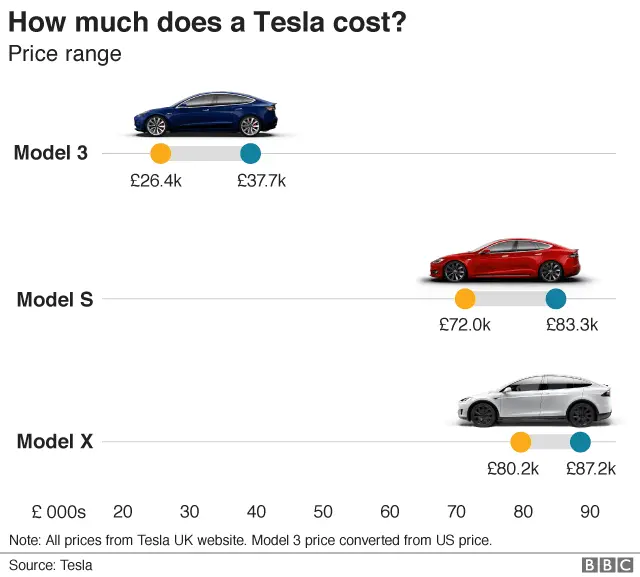
Tesla offers a range of vehicles, each catering to different needs and budgets, and each with its own starting price. The Model 3, often considered Tesla’s entry-level sedan, typically begins in the mid-$40,000s, varying with rear-wheel drive (RWD) or all-wheel drive (AWD) options and different battery ranges. Moving up, the Model Y, a compact SUV, usually starts slightly higher, in the upper $40,000s to low $50,000s. The premium Model S sedan and Model X SUV, known for their performance and luxury features, command significantly higher prices, often starting in the high $70,000s or $80,000s and easily exceeding $100,000 with upgrades. The futuristic Cybertruck, when available, is projected to have various configurations spanning a wide price range. These figures are base prices, excluding potential destination fees, order fees, and regulatory charges, which can add several hundred to a few thousand dollars to the total.
Navigating Customization and Upgrades
Once a model is selected, the price begins to climb with customization. Tesla offers various options that enhance performance, aesthetics, and functionality, all of which contribute to the final purchase price. Paint colors beyond the standard white, larger wheel options, and premium interior upgrades (like specialized seating or trim) are common add-ons. However, the most significant financial decision in customization often revolves around Tesla’s advanced driver-assistance features. Enhanced Autopilot (EAP) and Full Self-Driving (FSD) capability represent substantial investments, potentially adding thousands, if not tens of thousands, of dollars to the vehicle’s cost. These software upgrades, while promising future capabilities, are often paid upfront, making them a significant component of the initial financial outlay. Additionally, home charging solutions, such as the Tesla Wall Connector installation, represent another initial investment that, while crucial for convenience, is not included in the vehicle’s base price.
Understanding Incentives and Tax Credits
The net purchase price of a Tesla can be significantly influenced by various government incentives designed to promote EV adoption. These incentives can come in the form of federal tax credits, state rebates, and local programs. The federal EV tax credit, which can be up to $7,500, has historically been a major factor, though its applicability depends on factors like battery component sourcing, vehicle manufacturing location, and the buyer’s income level, as well as the vehicle’s MSRP. State and local programs vary widely, offering additional rebates, tax exemptions, or even preferred parking. Diligent research into these programs is crucial, as they can substantially reduce the effective purchase price and make a Tesla a more financially viable option. For businesses, additional depreciation write-offs or tax incentives for fleet electrification might also be available, further impacting the business finance perspective.
Beyond the Sticker Price: Ongoing Ownership Costs
The initial purchase price is just one piece of the financial puzzle. A comprehensive understanding of Tesla ownership necessitates a look at the recurring expenses that accrue over the vehicle’s lifespan. These ongoing costs are where EVs often diverge significantly from their internal combustion engine (ICE) counterparts.
Charging Costs: Electricity vs. Gasoline
One of the most touted financial benefits of an EV is the reduced “fuel” cost. While electricity prices vary by region and time of day, charging a Tesla is generally less expensive per mile than fueling a comparable gasoline car. Home charging, especially during off-peak hours, offers the lowest cost per mile, often equating to a few cents per mile. Public Supercharging, while convenient for long trips, is more expensive than home charging but still often competitive with or cheaper than gasoline. Calculating the exact savings depends on driving habits, electricity rates, and the comparative fuel efficiency of an ICE vehicle, but the long-term cumulative savings on “fuel” can be substantial, often representing thousands of dollars over several years. This shift from volatile gasoline prices to more stable electricity costs provides a significant budgeting advantage for Tesla owners.
Insurance Premiums for a High-Tech EV
Tesla vehicles, being high-performance, technology-laden, and relatively expensive, often come with higher insurance premiums compared to conventional vehicles. Several factors contribute to this: the high cost of replacement parts, the specialized nature of repairs, the advanced technology (which can be expensive to fix or recalibrate), and the vehicle’s performance capabilities. Insurance rates are highly individualized, based on the driver’s history, location, and coverage choices. Some owners find relief through Tesla Insurance, an offering from the company itself in select states, which leverages real-time driving data to potentially offer more competitive rates for safe drivers. Regardless, prospective buyers should obtain insurance quotes specific to the Tesla model they intend to purchase to factor this significant cost into their financial planning.
Maintenance and Repairs: A Different Paradigm
Maintenance for an EV differs significantly from an ICE vehicle. Teslas require no oil changes, spark plug replacements, or fuel filter changes. Routine maintenance is largely limited to tire rotations, brake fluid checks (though regenerative braking significantly reduces brake wear), cabin air filter replacements, and general vehicle inspections. This often translates to lower routine maintenance costs over the vehicle’s lifetime. However, the potential for higher specialized repair costs exists. Body repairs involving complex aluminum structures or advanced sensor systems can be more expensive. Battery degradation, while slow and covered by a lengthy warranty (typically 8 years/100,000 or 120,000 miles), is a long-term consideration, though full battery replacement is rare and very costly. Prospective owners should understand that while routine service is simpler, unexpected repairs, if outside of warranty, can be costly due to specialized parts and labor.
Software Subscriptions and Connectivity
While many core features are built-in, Tesla offers optional subscriptions that contribute to the ongoing cost of ownership. The Premium Connectivity package, which enables features like live traffic visualization, satellite-view maps, video streaming, and caraoke via cellular data, is typically free for the first month and then costs a monthly fee. While not strictly necessary for vehicle operation, many owners find it enhances the ownership experience. Furthermore, if one chooses not to purchase FSD outright, Tesla now offers it as a monthly subscription, allowing owners to access the advanced driver-assistance features for a recurring fee without the large upfront investment. These subscriptions, while optional, add to the monthly financial commitment for those who desire the full suite of Tesla features.
Depreciation and Resale Value: A Long-Term Financial Perspective
For any significant asset like a car, understanding its long-term value retention is crucial for comprehensive financial planning. Tesla’s position in the market has historically given it a unique depreciation profile.
Tesla’s Unique Resale Market
Historically, Teslas have demonstrated strong resale values, often depreciating slower than many luxury ICE vehicles. This is driven by several factors: high demand for EVs, Tesla’s brand prestige, continuous software updates that keep older models feeling fresh, and the relatively limited supply of used Teslas compared to demand. The robust used EV market, coupled with the increasing shift towards electric vehicles, means that a well-maintained Tesla can often fetch a strong price on the secondary market. However, market conditions can fluctuate, and specific models, mileage, and battery health will always play a role in determining exact resale value.
Impact of New Models and Price Adjustments
Tesla’s dynamic pricing strategy and the frequent introduction of new features or models can influence depreciation. While software updates generally enhance existing vehicles, the introduction of a new battery chemistry, a significant design refresh, or a price reduction on new vehicles can exert downward pressure on the resale value of older models. Prospective buyers should be aware that while Tesla’s depreciation has been favorable, the company’s agile market strategies mean that long-term predictions should be approached with a degree of flexibility.
Financing Your Tesla: Options and Strategies
Acquiring a Tesla involves significant capital, and understanding the financing options is paramount to making a fiscally sound decision.
Loans vs. Leases: Which Makes Financial Sense?
The choice between financing a Tesla with a loan or opting for a lease depends heavily on individual financial goals, driving habits, and long-term plans.
- Loans (Purchasing): A loan involves borrowing money to buy the vehicle outright. This means you own the car, build equity, and have no mileage restrictions or customization limitations. While monthly payments might be higher, you retain the asset and its eventual resale value. This option is generally better for those who plan to keep the car for many years, drive high mileage, or prefer full ownership.
- Leases (Renting): Leasing is essentially renting the car for a set period, typically 24 or 36 months, with an agreed-upon mileage limit. Monthly payments are often lower than loan payments, and you avoid the hassle of reselling the car at the end of the term. Leases are ideal for those who prefer to drive a new car every few years, desire lower monthly payments, or are hesitant about long-term EV technology changes. However, you don’t build equity, and excess mileage or wear and tear can incur penalties.
Maximizing Your Investment: Tax Implications and Long-Term Savings
Beyond the direct purchase and ownership costs, a Tesla can offer additional financial benefits, particularly through tax implications and long-term savings. For businesses, a Tesla might qualify for accelerated depreciation schedules or Section 179 deductions, potentially offering significant tax advantages. Individual owners benefit from the aforementioned federal and state incentives. Furthermore, the overall Total Cost of Ownership (TCO) calculation often shows Teslas to be competitive, or even superior, to luxury ICE vehicles over a 5-10 year period, primarily due to fuel savings, reduced maintenance, and potential tax credits. Analyzing these factors comprehensively allows buyers to see the Tesla not just as an expense, but as an investment with a potentially favorable long-term financial trajectory.
The Total Cost of Ownership (TCO): Is a Tesla a Smart Financial Move?
Bringing all these financial threads together, the question remains: is a Tesla a smart financial move? The answer, as with many significant purchases, is nuanced and highly individual.
Comparing TCO with Traditional ICE Vehicles
When considering the Total Cost of Ownership, it’s crucial to compare a Tesla not just to its upfront price but against the full lifecycle costs of a comparable ICE vehicle. While the initial purchase price of a Tesla might be higher than many traditional cars, the substantial savings on fuel, significantly lower routine maintenance costs, and potential for government incentives often offset this difference over a few years. Studies and real-world data frequently demonstrate that over a 5-year or 10-year period, the TCO of a Tesla can be competitive with, or even lower than, that of a premium gasoline-powered vehicle, especially when factoring in the time value of money and inflation. The predictable nature of electricity costs versus the volatility of gasoline prices also adds a layer of financial stability.
Personal Financial Assessment: Is a Tesla Right for You?
Ultimately, determining if a Tesla is a wise financial decision requires a thorough personal assessment.
- Budget: Can you comfortably afford the initial purchase (or lease payments) and the insurance premiums?
- Driving Habits: Do you drive enough miles for the fuel savings to be substantial? Do you have convenient access to home charging?
- Long-Term Goals: Are you looking for long-term ownership and the potential for greater TCO savings, or do you prefer to upgrade vehicles frequently?
- Environmental Values: Beyond the money, does the environmental benefit align with your personal values, providing an intangible return on investment?
A Tesla is more than just a car; it’s a financial commitment that offers a blend of cutting-edge technology, environmental benefits, and a distinct driving experience. By meticulously analyzing the initial investment, ongoing ownership expenses, depreciation, and financing options, prospective buyers can move beyond the “how much” and make an informed, financially sound decision that aligns with their personal and economic circumstances. The true cost of a Tesla is a dynamic equation, where careful calculation and foresight can unlock substantial long-term value.
aViewFromTheCave is a participant in the Amazon Services LLC Associates Program, an affiliate advertising program designed to provide a means for sites to earn advertising fees by advertising and linking to Amazon.com. Amazon, the Amazon logo, AmazonSupply, and the AmazonSupply logo are trademarks of Amazon.com, Inc. or its affiliates. As an Amazon Associate we earn affiliate commissions from qualifying purchases.